
 A History Lesson on Tucker Carlson for Vice President J.D. Vance








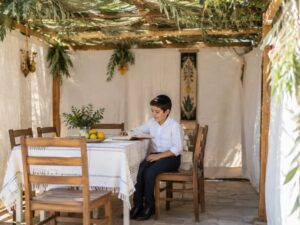
For one week a year, Jews trade solid walls for branches and open sky. Turns out that flimsy hut might be teaching us what a real home actually is.
The sukkah reminds us that home isn't a physical space. It's what we carry with us: our connections to friends, family, community and God. This Sukkot, sit inside its flimsy, holy walls and forge new, lasting bonds to your roots, your family and your values.
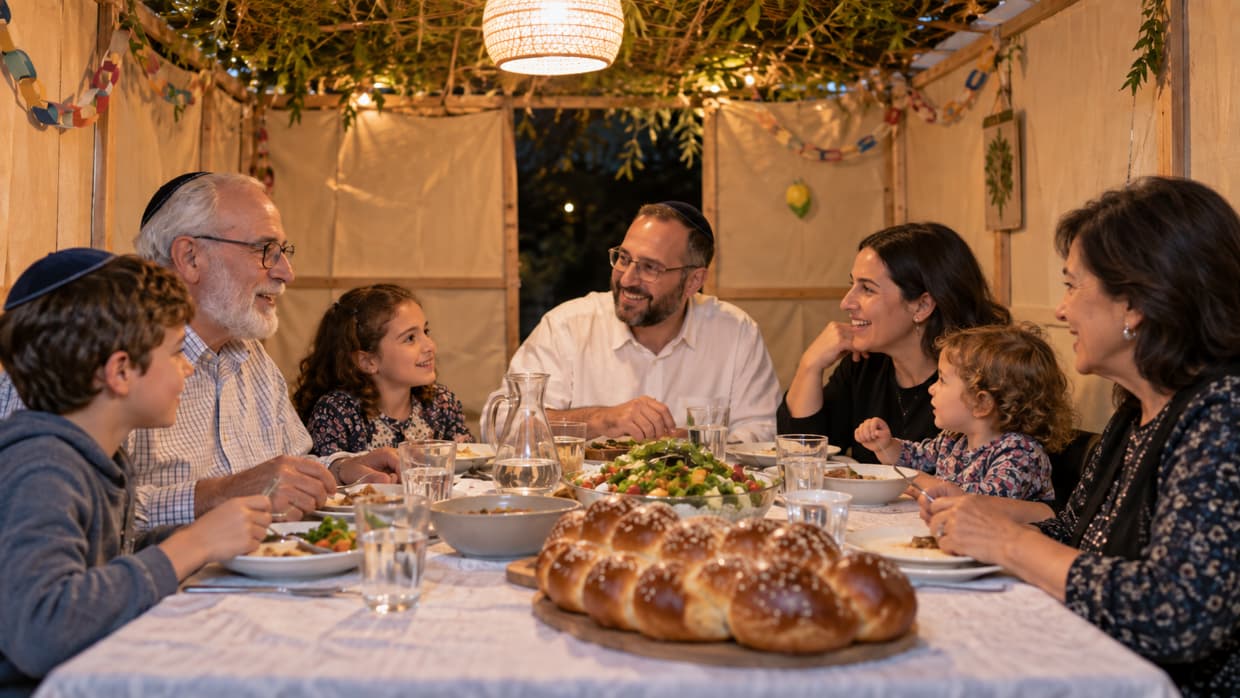
For thousands of years, Jews have stepped out of their homes and into sukkahs, sitting under branches and stars as they share meals with family and friends. Your ancestors' lives may look nothing like yours today, but when they sat in the sukkah, they too felt connected to something far bigger than themselves.
The sukkah itself commemorates the temporary shelters the Israelites lived in for 40 years in the desert, wandering with no fixed address and no knowledge of what tomorrow may bring. Every other Jewish holiday marks a moment (an exodus, a battle, a revelation). Sukkot marks an entire era of uncertainty, and asks you to rebuild it, willingly, every single year.
When you build and sit in your sukkah, you become a link in that long, unbroken chain.
This is how the sukkah links you to the generations before you and the generations still to come. The structure itself is temporary, but the tradition of building it has endured for thousands of years, across the world. When you build and sit in your sukkah, you become a link in that long, unbroken chain.
And it's worth noticing that this holiday falls just days after Yom Kippur. You spend the holiest day of the year in synagogue, examining your soul. Then you go outside and build something with your hands. Judaism doesn't let reflection stay abstract for long. It wants you to live it.
The sukkah brings families together by turning a simple, physical space into a shared experience. For one week, its walls hold memories, conversations, meals, laughter and song. There are fewer distractions pulling us away from each other, and we're reminded that family has nothing to do with how big or beautiful your home is, and everything to do with what happens inside it.
There's a tradition of inviting ushpizin (symbolic guests) into the sukkah each night: Abraham, Isaac, Moses, and other figures from Jewish history. The family at your table isn't limited to the people you can see. Every family you build stands on the shoulders of a family that came before it.
There's also something to be said for the discomfort. A sukkah is drafty, it's exposed to wind and bugs and unpredictable weather, and there's nowhere to hide from the people sitting next to you. That exposure is the point. Comfortable rooms let us retreat into our phones and our own heads. A sukkah, with its bare walls and open roof, doesn't offer that escape.
Next year you probably won't remember what you ate in the sukkah, but you'll likely remember the smile of the person sitting beside you, or the sound of your kids and grandkids laughing around the table. The sukkah reminds us that family isn't only the people you're related to. It's the people you're blessed to sit beside and walk beside through life.
The sukkah takes the things you say matter to you and gives you a physical place to actually live them out. Most of the year, you're probably prioritizing security, comfort, possessions and achievement. But for the week of Sukkot, you get to step back and ask what really matters to you. Often it isn't what you own or even what you've accomplished. Inside the sukkah, you give up the illusion of control you feel in your stable, "permanent" home.
Psychologists have long noted that the things we assume will make us secure (bigger houses, more possessions, more control over our environment) rarely deliver the security we expect. The sukkah makes that point physically instead of theoretically. You're sitting under a roof of branches that lets in the stars, in a structure that could blow over in a strong wind, and you're asked to feel at peace anyway. If you can find calm there, you start to realize how much of your "permanent" home's security was an illusion all along, and how much of your real security was never about the walls at all.
Where comfort and stability aren't guaranteed, the sukkah asks: what do you actually value? And then it asks you to go live it. You don't just say you value family, you put your phone away, cook a meal and have a real conversation with the people you love.
You may say you value gratitude, but pausing before a meal in the sukkah to recognize that family, community, shelter and food are gifts, not guarantees, is what turns that value into action.
And maybe this is the deepest connection the sukkah builds: the connection to your authentic self. Its walls remind you that your values only become real and lasting when you build a life around them.