








 The Macklemore Mess: What Pink Got Right and Everyone Else Got Wrong



7 min read
6 min read





Mark Podwal proudly painted his Judaism in the public square, including inside the pages of The New York Times.
Five days after eleven Israeli athletes were murdered in the 1972 Munich massacre, an arresting illustration appeared on the Op-Ed page of The New York Times. It showed an anonymous athlete marked with a Star of David beneath an arch inscribed with the opening line of the Kaddish, the Jewish mourner's prayer: "Yitgadal v'yitkadash sh'mei rabba" ("Magnified and sanctified be His great name").
There was no accompanying essay, no translation, no caption explaining who the athlete was or what the words meant. The image simply spoke for itself.
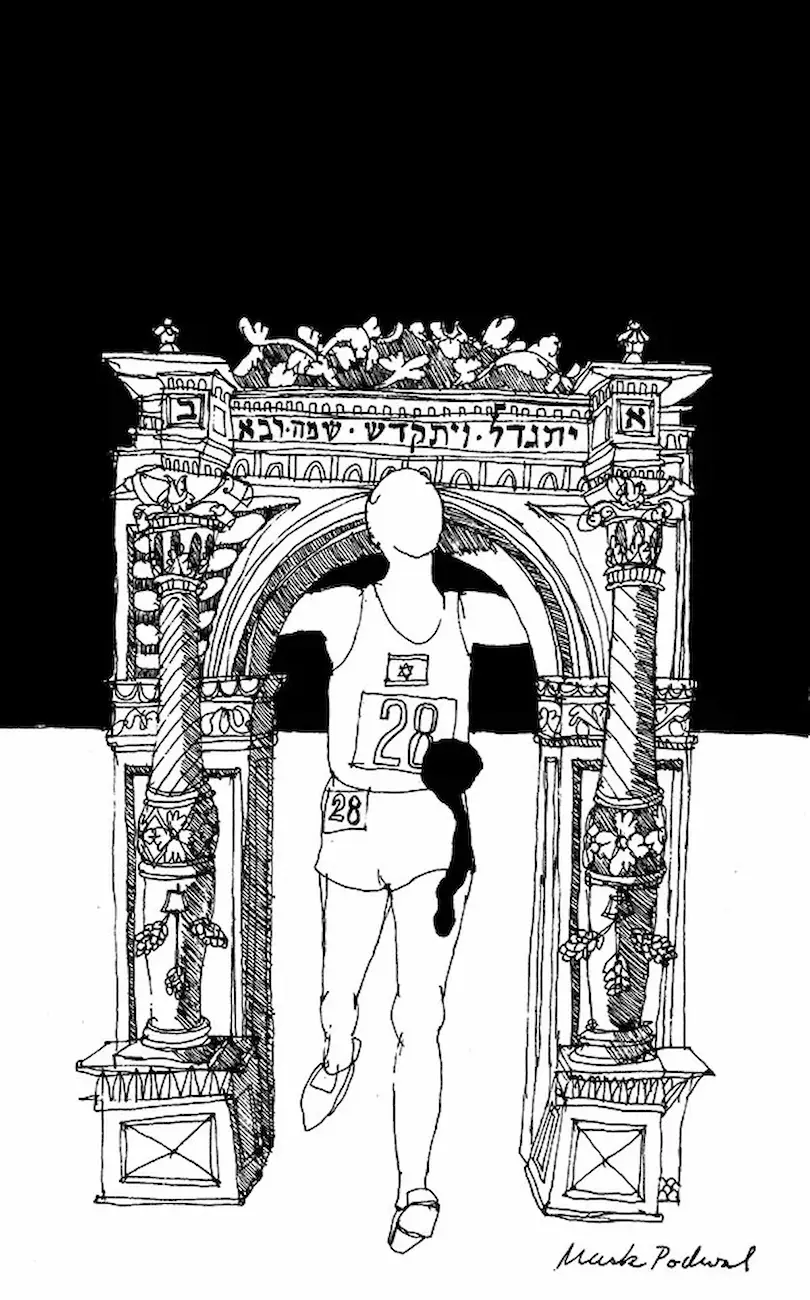
The artist was Mark Podwal, a 27-year-old medical resident at NYU. It was his first appearance in The New York Times.
Over the course of his career, Podwal produced more than 200 additional illustrations for the paper, all while working as a dermatologist, a specialty he chose precisely because it left him time to pursue his art.
His work went on to appear in collections and exhibitions at major institutions worldwide, including the Metropolitan Museum of Art in New York, the Pontifical Gregorian University at the Vatican, the Israel Museum in Jerusalem, and Munich's Stadtmuseum.
Steven Heller, who served as art director of The New York Times's Op-Ed page, described Podwal's drawings as conceptually rich and dense with symbolism, yet readily understandable to readers. Heller believed Podwal's economy of line reflected the practical demands of juggling two professions. For the busy physician-artist, every stroke was purposeful; nothing extraneous made it onto the page.
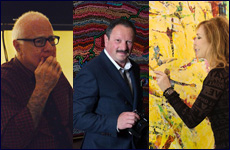
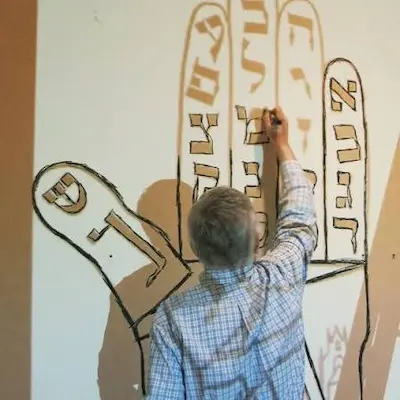 The artist at work
Podwal's family history profoundly shaped his artistic imagination. His mother was born in Dąbrowa, Poland, and immigrated to the United States in 1929 with two of her three brothers. The third brother, David, was refused entry after immigration officials mistakenly diagnosed him with an eye disease. Despite the family's repeated attempts to secure his passage to America, he remained in Europe and was ultimately murdered at Treblinka.
The loss devastated the family. When Podwal's grandmother learned of David's death, she suffered a severe psychological collapse and spent the remaining 18 years of her life in a psychiatric hospital. David had been remembered within the family as a gifted young artist whose drawings hinted at unrealized promise. Podwal later said he liked to think of himself as carrying his uncle's artistic legacy forward.
"I never planned on becoming an artist," Podwal recounted. "When I grew up in Queens, New York, if you did well in school you either became a doctor or a lawyer. Though I loved to draw, I never pursued formal art training, and eventually my parents encouraged me to become a physician. But while attending medical school, I discovered that my passion for drawing had crept back in: the tumultuous events of the 1960s compelled me to create a series of political drawings that became my first published book. Those images caught the attention of an art director at The New York Times, and in 1972, my first drawing for that newspaper appeared on its Op-Ed page. That drawing, of the Munich massacre, was later included in an exhibition at the Musée des Arts Décoratifs in the Palais du Louvre."
Podwal would describe himself as neither from a religious family nor observant. Still, he insisted, "I nonetheless derive continuing inspiration from my Jewish heritage. Fascinated by Jewish history, moved by its teachings, and enchanted by its legends and folklore, I've tried to imaginatively interpret and faithfully transmit my heritage with visual narratives."
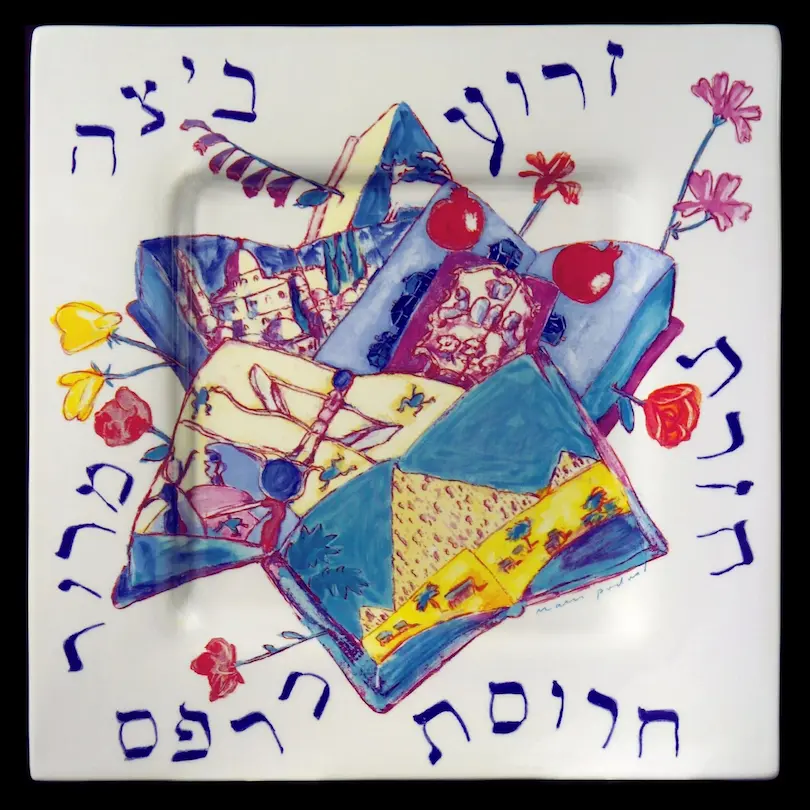
Podwal's artistic vision found expression not only in newspapers and galleries but in a remarkable body of books spanning more than five decades. Beginning with The Decline and Fall of the American Empire (1971), he went on to publish dozens of works exploring Jewish history, folklore, ritual, language, and memory through his distinctive visual style, among them A Book of Hebrew Letters, A Jewish Bestiary, Golem: A Giant Made of Mud, Jerusalem Sky, and Reimagined: 45 Years of Jewish Art. Together, these works reveal the breadth of Podwal's interests, from biblical symbolism and Jewish legend to the Holocaust, medicine, and political satire, while showing his lifelong commitment to preserving and reimagining Jewish culture through art. His work captivated the greatest Jewish minds of his generation.
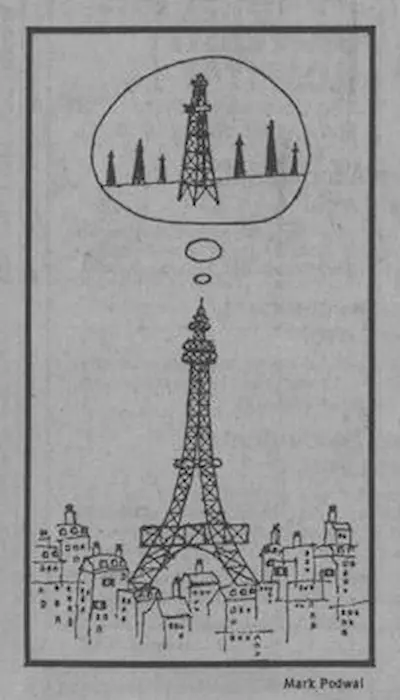
One of Podwal's illustrations for The New York Times letters page led to an enduring friendship with Elie Wiesel. In 1977, following France's controversial arrest and swift release of Abu Daoud, one of the principal organizers of the Munich massacre, Podwal drew the Eiffel Tower imagining itself as an oil well, a pointed jab at the political calculations behind the decision. Just days after it ran, Podwal received a handwritten note from Wiesel praising the illustration's power and eloquence, and inviting him to meet.
That exchange marked the start of a close personal and professional relationship between the two men. They collaborated on multiple books, including a Haggadah (the text used at the Passover seder), and Podwal designed the Congressional Gold Medal that President Ronald Reagan presented to Wiesel in 1985.
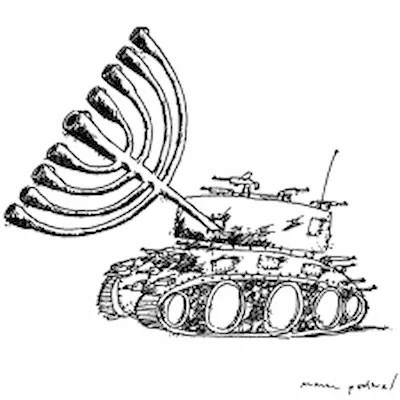
In 1982, Podwal produced another striking political illustration: an Israeli tank whose cannon was replaced by an oversized menorah, created for an article on the Lebanon War. Editors at The New York Times ultimately declined to publish it, judging the image too provocative. Seven years later, the drawing found new life when it accompanied an essay by former Israeli foreign minister Abba Eban, who challenged what he called the enduring misconception of Israeli vulnerability.
The writer Cynthia Ozick anointed Podwal the "Baal Kav Emet," the Master of the True Line, or of the line that opens into truth, into the depths of clarifying recognition and revelation.
"The doctor observes and interprets," Ozick reflected in her foreword to Podwal's Reimagined. "So does the artist. Both are scrupulous witnesses. Both hope to enlighten. Both measure the task with honest passion. The doctor is circumscribed by the limits of scientific knowledge. The artist is circumscribed by the limits of the line."
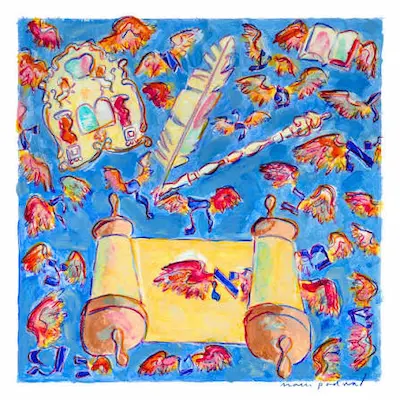
Yet through the limits of the medium, Podwal plumbed the depths of meaning. "Podwal's brilliant line is also a lineage," Ozick added. "He knows he is in the line of those whose truth derives from the merciful Covenant. His drawings are, now and then, jubilant God-imaginings, as when Jerusalem floats up from the leaves of a sacred text, or when the letters of the Torah dance through the ether. But more often his canny pen is attentive to the human obligation to see, with a doctor's honest eye, the terrifying wounds of our world."
As Tamar Mann Tweel has recently written, Podwal's work brought into American life "a form of religious sincerity that moves beyond depictions of our suffering or our might, our victimhood or our aggression, and towards the truth that we are also carriers of an ancient tradition that contains faith and beauty. Even after loss, even after hate, we appear in public as Jews, dignified by how we mourn and how we choose to live."
Mark Podwal's second yahrzeit falls on the 10th of Elul. May the legacy of his lines continue to enliven how Judaism is perceived and celebrated in the public square for years to come.









Beautiful tribute to Mark a wonderful artist and doctor….will miss him always.
Love his art. So sad when he passed.❤️💔✡️🕎
I remember the Jewish Bestiary in particular. Love the illustrations included in the article. May his memory be for a blessing and may his art live on in the Jewish heart
Thanks for making us aware of Mark and his unique talent. I wish his family the best. G-d bless.