Jewish Bread
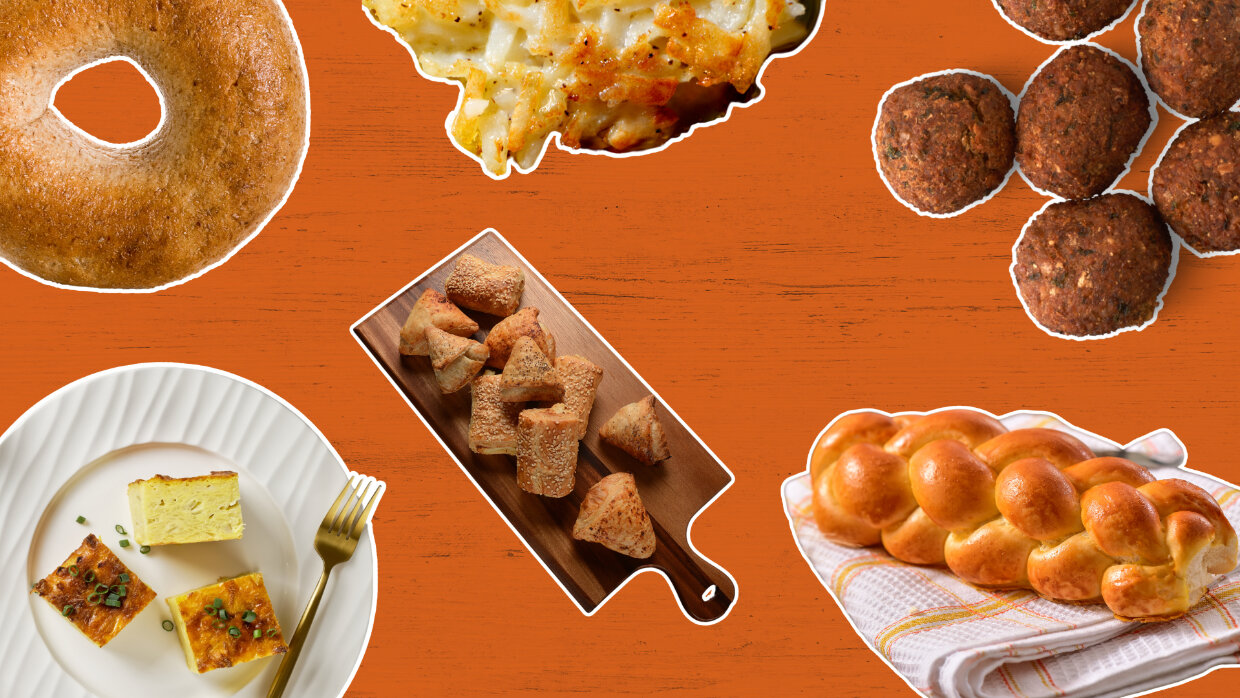
In one corner of the ring, we’ve got challah, that fluffy sweet bread Jews eat on holy days.
Its name comes from the Torah, which says, "When you eat the bread of the Land, you shall set aside a portion for God.”
Jewish mystical teachings say that when God created the world, He kneaded the earth like a giant piece of dough and put a piece aside which He formed into man.
With that, humanity - uh, that’s you! - was separated from the rest of creation and given a higher purpose and meaning.
In the other corner, we’ve got bagels, the quintessential Jewish food. In the Middle Ages, a form of round bread, kind of like a soft pretzel, became popular with German migrants to Poland.
But here’s the thing about most of Europe at the time - Jews were FORBADE from baking bread. Yes, seriously!
But then things began to lighten up in Poland, where the Jews won the right to make bread, but… only bread that was boiled.
So, Jewish bakers started to make their own, boiled twist on that round bread I mentioned earlier and called them bagels.
The word comes from the Yiddish word “beygl,” meaning "ring" or "bracelet.” Hey, I’d wear one!
Anyway, fast forward to the 20th century and Jewish immigrants brought their love of bagels to America where they EXPLODED in popularity and became a symbol of Jewish culture and resilience.
So, who wins? Challah or bagels? Drop a comment and let us know.
Jewish Noodles & Potatoes
In one corner of the ring, weighing in with noodles or potatoes, we’ve got… Kugel!
This casserole champ has been around for 800 years, and its name originates from the Yiddish term "ball,” as the O.G. version of the dish was round and puffy.
Kugel can be savory - think: slow-cooked potato kugel with oil and salt - or sweet - think: noodles loaded with raisins, cinnamon and sugar. OK, who’s getting hungry?!
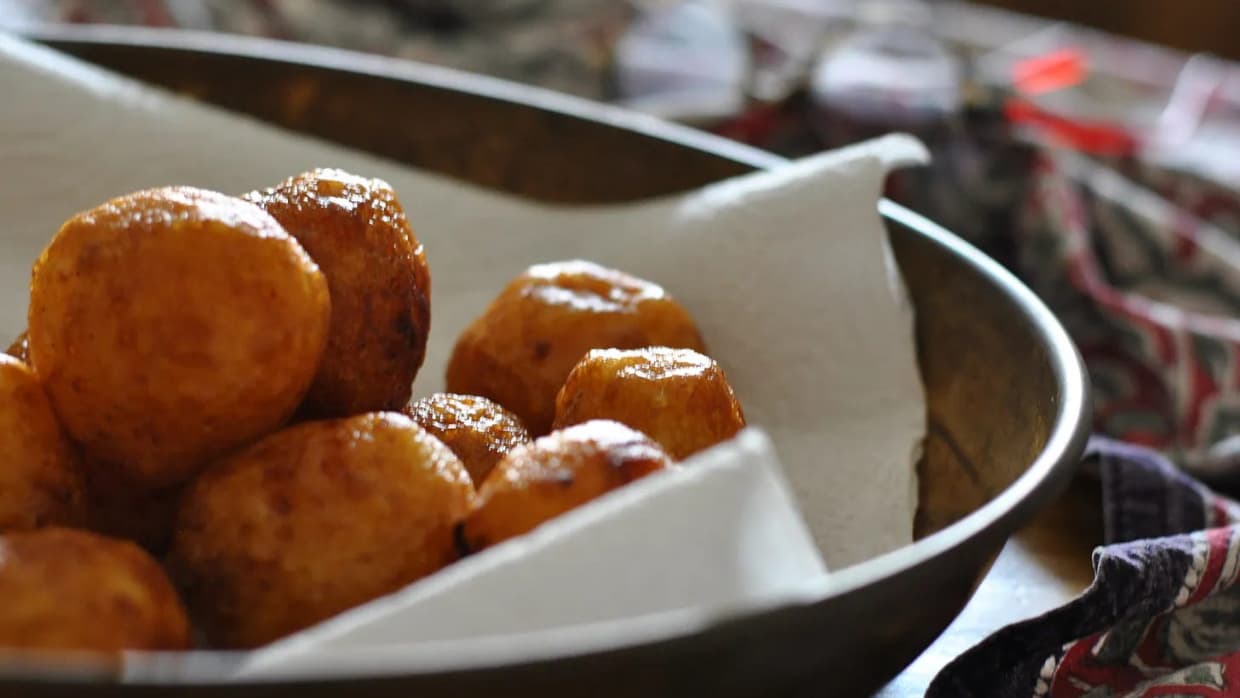
In the other corner of the ring, we’ve got Israel’s snack champ, the Boureka, a flaky doughy pastry, which was invented by Spanish Jews who were booted from Spain around 600 years ago.
These Spanish Jews took their empanada recipe with them, added a dash of Turkish flair, and BAM!!! Bourekas were born.
Over time, Bourekas evolved into all shapes and sizes, from sweet to savory, and eventually became the iconic Israeli street food it is today.
So, which one do YOU prefer – kugel or bourekas? You know the drill - hit up those comments and let us know.
Jewish Fried Food
In one corner of the ring, we’ve got latkes, the crispy potato pancakes that you eat during Hanukkah.
In the 14th century, an Italian rabbi created the first-ever latkes using CHEESE to celebrate Hanukkah's tradition of dairy.
Fast forward a few centuries and latkes take a trip to Eastern Europe where they swapped the cheese for potato and voila – the latke of today were born.
And while latkes have gone through a few different iterations over the years, they connect to the very essence of Hanukkah -
The oil used for frying latkes symbolizes the miracle of oil that kept the Hanukkah menorah kickin’ for eight days.
In the other corner, we’ve got the reigning champ, Israel's national dish, those heavenly fried chickpea balls - falafel!
While falafel’s origins are a bit of a mystery, some believe they hail from ancient Egypt. But how did it get to Israel?
Let’s fast forward to the 1950s during World War II when a rescue mission known as “Operation Magic Carpet” brought thousands of Yemenite Jews, and their delicious falafel, to the safe-haven of Israel, and the rest, as they say, is history.
Israel's melting pot of culture embraces all of its influences, and falafel is no exception.
So what’ll it be – falafel or latkes? Or… will it be any number of delicious Jewish foods, such as matzah ball soup, cholent, Moroccan fish, gefilte fish and… am I missing any? Let us know!
The good news? Whatever you choose to KNOCK OUT, you’ll be taking a bite out of Jewish history.