






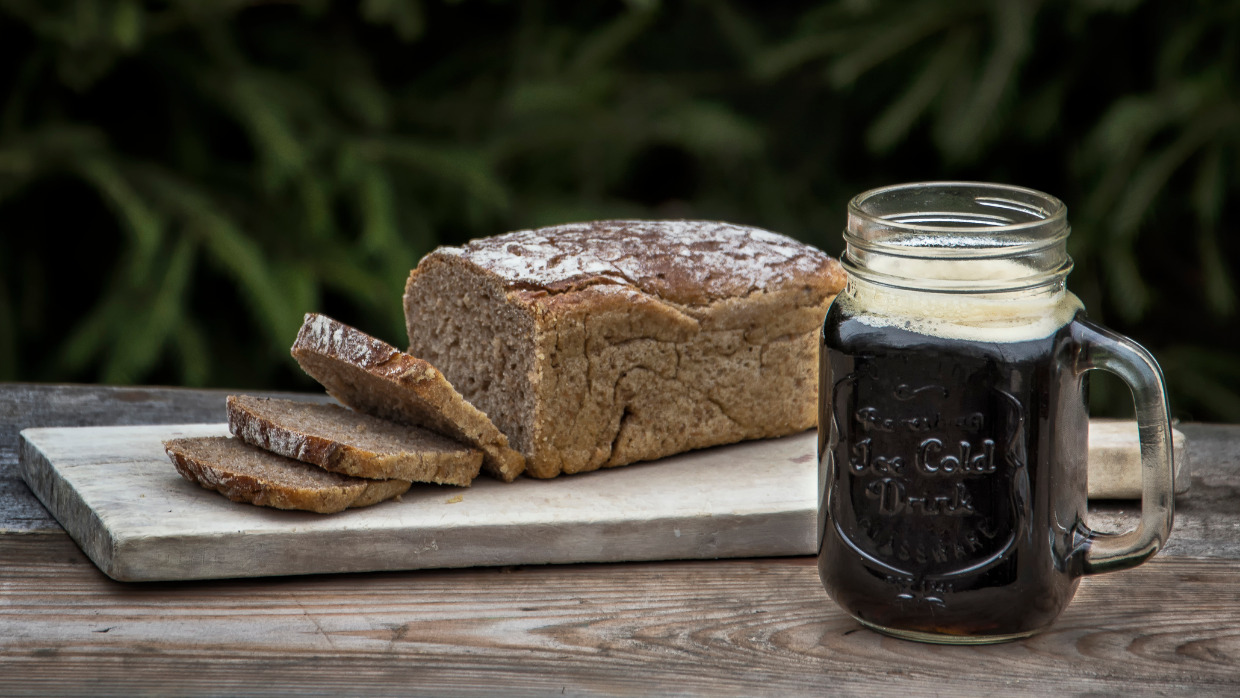
With the surge in popularity of fermented drinks like kombucha, it seems there's a whole world of untapped beverages waiting to be discovered. Fermented food has always been a big part of Jewish cuisine. From the iconic kosher dill pickle to our favorite hot dog topping, sauerkraut, fermented foods are a major part of the Jewish diet. Yet, it seems our heritage of crafting fermented drinks has been sidelined. Let's raise a glass to rediscovering the unique fermented beverages of Jewish cuisine.
Kvass
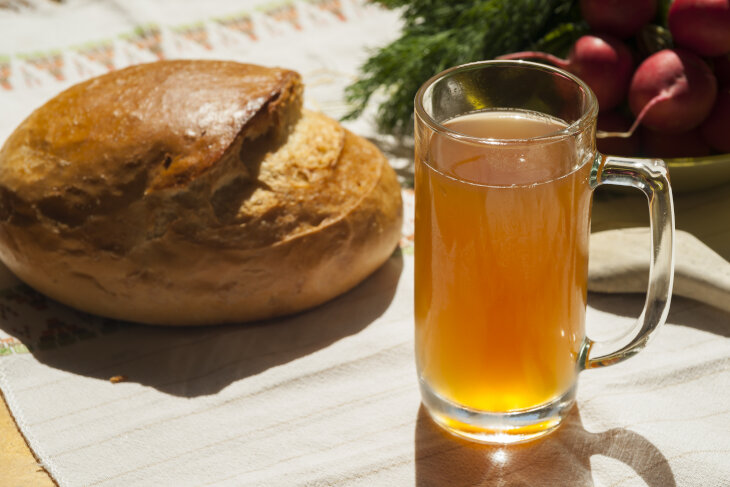
Take Kvass, for instance, the age-old fermented Ukrainian probiotic drink that has been a staple in Jewish homes for centuries. “Kvass” derives from the Yiddish word for tart, which is a great way to describe the taste of this unique drink. Preparing this drink is simple: just soak leftover rye bread and malt in hot water overnight, and get a tangy, bubbly, and refreshing beverage.
Kvass first originated as a substitute for beer over a thousand years ago in Eastern Europe because grains were in short supply, and Europeans needed a new drink to keep them satisfied. In Poland, there is a customary game known as Wulkan ("volcano") that uses Kvass’ bubbles for a fun prank. During regional festivities, mischievous teenagers shake bottles of Kvass and then serve them to guests, only for the beverage to explode like a Volcano in their faces.
In modern times, the drink has become industrialized and bottled and has become a hit in the most surprising of places like China and Finland. However, many still prefer their homemade barrel to the store-bought variety. In bars throughout Eastern Europe, you might even find Kvass as a cocktail mixer since its 2.0% alcohol content adds a bit of extra booze and a whole lot of flavor.
Mentions of Kvass are littered throughout great European literature like War and Peace, where the French soldiers refer to it as “Pig’s Lemonade,” as well as in Jewish playwright Sholom Aleichem’s acclaimed story “Motl Peysi, the Cantor’s Son.” Where in one of the main character’s get-rich-quick schemes, a Jewish shop owner devises a plan to sell Kvass from a little Russian kiosk with the hope that the drink would be a relief during the sweltering summer days. However, the Kvass was too irresistible to the townsfolk, and one by one, thirsty locals would sneak into the shop to steal a sip until there was nothing left in the barrel.
He concluded the story, writing: “Kvass, Jews, kvass…it costs little and is consumed a lot.” Which is a great mission statement for much of Jewish food.
Kefir
Kvass’ partner in crime, Kefir, is a drink that, while not originating in Jewish circles, has found a home in many Russian Israeli households for its health benefits and unique flavor.
Traditionally, kefir is prepared by taking kefir grains and milk and leaving them in goatskin bags that were hung near a doorway so anyone passing through could easily knock the bags to mix the milk and kefir grains. “Some accounts hold that it has existed in central Asia since at least 3000 BCE,” writes Alex Lewin, writer of “Real Food Fermentation”. The starters necessary to make kefir were guarded by the people of the region until the early twentieth century. At that time, a Russian spy supposedly stole some of the starters and brought them to Moscow, whence they spread far and wide.”
Nowadays, Kefir starters can be bought at local health stores, so you can make your own version of the drink. In the Soviet Union, it was typical for both Kefir and Kvass to be served together alongside pastries and loaves of bread for feasts. However, in Jewish circles, they would drink the Kefir only for breakfast so it wouldn’t interfere with meat lunches and dinners.
Arak
Many of you may not know that Arak, everyone’s favorite anise-based liquor, was first distilled from fermented date sap. Nowadays, we use grapes for the arduous distillation process however, the original drink must’ve been a treat to try in the sweltering Sahara Desert.
Don’t conflate the taste of the drink with its name, which comes from the Arabic word for “sweat,” likely because of the tree sap that it was originally made from.
Back in the Talmudic era, caperberries were also fermented into a wine called Yein Kafrisin. Known as the strongest fruit wine, Yein Kafrisin was an element in the incense used in the First and Second Temples.
Fermentation has always been a major part of the Jewish culinary experience. It made it possible for poor Jews to store food for long periods of time, especially when Jews were frequently traveling merchants and expelled from their homes. By making the most of cabbage, beets, stale rye bread, and bland cucumbers, Jews were able to elevate these ingredients to new heights. Probiotic drinks have gained popularity in the past several years for many reasons, but primarily for their health benefits and digestive properties. It’s likely that our Jewish ancestors from thousands of years ago were ahead of the curve without even knowing it.
















where to purchase malt?