





 Purim’s Counterintuitive Strategy for Confronting Modern Antisemitism

4 min read
3 min read
4 min read



6 min read


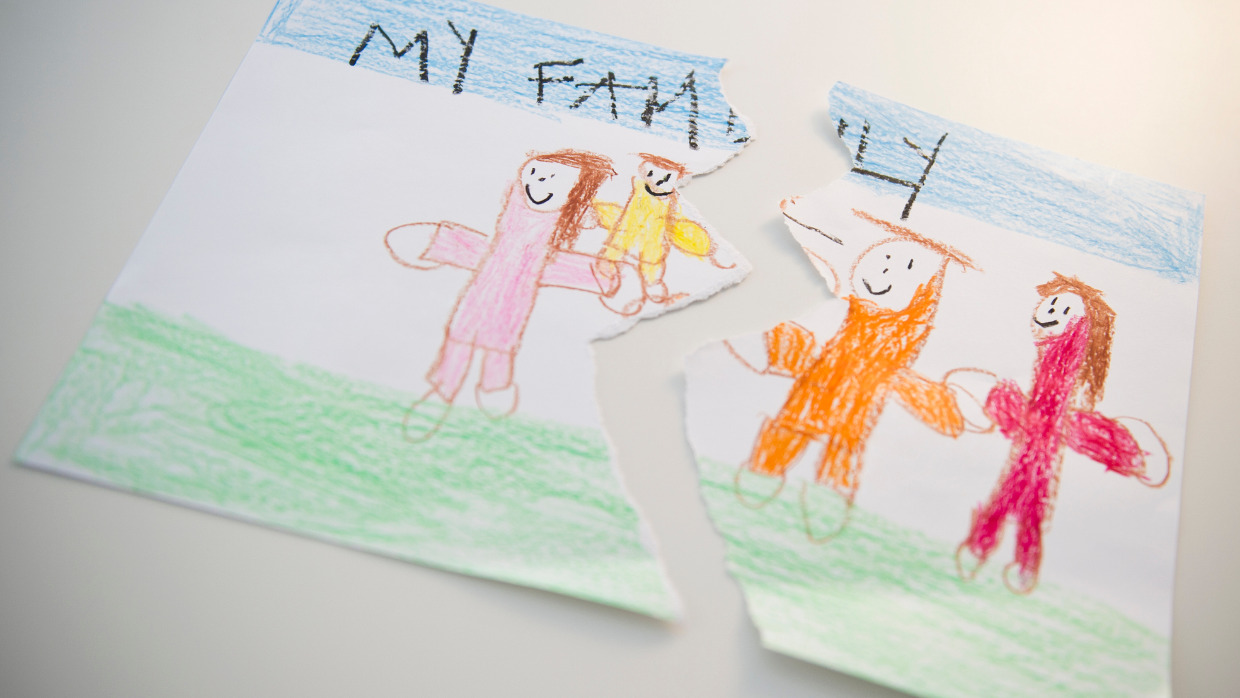
Cutting off ties is a drastic measure that should only be taken when your well-being is genuinely at risk.
Relationships can be challenging, and even the closest ones can become complicated. Breaking off from significant relationships is a common way of dealing with anxiety within a relationship or family system, especially in American families. More than 65 million Americans suffer from such rifts (Karl Pillemer, 2020).
For instance, imagine you recently had a baby and your in-laws keep giving you advice on how to take care of your child. Feeling overwhelmed by their advice, you start distancing from them, and as you distance yourself, they become more reactive, claiming you are keeping them from their grandchild. Your spouse supports you in the matter, saying their parents always have something to say about what others should do, and before you know it, you are no longer speaking to them, and your child grows up without grandparents.
I often come across scenarios similar to the one described above. When dealing with such matters in a therapeutic setting, I usually look at the bigger picture of the family system to show how cutting off a family member can result in a generational pattern of responding to intense emotions by severing connections with those who trigger them.
If your family has a history of cutting off contact due to stressful circumstances or issues such as financial strain, divorce, religion, or politics, your immediate response when upset with someone might be to cut them out of your life. In such cases, I would most likely find a history of cutoff on both sides of the family with members distancing themselves and cutting off instead of communicating and resolving underlying issues.
Unfortunately, few people understand the significant cost of cutting off a family member. While it may relieve tension in the short term, over time, it can lead to more anxiety and emotional intensity in other relationships. Cutting off contact with your family can place more pressure on your spouse to fulfill all your emotional needs, which can strain the marriage. This explains why many people who seek therapy for relationship issues, anxiety, or depression have a history of family cutoff.
The process of cutoff can take various forms within families. It's not just about not speaking to each other; it's a gradual disconnection. It involves minimizing emotional contact by physically distancing oneself from the family, rarely visiting home, or staying in touch but avoiding sensitive topics.
It's important to remember that we need other people in our lives, and family is a crucial part of our development. Although cutting people off may seem like the easiest solution, it may prevent us from developing emotional maturity and improving our relationships with others. Studies have shown that maintaining contact with family members can lead to reduced stress, depression, and increased self-confidence. Additionally, children tend to perform better in school, and people may live longer when maintaining a strong connection with family members.
Rather than cutting ties, working on improving challenging relationships can help us develop emotional flexibility and awareness of our contribution to relationship problems. If you do decide to cut ties, it's important to understand what fueled the decision and to identify which family members you can still remain connected to.
I recently had a conversation with Rabbi Aryeh Weinstein, a coach, mentor, and teacher, regarding the Jewish perspective on cutting off family ties. During our discussion, we explored the delicate balance between maintaining family relationships and honoring one's parents. Rabbi Weinstein highlighted the significance of the fifth commandment, which instructs individuals to honor their father and mother. This commandment holds great spiritual importance as it is situated at the center of the Ten Commandments. It is flanked by five commandments that govern relations between man and God on the right side, and interpersonal interactions on the left. The value of honoring our parents is expressed in the fact that there are three partners involved in creating a child – a father, a mother, and God. Because our parents gave us life, we must honor and respect them.
In Judaism, respecting your parents is a prime value and obligation. Even if you have to set boundaries for the sake of your well-being, it's important to show respect.
True respect goes beyond mere affection and requires creating space for parents and demonstrating reverence through actions and attitudes. In Judaism, love is more than just an emotional attachment, it involves actively engaging with others. Conversely, fear and respect are intertwined, and respect often manifests as stepping back in awe or acknowledging another's position or authority.
Rabbi Weinstein emphasized the complex dynamics of loving and respecting parents, underscoring that while love may not always be a given, respect, manifested through creating space and maintaining boundaries, is essential in honoring them. Love makes us more vulnerable to the person we relate to because love is an act of embracing. Respect is far less vulnerable as it is stepping away and making room for another to be. This is why loving a parent may be difficult, but we can always respect them. Lastly, Rabbi Weinstein highlighted Judaism's profound emphasis on peace as a foundational value, emphasizing the importance of striving for harmony despite disagreements.
According to Rabbi Weinstein, everything happens for a reason, and if someone wrongs you, it is your responsibility to seek justice, as well as forgiveness. However, how you deal with the situation is ultimately between you and God.
Rabbi Weinstein advocated for open communication, boundary-setting, and a commitment to maintaining relationships with parents and family, even in challenging circumstances. By embracing balance, forgiveness, and a spirit of understanding, individuals can navigate the complexities of familial relationships with grace and resilience. In cases of physical, mental, or sexual abuse by a parent or family member, an individual's peace and safety must take precedence. Seeking guidance from professionals becomes imperative in such cases.
Relationships can be difficult, especially with family members who don't always agree with each other. However, challenging relationships can be an opportunity for personal growth and development. If you choose not to sever ties with your family, you can work on yourself and address any issues in the relationship.
References












I disagree with MOST of what was said, in this article. I'm not going to break it all down, but, for sanity's sake, the reverse of what was stated, I believe true. One has a primary obligation to one's own health and sanity. When boundaries and communication, (or respect), is not given, the BEST option is to walk away, and work on personal development.
She stated: "While it may relieve tension in the short term, over time, it can lead to more anxiety and emotional intensity in other relationships." True, but only until one grows, matures and gains understanding of things which created the rift, in the first place.
For me, the longer I stayed away (though it was painful), the better my life became. I look back with pride, in having had the ability to make the RIGHT decision.
Interesting and such a relevant article. You've inspired me to engage and challenge my parents instead of simply distancing myself from them.
Thank you for your comment. I am glad it inspired a change in your response to them.
My daughter has stopped talking to me, and I don't know why; I have asked for silence. I have written letters and been silent. This has been going on for 4 years. It has broken my heart and has sent me into therapy to try to live with this horrible situation. There is no way to solve it if one of the people refuses to have any contact with the other.
It's truly heartbreaking, especially when the reasons behind the cutoff are unclear. Various factors such as a family history of cutoffs, mental illness, or controlling relationships can contribute to this decision. I'm relieved to hear that you're seeking support from a professional. Being cut off from a child is an incredibly challenging experience.
If you don't know the why, and the other refuses to communicate (which I believe you meant to say), there is nothing more which can be done.
A relationship is a two way street.
I, myself have asked for clarity from my parent concerning destructive behaviors.
I came to the conclusion, for my own piece of mind, that without explanation, or acceptance of personal responsibility, I would rather not have the relationship. Sorry for your loss, but without reciprocation, there never was a relationship, to begin with.
It all sounds logical; but, if one family member insists to break a commandment and repeatedly towards another family member, breaking ties is the best option.
If children refuse to honor parents is a perfect example.
If you allow it to continue, you share their guilt.
Another example is a husband, or wife who are chronic adulterers.
Or, parents or children who commit incest.
The list could go on.
There are instances when breaking ties is both sensible for the preservation of a person's intellsctual and spiritual well being, and it is righteous to do so, and wrong not to.
It's important to approach each case individually, allowing individuals to determine what is best for their mental, emotional, spiritual, and physical well-being. In my therapy practice, I often witness individuals choosing to cut off family ties over minor issues. However, in cases of serious situations or abuse, cutting off may be a necessary step for safety and well-being.
So when the asking forgiveness is met with refusal to forgive, and the skill to communicate is missing, or the family sibling appears to support the spouse’s decision to NOT communicate…what then?
Things happen for a reason….
When forgiveness is difficult and there is a lack of communication skills, it's important to focus on understanding each family member's perspective and improving your response to them. Encouraging empathy, active listening, and seeking professional guidance can help navigate these challenging dynamics. Addressing underlying issues openly and respectfully is key to fostering healthy relationships within the family. If family members are not willing to do so, seeking guidance can help you approach the situation in a new way.