







 The FlyDubai Miracle




6 min read
6 min read
11 min read
4 min read





When my brother said we were imposters and vanished into schizophrenia’s grip, I faced the Torah’s haunting question: Am I my brother’s keeper—if he no longer believes we’re brothers?
I wrestle with the Torah's question, "Am I my brother's keeper?" My brother is severely mentally ill, believes that I am an imposter, and swears we were never family. He lives in a paranoid schizophrenic delusion and I have no way to contact him or know if he's safe, wherever he is, whoever he has become.
Losing my brother to mental illness was practically unbearable, especially because I still wanted to be his keeper.
When I was 13, I had a very bad day. It happened when my mother and I were dropping my brother off at his college apartment. My brother was about to exit the car when he said he needed to come clean about something.
At first, he was quiet, shaking. Tears rolled down his face and choked him up. Then came his explosion.
My brother was screaming at my mother and me, and for the first time in my life I feared him. I knew this day would change everything between us.
What I remember most was the world-crushing sound violently panging off every surface of the car interior: he was pounding his fists into the cabin, and I worried it would crack.
My brother was screaming at my mother and me, and for the first time in my life I feared him. His eyes were red and I knew this day would change everything between us.
He was begging us with utmost desperation to admit we were never family. We were imposters.
It didn’t make sense. It was impossible. But with tears rolling down his eyes, all we wanted was to make him stop. He said he was switched at birth and he needed to find his real family.
Then he told us about his suicide attempts. The multiple car crashes were some of his attempts.
If I was my brother’s keeper, how did I miss his pain?
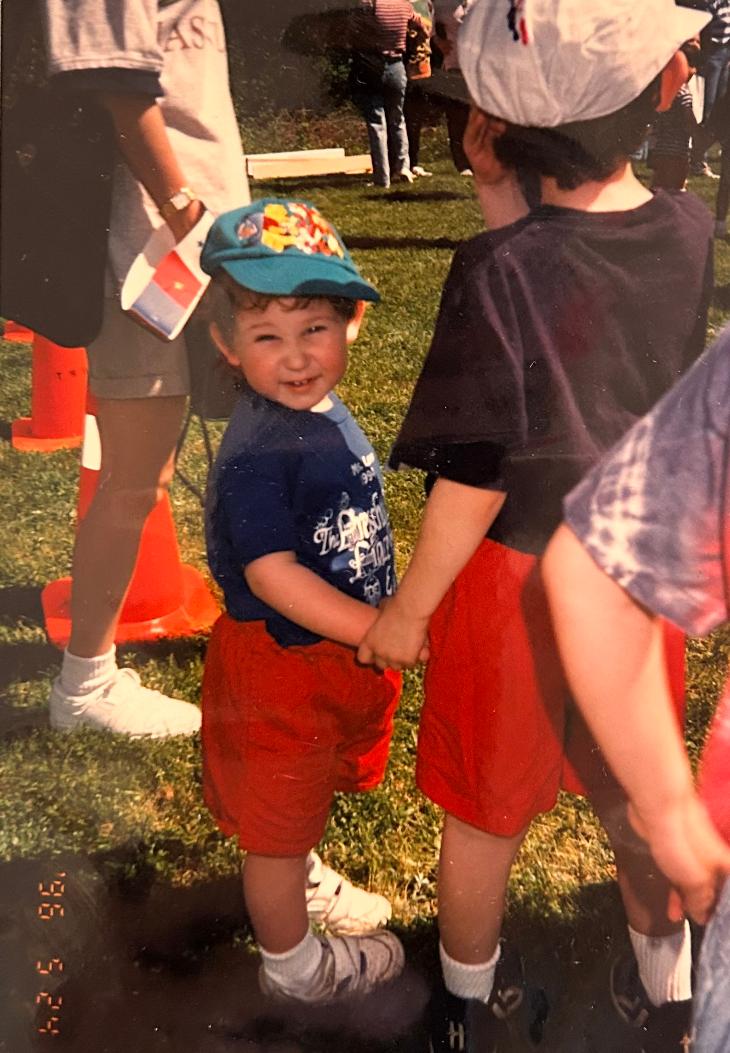 My brother at seven and me at three
I was reluctant to admit it to myself, but that was the day I understood my brother was mentally ill.
Exhausted from his outburst, he exited the car and he did not look back.
Nearly 20 years later, I still have trouble thinking about him. I wanted to be his keeper, but he pushed me away.
My mother called the police and within the hour my brother was placed in a 72-hour hold at a psychiatric facility. Doctors prodded him about his next of kin; my brother told staff that my mother and father were all imposters. He was diagnosed with paranoid delusional schizophrenia.
Despite my parents' wishes, the doctors determined my brother wasn’t a threat to himself or others and he could go free, even after we told them about his suicide attempts.
My parents sought help and even arranged for medication, but he never took them.
That was the last time he interacted with the mental health care system. He was legally an adult and cleaned his hands of doctors, pills, and family.
My parents begged for him to come home. He refused and went back to his college apartment, only to drop out of school shortly thereafter.
The last time he let me visit, I asked what happened to his bed. It was a miracle he let me come see him at all, because from his point of view we weren’t even related.
I stood over his bed, if you can call it that. He slept on a dirty mattress on the floor. Next to it, the mattress laid beside broken glass and garbage.
I also asked him what happened to his laptop my parents gifted him just one year ago. He needed the money, he said. He also maxed out my parents’ credit card and withdrew the lion-share of their funds. For what, I do not know to this day.
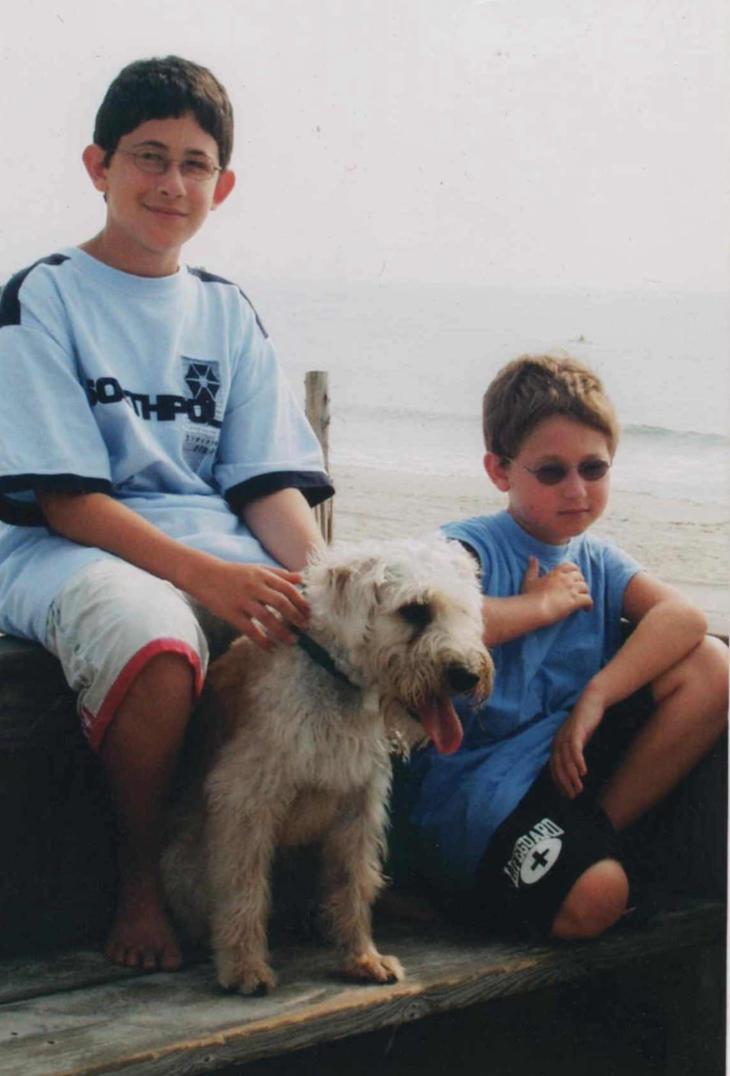 In secret from my parents, I gave him all the cash I had saved from Birthdays and my Bar Mitzvah. I still wanted to be my brother’s keeper
My family periodically texted him and would get a response once a week. But then the weeks turned into months, and the months turned into years.
When I graduated from high school, I looked in the bleachers for him, but he was nowhere to be seen. I couldn’t help but blame myself for his absence. For the first time I thought if only I lied to him and believed in his delusions, he might have come home.
The last time I heard from him was over the phone in 2014. I tried to tell him about our parents and how much we all missed him. I asked him to remember me, to remember me as his brother again, but he cut me off; he told me he was never my brother. After a pause, he admitted perhaps we could be friends. Making the toughest call of my life, I insisted that he was my brother—and if he ever remembers that, I’ll be there and ready to welcome him back.
After that call, he disappeared. He got rid of his phone and went off the grid.
The mental health system failed him and without its support, I failed him.
If my brother was diagnosed before he was 18, I might still be his keeper. But the laws in place did not help my family. When the mental health care system let him go, he fell off the map like so many other individuals with mental illnesses.
The next time you think about a person screaming outside on the street, picture their families and ask yourself what it means to be your brother’s keeper. The mental health care system needs to change, so other loved ones can hold onto their brothers.
I tried to hold on. I’m grateful that he let us hold on for so long. Now without his phone as a lifeline, we just try to find closure.
My brother grew up collecting vintage basketball cards and listening to Motown music. I remember him every day and choose to hold onto the memory of his big heart, his many gifts to me, and the priceless moments we shared together.
Wherever he is, whoever he is, I pray that he finds peace.














Thank you for writing this. So heartfelt. It really helped me.
I felt bad for a high school friend with a schizophrenic brother. In college my roommate’s schizophrenic cousin was more heartbreaking. Later, my co-worker’s screaming outside his house seemed more than weird. My Dad’s half cousin was institutionalized after a bad divorce. I found out a few years ago most people don’t know this many mentally ill people because mental illness like this isn’t common. Apparently it’s not rare but it’s very sad. I don’t think a friend was anything other than severely depressed and alone when she attempted suicide. I can’t find help to talk about my sadness that’s holding me back. ( didn’t know my friend was depressed, she definitely had some issues but…) I’m sensitive and have high morals, didn’t appreciate that two therapists didn’t want to listen just talk.
I work with many patients who have schizophrenia. Thankfully there are long acting medications that can help get people stable. There are also homeless outreach teams and crisis organizations. Hoping for peace and health for you and your family.
My sister in law is schizophrenic. It was mostly under control until 2 years ago. A lot of her care falls on my wife - the sister calls her app. 20 times a day and other friends and family too. I'm very proud of my wife - my kids know about my wifes efforts and is has made them kinder people too. Mental illness is a national crisis.
Oh my, what a tragedy. I have 2 sons with autism, thank G-d they recognize the family. G-d saved. May G-d keep all those who has such problems. My love goes to the family and the sufferer.
The U.S. needs sensible, decent paternalistic laws, such as for involuntary psychiatric commitment. We also need top quality care, whether residential or out-patient. Less-than-optimal care is more costly--in the broad sense--than top-quality care will ever be.
Your brother is my ex- husband’s story almost exactly. We got divorced and he took off . My children desperately want to find him and get him in a facility bit he refuses any sort of help and has cut off ties with everyone he knows. May Gd protect him and all the other mentally ill people out there.
A sad essay indeed. Mental illness is a nightmare. It seems to me that the writer - the younger brother - did everything and anything to be ‘there’ for his brother, as the parents did as well. The mental health professionals do their best too, I am certain.
When I was 12 years old, my brother was diagnosed with schizophrenia at 17.
My brother had violent and paranoid outbursts up to that point. I called the police on him when he was physically harming my dad. He was straightjacketed and taken to a mental facility. When he came out, he was diagnosed and had medication.
Even though he lived at home, taken care of, he refused to take medication, he became a hoarder, continued violent outbursts, attempted suicide multiple times, did drugs, was unable to hold a job, drive a car without crashing it, etc. And we had to live knowing nothing we could do would change it.
You can love your brother, but you cannot be schizophrenia's keeper.
Wishing you all peace.
Thank you so very much….we are his Mother and Father and pray for his safety daily.
He did have years of therapy , but it was not until after his 18 birthday that the therapists and psychologist actually listened to us
Mr. Finley-Conlon: Thank you for sharing your heartfelt thoughts about your brother. I pray that he is returned safely to your family. I am touched by everything that you did to try to help him.
To the others on this thread who glibly suggest that institutionalization is the solution to severe mental health issues, I offer the following: Please read some of the heartbreaking stories contained in the U.S. Department of Justice reports and litigation related to the institutionalization of people with intellectual disabilities and mental health diagnoses. There is a recent report from Missouri, and there are some recent federal court decisions from the District of Columbia, Florida, Texas, and Mississippi.
(Continued Part 2) These documents tell of the desperation of institutionalized persons, as well as their happiness when they are moved to less restrictive settings.
I’m not proposing any glib or simple solutions. I once had a colleague, a (Jewish) psychiatrist, describe how she treated a person with schizophrenia. She only found a medication that worked after constructing a spreadsheet detailing the patient’s response to over a dozen medications. Continuing this line of reasoning, it may be possible, after much trial and error, to find a medication that works for a particular person with schizophrenia. If that medication is available in depot form, then there will be a way to minimize challenges related to compliance.
(Continued Part 3) The person with schizophrenia may be able to move to a less restrictive environment.
The issue of institutionalization is deeply personal to me. In 2018, I was diagnosed with Parkinson’s disease. In the course of my research into planning for incapacity, I encountered numerous patronizing statements by currently-abled persons who seemed to believe that people enjoyed being institutionalized in nursing homes. One Arizona probate judge wrote that it was a myth that “professional fiduciaries . . . deny wards access to TV,” as if the ability to watch TV were a privilege. A manual circulated by an Ohio probate court cautioned court-appointed guardians to ensure that wards have “privacy” by verifying that there is a curtain separating nursing home beds.
(Continued Part 4) I recently got into a social media debate with a semi-literate professional guardian who bragged about the fun activities at an assisted living facility. Her idea of a fun activity? Placing a shower cap on an elderly person’s head, covering the cap with shaving cream, and having other assisted living residents throw cheese puffs at the person. She couldn’t grasp my use of the phrase “infantilizing and degrading.”
The crisis in mental health care and the related issue of unnecessary institutionalization can only be resolved by co-operation between families, healthcare professionals, lawyers, and legislators. Most importantly, the people at risk of institutionalization need to be heard.
(Continued Part 5) While researching the probable Frankist history of my Catholic family, I came across this aphorism that should be familiar to many of you: “It is not up to you to finish the task, but you are not free to avoid it.” Let’s get on to the task at hand.
I apologize for misspelling Mr. Finney-Conlon’s name. I didn’t realize that my computer’s auto-correct had changed it, and this website won’t let me edit.
Thank you for your thoughtful message, Dr Dvorak. I will try my best to keep advocating for family and community inclusive care. I agree- conservatorship is not always a best choice, as is institutionalization. We need more options for care and new ways to integrate family and social support systems into the care process
Thank you for your message of support. You obviously have more on your plate than I do, and I appreciate the time you took to craft a reply. I have always admired the problem-solving abilities of the Jewish people, and I hope that my comment provoked thoughts and ideas from other readers of this website.
I feel your pain. But the only thing you can do is pray for him daily. That is often all we can do for the problems of all family members who do not solicit our help.
You have loved well and still do. Keep your prayers up for him. They will give you hope. Help others as though they are the brother you love so much. Lord have mercy
Thank you so very much….we are his Mother and Father and pray for his safety daily.
He did have years of therapy , but it was not until after his 18 birthday that the therapists and psychologist actually listened to us
In the meantime you can learn about schizophrenia from the CUREZ Foundation. Also, NAMI is an organization that gives support to families of those individuals struggling with mental illness and has offices nationwide. תפילה for now for sure too. But G-d gives us resources in not only religious community, but in secular community as well and it is a resource there that G-d puts in place to learn and heal and help.
A lot of commenters here as well as the author have stated that mentally ill people need to “get help”. What help is there? Psychiatry helps in very few cases, if for no other reason than lack of patient compliance. Institutionalizing the mentally ill may help protect them (and others), but it hasn’t worked as a “treatment”.
So far there are no real answers to this terrible problem. Accepting that sad fact is one way to move forward in your own life.
Research of the disease and encouraging early diagnoses. These are things to advocate for that are proactive, and then there are more complex matters such as when it’s appropriate to commit someone. I seek peace and also recognize I can use my story to help others. To remind them they aren’t alone. And to hopefully advocate for the simple and more complex matters. I’m going to try my best.
It is sad that people didn't help your brother does schizophrenia run in families, like in some families people have bi polar mental illness or some families have depression or anxiety, so you never know what other families have, is there groups for people that have someone i your situation, there are groups for other people's different problems and illness, if there is not a group start one, maybe other people have similar situations like you have, it is easier to cope when you see other people are in the same boat as you, you just never know what is going on in other people's lives
First: you were a child at the time of your brother’s first breakdown. A child is never responsible for anyone else’s welfare.
I know that you and your family have tried. A more comprehensive health care system would help.
I will pray for you and your family. I know that thoughts and prayers alone are not reassuring, but that’s all I can offer.
My brother has a mental illness. I am his keeper. Very sad.
You are your brother's keeper. You keep him in your prayers and memories despite the pain you don't forget about him, you hope and more importantly keep a light on and door open incase he ever pops up or the authorities G-D willing have him and he hasn't hurt himself or anyone. You did everything you possibly could along with your parents.
Still you have a responsibility to be strong for yourself and your family you cannot exhaust everything on him as he's incapable of reciprocating due to his illness. You writing this piece shows you are still keeping him in your heart, as well as reminding all of us what our priorities should be.
The psychiatric hospital system needs to be enhanced to be able to hold individuals such as your brother for their welfare.
Thank you, deeply.
Necole - in the STILL CURRENT Written Torah Testament (3350 years) & Prophets -- that G-D gave FOREVER - to the Israelite nation. G-D said - "I alone am HE - there is NO OTHER G-D but ME" - in several places. It is G-D the FATHER - who allows & even leads a human NON-deity - to perform miracles on His behalf - using the same fasting & prayer(s) that He expects from Jews - when seeking to remove evil spirits from our lives. He - G-D the FATHER alone - should be given the credit.
When I was two years old I had a high fever that gave me permanent brain damage which resulted in severe OCD. Medicine to treat that was not yet invented. When I was in my 20's Prozac came out and in my early 30's I was able to take the medicine and it has worked for me. One of my children was born with autism, technically a developmental disability, but still a very serious problem to try to overcome. We have both gotten help with the advances in both medicine and behavioral treatment but there is still so much more to do, and we need to continue to fund the research on these issues so we can help those who are affected.
There may be an answer - especially if - it hasn't already been tried. Fasting & prayer - asking G-D - to break the evil bond - that has enveloped your family member. There are also groups to contact - that will take up the challenge to pray specifically - for your family member. I will also include them in the daily prayers. And - ask G-D - to bring immediate resolution & peace to your family.
Fasting and prayer is not enough. Medical science has made some great advances in recent years and one should also get the advise of Medical experts if you have a serious mental illness.
Elena - don't be so quick - to discount fasting & prayer alone.
There are a humongous amount of stories - where spiritual fasting & prayer have succeeded alone. While the medical/mental community have just sat back & MARVELED. I - know from personal experience - when my wife was given a miracle & brought back to life - by G-D ALONE. Does G-D direct medical/mental professionals - the wisdom to - help - bring lives back to normal - YES!
I’m so happy in America. We are starting to hopefully reopen this mental health facilities for people. Also, can you believe they are even saying that A Leto diet can cure schizophrenia so the whole government has been against us with the food system for many years but now the truth is coming out. Our government has been too damn secular to acknowledge the spiritual caused behind mental health illness.
Imagine how much we have failed them by just feeding the wrong food even without medication. I’m so happy we’re coming upon this new time where the truth is being revealed.
I have serious neuro-metabolic problems. This effected behavior but was also physiologically agonizing. I broke from the mental health system at age 14. In attempting to survive in the aftermath of the damage done by psychiatric "medication" my life has been hampered by the over emphasis on "mental illness". Psychiatry should lose power, not be given more.
As a person who worked in a psychiatric hospital, I know how terrible and difficult it is to treat people with mental illness. To the author of this piece, none of what happened is your fault. Dealing with people who refuse help is almost impossible. It was my experience that the system cannot help people who don't have family support. Unfortunately, the family eventually breaks down. Without a good system of care and strong family support there is virtually nothing we can do to help people with serious mental illness.
We need to bring back involuntary commitment. Freedom to be insane, addicted and homeless is not compassion for our fellow man. It’s a death sentence upon them and more cruel than any mental institution could possibly be. A schizophrenic relative of mine was committed back in the 1930’s and I shudder to think what would have happened to him if he was left to deal with his insanity by himself. He lived in the institution his entire life and was able to have a relationship with his family, he was treated humanely and most importantly, was not left to die on the street in a ditch. His mother visited him every weekend and even though it was a hardship for her to see him locked up, she knew that he was safe, warm and fed. We need to do better for these troubled souls.
Re: inmolumtary committ,ent. Not all institutions are created equal. Let's make sure said institions are more tham warejouses for the mentally ill.
sorry about the irritatimg typos! i am currentlt dealing w/ a broken arm
My my mom’s sister had schizophrenia. She was diagnosed as a young teenager in the 1960s. She was institutionalized for many years and my mom was her keeper. Eventually she was able to live in a half way home. She passed in 2011 from cancer from being a smoker for many years.
I am so sorry about the pain and the failure of the system to help your brother.
May GOD give all of you…your parents, your brother, and you…peace and full healing. Such a heartbreaking story.
Sorry he did not take medication..i have similar but takes medication and is stable..sorry to hear...bad doctors that let him out
You are a brave person. Schizophrenia is a difficult reality to live with and the medications available are so important to regulate brain function. Stay with it! I know they all have side effects, but the benefits outweigh the risk.
Dvora, I’m so glad you are stable. I’m praying for your continued health.
Thank you for sharing. The system is fallible and disappointing. We expect help but laws get in the way. In the end it's his choice. I'm sorry for your loss.
This article overlooks the value of of freedom, individual and societal.
No it does not. read it again.
This is painful to read. My brother has mental/emotional issues, not as challenging as what this article describes. He mistreated his three siblings to the point where none of them are in touch anymore. Every so often, when he has a surgery and needs a ride home, he will contact one sister-in-law for help, otherwise nothing. It’s sad to lose a brother, and it’s also sad and painful to endure frequent/constant heartache. Each of us concluded that helping him is impossible and we need to focus on our spouses and children, plus family and friends, school and work.
As the secular prayer says: God grant me the strength to change what I can, the patience to accept what I cannot change, and the wisdom to know the difference.
So sad to hear. I know the pain. I can relate to the story. My heart goes out to you and your family.
My son is or was (not sure exactly where he is right now) in a state mental hospital having medication forced to bring him competent to stand trial for murdering his father. He accused us of being evil psychopaths and even being robots.
He previously served three years in federal prisons (transferred more than ten times) all in the name of bringing him to competency to face charges of making threatening phone calls. It’s a long story and I cannot imagine the horrors he went through during those three years.
I hope your brother finds peace and you as well.
Wow that is so so hard. Wishing you strength and much success.
I pray that you also find peace.
In sharing you are still your brother’s keeper and also helping so many others who struggle.
Amen
This article might (hopefully) help someone-
Wishing you and your family peace and the strength you need having a seriously ill family member. May HaShem watch over all of you and may you be confident knowing that you did all you could do for him. Mental illness is so devastating to a family and to the tragically ill person.
Amen, and it is very sad to hear cases like this, and why doesn't people come up with a plan to do something about this tragedy