




 Why Were the Graves of So Many Jewish GIs Marked by a Cross?

4 min read
5 min read
4 min read
4 min read



6 min read


Marking Rabbi Jonathan Sacks’ yahrzeit—a tribute to a soul whose thirst for God and authenticity uplifted generations.
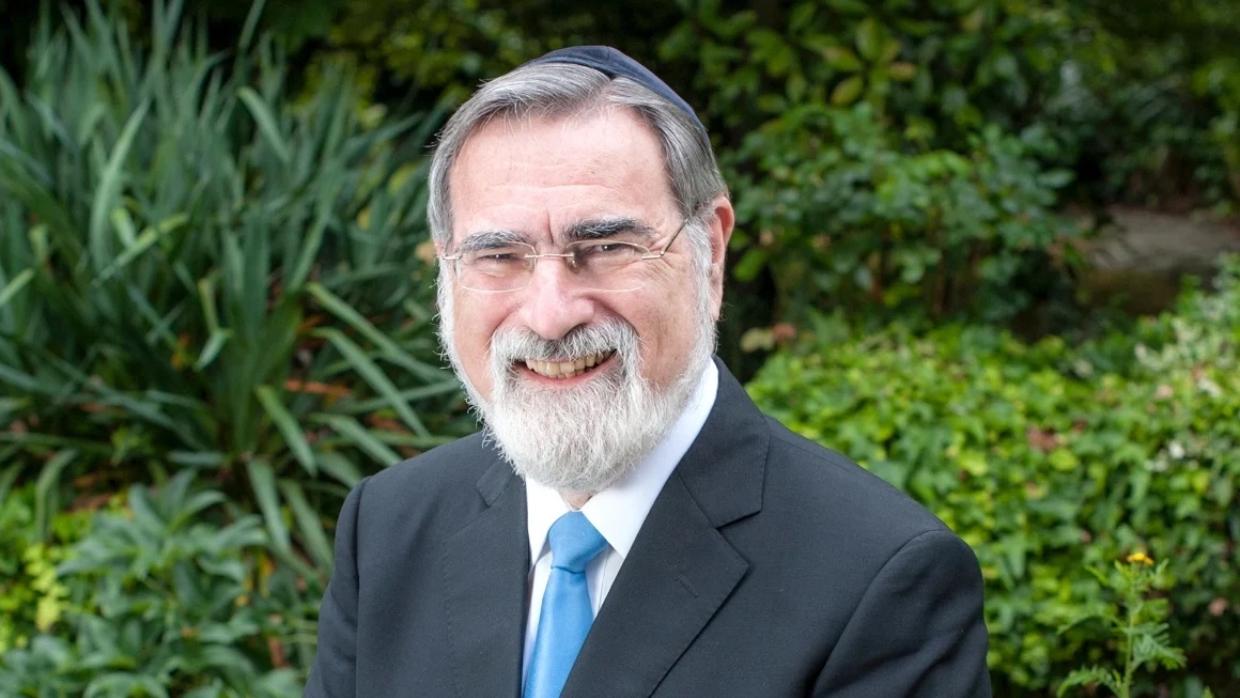
This Tuesday, November 11th (20th of Marcheshvan), is the fifth yahrzeit of Chief Rabbi Lord Jonathan Sacks.
When I was a confused 19-year-old, I opened one of his books and was struck by the beauty of his prose and his ability to speak the language of faith in words that resonated with me.
In a world where we often feel we are drowning in information, Rabbi Sacks’ elegant pen has the power to pierce through the haze and reach people’s hearts.
In my experience, when I delved deeper into the lives of captivating speakers, I often discovered that although they had the gift of speech, their inner world was lacking. They were an empty shell. Their ideas were communicated beautifully but it was merely the packaging with little inside.
When it came to Rabbi Sacks, the more I dug into who he was, the more I discovered that beneath his gift of communication was a beautiful and noble soul—a person who, at his core, was searching for God and for meaning. I trusted him because I knew his heart and his inner world were authentic and holy.
When he first became Chief Rabbi of the United Hebrew Congregations of the Commonwealth in the United Kingdom in 1991, he said in an interview that the Lubavitcher song, “Tzamah Lecha Nafshi – My Soul Thirsts For You” was one of the songs he would bring with him to a desert island. He added that he hoped one day that phrase would serve as his epitaph—that his soul thirsted for God. And in fact, it is.
Rabbi Sacks was a soul thirsting and searching for God.
I believe this was what made Rabbi Sacks so remarkable and what people deeply connected with. At his core, he was a soul thirsting and searching for God.
Rabbi Sacks began his journey as a searching university student. He had questions, and he traveled to the United States to meet the greatest rabbis and ask them his questions. In one of the last interviews he ever held, Rabbi Sacks reflected on trip to the United States. He shared with Tim Ferriss the story of how a meeting with the Lubavitcher Rebbe changed his life forever.
In 1968, at the end of my second year at university, when I was 20 years old, I thought to myself: I don’t know much about Judaism or about religion—but I do know there are many distinguished rabbis. So that summer, I decided to take a plane to the United States and buy a Greyhound bus ticket—one of those $100 unlimited travel passes they used to sell—and travel across America meeting rabbis.
I met many wonderful rabbis, but the extraordinary thing was that almost all of them mentioned a name I hadn’t heard before: Rabbi Menachem Mendel Schneerson, the Lubavitcher Rebbe. They all told me, “You must meet him—he is the great leader of our time.”
So I tried to find out where he was. His center was at 770 Eastern Parkway in Brooklyn. I went there and told the first person I met, “I’ve come 3,000 miles to meet the Lubavitcher Rebbe. Could I please have an appointment?”
He laughed and said, “Do you know how many tens of thousands of people are waiting to meet him? Come back next year—or maybe in ten years—and forget it.”
I said, “Look, I’m traveling around the country on this Greyhound bus. I don’t know where I’ll be when, but I do know that I’ll be in Los Angeles visiting my aunt. Here’s her phone number—if the Rebbe can see me, please call.”
Weeks later, while staying with my aunt in Beverly Hills, the phone rang on Sunday night. It was someone from Brooklyn: “The Rebbe can see you on Thursday night.”
I had to go. The only problem was that I had no money—I was a student. The only way to get from Beverly Hills to Brooklyn was a 72-hour bus ride. And that’s exactly what I did. I don’t recommend it to anyone, but I did it—three days on the bus to meet the Rebbe.
I was 20 years old, and here was a man with hundreds of thousands of followers. We sat together for about twenty-five minutes, and it was a life-changing experience. Interestingly, he didn’t let me ask him questions—he asked me questions. It was as if he were interviewing me.
He said, “How many Jewish students are there at Cambridge University?”
I said, “I don’t know—around a thousand.”
He asked, “And how many are involved in Jewish life?”
I said, “About a hundred.”
He said, “You mean ninety percent are completely disengaged?”
“Yes,” I replied.
He looked at me and said, “So what are you doing about it?”
I began, very Englishly, “In the situation in which I find myself…”—which really meant, “Please ask me something else.” But the Rebbe, though always polite, interrupted me mid-sentence and said, “You do not find yourself in a situation—you put yourself in a situation. And therefore, you can put yourself in a different situation.”
That moment was absolutely mind-blowing. There were hundreds of people outside waiting to see him, and yet here was this great man telling me—a twenty-year-old student—to become a leader, which was the last thing I ever wanted to be.
Many years later, I realized what had happened. People thought of the Rebbe as a religious leader with thousands of followers—and that was true—but that was the least interesting thing about him. I realized: good leaders create followers; great leaders create leaders. And that’s what he did for me that night. That moment never left me. It changed my entire life—not immediately, but slowly and profoundly.
My life, I often say, was shaped by a handful of people who believed in me more than I believed in myself. I was blessed by their friendship. It’s an extraordinary thing when someone believes you can do something you never thought you could.
That meeting with the Rebbe changed Rabbi Sacks’s life forever. But to get there, he had to ride a bus for three days straight.
There was a fire burning in his soul—a thirst he needed to quench. He was searching for something, and he would not give up until he found it. Eventually, he made his way to study in a Lubavitch Yeshiva where he learned the song, “Tzamah Lecha Nafshi.”
Even five years after his death, I too, feel I am thirsting. Tzamah Lecha Nafshi—I am thirsting for Rabbi Sacks. I know I am not alone. We all deeply yearn for his soul, for his wise and encouraging words we so desperately need in these confusing and difficult times.










Love this
I feel the pain too. The loss of such a great soul that so powerfully and artistically connected us to God by using his pen like an artist that paints beautiful paintings
Such beautiful words. So true. How we miss him!
Wonderful article reminding us of the loss we all had in Rabbi Sack's passing. Thank you Rabbi Lesher
If we yearn for and need his words, I would encourage people to read his books. I am presently reading his book Morality. What a great read. The only problem is there is so much in the book I have to read slowly so as to absorb it.
Very true. Definitely in these troubled times we are thirsting for his wisdom abd wise words