




 The Pitt's Dr. Robby Needs a Jewish Intervention

5 min read
5 min read
7 min read



9 min read


Ten common myths women bring into marriage and how they quietly sabotage intimacy, respect, and connection—plus what to understand instead.
After reading 10 false beliefs men have about marriage, readers have been asking for the female counterpart. These assumptions are common, understandable—but often quietly damaging. Identifying them is the first step toward building a healthier, deeper, and more realistic relationship.
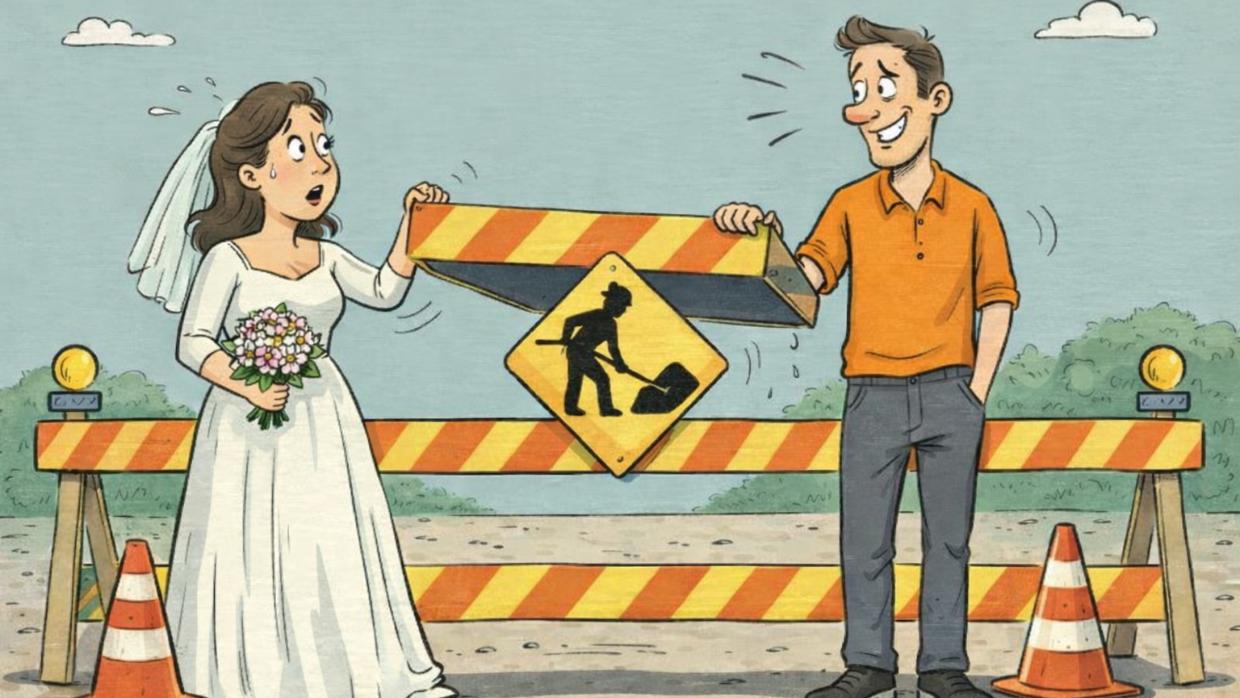
Fact: It is unwise to marry someone on the condition that he will change. Your husband is not your project. While change is possible, you can’t hang your marriage on that hope.
If your minimum standard in a spouse is something that doesn't yet exist, that is a recipe for a disaster. Women fall in love with potential and then become despondent when they can’t actualize it. Any change he makes will have to come from him. The only person you can change is yourself.
Rebbetzin Esther Jungreis famously said that hairlines change, but hearts don’t. A woman must accept the man she is marrying for who he is. Trying to change a spouse often makes them feel controlled and loved conditionally, which doesn’t feel like love at all.
Marriage deepens traits—it rarely transforms them. Change yourself. Your growth may inspire your spouse to grow as well—or it may not. Either way, your own growth is powerful in and of itself. Any work in marriage done by one partner causes a shift in the dynamic. And you will have grown in the process, and that, in itself, is a win.
Fact: Marriage brings many joyful moments, but living with another human being also brings complexity. Married life can be better in many ways, but it's not a magic wand that will erase all pain. While in some ways being married will make life richer and deeper, a happy marriage requires a great deal of effort and determination on the part of both spouses. There are countless details to negotiate, adjust to, and recalibrate.
Marriage is definitely meaningful and full of joy, but don’t expect it to be a constant, effort-free paradise.
Fact: Marriage tends to augment who you already are. If you are angry, you may at times feel angrier. If you are happy, you will feel happier. If you are lonely, you may still feel lonely—sometimes even more so.
Marriage does not erase the emotional landscape you bring into it. Who you are becomes highlighted in the presence of a partner. The good news is that this can be true even regarding your best qualities.
Additionally, people move through different stages throughout life. A man may experience a midlife crisis; a woman may face menopause or an empty-nest transition. There can be the loss of a family member, major shifts, or unexpected changes. Each of these journeys requires readjustment and recalibration, and it’s common to feel alone in the process, especially when a spouse is at work all day and emotional needs feel unmet.
Fact: Many women think, we will never fight, that’s what happens to everyone else! The reality check is that the chemical high of new love, powered by PEA (Phenyl ethylamine), typically lasts three to six months. When PEA in the brain decreases, a new stage in the relationship begins. I call this The Annoying Fork Phase. I use this term because a student once told me that after she got married, she suddenly couldn’t stand the way her husband held his fork.
This phase also creates a “fork” in the road. A part of you may feel this is the cue to leave and search for someone new who can recreate the relationship of that blissful high. Judaism, however, encourages you to dig deeper and build new layers of connection. If you move through this stage instead of fleeing it, you arrive at something far more meaningful: real, lasting love.
That initial emotional “high” is a divine blessing, but it is also a phase. You’re meant to move beyond infatuation into the deeper work of true unity.
Fact: Love does not equal mind‑reading. Men and women have different perspectives, and often experience and express emotions differently. A strong marriage is built when a woman learns to clearly and respectfully teach her husband how to love her, and when a man is willing to listen, learn, and grow.
Clear and honest communication is essential for the marriage to both survive and thrive. Which is everyone’s goal.
Fact: A man is wired to want to be the center of his wife’s world, even if he is embarrassed to say this. Even when she has legitimate reasons to be busy, he needs to feel and hear: “I can’t wait for this to be over so I can get back to my main priority—which is you.”
Big projects. Big fundraisers. Big volunteering. And slowly, the husband is shunted aside.
There are times you need to learn to say no, to friends, to the community, and sometimes even to your children, so that you can say yes to your spouse.
Wendy Mogel, bestselling author and child therapist, opens The Blessing of a Skinned Knee with a striking confession. She writes: “I was an adulteress.”
Her lover? Sleep.
She describes days filled with carpools, workouts, work, and parenting, leaving her depleted by evening. Though she intended to spend time with her husband, night after night exhaustion won out. Her marriage wasn’t falling apart from conflict, but from neglect.
This resonated deeply with me. I realized I had scheduled everything—work, writing, walks with friends—except time with my husband. By evening, there was nothing left to give. I needed to change my priorities in real time.
A woman is instinctively wired to connect deeply with her children. As the family grows and children become teenagers, her emotional energy can become child-centered and a man can begin to feel sidelined. A woman should be aware of this dynamic. Even while caring for children and managing life, she needs to consciously carve out space in her awareness to place her husband back at the center.
Sometimes, men don’t articulate this need, yet they long to feel strong, chosen, and essential.
Fact: For men, respect is like oxygen.
Men crave respect as much as love, if not more. In one study that sampled 400 males, 74% admitted that they would rather live a life devoid of love over a life without respect.1 Love and respect are intertwined and trying to separate the two is fruitless, however this study brings to light the importance of respect in any relationship.
Kavod, respect, comes from the root kaved—meaning “heaviness” or “weight.” To give kavod is to give weight to your spouse’s words, presence, and essence, and to treat him with genuine respect. (Respect of course, goes both ways. See article about men false beliefs.)
Respect isn't just communicated with words. Body language and facial expressions can display lack of respect. If a woman rolls her eyes at her husband or laughs at his expense it signals: I don’t take you seriously. I don’t see you as honorable. I’m above you.
A relationship will struggle to survive without authentic respect.
Fact: For many men, excessive displays of sentimental romance could make them feel embarrassed and overly vulnerable. Romance may not come naturally, especially for men who weren’t raised in emotionally expressive environments.
Romance is beautiful, but life is not a rom‑com. Expectations must be adjusted and patience must be employed.
In order for a man to initiate romance he needs to feel welcomed. Dr. Steven Snyder, bestselling author states, “Women want to be wanted but men want to be welcomed.”
How she greets him when she sees him can affect the entire day. When she welcomes him home with grace it can literally give him strength.
Truth: Control and connection are polar opposites. Domineering, nagging, or demanding behavior often leads a spouse to withdraw. You may get compliance in the moment, but you lose closeness in the process. When someone feels managed rather than trusted, motivation and intimacy both suffer.
A healthier approach is to openly discuss expectations and agree on a clear division of responsibility. Once something is agreed upon, ask for what you want once—and then allow your spouse the dignity of choosing the when and how.
Letting go of control and believing in your spouse’s capability creates space for initiative. When a person feels trusted rather than monitored, they are far more likely to rise to the challenge.
Fact: Conflict is inevitable and healthy, and there is nothing wrong with a couple disagreeing on an issue. The true measure of a relationship is not whether conflict exists, but how quickly and respectfully you resolve it.
When he tries to resolve it with humor, do you scoff or do you accept the invitation for peace? After resolving an issue do you bring it up again and again? Do you hold onto grudges unwilling to release him or yourself from the tension?
These habits have to go and are the true source of the problem. Conflict isn't the problem, handling it incorrectly is.
Based on varying sources including ideas from Rabbi Aryeh Nivin, a respected teacher of personal growth and wellness coach. He can be reached at https://adamhashalem.com/














Respect and loyalty are two way streets. Both women and men need to feel respected - equally. Both need to feel their spouse's loyalty, in ways big and small. Both need to feel that they are the center of their spouse's lives. How do we develop these behaviors? By inculcating our children with a healthy emotionally intelligent education at home and in school.
I think respect is the single most important factor in every relationship. That’s as true of women as men. Parents need to respect their children as they reach new stages of development. My dog knows I love her because I respect her needs to go out, to be fed, to play and to rest.
Your dog knows nothing; it has no consciousness.
YES! now we men can feel vindicated and not feel guilty about your first article (that was Myth #11 ;-)! Thanks for your thoughtful and well-written articles; I enjoyed reading them. We are married over fifty years and can relate to many of your points. I often tell young people (including my married kids and grandkids) "Don't make catastrophes out of trivialities" and "Never argue when you're angry" ... wait a bit until things have calmed down and then suggest a discussion. Also, stay far away from sore points; picking at them is a recipe for disaster which you can actually see with couples in trouble. We've had rough times amongst the great times. We can disagree strongly; by the next day, we've apologized for wayward words and have moved on, always close. We are still very much in love.
as a man married for over 30 years, I give this article a full stamp of approval.
It really is on target.
I understand it is likely not easy to implement. The "10 false beliefs for men" article certainly isn't, for me.
I'm just saying that the advice is spot on, so it is worth pursuing.