 The Jewish Architects of Opera






8 min read


They called her “white blond Jew.” She took the words meant to silence her and made them the title of her book.
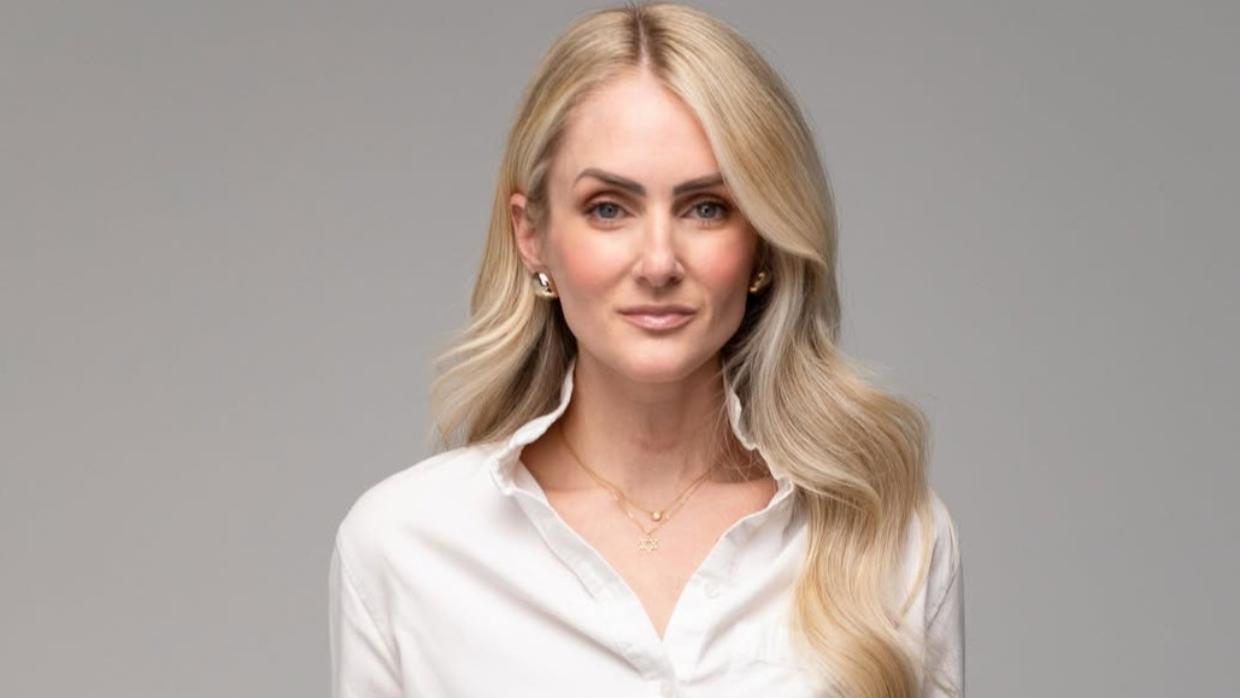
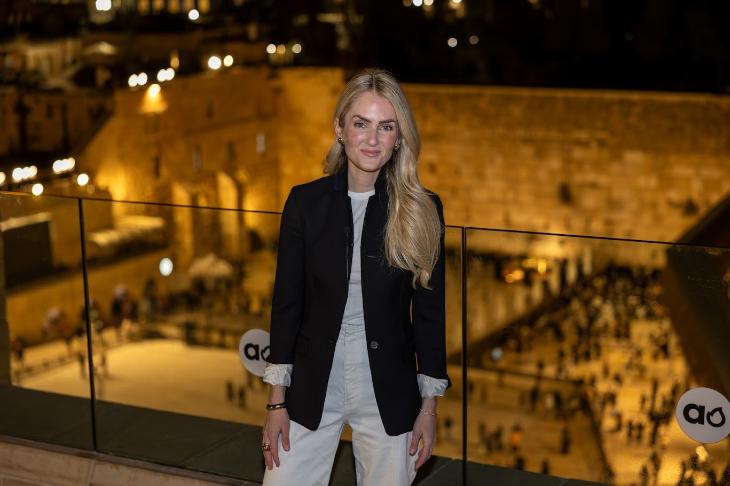
You probably know Alyssa Rosenheck’s work before you know her name. Her photographs have run in Vogue, Elle, and Architectural Digest. She built an empire documenting the beauty of American interiors, the spaces where people live, dream, and show the world who they are.
She started a movement with her groundbreaking book The New Southern, the first inclusive design coffee table book in the industry, a project she describes as being about "humanizing our differences through creativity." She played Division I tennis on a full scholarship, worked her way through corporate America at IBM and in medical device sales, and at 31, survived thyroid cancer.
And then, when she started speaking publicly in defense of Israel — in 2021, and again after October 7 — the industry turned on her. Publishers dropped her. Platforms uninvited her. The people who had celebrated her work started calling her names.
They meant it as a takedown. Alyssa is making it the title of her next book.
Growing up Jewish in Tulsa, Oklahoma, is its own education. Alyssa's father came from a big Jewish family in the Catskills. Her mother, Italian Catholic from Teaneck, New Jersey, converted before having children, a conversion that put her grandmother in the hospital with shock.
Their marriage, their family, their life in the South were all acts of courage.
Alyssa learned that early. She was four years old when her mother took her to the Jewish Community Center pool on what should have been a warm, ordinary summer day. Without warning, her mother grabbed her out of the water, rushed her to the restroom, and used her own body as a shield. There was a sniper on the rooftop of a hotel across the street, threatening to shoot the women and children in the pool.
"I was a baby," Alyssa says quietly.
She doesn't tell that story for shock value. She tells it because it's the foundation of everything, the beginning of understanding that being Jewish in America, even in the heartland, even in peacetime, comes with a target on your back. And that how you respond to that target is everything.
Her mother's response that day taught her something she has carried ever since: courage gets passed down. You don't run from who you are. You run toward it.
After six years in medical device sales, Alyssa was diagnosed with thyroid cancer. She was 32. Highly survivable, yes, but there was a moment when doctors thought it might have spread to her lungs, a moment that connected her to her own mortality in a way nothing else had.
"Cancer gave me so much more than it took away," she says.
It was during that healing season that she picked up a camera. Photography became prayer, catharsis, a way to go inward when the corporate world had trained her only to go forward. She had been, by her own description, "a little machine" — Type A, structured, controlling. Cancer cracked her open.
From that crack came everything: the photographs, the books, the platform, the voice.
Creativity became her community. "When we're creative, we build. We move forward. We're courageous," she says. "That's our birthright."
Alyssa had her first public wake-up call in 2021, when Israel was bombarded with over 3,000 rockets and she watched her industry conflate geopolitical reality with race, amplifying narratives that had nothing to do with the truth on the ground. She started connecting dots — BDS, the erosion of legacy media credibility, the weaponization of social justice language against Jews. She started speaking out.
And she paid for it. Before she even understood why she was being silenced, she was being erased from events and opportunities because she was, as she puts it, "too white, too blond, too Jewish."
Then came October 7.
"I knew immediately what the media was going to do," she says. "Because I'd seen what they did in 2021."
She was right. And she kept speaking anyway.
She lost a significant book deal in the first wave of literary boycotts against Jewish authors.
She came to Israel shortly after the attacks as part of a small private delegation. Twenty meetings in four and a half days. She ended the trip on the rooftop of the Hostage Forum, overlooking Tel Aviv, and made a promise out loud: if she had the opportunity to write another book, she would devote it to this fight.
That book is White Blond Jew.
"I'm giving credit to my haters," she says, with a smile that doesn't flinch. "They titled my book. If they have an issue with it, they shouldn't have called me that."
She lost a significant book deal in the first wave of literary boycotts against Jewish authors. She sat on the couch, ate ice cream, and gave herself a few weeks to feel it. Then she got up.
October 7 didn't just ignite a public fight. It detonated something at home.
When Alyssa returned from Israel, her then-husband, with whom she had always agreed to raise their children Jewish, told her he didn't want to have Jewish children.
She still remembers exactly where she was standing. The marble countertop under her hands.
"You can't unhear those words," she says.
She doesn't call him a bad person. She doesn't call him antisemitic. "I think we had deep ideological differences," she says carefully. "But you can't build a future with someone who's living from fear."
She's newly divorced and doesn't glamorize it. "I believe in real love," she says. "In Judaism, you don't call someone your bashert — your soulmate — until you're 90 and you've weathered real life together. That's what I want."
She's planting seeds. She's letting God handle the weeds.
Every time Alyssa comes to Israel, she comes with her camera to document humanity.
She photographed a survivor of the Nova music festival massacre. "Body language communicates what words can't," she says. "She was in pain. The moment felt real and vulnerable. I took the picture."
"They didn't just survive. They rebuilt,"
She talks about the mothers, the ones lucky enough to get their sons back from combat, physically whole. "So many of them say, 'That's not the same boy who left me.'" The invisible wounds. The ones that don't show up in headlines or casualty counts, but that those who love these soldiers carry every single day.
"There's not a lot of support for that," she says. "We're busy trying to survive."
Alyssa's grandparents are all Holocaust survivors. Her grandfather's first wife and children were killed. He rebuilt. He married again, had children, built a family, built a life.
"They didn't just survive. They rebuilt," she says. "That's what it means to be a survivor."
She draws her strength from them, from her Russian grandmother who never held back a word, from her other grandmother who was equally fierce and warm. She feels them when she's in Jerusalem. She says she feels them guiding her.
She also draws strength from something she learned from a resident of Kibbutz Be'eri, one of the communities devastated on October 7. She asked him how he was still standing, after everything he'd seen, the evil, the blood, the loss all around him.
He told her: "You have to continue to create and build forward. You can't live in it."
"That's it," she says. "That's the whole thing."
Alyssa Rosenheck is not asking you to see her as a victim, of cancer, of antisemitism, of divorce, of literary blacklisting. She is asking you to see what's actually happening in the world. To open your eyes. To use whatever gift you have: a camera, a checkbook, a therapy license, a startup brain, and direct it somewhere that matters.
"Everyone has something to contribute," she says. "Find your gift and serve."
Alyssa Rosenheck's book White Blond Jew is forthcoming. Follow her work at alyssarosenheck.com.
Watch Jamie Geller’s interview below:
00:00 — The moment Jews are cast as the problem
02:15 — Growing up Jewish in the South and learning you’re a target
06:05 — A sniper at the JCC pool: the moment antisemitism became real
10:55 — Identity, survival, and what gets passed down through generations
15:40 — College, ambition, and building a life in survival mode
19:10 — Cancer at 32 and the moment everything slowed down
23:45 — Finding God, creativity, and a new inner compass
29:30 — Divorce, fear, and choosing Judaism without apology
38:05 — Photography as truth telling in Israel
46:40 — Turning the words meant to silence you into purpose