






 The Fall of the United Kingdom

4 min read
4 min read



4 min read


The removal of Randa Abdel-Fattah revealed how Australia’s cultural elite excuses extremism and excludes Jews.
The collapse of Australia’s leading writers’ festival is the latest chapter in the Australian Jewish experience since October 7, signaling that even after the Bondi Beach terror attack, little has changed within the cultural and academic establishment.
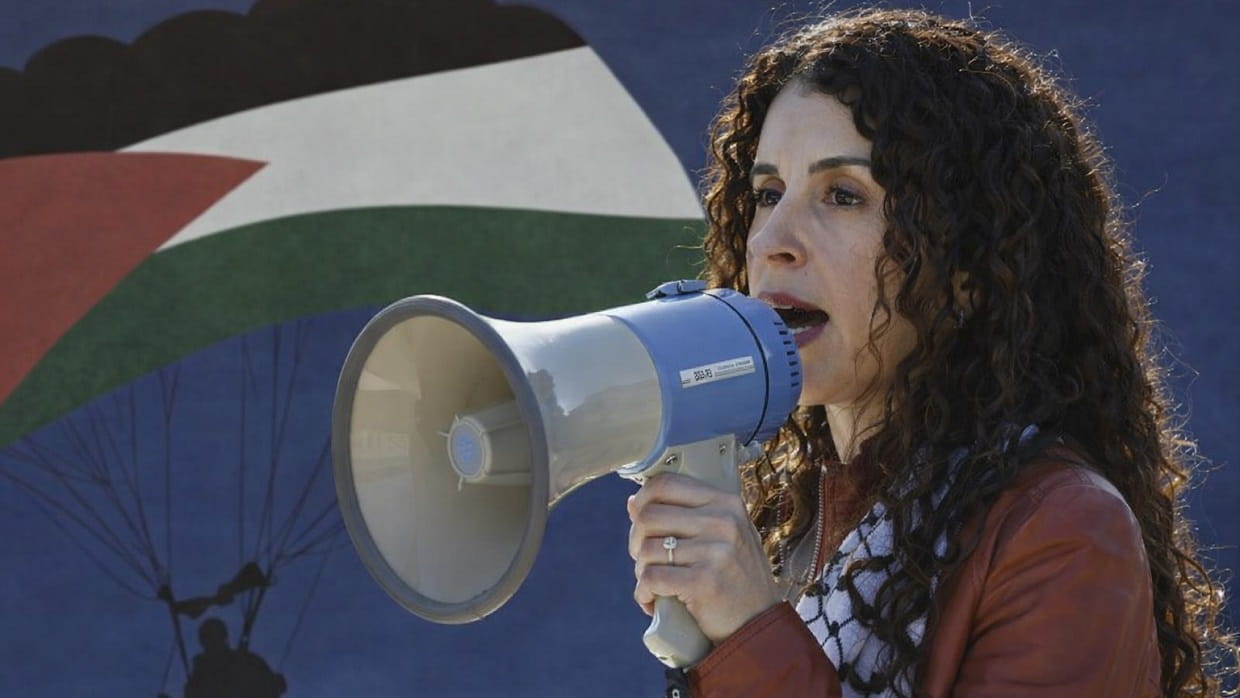
The decision to remove Randa Abdel-Fattah, one of Australia’s most prominent pro-Palestinian activists, authors and academics, from the Adelaide Writers’ Festival triggered national headlines, open letters, and high-profile resignations. Within days, the board stepped down and the festival was cancelled altogether.
The controversy has been framed as a free speech crisis, even a witch-hunt. It is nothing of the sort.
Abdel-Fattah was not removed because she is Palestinian. She is an Australian-born academic and author who has long been embraced and platformed by Australia’s cultural institutions. She was removed because she has repeatedly promoted rhetoric that denies safety and legitimacy to anyone who believes in the right of the State of Israel to exist.
This is not a case of words taken out of context. At the tip of the iceberg, Abdel-Fattah has said that “no Zionist has the right to feel culturally safe.” She has called for 2025 to mark “the end of Israel” and all Zionists. On October 8, 2023, she changed her public image to a Hamas paraglider, describing the terrorists as “Palestinian fighters who broke out of their 16-year hostage conditions.” She has also been filmed leading children in chants of intifada on the lawn of the University of Sydney.
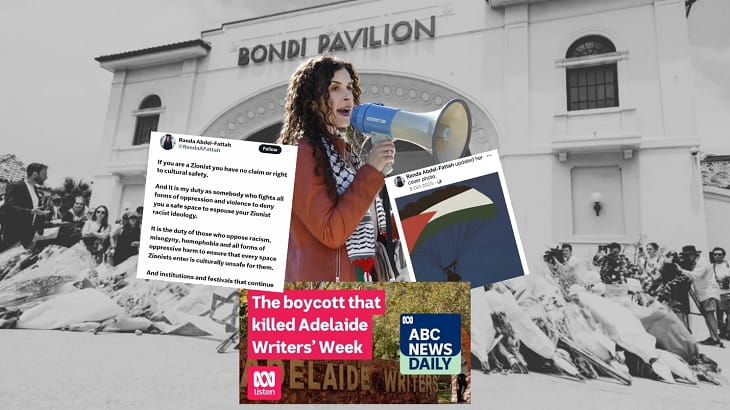
These statements are not metaphors or policy critiques. They are explicit, dehumanizing, and inciteful. They deny safety and legitimacy to the overwhelming majority of Australia’s Jewish community.
For years, this language was tolerated and rewarded. Abdel-Fattah was elevated as a moral authority on anti-racism and embraced by institutions that claimed to stand for inclusion. That context matters, because it explains why her removal, when it finally came, did not look like a moral reckoning.
When Abdel-Fattah was first removed, it appeared less a principled stand than a panicked attempt to avoid scrutiny. After the Bondi Beach terror attack, institutions that had long championed voices like hers suddenly grew nervous. In their own recorded words, the men who murdered Jews at a Hanukkah celebration condemned “Zionists” as part of their motivation, echoing rhetoric that had gone unchecked in public discourse for years.
What followed was more revealing still. Faced with backlash, the festival did not stand behind even that belatedly correct decision. Instead, it collapsed entirely. In doing so, Australia’s cultural establishment signaled that drawing a clear line between violent rhetoric and violent action remains culturally unacceptable, even after Bondi Beach.
The hypocrisy is impossible to ignore. The same institutions and public figures now invoking the sanctity of free expression showed no such concern when Jewish and Israeli voices were excluded.
Since October 7, Australia’s cultural and academic scene quietly dropped Israeli guests or stopped inviting them altogether. Jewish professionals with any connection to Israel were deemed too controversial to appear. In 2024, Abdel-Fattah herself petitioned the Adelaide Festival board to rescind the invitation to New York Times columnist Thomas Friedman.
There were no resignations then. No anguished statements. No open letters. Just silence.
I know this from personal experience.
Before October 7, I was an Australian-Israeli author publicly celebrated by Australia’s literary establishment. My first novel, The Spoon and the Sea, was a Vogel Literary Award finalist and signed by a leading agency. After October 7, everything changed. Not because I called for harm or violence, but because my Jewish and Israeli identity suddenly made me unacceptable.
That is what it actually looks like to be silenced for who you are.
Against that backdrop, the outrage over Abdel-Fattah’s removal feels jarring. Unlike the many Jewish writers sidelined in recent years, she was not excluded for her identity. She was removed for words she had proudly and repeatedly amplified over many years.
The Jewish community is asking for consistency, not special treatment. If non-violent Jewish and Israeli voices could be excluded without apology or institutional collapse, those same institutions cannot plausibly claim shock when genuinely dangerous rhetoric is finally withdrawn from the public stage.
The real scandal is not that a megaphone was withdrawn, but that it took panic rather than principle to do so, and that institutions crumbled almost immediately when asked to stand by it. This hypocrisy leaves Australian Jews with a stark question: has anything truly changed, or is this simply another chapter in the same story?












I honestly believe there is nothing new under the sun. For many decades I have seen Jews being snubbed while "the powers that be" try to justify their actions.