






 In Poland, Even Winnie-the-Pooh Has a Holocaust Story





14 min view


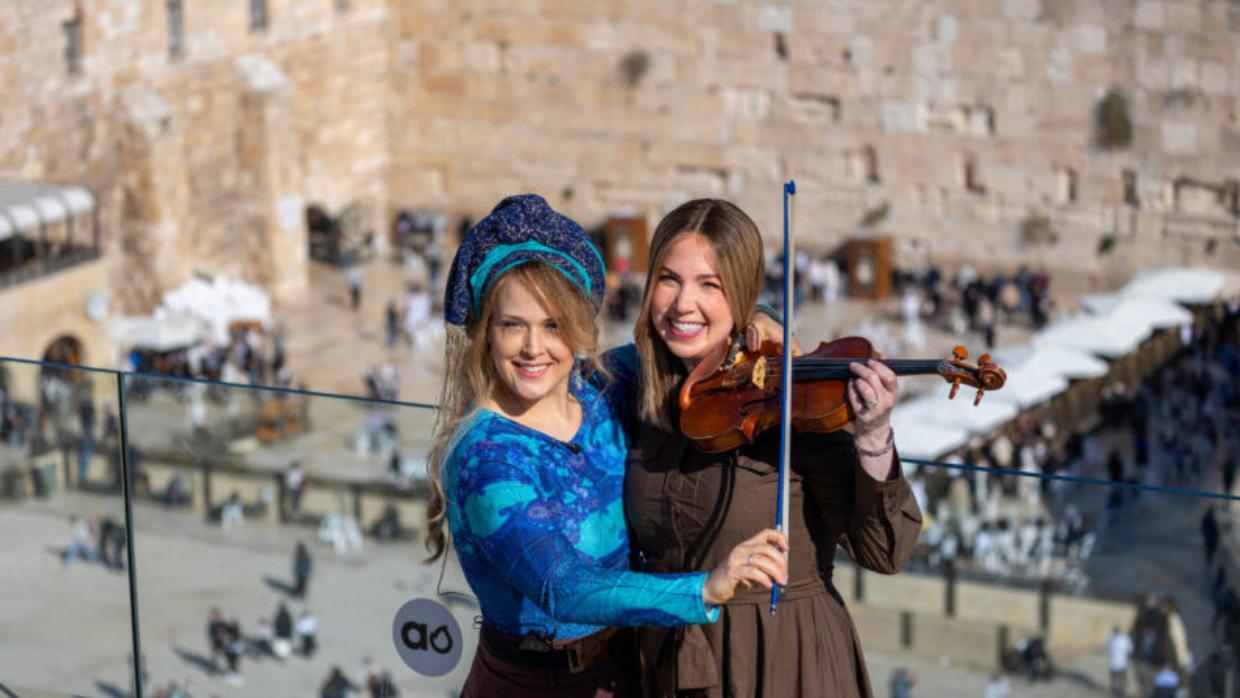
Ariella Zeitlin was a violin prodigy on track for Juilliard, and secretly buying cocaine to practice longer. She’s ready to tell her story.
Ariella Zeitlin was heading to Juilliard and spiraling toward death at the same time.
On the outside: a violin prodigy on the fast track to one of the world's most elite music schools. On the inside: a teenager buying cocaine and Adderall, climbing out her bedroom window at night, running a quiet double life no one around her suspected.
"A lot of my friends from that period," she says, with a pause that carries real weight, "are no longer living."
Ariella is 38 now, 16 years clean from hard drugs, and finally ready to tell the whole story.
To understand Ariella, you have to start at the beginning — and her beginning is extraordinary.
Her great-grandparents were Zionist organizers in 1920s Moscow, risking everything at a time when being caught meant Siberia.
They were caught and jailed. And then, in a twist that sounds too cinematic to be real, they were brought before an Armenian judge, a man who had survived genocide himself and had no interest in perpetuating someone else's. He saw no logic in sending people to Siberia for wanting to go to Palestine. So he sent them there instead, on the Russian government's dime.
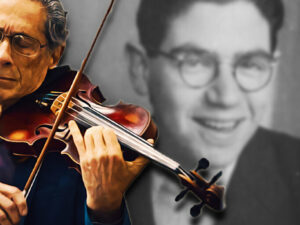
Their son, Ariella's grandfather, inherited their fire and channeled it into a violin. By age seven he was a prodigy. By eleven, he was the youngest person ever accepted to Juilliard.
Ariella never needed anyone to explain why music mattered. It was in her blood.
She picked up the violin at seven, the same age her grandfather had started. By nine, she was training at Baltimore's prestigious Peabody Preparatory, taking lessons three times a week, orchestra, theory, chamber music. By ten, she was flying solo to Rochester to spend days at a time with her grandfather, playing for him, learning from him, living to make him proud.
He was her whole world.
When Ariella was eleven, her grandfather sat her down and told her two things. First: never get married. He'd watched too many talented women disappear into domesticity. Second — and this one landed differently — you cannot make it as a musician if you're an Orthodox Jew. It's impossible.
On Shabbat she went to her room and turned the light on and off.
I can be a famous violinist now.
She had just broken Shabbat for the first time. And in her young, black-and-white, ADHD-wired mind, a switch flipped. If she was already bad, she might as well go all the way.
It started small. No socks outside the house at 11. Jeans under her skirt at 12. Cigarettes at 13. Weed at 14. Blackout drinking at 15. By 16, harder drugs. By the summer before twelfth grade, she was buying, selling, using cocaine to stay awake long enough to practice, telling herself it was in service of her dreams.
Her parents had no idea. Her grandmother had no idea. Nobody knew.
"It was so quiet," she says. "I would go into my room and climb out my window."
Her school closed. On a whim Ariella took an offer to spend her twelfth-grade year at a seminary in Israel. She almost said no because she wasn't sure she'd be able to get the drugs.
She went anyway.
Jerusalem cracked her open. For the first time, she felt free in a way that didn't require being numb. She made aliyah (immigrated to Israel) on her 18th birthday and let Juilliard go without looking back. When a woman from Gush Katif, the Jewish community forcibly evacuated from Gaza, drove her around and explained why the Jews had to leave ("There aren't enough of us to hold this land"), something settled in Ariella. I'm not leaving. I'm staying.
She was building a new life. But she hadn't finished with the old one yet.
At 21, living in the bohemian Jerusalem neighborhood of Nachlaot, hosting parties, still flirting with weed and hash, Ariella spotted a redheaded man playing guitar on Ben Yehuda Street and knew — just knew — she would marry him.
His name was Chezky. He was religious. She was in purple hair and jeans. It didn't matter. They became friends, then something more.
That summer, she got into the Music Academy of the West in Montecito, California, one of the most prestigious music programs in the world, where her grandfather taught.
Six weeks in, going beautifully, she had quietly arranged not to perform on Saturdays in keeping with Shabbat. Then her grandfather found out. He walked into the concert hall and confronted her publicly, loudly, in front of other musicians: Who do you think you are? This is why people hate Jews. You're bringing shame on me and your grandmother.
The man who had shaped her entire identity as a musician was humiliating her for becoming someone he didn't recognize. She played on Saturdays to quiet him. And felt sick doing it.
That betrayal clarified something. This — keeping Shabbat, this life I'm building — matters more to me than the career. More than being the best.
A few weeks later, back in Jerusalem, she got into a car with a friend who had clearly taken something before he arrived. Her sister drove. A police stop and a switch in drivers. And then the friend behind the wheel, flying down the terrifyingly narrow roads above the Dead Sea, laughing as everyone screamed at him to slow down.
Ariella looked at the cliffs and said, out loud, to God: I don't think I'm going to survive this. If I get out of this, I'm giving you my life.
Chezky said a traditional Jewish prayer for safe travel. She screamed amen. The car hit the guardrail and flipped. They hung upside down from their seatbelts. When police arrived, their first question was whether there were any survivors. They hadn't thought it possible.
Everyone walked away.
Ariella entered a narcotics anonymous program, worked all twelve steps, called people she'd hurt, made her amends. She married Chezky. She stopped drinking during COVID when she realized it had crept back in. She watches her relationship with her phone, with food, with anything that chases dopamine, because she knows exactly what that chase looks like when it gets its grip.
"You don't get to graduate," she says of recovery. "You just have to stay aware."
She performed on street corners to conquer her stage fright, slowly, painfully, standing at Ben Yehuda Street for three hours once before she could open her violin case. She built a career raising millions for organizations around the world, playing at hundreds of events, becoming one of Israel's most beloved performers, all while keeping the darker parts of her story locked away.
Then, within a month of each other, she lost a close friend's husband — killed in a special forces operation — and a childhood friend to overdose in her bedroom in Baltimore.
She couldn't stay quiet anymore.
Ariella is now building what she calls a movement, and the name says everything: Kumi Ori — Hebrew for "Rise, be the light," drawn from Psalms. Her debut vocal album, Kumi Ori, weaves acoustic rock with Jewish spiritual sources, including the teachings of Rabbi Nachman of Breslov. It's also the name of the journal she created, a daily five-minute practice of gratitude, intention-setting, and personal prayer, plus a library of over a hundred guided meditations.
The throughline of all of it: changing the way we talk to ourselves.
"I realized how much has to do with our own self-talk," she says. "I started writing shows and programs designed to help people change the narrative." She works with Nova massacre survivors, former hostages, and sexual abuse survivors, helping people find their strength through storytelling. She draws a direct line between her own recovery and this work: "Every trauma is a superpower. I have tools to change habits that people who haven't been through what I've been through simply don't have."
Ariella knows the names of the friends who didn't make it. She thinks about them. She doesn't ask why she survived and they didn't. She just asks what she's supposed to do with the fact that she did.
The answer, it turns out, is this: rise. Be the light. And help everyone around you do the same.
Watch Jamie Geller’s uplifting conversation with Ariella:











Wonderful, thank G!d!
"Kumi Ori", does not mean "Rise, be the light". It means "Arise, my Light!" very, very different.
Why do we need to be exacting? Because this is the Word. And the Word is Life.
It could also be translated as "let my light shine", which in this context might be the best translation. Not everything need be literal.