




 Why Does the Word “Zionist” Still Exist?

5 min read
5 min read
5 min read


6 min read


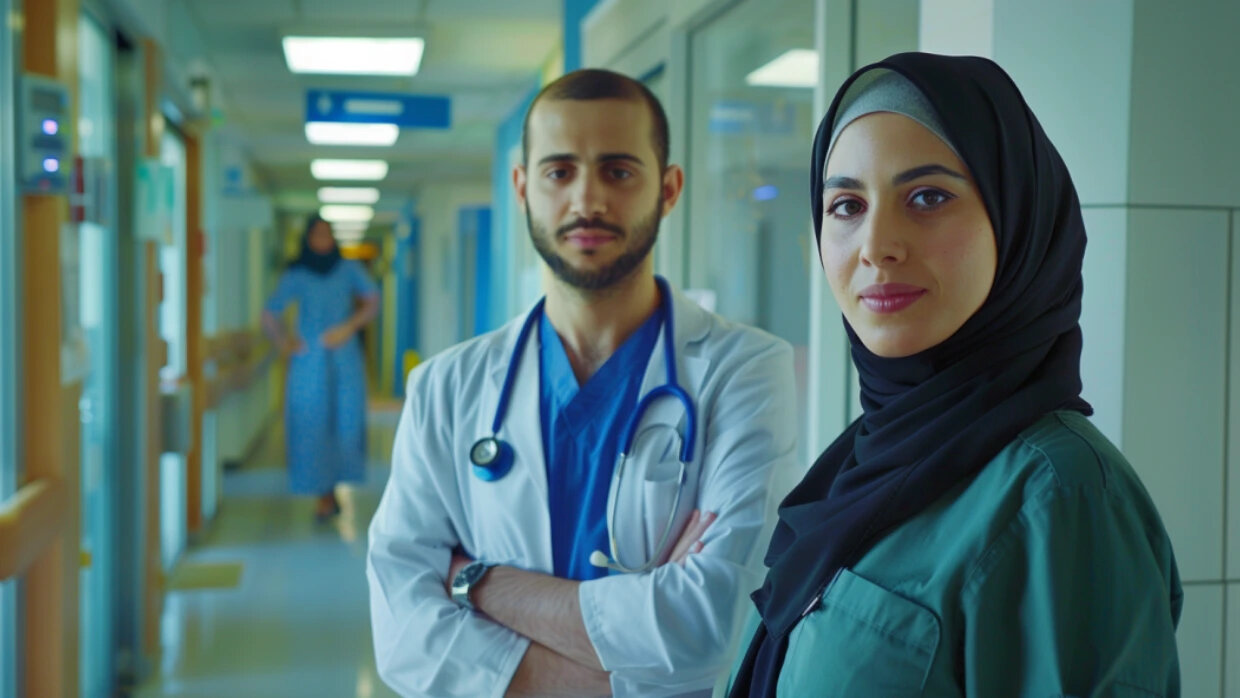
Israel’s healthcare system is focused on providing compassionate care to Jewish, Muslim, Christian, and Druze patients, striving to keep politics from entering the hospital.
Humanism in medicine – so needed and so essential for quality healthcare. The Arnold P. Gold Foundation “champions humanism in healthcare” which they define as “compassionate, collaborative, and scientifically excellent care” and states that healthcare “will be dramatically improved by placing the interests, values and dignity of all people at the core of teaching and practice.” Humanism in healthcare comprises kindness, safety, and trust.
Unfortunately, we have seen exemplars of a morally compromised breakdown of these principles in U.S. healthcare institutions over the past year. Protests of medical students and physicians with “Long live the intifada” heard outside patient rooms, claims that American Zionist doctors and nurses may harm patients, blacklists of Jewish social workers, and antisemitic slogans and social media posts in medical institutions create divisive, even hostile work and learning environments, do not foster collaboration, and may harm patients.
Physicians do not treat their patients in silos but work with diverse colleagues from various disciplines as well as nursing and other allied health professionals. Without a safe, kind relationship between fellow health care providers built on trust, patient care may be compromised. Our medical students must also learn to care for patients regardless of religious or ethnic background. Blacklists of particular healthcare providers and antisemitic graffiti near cancer treatment buildings certainly do not provide a welcoming and safe environment for patients. Such actions have resulted in inquiries at two universities including medical schools and associated health centers.
Scientific advancement is threatened by antisemitism creeping in to the field of medicine.
Scientific advancement is also threatened by antisemitism creeping in to the field of medicine. The Federation of Israeli Medical Students was recently suspended from the International Federation of Medical Student Associations (of which the American Medical Student Association is a member). This harmful exclusion prevents student exchanges and collaborations, and thus, shared learning and experience working with colleagues from different backgrounds. Call for exclusion and boycott also reduce research funding and academic participation in professional conferences. Research collaborations are essential for discovery of knowledge, such as a recent study involving the pathophysiology of Alzheimer’s Disease made possible by Israeli and American universities working together.
The antisemitism within healthcare threatens its humanism and compels me to share insights gained from years building relationships within and learning from the Israeli healthcare system. I have always been struck by the ethnically and religiously diverse healthcare teams working cooperatively to deliver compassionate care to diverse populations. Striking examples include treating trauma victims from the Syrian civil war, building field hospitals in Haiti, placing cochlear implants for deaf Palestinian children, and Save A Child’s Heart treating over 7000 children from 70 countries with congenital and rheumatic heart disease.
I have attended Israeli academic meetings in my area of expertise where Jews, Muslims, and Christians are all listening, collaborating, and learning from each other. I have presented at Israeli medical centers to resident physicians, including Israeli Jews, Muslims, and Christians as well as resident physicians from Paraguay and Ethiopia who benefit from the training at Israeli medical institutions. My Department has also helped train Israeli resident physicians regardless of their background during collaborative exchanges. These examples of supportive and collaborative learning must remain the norm.
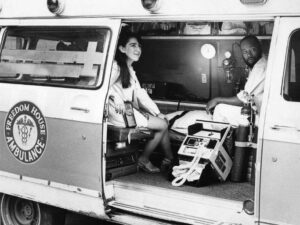
While in Israel with the American Healthcare Professionals and Friends for Medicine in Israel in February 2024, I observed how the Israeli healthcare system demonstrated its humanism even in the face of the devastating terrorist attack of October 7, 2023. To reduce division, hospital leaders brought their healthcare teams together with the message that “what happens outside these walls does not enter the hospital” and that there are no enemies in medicine. Arabs, including heads of departments, and Jews worked alongside each other in Israeli hospitals before October 7, and this did not change. All patients, Jews, Muslims, Christians, Druze, or Bedouins, were treated with compassionate care. I participated in an inpatient consult with two Jewish doctors and two Arab speech-language pathologists. No one discussed politics or personal opinions but only how to help the patient.
I saw how caring for your colleagues was a necessary aspect of caring for patients. At Soroka University Medical Center, 676 casualties were treated while under repeated rocket attacks in the first 24 hours after the attack. A collaborative, team-oriented effort followed with night shift staff helping the day shift, other medical centers sent 28 nurses and 18 physicians to assist, and social workers established an information center to help desperate families find their loved ones. Day care centers were established to care for the hospital staff’s children. Resilience teams supported health care providers who were continually exposed to traumatic stress, suffering, distress, and grief. Healthcare providers and staff across different backgrounds and religious lines also volunteered together outside the hospital to reinforce shared purpose.
I observed how dignity of the patient regardless of background or religion was upheld.
Nevertheless, challenging situations did occur. A health professional at a children’s rehabilitation hospital known for its cultural competency focus described one event. After October 7, 2023, a patient’s mother played a Hamas video during an encounter with the treating provider. Conversations with the hospital director about what was appropriate followed. Setting a tone that the focus was the patient, despite potential differences in background and opinion, helped create a trusting environment despite significant challenges. Care continued for this child. To the staff, hospital directors provided clear instruction on acceptable speech and behavior and what was not (i.e., civil discourse). When needed, disciplinary actions did occur.
For U.S. healthcare professionals, the Israeli healthcare system’s ability to focus on its mission of providing compassionate care by Jewish, Muslim, Christian, and Druze healthcare providers to Jewish, Muslim, Christian, and Druze patients and its attempts to keep politics from entering the hospital, even in such dire circumstances, serves as an important lesson in humanism. I observed how dignity of the patient regardless of background or religion was upheld. Health care providers showed empathy for the patients and for each other to enable mutual trust, and thus, were able to provide safe, collaborative patient care. These observations align with a recent 4E’s framework of Education, Engagement, Empathy, and Enforcement proposed to foster moral responsibility, combat hate, and promote an inclusive environment aimed at “humanistic, non-biased care.” I encourage our medical and other health professions schools and healthcare facilities to do the same.
The original version of this essay was published at https://blogs.timesofisrael.com/lessons-in-humanism-what-can-we-learn-from-israeli-healthcare/









" a patient’s mother played a Hamas video during an encounter with the treating provider. Conversations with the hospital director about what was appropriate followed. " I hope the conversation included the retort that the mother apparently wishes her child's doctors to be killed, and any more of that and she can take her child to Shifa.
Maybe she was trying to show the HCP what had happened to her child, the better to define necessary treatments for healing.
Once again, Israel shows the way, as usual!
This article about Israeli healthcare could be a good place to tell this personal story: About 20 years ago I studied women's ultrasound. The internship took place in two places: "Kupat Cholim Klalit" infirmaries in Sheikh Jarach (not sure about the spelling) in east Jerusalem and in an adjacent Jewish neighborhood Ma'alot Daphna. in Sheikh Jarach, Jewish women almost never book appointments. However, Arab ladies came all the time to Ma'alot Daphna. One time while I was in Ma'alot Daphna, there came a strange triplet: a young Arab man of about 30 and 2 very young Arab women. They handed us the "hafnaya"', a paper which explains the purpose of the visit, and in which it was written that one of the young women came for a follicles examination
2. This examination is a fertility test for women who are trying to find a reason for why they have not been impregnated yet. She entered the examination room and handed us (me and the medical technician, I was a student) her medical card ("kupat cholim" card) and when we opened her medical file, we discovered the following: 1. She was only 16 and 3 months old 2. She was married for 6 months. We looked at each other puzzled - there had to be a mistake in the data we are seeing! no way that a 16 year old came for a fertility examination! The young woman did not speak Hebrew, so the technician asked me to go and ask the man outside if she was married.
3. I went to the waiting room, where the man was giggling with the other young woman (his other wife? his sister? but who takes either of the two to his wife's US?) and I asked him gently if the woman in the examination room is married. He looked at me surprised and said "yes!", I guess he wondered to himself what happened in there that made me come out and ask such a question...
So there you go, the cruelest apartheid you have ever seen, ethnic cleansing at its worst - a fertility examination, paid by Israeli tax payers, for a 16 year old child who is married for 6 full months! the horror...
I don’t understand your reference to apartheid. Would you please explain further? Also, teen marriages are not uncommon in many parts of the world. Educating women has been seen to be the best way for societies to encourage smaller families.
She was being facetious about "apartheid" when obviously is NOT apartheid.
Important piece!
best example of Israeli compassionate care...
Yahya Sinwar
Wow, you had to go there.
Of course, let the truth be told!
Israel follows the Hippocratic Oath to the fullest extent, even medically treating its sworn enemies who seek its destruction; meanwhile, its hateful Arab foes (including too many of its own residents!) religiously abide by their very own hypocritical oath, the only thing at which they excel.
You've told the truth, but what were expecting to happen as a result of telling it? How does it change anything? Therefore, what, DON'T TREAT people trying to murder us? Are there in precedents in Jewish history to not treat such people? Are ALL Arab potential murderers? Even then, what's the halakha?
Yes, why not
Yes. His elimination saved many lives.
Right
If a Jewish doctor didn't cure him, he would of died and then couldn't plan the massacre on 10/ 07/23, Jewish doctors shouldn't cure our enemies tell them to go to Muslim doctors or Arab countrues because after you cure them they are like snake(s) in the King Solomon story " the old man and the snake"