





 Three Things Every Jew Needs to Hear at the Seder This Year



3 min read
4 min read



5 min read


When tragedy strikes, the internet rushes to label it hate. Judaism urges restraint: be slow to judgment, pursue truth responsibly, and preserve credibility when real threats emerge.
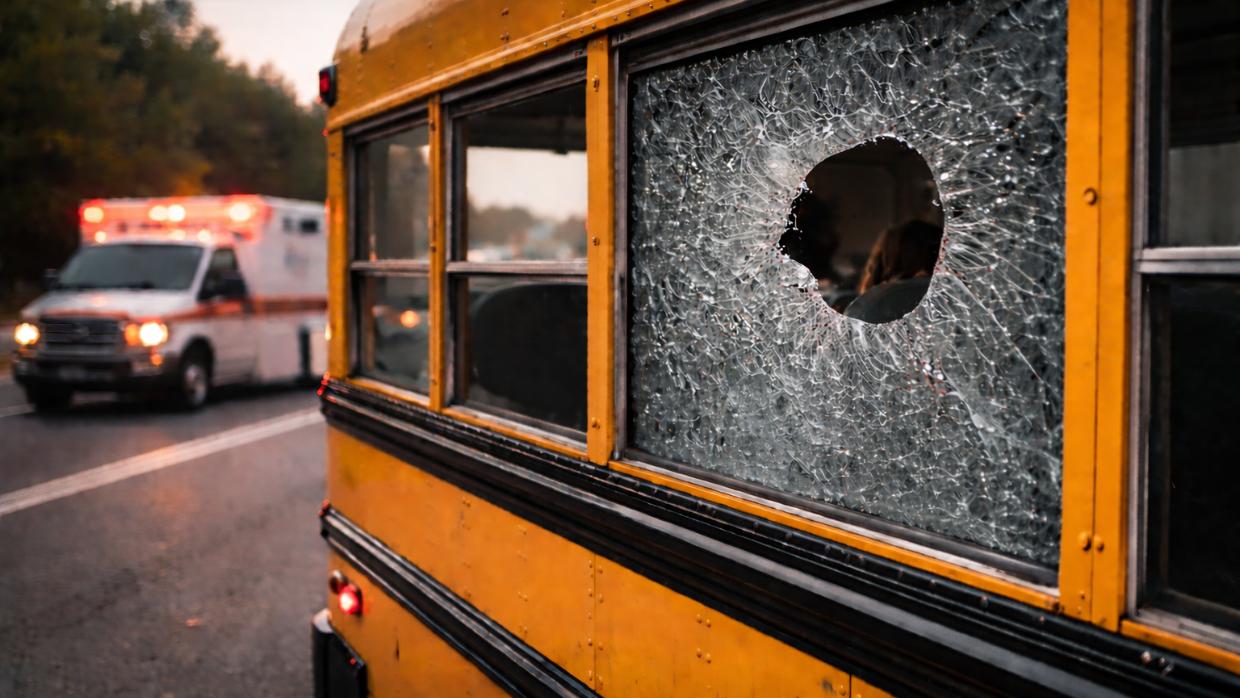
While returning to school from a class trip, a third-grade student from Yeshivat Noam in Paramus was severely injured when a rock was thrown at her school bus on the New Jersey Turnpike. As the buses traveled near the Teaneck Road exit, a large rock shattered a window and struck the young girl in the head. What initially appeared to be a minor injury quickly turned into a nightmare. A CAT scan revealed bleeding on the brain and the child now required surgery. Thank God the surgery was successful and she is recovering.
It was frightening and understandably shook the Jewish community to its core.
Almost immediately, social media erupted. Though the school and law enforcement explicitly stated that they did not yet know the nature or motive of the incident (and there were no external markings on the bus that identified it as a bus with Jewish students), many online rushed to label it a horrific antisemitic attack. Predictably, the declarations followed. This is the end of Jewish life in America. Jews are no longer safe. History is repeating itself before our eyes.
Two days later, an arrest was made.
This was not a hate crime. It was a tragic act of violence committed by someone deeply unwell.
Authorities announced that the suspect, already charged in a series of rock-throwing incidents across Bergen County, was not motivated by antisemitism. He was mentally unstable. State police revealed that he had been awaiting trial for similar acts, including an aggravated assault in Bogota that had already landed him in jail. Court records showed multiple additional charges after his release, including alleged assaults on law enforcement officers, criminal mischief, and trespassing.
This was not a hate crime. It was a tragic act of violence committed by someone deeply unwell.
Just a few months earlier, a similar story unfolded. In October, a rabbi in New Jersey was attacked outside his home. Surveillance footage showed bystanders rushing to help as the rabbi and a good Samaritan suffered minor injuries. Within minutes, the internet declared with certainty that a rabbi putting up his sukkah was attacked in broad daylight by an antisemite.
Strong statements followed and dire warnings were issued, spreading fear.
But the facts told a different story. Police stated, “This was a random act of violence. No words were exchanged prior to the assault, and there is no indication that this attack was motivated by race, religion, or ethnicity.” The suspect had a criminal record. There was no evidence of a hate crime. The rabbi was not putting up his sukkah. And yet the online verdict had already been rendered.
I do not share these stories to minimize or dismiss the very real and disturbing rise in antisemitism. The statistics are undeniable and the threats are real. The horrific acts of violence that have occurred are too painful and numerous to count. We must remain vigilant, courageous, and vocal. We must call out hatred, confront it, and fight it legally, morally, and spiritually.
The rush to assume motive is understandable. After October 7th (and the response to it), comedian Jim Gaffigan captured a feeling many Jews recognized when he quipped, “Does anyone else feel the need to call all their Jewish friends and say, ‘Okay, you weren’t being paranoid’?”
And yet, Judaism asks us to pause, think and reflect.
The Mishna states, “Be slow to judgment” (Ethics of the Fathers, 1:1). Rabbeinu Yonah, a foremost commentary on the Mishna, explains that one who is quick to judge, even if he believes he is speaking truth, his error is not considered accidental. It is closer to willful wrongdoing because he failed to reflect. A hasty mind lacks the depth required to truly know and make proper judgments.
Today, information travels instantly and opinions spread faster than facts. There is a kneejerk reaction to quickly alert, alarm, analyze and advise, often without the patience to gather, to listen, to learn. This is dangerous for the content creator and consumer alike.
We are watching this same phenomenon play out now as the public, on the left and right, rushes to conclusions about the incident involving the death of Renee Nicole Good at the hands of an ICE agent in Minneapolis. Before full video evidence emerged, before facts were established, before investigations concluded (or were even conducted!), each side hurried to condemn or defend, to accuse or absolve, filtered entirely through preconceived narratives. We saw not events, but reflections of our own assumptions.
“Be slow to judgment.”
Pursue the truth responsibly. Outrage untethered from truth only fractures the world further.
Deliberation is what our hyperconnected, emotionally charged world desperately needs. Being slow to judgment makes you trustworthy and credible, so that when real hatred and genuine threats appear, you won’t be merely crying wolf.
In a world rushing to conclusions, have the courage to pause.












It looks like Jewish school buses must have shattered proof glass, and guards like they have buses to ho to the tomb of Rachael in Bethlehem, Israel, if Jews ignore anti Semitic/ anti Jewish incidents it will not go away, Jews have to stop it the FBI said most hate crimes are targeting Jews not any other minorities, so why can't the author get the memo, hate must be confronted and stopped by some why, Jews have to protect themselves if not the government doesn't do it, in Germany the government was involved with what is called KristallNach( the night of broken glass) the survivors of the Holocaust saw this coming and told their descendants this, and it looks it is happening in 2026 like we are in the 1930s/ 1940s
I disagree. Not a rush to judgement. It was an act of antisemitism and to label it otherwise is to hide one’s head in the sand.
When this first became news, my son (a very level-headed and wise person), who lives in Jerusalem (I'm in the States) told me about it and concluded it was definitely another chu"l antisemitic act. I responded, "But, how do you know that?" He responded, "It was a school bus filled with Jewish kids; what else could it be?" I thought, "But that doesn't necessarily add up, since the bus was unmarked; and was someone really just waiting at the intersection for a Jewish school bus?" Taiku. But now, you have wisely informed us of the 'truth,' and therefore I must agree with you (will send my son this article). However, I also think our radar must be always on guard, since we are living in a tekufa kasha (hard times). I think, let's keep our judgements in check, despite the daily challenges.
When so many are quick to dismiss hate crimes against Jews, we need to be advocates for ourselves. Rush to judgment may not be the best tactic, but rush to raise the possibility is necessary given the current climate.
THANK YOU! I am an attorney (and my work is in the mostly unemotional field of international trade.) Since last week I have read certain condemnations of both the driver and the agent.
Here’s the thing: all we have at the moment are audio and video. So far, no investigation (which I think is imperative.) An investigation may lead to a trial. A trial may lead to a verdict or plea. Until that step, the shooter is legally presumed innocent.
We don’t know the mens re, the mental state, of either party.
If you want justice for the victim, then let the system work.
If you want justice for the agent, let the system work.
I really appreciate this thoughtful response.
Agreed! Although we may feel (and know) how much hatred is out there aimed at Jews, the response Rachel gave is perfectly in tune with our sages!
Thanks for a timely and necessary message.