




 An Open Letter to Mayor Zohran Mamdani

6 min read
5 min read




6 min read


I feared who my son might become at yeshiva. What I saw surprised me.
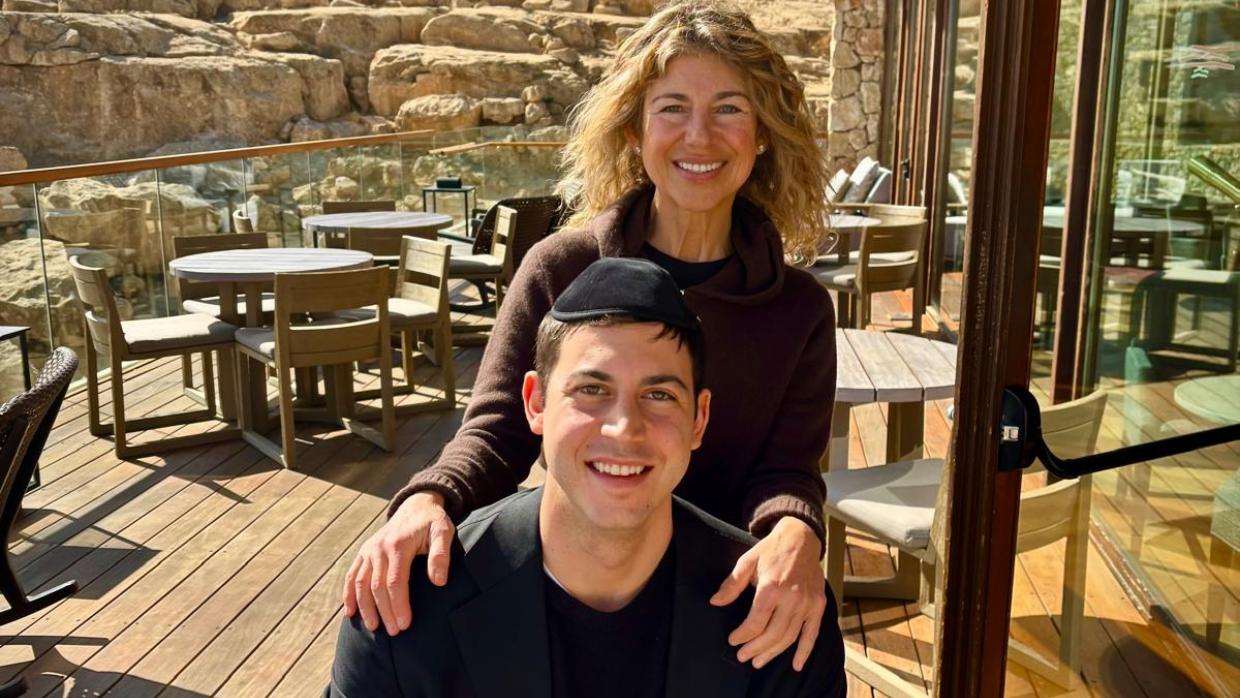
My son is presently studying at Aish, a yeshiva in Jerusalem.
He had dipped his toe into religious studies here and there after graduating from college, but it wasn't until about a year ago that he decided to go all in.
Many of you—my clients, readers, and listeners—are also friends and family. As such, you may know a little or a lot about my son. He was raised in a privileged environment, attended private school, and had his pick of future paths. He is an ambitious young man, and even as a child, he spoke with confidence about what he wanted to achieve and acquire in the world.
Once he had passed his teenage years, I didn't worry much about him. He is nothing if not resourceful, and I was confident he would find his way through whatever challenges life threw his way.
But going to yeshiva?
I was not ready for that.
When my son committed to studying at Aish, it felt as if the ground beneath me was shifting. What would I lose? Would he become dogmatic? Rigid? Judgmental?
I am a proud Jew and a devoted supporter of the Jewish State. But I'm also the child of immigrants who had to escape their home when it was overtaken by an Islamic regime that hates Jews and is obsessed with destroying their homeland. Over the years, and especially after October 7th, 2023, I have embraced my Judaism even more deeply.
But when my son committed to studying at Aish, it felt as if the ground beneath me was shifting. I didn't know if I would ever regain my balance.
What would I lose? Would he become dogmatic? Rigid? Judgmental?
Honestly, I didn't know what to expect. It was the first time I was in this situation, and my "expectations" were being shaped by the unsolicited warnings of other parents whose sons had walked this path. These parents, with only the best of intentions, were eager to tell me about the disasters that lay ahead.
They warned me of separation from family. Of righteous preaching. Of needing to fight the forces of religion before they tore our family apart.
I believed them. I braced for impact.
But my story turned out to be different from theirs.
A few months ago, I visited my son at his yeshiva. I went with an open mind, but also with guarded expectations. What I found caught me completely off guard.
The changes I had been noticing in my son were not unique to him. Almost all the young men I encountered there carried themselves the same way—not as automatons who had lost their individuality, but as distinct young men who happened to share a common foundation.
A decade of life coaching has taught me that our behaviors—positive and negative—are the downstream effects of our values. Not the values we talk about, but the ones that live deep within us, often beneath our awareness.
These young men were living consciously. And among 18- to 30-year-old males, that is almost unheard of.
These young men were living consciously. And among 18- to 30-year-old males, that is almost unheard of.
They were on to something, and I started calling it, in my own mind, The Mensch Code.
Mensch is a Yiddish word. Its literal meaning is simply "person." The equivalent Persian word is Odam. But both words signify something far greater.
To be a mensch is to be a person of integrity, honor, and decency—someone who does the right thing with compassion, dignity, and responsibility. A Mensch helps others without expecting anything in return. The word points to a genuinely exceptional moral character, someone who goes beyond merely existing as a person and aspires to something higher.
What struck me most during my visit wasn't any single behavior. It was the cumulative effect of small things.
The care they took with their words, understanding that words make worlds. The way they spoke to each other with genuine respect, not the teasing and one-upmanship that passes for male bonding in most circles.
The attention they gave to everyone they encountered—a friend's parent, a stranger, a beggar on the street.
The way they listened, not to argue or defend, but to understand. The curiosity that only comes when someone is trying to grow, not just perform.
And then there were the surprises—the things I didn't expect.
Their world was not small or parochial. They were forming friendships with young men from every corner of the globe, bonded not by culture but by shared values.
Their teachers were not the caricatures I had imagined—old men from the shtetls of Eastern Europe—but worldly, educated, open-minded individuals devoted to the moral development of their students. And far from diminishing women, these young men spoke of them with a respect that bordered on reverence.
I had prepared myself for the worst. What I found was something I hadn't dared hope for.
Should every young man go to yeshiva? Maybe. Maybe not. That's a deeply personal decision—one each family must make for themselves.
But here is what I know: many of our sons are struggling. They are unmoored, unsure of what it means to become a man of substance. And the adults in their lives—parents, mentors, teachers—are tasked with finding ways to transmit something like The Mensch Code to them. Not through lectures. Through lived example, high expectations, and environments that hold them accountable to their highest selves.
My son found his path. Yours may find a different one. Perhaps the code can be transmitted in many ways.
I almost let other people's experiences become my own. I almost accepted their fears as my future.
But here is the deeper lesson I walked away with, and the one I want to leave with you.
I almost let other people's experiences become my own. I almost accepted their fears as my future. And if I had, I would have missed one of the most meaningful chapters of my relationship with my son.
Don't do that.
Whatever you're facing—a child's unexpected choice, a relationship that confuses you, a path someone you love is walking that you don't understand—resist the temptation to let others write the story for you.
Go see for yourself.
The truth may be wildly different from what you've been told. And you owe it to yourself—and to the people you love—to find out.












I really enjoyed reading this. Thank you so much for shedding light on this topic, Aish is doing a great job (and the other yeshivas.) The mentch code sounds great, may we all be able to, with G-D's help put it to practice. Well done to you Carolyn for being so supportive, even though it was hard. May we all be able to grow and change into the best versions of ourselves!
Amen!
As a long-time professional Life Coach, I confess that R. Noach was the OG Life Coach. I've listened to all his lectures, learned so much, and base much of the work I do with young adults on his teachings.
Wow, I feel like you read my mind. My son went to Aish as well and even stayed for Shana Bet. We’re not from a religious family, and I was nervous about what that might mean—but today he’s in college, confidently forging his own path with truly the best values.
BH 🙂
Beautiful article! Our son also had a wonderful experience at Yeshiva in Israel.
I'm thrilled to hear that and wish more parents would share their family's success stories, and not just the warnings!
No one way for all but sadly the majority of Jews have little or no exposure to their true birthright. Each child ideally needs to be given the Torah in the way /suitable for him/her.
Love your article. I had similar feelings when our sons chose to attend yeshivah instead of the 4-year college path I expected them to take. However, they have better, happier, grounded, respected Jewish lives after 4+ years immersed in Torah scholarship, and many more life-long relationships with respected rebbes friendships with mensches than they would have had on a different path. Being an open-minded parent is not easy but well worth the efforts and outcome.
So true, about the not easy part 🙂
Dear Carolin, I Will write you in spanish because my inglish, as will see is very poor. Estoy muy agradecida de leer tu nota. Y sobre todo tu mensaje final. Cada uno pasa por situaciones inéditas con los hijos y mirar al vecino o escucharlo a veces no es lo que debemos hacer. No quiere decir que no debamos buscar ayuda si es necesario. Pero muchas veces , como madres y padres conocemos a nuestros hijos de una manera que nadie más puede hacerlos y eso nos lo dio Hashen como regalo cuando ellos vinieron al mundo. Así que es importante escucharlos y escucharnos de una forma que solo nosotros podemos hacerlo.
Gracias
Gracias por tomarte el tiempo de escribirme. Aprecio tu sabiduría.
Wow! Good to know what goes on there, and that at least one parent cares deeply enough to investigate in person, and then publish a positive report -- well done and thanks !
Thank you for the acknowledgement, Gary.
lucky you could afford this
There are good yeshivas that take boys without any tuition.
I myself went to one.
Honorable and noble lady Ma'am Carolyn Mahboubi, What has been achieved on the ground is a natural result of years of sincerity, effort, and dedication that you have shown in upbringing, education, perseverance, and real investment in your righteous and noble son. God has seen from you sincerity, care and diligence in planting and the final result is reaping the fruits of this wonderful planting that proceeded in accordance with what is required by the Jewish law, the pure law of the Torah. We congratulate you on this great achievement and I pray to God that we will see your righteous son become a devoted rabbi serving the Jewish heritage, the true covenant between God and His chosen people.
My late father in law was the principle of a well to do highly rated secular high school several years ago. He was committed to the idea that exposing students to multiple ideas and disciplines will allow them to grow and make intelligent life choices. (ie. education prior to the era of indoctrination) He once remarked that in his school many students graduated and eventually became quite successful at the paths that they chose. "Some became doctors, some became CEOs, some became lawyers, some became artists and some became Orthodox Jews. I have known several of those graduates made the last mentioned choice and are thriving because of it.
The last category is hardly mutually exclusive.
Bro, Yitzhak makes a point. You can be religious and still make a living for your wife and family.
1 year there is fine. No more. It’s important to get a proper post secondary education, IMHO. The experience seems to hit Baal Tshuvas differently than FFBs.
So true, Being a business man blesses your worker and family and customers.
Interesting. Post-secondary education is largely technical, while yeshiva education is value-based, a much deep system that promotes personal growth rather than technical skills. Don't get me wrong, I appreciate both & zigzagged between them both for decades. Yeshiva builds structure. University does not. A yeshiva gives you walls before windows. A university gives you windows and assumes you already have walls. Yeshiva analytical skills help tremendously in university. University helps in stronger & clearer articulation, at least for me, though I know yeshiva-only men who are brilliantly not only articulate, but elegant in their communication skills. I often wonder exactly where those particular folk picked that up.
Simply beautiful
As we travel life's path(s) - & when we confront the upcoming unknowns & how to deal with them. We start referring to our past experiences - & that of others who've offered their advice - on what happened to them & maybe - what to expect. Keeping an open mind - We often see & learn that: As each moment of our life goes by - all the stimulus events we experience in that moment - whether we know it - or not - changes our lives forever & maybe that of others.
Some significantly - others - not so much. Seeing this - can bring us much joy - when we see that the fruit(s) of parenting - & or mentoring - has made a significance in the life of others. Hopefully - this will also - pass forward to others.
I couldn’t agree more! Thank you, Gershom 🙏
Thank you for sharing. This was a thought provoking article in many ways.
Personally, thinking about the perceptions and influences I receive and hold is a responsibility on one hand and demanding introspection on the other.
Your experiences with your son in yeshiva resonated with me and I appreciate you putting it out there to benefit others.
Thank you, Rochel. I never expected it to resonate with so many.
I cried reading your moving article. I am a baal teshuvah of 50+ years. I have many children, grandchildren and great-grandchildren; they are all Torah observant, many Torah scholars, and real 'mentchen' (boys and girls); many are already married (I am 77 yo, ba"h). It was not easy becoming and being a baal teshuvah, especially throughout the formative years (no Aish Hatorah!). My parents gave lukewarm support. I give thanks to Hashem every single day that "He separated me from the other nations of the world and gave (us) the Torah of truth". The rest of my siblings, cousins, etc. – not so fortunate: widespread assimilation, living lives attuned mostly to fleeting values in vogue. Your article is meaningful at so many levels; thank you for the courage to write it. Bracha v'hatzlacha.
Avraham, your note brought tears to my eyes. Thank you for your kind words. May you continue to live a long and blessed life.
Such a beautiful and well written article, thank you Carolyn! And the messages are profound and positive.
But, if I may offer one comment, and one critique please...
The comment, just a thought to add to your definition of a Mensch:
"Mensch is a Yiddish word. Its literal meaning is simply "man." ..." Not just "man", but more like in the expression, "be a man!".
And, if I may, the critique: Your parting message, regarding not being judgemental and being 1st-handedly open to other's paths - is a beautiful and meaningful truth. But it also runs the risk of some making equivalences to all paths of life. I was hoping you might also add a parting affirmation specifically of yeshivas or Orthodox Judaism, that it is a place of rigorous intellectual and moral development etc.
Thank you, Yaakov. I appreciate both your comment and your critique.
What a remarkable article I admire you!
Thank you for taking the time to read and respond, Liora.
thank you for that meaningful inspirationl article,How can I write to you privately.
Thank you
Hi Ari, I'm open to being connected via my website at http://www.carolynmahboubi.com.
You can reach me through my website.
I enjoyed your article! My son Jack shares similar qualities. He has been studying at Aish since September and is returning next month.
Thank you, Jennifer. We are fortunate for the young men Hashem has blessed us with.
Well, now I have a lump in my throat. What a fine young man you have raised!
Thank you, Nancy. I'm grateful my story has touched you.
Wow this is beautiful!!! And I am so happy for you as a mother to experience this through your son!! Indeed he is a Mench. And yes my son went to Yeshiva as well for a year and a half besides growing up being exposed to all this and yes I see the same thing w my son a Mench is the word! A quality beyond all.
You should have lots of blessings through your son and see him grow to all the best potentials that life has to offer always in health, happiness and success.
Thank you, dear Loretta. Your home was Adam's home away while he was at UCSD and I will always be grateful to your family for it.
Beautifully written and expressed so genuinely.
I happen to know Adam as well and he is a gem that is constantly being polished 💎
So graciously put, Sean. Thank you!