 The Questions Everyone's Afraid to Ask About Jews





3 min read


In the Purim story, the miracles were masked as coincidences. Purim invites you to look deeper and recognize the hand that was quietly guiding everything all along.
I used to think miracles had to be obvious. Splitting seas, burning bushes, Divine voices from heaven and the like.
If something dramatic didn’t happen, I assumed nothing spiritual was happening at all.
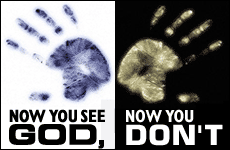
Then Purim came along and upended that theory. The miracle of Purim is famous for something unusual: God’s name never appears in the story.
The miracles are hidden, masked by seemingly ‘random’ occurrences.
In the Exodus story, miracles are undeniable. Nature bends, empires collapse, and freedom arrives with spectacle.
Purim is the opposite. Salvation comes through quiet maneuvers orchestrated by God’s unseen hand: a political reshuffling, a sleepless king, a queen who happens to speak at the right time, a villain whose plan unravels through a chain of coincidences.
Nothing supernatural on the surface, just events unfolding.
Yet looking back, once all the pieces click together, the Purim story reveals one of the greatest demonstrations of Divine intervention.
Most of life doesn’t look like the splitting of the sea. It looks like:
At the time, these moments feel ordinary, sometimes even frustrating. Only later do you see how events quietly aligned. Purim trains you to notice those alignments, when God is in hiding.
History unfolds through human decisions, timing, courage, and what might feel like chance, except “chance” is just the mask God wears to keep a low profile. He’s present, behind the scenes.
The Hebrew the word “megillah” means scroll.
But it shares the Hebrew root that means “revealed”, galui.
And the name Esther comes from the same root as hester — hiddenness. Put together, the title hints at a paradox: The revealing of the hidden.
Purim isn’t about fireworks. It’s about learning to see the invisible threads holding everything together.
On Purim, people dress up in costumes, kids and adults alike. Yes, it’s fun, but the custom is profound, symbolizing that reality itself wears a costume.
Events look natural, random, coincidental, but beneath the mask, something deeper is unfolding. It’s all part of a grand Divine orchestration that will be eventually revealed.
Purim is about developing the ability to notice meaning even when nothing dramatic happens. To ask:
That awareness changes how you live. You become less cynical, more patient, more open to possibility.
Purim invites you to look at your life and notice the patterns, the timing, the quiet turns of the story, to realize that even when nothing supernatural seems to be happening, something meaningful might be unfolding behind the scenes.
Purim reminds us that God's silence is not His absence; it's His signature. And the threads you couldn't see were there all along, woven quietly, purposefully, into the story only you were meant to live.