 Tucker Carlson's Lies About Jews and Israel




11 min read


This popular Chinese game has been largely shaped by a group of Jewish women.
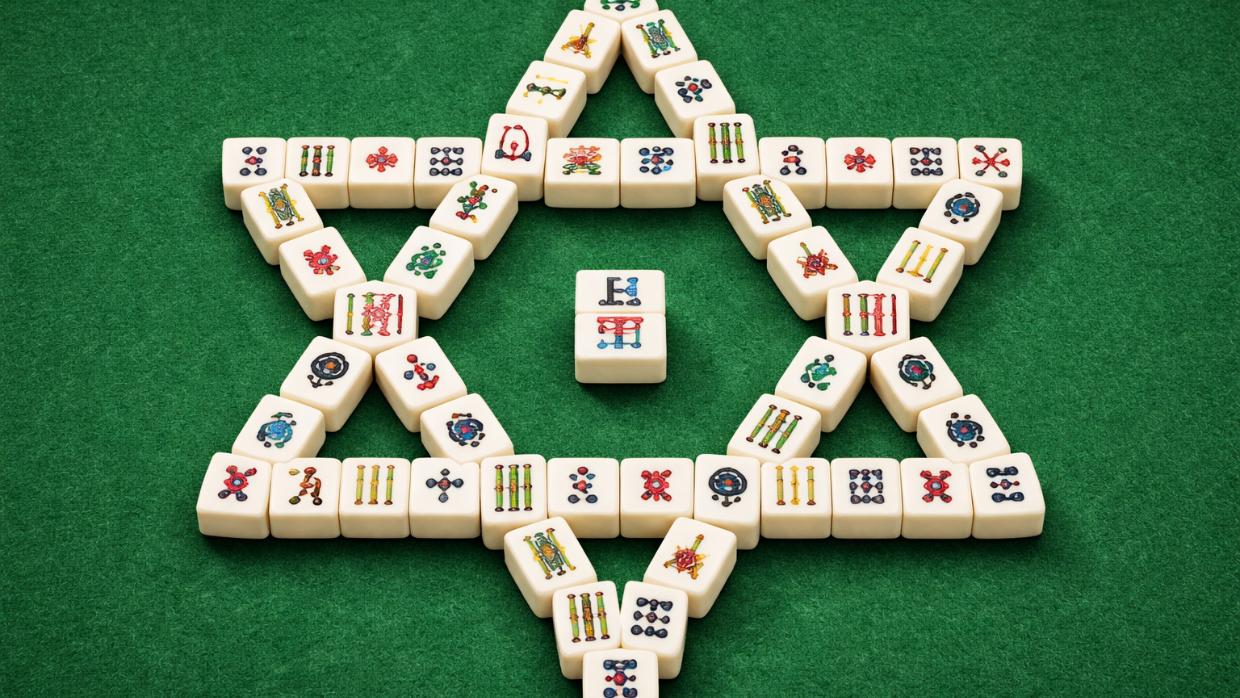
Mah Jongg began as a Chinese game but the version millions of Americans recognize today was decisively shaped by Jewish women in the United States.
A fast-paced tile game played by four people, Mah Jongg challenges players to draw and discard brightly colored tiles in order to complete specific winning patterns. It demands strategy, memory, and nerve. Over the past century, the game has traveled from late imperial China to Jazz Age Shanghai, from 1920s American department stores to suburban living rooms and synagogue fundraisers. Along the way, it has been reinvented, most influentially by a group of American Jewish women who standardized the rules and tied the game to philanthropy, giving Mah Jongg a distinctly Jewish American identity.
In China during the late Qing Dynasty (which lasted until 1911), gambling games became extremely popular among men. New variations of old games sprang up all the time. One such innovation was a new way to play the old Chinese card game called madiao: instead of using cards, players began using ivory tiles instead.
The tiles made a clicking game which reminded some people of the sound that sparrows make as they twitter together. In southern Chinese dialects, the word sparrow sounds like ma tsiang or ma chiang. Soon, the new game was called “Sparrow” - Mah Jongg - and pictures of sparrows appeared on some of the tiles.
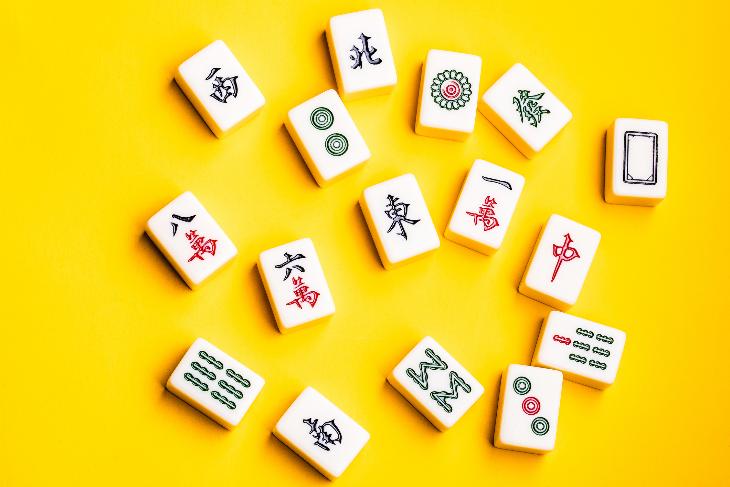
Mah Jongg became a sensation in the southern Chinese port city of Shanghai, which was home to a large European population of merchants and their families. Before long, European residents of the city were playing the game too. Unlike their Chinese counterparts, Europeans embraced Mah Jongg as a family game, with both men and women becoming avid players. Playing a “foreign” game like Mah Jongg was seen as a sign of sophistication by European expats, and the game dominated the evenings in European social clubs throughout Shanghai.
In 1921, Elsie McCormick, an American living in Shanghai, described Mah Jongg’s ubiquity in the local China Press newspaper: “Visitors to Shanghai who ride past any of the clubs” heard an odd clicking sound, “the galloping ivories of China.” Mah Jongg was so popular, she wrote, that it soon might displace Bridge as the European game of choice.
Bringing Mah Jongg (or Mahjong, as it was spelled at the time) to the United States was the brainchild of three American men who met in Shanghai in the early 1900s and became fast friends. Albert Hager left the USA in 1901 to become a teacher in the Philippines; he eventually moved to China and set up a correspondence school in Shanghai. One of his employees was Anton Lethin. An adventurer with a longing to travel, Lethin had moved to Shanghai at the beginning of World War I and served in China’s volunteer force throughout the war. Joseph Babcock worked for Standard Oil, which sent him far from his home in Indiana to live and work in Shanghai.
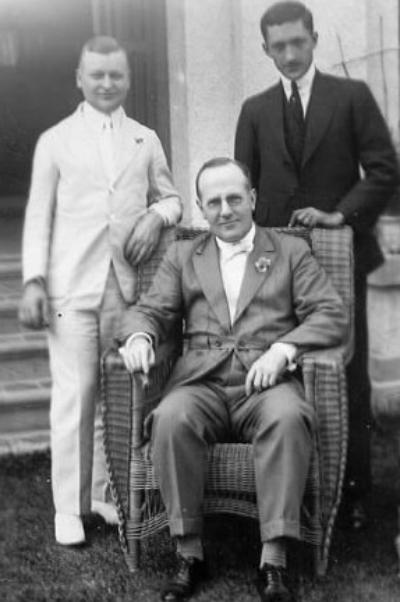 From the left; Anton Lethin, Albert Hager and unknown. (Courtesy http://www.mahjongmuseum.nl/mijn-groot-vader-was-de-zakenpartner-van-joe-babcock/)
Together, these three men decided to shed their jobs and embark on a new enterprise: manufacturing Mah Jongg tiles and selling the game to new audiences in the United States. They formed the Mah-Jongg Company, employing Chinese artisans to manufacture beautiful game sets, and shipped them to New York. They were sold at Abercrombie & Fitch, which at the time sold games.
Chinese immigrants played Mah Jongg in New York and elsewhere, but Babcock, Hager, and Lethin wanted the game to feel more upper class and accessible to American players. Babcock wrote a bestseller titled Little Red Book of Rules. The men tried to create a sense of mystique about the game, telling journalists that Mah Jongg was an ancient Chinese game and was played by Confucius over 3,000 years ago. They claimed (inaccurately) that Mah Jongg was called “the gift of heaven” and “the game of a hundred intelligences” back in China. “By creating this origin myth - which became really widespread and lasting - about the game, marketers separated it from contemporary Chinese immigrants in terms of class and status,” explains Dr. Annelise Heinz, author of Mahjong: A Chinese Game and the Making of Modern American Culture (2021).
The ruse worked. Mah Jongg became a popular fad in the United States in the 1920s. Seen as cosmopolitan and exotic, players of all ages and ethnicities – first in New York, then elsewhere in the country – embraced Mah Jongg in clubs, at parties, and in their homes. Department stores offered in-store Mah Jongg classes, feeding the craze and providing new customers to buy Mah Jongg sets. The fact that it seemed exotic and foreign only added to its appeal.
Jewish American songwriter Eddie Cantor wrote a comic song “Since Ma is Playing Ma Jong” for the 1923 Ziegfeld musical Kid Boots. Jewish American composer George Gershwin wrote the song “Mah-Jongg” the following year for a Broadway musical Sweet Little Devil. For a time, the game was a byword for faddish exoticism and fun.
Mah Jongg’s initial popularity in the 1920s was short-lived. After the stock market crash in 1929, the mood in America turned sharply away from seemingly frivolous pastimes like the game. By the time World War II broke out, Mah Jongg was rarely played in the US. Historian Dr. Annelise Heinz observes: “By the 1950s, most Americans had shelved their mahjong sets. Mainstream media rarely mentioned the game except…to reference the outmoded fad of the 1920s.”
Jewish women were a major exception to this trend. By the 1950s, Mah Jongg was firmly established in American consciousness as a “Jewish” game, played by women. Media references to Mah Jongg in the 1950s overwhelmingly mention the game in conjunction with Jews.
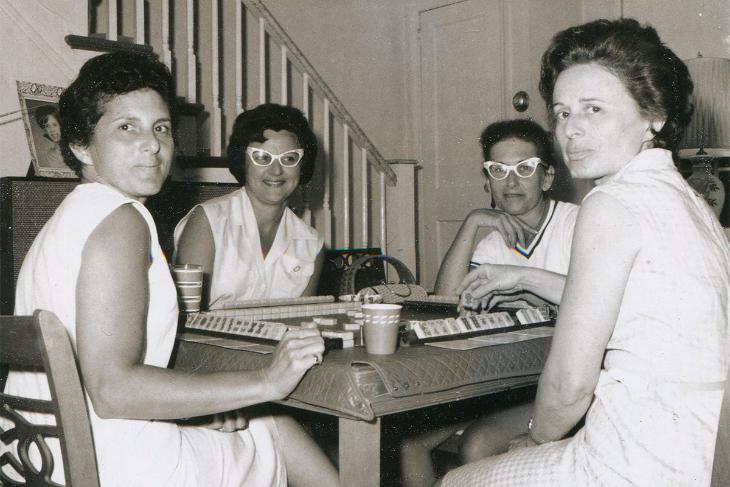
Some historians posit that this was because Jewish women were more highly educated than the general population, and also disproportionately stayed home to raise their families. After doing housework all day long, some academics theorize, the prospect of getting together with other women over a leisurely game of Mah Jongg seemed like a tempting break.
Jewish spaces embraced Mah Jongg. Resorts in the Catskills featured the game as a central activity, and Jewish networks in cities across America organized regular Mah Jongg gatherings. Over time, many Jewish women came to see playing not only as recreation but also as a way to raise money for charity. Although Mah Jongg originated as a gambling game—and some players still wager while they play—its growing association with philanthropy stemmed from a major innovation in the late 1930s: the founding of the National Mah Jongg League, created by a group of remarkable Jewish women.
The version of Mah Jongg most Americans play today was largely shaped in 1937 in New York City by five Jewish friends who loved the game. They founded the National Mah Jongg League, which standardized the rules, reshaped the game, and helped propel its popularity nationwide.
Dorothy Meyerson, who grew up in an immigrant Jewish home in New York, developed a deep passion for Mah Jongg and had strong opinions about how it should be played. By the 1920s, countless variations of the game had emerged. Different social circles introduced their own elaborate rules; in some cases, the game became so complicated that interest began to decline. Even the wives of American Air Force pilots had created their own standardized version, known as the Wright-Patterson variation, which still exists today.
Inspired by such efforts, Dorothy began envisioning a streamlined, Americanized standard of her own.
She created a simplified version of Mah Jongg and in 1936 published a book promoting it titled That’s It!—a nod to the triumphant cry of a winning player. Energetic and determined, Dorothy hired women to promote the book, encouraging customers to purchase it for one dollar and adopt her method of play. For many of these women the income mattered and they worked diligently to spread the word about Dorothy’s innovations. As interest revived, department stores in New York and elsewhere—including the May Company, owner of Lord & Taylor—reopened Mah Jongg clinics they had closed a decade earlier.
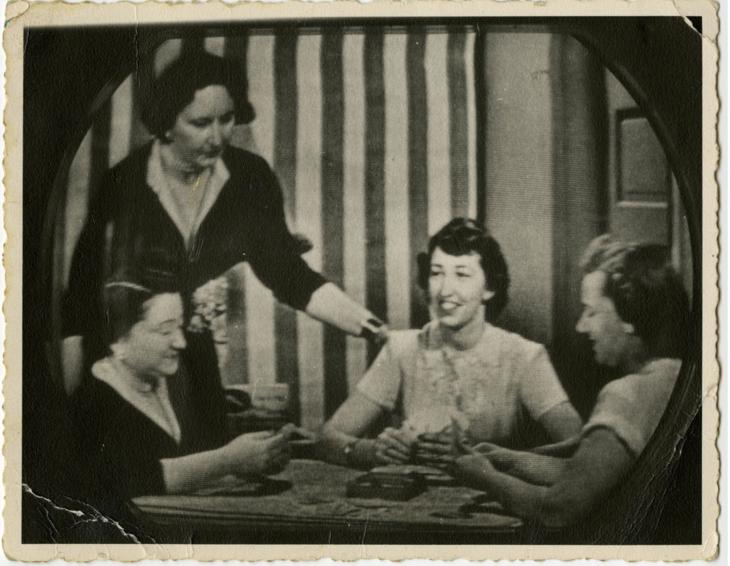 Dorothy S. Meyerson teaching Mah Jongg on television, 1951 (photo courtesy of Maltz Museum of Jewish Heritage).
Around this time, another Jewish New Yorker, Viola Cecil, reached out to Dorothy. Viola loved Mah Jongg and lamented its fading popularity. Impressed by Dorothy’s efforts to revive the game, she proposed joining forces to restore it to prominence.
In 1937, Dorothy and Viola organized a public meeting of Mah Jongg enthusiasts to discuss standardizing the rules. They chose the fashionable Essex House Hotel in Manhattan where Viola lived. Expecting perhaps a hundred attendees, they were astonished when nearly 400 women arrived. Participants traveled from across New York City and beyond, eager to help unify the rules and rescue the game from the factionalism that threatened its future.
After hours of spirited debate, the group voted to form the National Mah Jongg League. Viola Cecil became president and Dorothy Meyerson vice president, positions they would hold for years.
One of the League’s most visible changes was to the game’s name. Formerly spelled Mahjong or Mah Jong, it now became Mah Jongg, with an added “g.” The League also standardized the rules. “No one person created the new way to play,” Dorothy later explained, though the final version closely reflected the system outlined in her book. Together, Dorothy and Viola authored an instruction manual, How to Play Mah Jongg, presenting the game as transformed from an “ancient game of the Mandarins” into a “new American game made up of representative suggestions from different groups.”
National Mah Jongg League rule cards are modestly priced, but the annual fees players pay add up. From its earliest years, the League closely linked the game to charitable fundraising, with Jewish charities representing a large and steadily growing share of the beneficiaries.
During World War II, the League raised funds for both Jewish and non-Jewish war-related causes. After the war, much of its charitable giving supported Jewish and general organizations aiding victims of the conflict. As Mah Jongg increasingly came to be seen as a “Jewish” game, however, a larger proportion of donations went specifically to Jewish causes. The 1950 rule card was the last to list American charities on its cover; thereafter, the cards simply stated, “Proceeds donated to charitable causes.”
“After World War II, the League’s philanthropy noticeably shifted as more individual donations flowed to specifically Jewish organizations and, especially, to support the new state of Israel,” observes historian Dr. Annelise Heinz. One prominent beneficiary was Hadassah’s Youth Aliyah program, originally established to aid Jewish orphans in Europe and later focused on helping orphans and disadvantaged children in Israel.
Dr. Heinz illustrates this pattern through the story of Martha Lustbader, who led her local Hadassah chapter in Newburgh, New York. Lustbader relied on Mah Jongg parties to raise funds through ticket and raffle sales, directing the proceeds toward building a hospital in Israel, a cause she passionately supported. She ensured that her Mah Jongg group actively backed these fundraising events. Throughout the postwar years, thousands of women like Lustbader used Mah Jongg gatherings, tournaments, and clubs to generate significant support for Jewish causes, channeling the charitable commitments of their friends and neighbors.
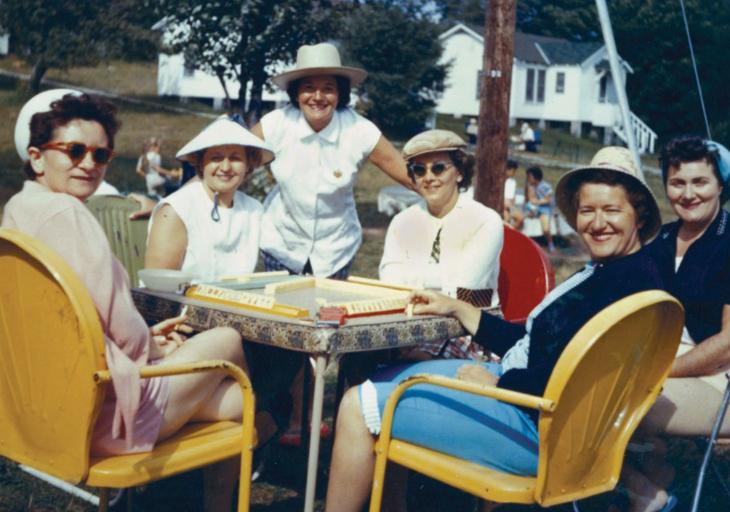 A group of women playing mah jongg at Gold-Dan’s Cottages in the Catskills, in 1960.
Former National Mah Jongg League president Ruth Unger later explained that the Jewish value of tzedakah (charitable giving) helped sustain the game’s popularity. As synagogues and Hadassah chapters depended on selling Mah Jongg cards to raise funds, they had a vested interest in promoting the game, organizing classes, hosting tournaments, and ensuring that enthusiasm for Mah Jongg remained strong. (Hadassah and other Jewish organizations remain among the League’s official charitable beneficiaries today.)
Mah Jongg is undergoing a resurgence today, with younger and more diverse players discovering the joys of the game. Mahjong events advertised on the online platform Eventbrite rose 170% between 2023 and 2024 worldwide. New York has seen the most new interest, followed by San Francisco, then Houston, where Mah Jongg events advertised on Eventbrite rose a whopping 867% between 2023 and 2024.
As a new generation discovers the joys of Mah Jongg, let’s embrace this game’s rich history, including the many contributions made by generations of Jewish women.