





 A New Holocaust Film Every Young Person Should See




8 min read


Kundanlal Gupta invented fake companies in order to issue exit visas to Austrian Jews.
The year was 1938, and Kundanlal Gupta, a businessman and former magistrate from Punjab, India, was planning his second trip to Europe.
Traveling so far was expensive and slow, but Kundanlal was determined to visit Austria’s capital city. On his previous visit ten years earlier, he had purchased cutting-edge machinery in Switzerland and arranged to have it shipped back to his hometown in India, where he established a range of factories producing everyday household items such as batteries, combs, soap, buttons, and wooden furniture. Now, he wanted to expand his woodworking enterprises and acquire newer machinery in Europe. He planned to attend the 1938 Wiener Messe trade fair in Vienna, a regular industry event where industrialists from across the German-speaking world showcased their latest inventions and machinery.
Kundanlal also had a more personal reason to visit Vienna: he was diabetic and struggled with gastrointestinal problems. He had read about a world-renowned gastroenterologist in Vienna, Dr. Gustav Singer, and was determined to consult him. “If he is the best doctor in the world,” Kundanlal told a friend, “then that is who I want to perform my surgery.”
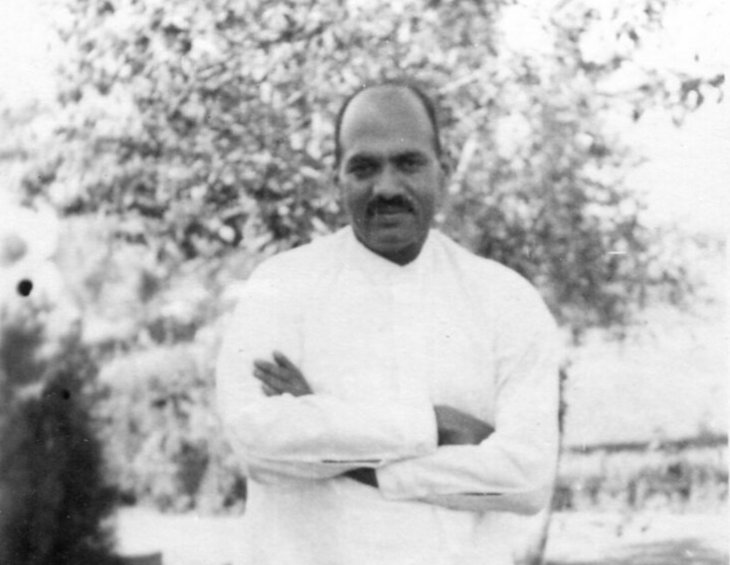 Kundanlal Gupta
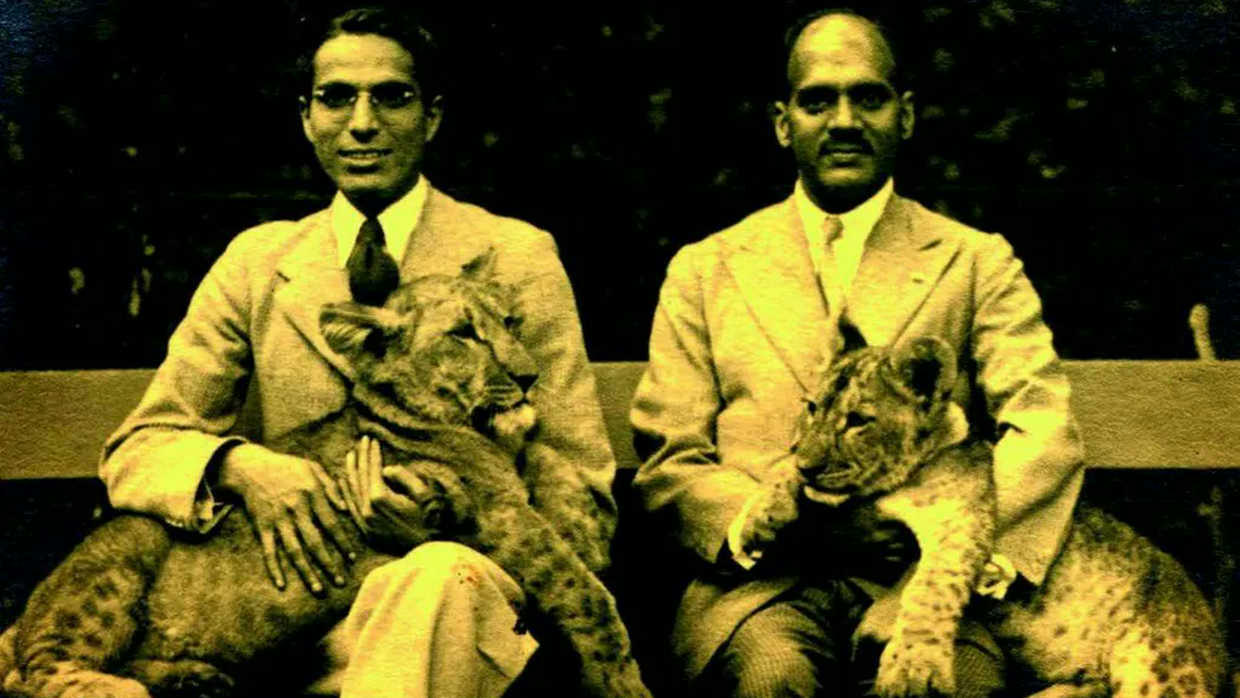
The Europe that greeted Kundanlal in 1938 was very different from the one he and his wife had visited in 1928. Back then, they had enjoyed strolling through stately, peaceful streets, with Berlin’s zoo being one of their favorite sights. Kundanlal remembered the businessmen he met in Germany, Austria, and elsewhere in 1928 as happy and optimistic. Now, with Nazis in power in Germany and support for the Nazi Party spreading in Austria, the atmosphere was tense and threatening.
By the late 1930s, Germany’s Nazi Party was extremely popular in Austria and spread propaganda freely. On March 12, 1938, German troops entered Austria and were greeted by rapturous crowds. The next day, Austria officially lost its independence and became part of Germany. Soon after, the new Nazi government in Austria called a vote to approve the Anschluss. Jews, who made up close to 4% of the population, as well as Roma, were barred from voting. In a highly suspect referendum, 99% of voters approved the union with Germany.
Overnight, Austrian Jews were subjected to Germany’s harsh Nuremberg Race Laws. They had to wear a yellow star on their clothing and adopt the first name “Israel” or “Sarah.” Jews were dismissed from civil service positions and barred from many public places. In Vienna, open hatred of Jews erupted. They were forced to scrub streets on their hands and knees while jeering crowds mocked them. Jewish companies were “Aryanized,” their assets seized. Homes, shops, and synagogues were vandalized, and Jews were beaten in the streets with impunity.
The violence culminated on November 9–10 in a mass pogrom throughout Germany and Austria, later known as Kristallnacht, the Night of Broken Glass. Encouraged by Nazi propaganda minister Joseph Goebbels, mobs attacked Jews, synagogues, homes, and businesses. Over 1,400 synagogues were burned down, thousands of homes and shops were ransacked, hundreds of Jews were killed, and 26,000 were arrested and sent to concentration camps immediately after the attacks.
This was the febrile atmosphere Kundanlal entered in early 1938. When he arrived at Vienna’s Rudolf Hospital soon after the Anschluss, he was shocked to discover that all Jewish physicians—including Dr. Gustav Singer, whom he had specifically come to see—had been fired. Astonished, Kundanlal told the staff that Dr. Singer was considered the best gastroenterologist in the world, even serving as personal physician to Austria’s former Chancellor Ignaz Seipel. “Who in their right mind fires their best staff?” he asked.
To the hospital staff, the answer was obvious: Jews were utterly despised in Austria. Kundanlal could not understand why.
Wherever Kundanlal went in Vienna, he struck up conversations with Jews. He met Dr. Siegmund Retter, whose machine tools he had hoped to purchase, but Retter admitted he was too preoccupied—he and his family had no future in Austria.
At Rudolf Hospital, Kundanlal befriended Alfred and Lucy Wachsler, a young couple spending their days there. Lucy was pregnant and frequently at appointments, but when Kundanlal asked if there was a problem with her pregnancy, the couple explained she and the baby were fine. They were simply safer at the hospital than on Vienna’s violent streets.
Alfred had once been an officer in the Austrian Army, but even military service offered no security to Jews anymore. He confided to Kundanlal that he and Lucy were desperate to leave Austria and would go anywhere. Alfred, trained as a furniture-maker, said he would take any work if it meant escape. Kundanlal began to wonder if he could help.
Later, at a sanatorium in the suburbs, Kundanlal met another Jewish patient, Fritz Weiss, confined to a wheelchair after being beaten by guards. Fritz had earned a law degree from the University of Vienna and had been a practicing lawyer for six years, but Jews were now barred from Austrian courts. His family was robbed of their valuables, and he and his uncle were jailed and then released with the warning to “leave Austria or else.” His uncle managed to obtain a visa to the Land of Israel, but Fritz was still trapped.
Kundanlal knew he had to act.
British-ruled India made immigration difficult. Sponsors had to prove there was a job waiting and personally guarantee full support for immigrants and their dependents. Fewer than 300 visas were issued in 1938. Yet Kundanlal did not hesitate.
He invented a company, “Kundan Agencies,” and offered Fritz a job. He gave Alfred a real position in his wood products company. After months of assembling documents, both families finally received visas. Fritz, Alfred, Lucy, and their newborn baby escaped via Italy to India.
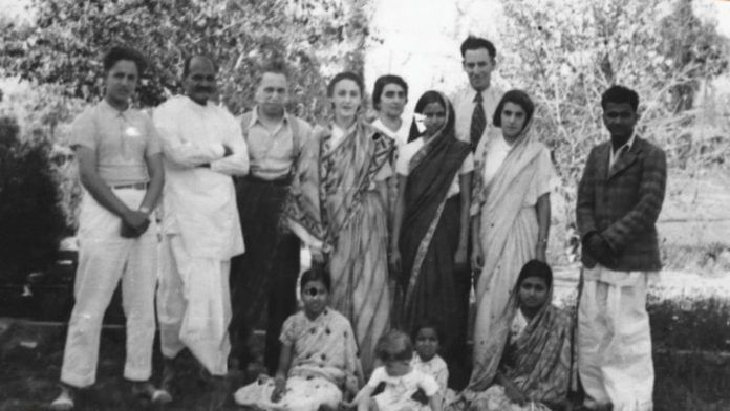 Kundanlal with the Jewish people he brought from Vienna to Ludhiana. He was in Nazi-era Vienna for a medical procedure when he found out about the plight of Jews in the city | Bloomsbury
Encouraged, Kundanlal placed ads in Austrian newspapers seeking men experienced in textiles and woodworking—his actual industries. But the only applicants he accepted were Jews.
Hans Losch, a textile worker, was hired into another fictitious company, “Kundan Cloth Mills.” Alfred Schanfranek, a veteran of the wood industry, was desperate after he and his son Bruno had been arrested and forced to give up all their belongings before being ordered to leave Austria. Kundanlal created yet another business on paper to employ Alfred, his brother Siegfried, and sponsored their families as well.
Kundanlal’s repeated efforts eventually drew the suspicion of British officials. A police officer visited his home in Ludhiana while Kundanlal was still abroad. His son, Prem Narain, vouched for him, truthfully affirming that his father was wealthy, while also confirming—falsely—that the new companies existed. After questioning, the officer left satisfied, and Dr. Retter received his visa to India thanks to Kundanlal.
Kundanlal and more than a dozen Jews he had sponsored arrived in Ludhiana in late 1938. He later helped at least two more Jewish families. He opened his home to them, shared meals with his family, and even built two houses for his new workers. Many soon moved to larger cities, but some stayed. Alfred Wachsler, for example, worked in Gupta’s factory producing fine wooden furniture that remains in use in Ludhiana today.
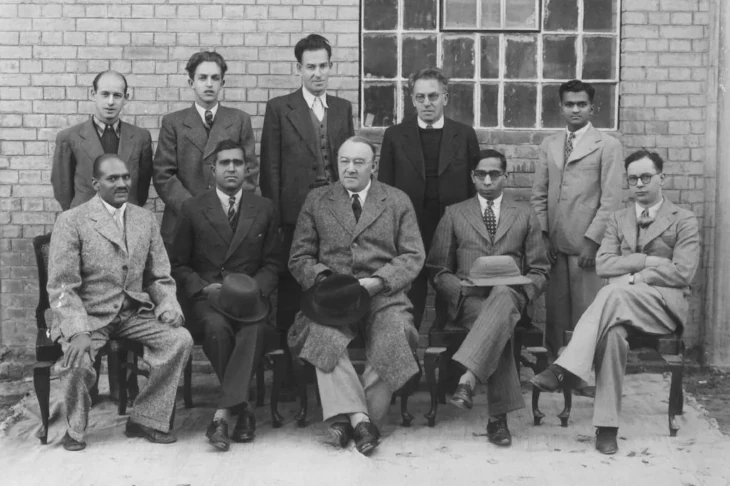 Kundanlal (seated, far left) with Alfred Wachsler (standing, far left), Siegfried Schafranek (standing, third from left), and Alfred Schafranek (standing, fourth from left)
During World War II, the Wachsler family and other Jews in India were arrested by the British and interned as enemy aliens in a prison camp in Purandhar. Many were not released until 1946, long after the war had ended.
Kundanlal never spoke of his heroism. He sought no recognition, and when he died in 1966, few remembered that he had rescued Jews.
That began to change when his grandson, Vinay Gupta, started researching the story. “Let me tell you a secret,” his mother once told him. “Your Nana helped many Jewish families flee the Nazis.”
Vinay, dimly aware of the tale, finally investigated when his own son asked questions about their family history. His findings became a book, A Rescue in Vienna: The Story of an Unlikely Saviour. “I thought I would disprove a family rumor,” Vinay writes. “Instead, I proved its authenticity.”

He uncovered the ads Kundanlal had placed in Austrian newspapers and traced the many Jews who reached India because of him. Vinay believes his grandfather saved about 15 Austrian Jews, though the true number is uncertain. “My grandfather never talked about it,” he says. “He was a very quiet man. He never wanted to discuss it.”
In the face of impossible odds, Kundanlal Gupta took action to help others. His remarkable heroism, now ofinally brought to light, stands as a shining example of hope, resilience, and moral courage.










Grace, indeed, INDEED! Reading this story moved me deeply. Vinay Gupta’s work to bring his grandfather’s quiet heroism to light deserves nothing less than a film. I recently watched One Life, about Nicholas Winton’s rescues, and wondered why such stories are not more widely known. Now, discovering this as an Indian, a Hindu, and a global citizen, I feel both proud and humbled—but also regretful that it took me 44 years to learn of Kundanlal Gupta’s courage. This history must be shared with the world
I heard a lot of stories about righteous gentiles, so why is this story coming out now after all these years, also I hope he got honored by Yad Vashem, if he is not alive may his memory be a blessing, for such a real mensch
Without expecting anything in return, it was done because it was the right thing to do. The people of G@z@ were offered money and free passage for intel on the hostages, and not a peep, because they are all morally corrupted savages.
May Mr. Gupta's memory forever be for a blessing.
This is a wow--amazing article! He was so brave and fearless to do the things that he did. Thank you so much for letting everyone know about this.
Maybe this why I love Indian food. Seriously, I hope his story is known to Yad Vashem. May his memory be for a blessing.
I feel a kindship with Indian Hindus, with relationships with them spanning many decades. One such friend is a Brahmin scholar trained in Advaita Vedanta. It turns out that there concepts are extremely close to Judaism, including NOT using idols. There is also the comfortable feeling of them NOT having hidden agendas of converting us to Hinduism. Indian Hindus, having their own issues with their Muslim population & Pakistan, deeply identify & support Israel.
The people who are Righteous know that doing the right thing is what counts, not the publicity or adulation. There are Angels who walk among us, and Kundanlal Gupta was one of them. May his memory always be a Blessing
This is another example of a righteous gentile , this time an Indian hero.Bravo!
Is it not disgusting that there are no Gazans to tell of who helped the Hostages and Idf? Even after being offered 5 Million dollars.’
Only savages like these and Hamas and Islamic jihad commit crimes against humanity.