







 Can a Monk Be a Jew?

3 min read
5 min read




Two families, eight kids, thirty years. Here are the key insights I discovered in building a home together.
When my husband and I got married, we didn’t just become a couple. We became a family.
Each of us came into the marriage with two children, and over the years, our household grew to eight children altogether. We have now been on this journey for more than 30 years, long enough to watch those children grow, develop their own relationships, build their own lives, and become adults.
Looking back, I realize there were things I understood then and things I could only understand with time.
There is no single blueprint for a blended family. Some begin after divorce, others after the loss of a spouse. Sometimes both partners arrive with children; sometimes only one does. And every child enters the new configuration with a history, a perspective, and an emotional landscape of his or her own.
There is no formula for navigating all of these relationships and emotions. After more than 30 years, I’ve come to see certain things differently than I did at the beginning—things I could only have learned by living them. I’d like to share some of those insights, in the hope that they might offer perspective, encouragement, and perhaps reassurance to others walking a similar path.
We often expect a new family to feel like a family right away. But relationships don’t work that way.
You get to know one another through the ordinary rhythm of life—the daily ups and downs, the celebrations and disappointments, the disagreements and the laughter. You share experiences, make memories, and slowly develop trust and familiarity.
A stepparent may care deeply about a child without immediately feeling the same connection they feel with a biological child. Over time, that connection may grow into a deep and lasting love. But it may never feel exactly the same as the bond with a child you have known and loved since birth—and that doesn’t make it any less meaningful. For a child, developing a relationship with a stepparent can be complicated as well. They may worry that caring about this new person means they are being disloyal to their other parent, especially when that parent is still part of their life—or when they are grieving the parent they lost.
There is no need to force closeness or expect feelings to develop on a schedule. Most often, the relationship you are hoping for takes shape quietly, through hundreds of small interactions that don’t seem significant at the time.
Give people the space to find their own connection.
No one enters a blended family with a blank slate. Everyone arrives with experiences that shape how they approach this new chapter.
For one child, that may mean grieving a parent who died. For another, it may mean adjusting to the end of their parents’ marriage and the life they once knew. Some remember their parents together with happiness; others remember a home marked by conflict.
Adults bring their own experiences as well. A previous marriage may have ended peacefully, or it may have left behind hurt, disappointment, or unresolved feelings.
All of this matters. A child should not have to pretend that a parent who died never existed, or that the family they once had didn’t matter. If photographs, memories, or stories from before the new marriage are treated as things to hide or avoid, a child may begin to feel that those parts of their life are unwelcome.
In our family, I wanted my children to feel comfortable holding on to photographs and memories that were meaningful to them. They sometimes even thought it was pretty cool to show their friends pictures from another part of their lives. It gave them a sense that their experience was unique and worth holding on to.
I know another couple who had each lost a spouse before marrying. They chose to display photographs of those spouses alongside the other family photographs in their home. There was no need to pretend those marriages had never existed. They were part of what had brought each of them to this new chapter.
Creating something new does not require erasing what came before. Both can have a place.
Making room for what came before requires security in what exists now. When you feel secure in your marriage, your spouse’s memories and experiences do not have to feel like a threat. They can remain part of who your spouse is without competing with the life you are building together.
This is something I have had to remind myself of over the years.
When my husband and I married, my son was only 18 months old. His birth father was completely out of the picture, and my husband became his father in every way. They developed a close, loving relationship, and our family simply felt like our family.
Then my son became a teenager.
There were challenges. He tested boundaries, pushed for independence, and went through periods that, at the time, felt overwhelming. At one point, feelings of abandonment connected to his birth father seemed to surface, adding another layer to what he was experiencing.
It was easy to wonder how much of what we were dealing with was because he was part of a blended family. Looking back, I see that many of those struggles were also part of growing up—figuring out who he was, becoming more independent, and making the transition from childhood to adulthood.
That experience taught me how quickly we can blame the family structure when a child is going through a difficult stage. The young children who went to bed at eight when a marriage ended eventually become teenagers, with very different needs, boundaries, and emotions. Not every challenge that emerges later can be traced back to the divorce or remarriage.
My son eventually came through that period and matured. Years later, he changed his last name to match his stepfather, his “Abba,” because he wanted his future wife and children to share the name of the family he felt he was truly a part of.
Sometimes a difficult moment is simply a difficult moment. It doesn’t always need a label.
The change made no difference in how my husband or I felt about him. He had been our son all along. But his decision was a recognition of the place he had chosen for himself, and we received it as an honor.
I learned this during the years when we shared custody of my husband’s children from his first marriage.
My children lived with my husband and me full time, while his children were with us on weekends and holidays. I remember encouraging my children to give their step-siblings space for special time with their father. They saw him every day; his children saw him only on weekends. I wanted my children to understand that the time their father spent with his other children wasn’t taking anything away from them.
There was no way to make the situation equal. The circumstances were simply different. What I could do was help my children understand what their step-siblings were experiencing and why that time with their father mattered so much to them.
Sometimes fairness means recognizing that people have different needs, even when circumstances cannot be made equal.
For children, that understanding doesn’t always come easily. They may simply see that someone else is getting something they want and feel that there isn’t enough to go around.
Sometimes fairness means recognizing that people have different needs, even when circumstances cannot be made equal. We may not be able to change what is, but we can try to help children understand it while making room for their feelings.
There will be days when you wonder if this is ever going to feel normal.
There will be visitations and handoffs, holidays when only part of your family is around the table, and celebrations when someone you love is missing. There may be awkward moments, difficult conversations, jealousy, misunderstandings, and times when you wonder whether everyone will ever truly feel comfortable with this new dynamic.
And then, when you least expect it, something happens.
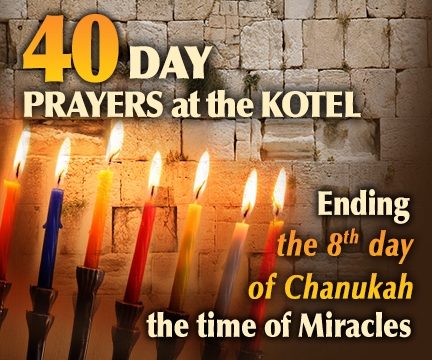
You’re sitting around the table, laughing at a family joke. One of the children calls just to say hello. You watch siblings who once had to learn how to share a family now relating to one another as adults. And suddenly, you realize how far you’ve come.
For us, those moments didn’t arrive all at once. They were woven quietly into the ordinary rhythm of our lives. We didn’t always recognize them when they were happening. Looking back, they were the moments that showed us something had taken root.
You can’t always know how things will look years from now. Sometimes you simply have to keep moving forward, figuring things out as you go. And when things feel difficult, seek out the advice, encouragement, or professional guidance you need. Asking for help is not a sign that something is wrong; it can be part of finding your way forward.
Looking back, I don’t think our family became a family because everything blended perfectly. It became a family because we kept choosing it.
Not every stage was easy, and not every relationship unfolded the way we expected. But we stayed, adjusted, learned, and kept going. There was no single moment when everything fell into place. It happened gradually, through years of living, changing, and growing together.













Great!
great! one great take away from my pre blended family research that I believe is very important, is the step parent is like the favourite aunt or uncle, for at least the first 18 to 24 months of the marriage, ZERO rebuke, zero discipline (maybe ever! depending on the age and if theres another co-parent involved) and be the happy friendly uncle or aunt till the love and trust bond is secure
Great advice!
This article is so good. Thank you so much for sharing. We are almost 10 years into a blended marriage and also have 8 total children. There have been ups and downs but we feel very blessed and are very grateful to our Father for the family that we have, even though it doesn’t look like what we imagined as children. These 5 points are so helpful for blended families to remember. Thank you.
Managing expectations and coming to terms with what we had expected or imagined vs. what we have been gifted with is so important.