




 Tucker Carlson's Lies About Jews and Israel


4 min read
4 min read


6 min read


How the world's highest mountains reminded me of timeless Jewish wisdom about life and personal growth.
Standing at the base camp of Thorung-La pass at 5 AM, watching my breath materialize in the beam of my headlamp, a dazzling starry sky lit up the surrounding Himalayan peaks, but I wondered if I was losing my mind.
The highest point of Nepal's Annapurna Circuit loomed ahead 17,769 feet above sea level – higher than any mountain in Europe – and I had hiked for over one week to reach this point where the amount of oxygen is noticeably decreased. Each bodily movement felt like a burden and one must be vigilant for the onset of severe altitude sickness symptoms.
This final grueling 8-hour ascent through the Himalayas would prove to be more than just a physical challenge. As I marched forward, I found myself drawing upon reserves of spiritual wisdom – based on Jewish teachings that I re-discovered in the majestic peaks and valleys of Nepal’s highest mountains.
Here are five of the spiritual lessons that supported me during my two weeks trekking on top of the roof of the world.
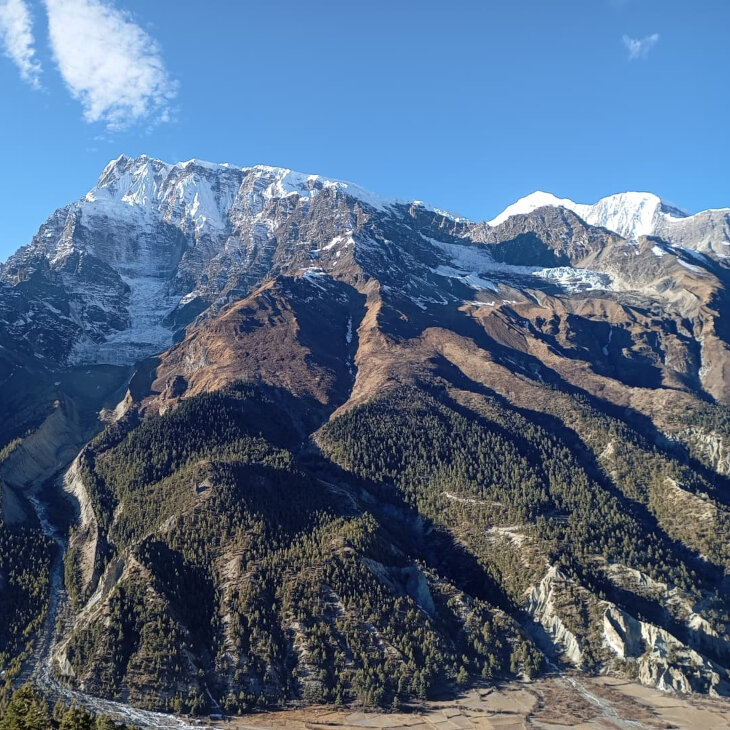
As dawn broke over the Himalayan peaks three hours into my trek, the world's highest mountains were illuminated with crowns of gold. At that moment, I recalled the story of Rabbi Samson Rafael Hirsch, the 19th-century German Jewish leader who surprised his students by taking a vacation to the Swiss Alps at age 70. When questioned why a Torah scholar would "waste time" admiring mountains instead of studying, he shared a profound response that has echoed through generations:
"When I stand before God," he explained, "I will be asked many questions. But one of them will be, 'Samson, did you see My Alps?'" Rabbi Hirsch understood that appreciating the majesty of God's creation wasn't a distraction from spiritual life; it was an essential part of it.
Standing before the massive face of Annapurna and other anonymous peaks, I understood the profound depth of his message. These weren't just mountains – they were Divine masterpieces demanding awe and appreciation. As the morning light painted the snow-capped peaks in impossibly beautiful hues, I felt myself experiencing what Rabbi Hirsch must have felt in Switzerland: the raw spiritual power of encountering God's grandeur in nature.
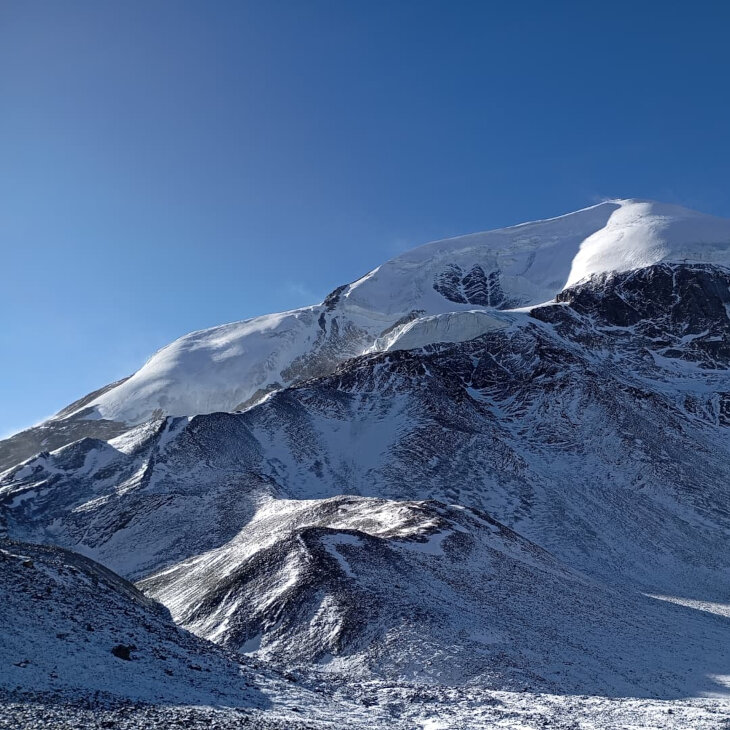 A mountain peak above 6,000 meters on the Thorung-La Pass
Judaism teaches that while we shouldn't worship nature, we must recognize it as God's handiwork. The Talmud prescribes specific blessings upon seeing natural wonders, acknowledging that mountains and great wilderness can awaken our souls to the Creator's presence.
Climbing through the Himalayas, I realized a new, personal meaning to the words of the Psalmist: "I lift my eyes to the mountains – from where will my help come?" The mountains themselves provide perspective, humbling us with their massive presence. Yet they also direct our gaze upward, reminding us there is something even greater than the highest peak.
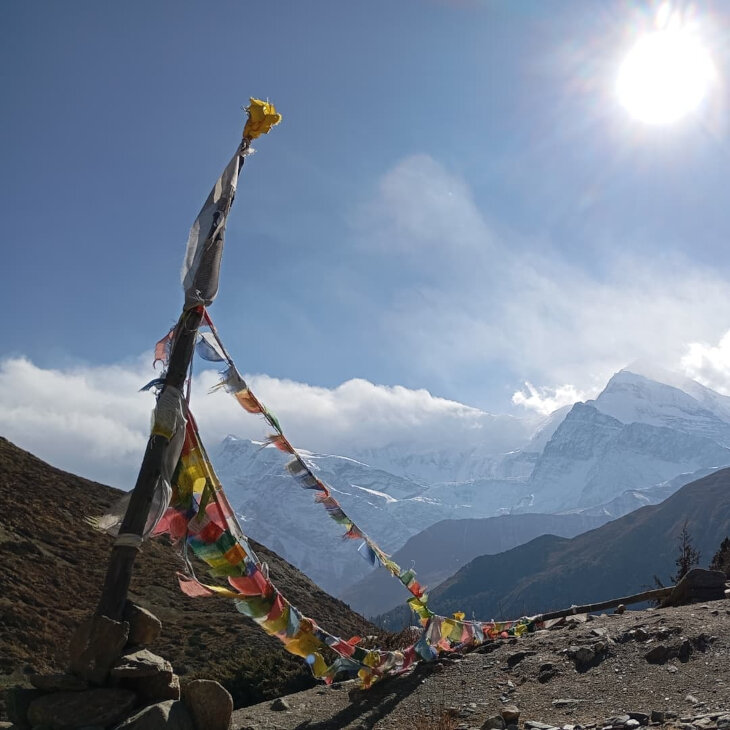 Himalayan Buddhist prayer flags
At such extreme altitudes, rushing ahead to complete the climb and return to safety can paradoxically lead to altitude sickness or worse. The mountains demand patience, humility, and acceptance of a slow pace that went against my rushed instinct to complete the upward ascension in order to descend as quickly as possible.
This mirrors the Jewish approach to spiritual growth, mastered over thousands of years, where slow and steady progress is portrayed as the best path towards the most lasting transformation. As the 19th century Mussar master Rabbi Israel Salanter taught, it is better to change one small habit permanently than to attempt a complete personality overhaul that proves temporary.
Just as no one reaches the summit of Thorung-La in a single leap, genuine spiritual accomplishment comes through consistent small steps in the right direction, taking plenty of pauses to catch one’s breath.
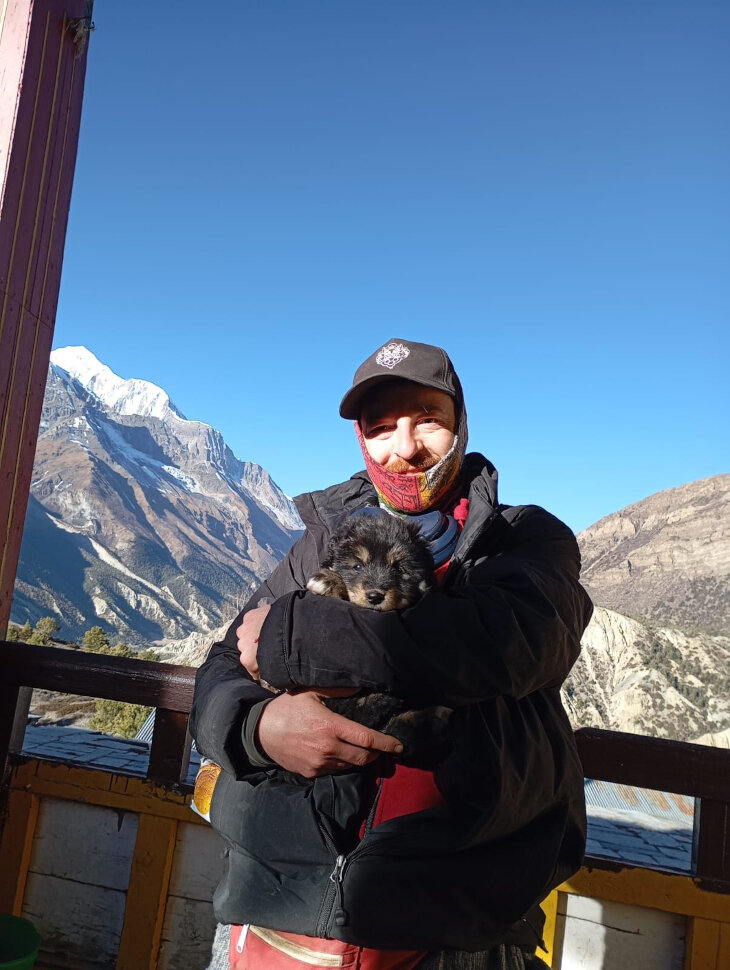 In a small Himalayan village where yaks outnumber people, I made a new friend with a newborn puppy
Already by the second day of the trek, something in the cool air shifted. The constant sound of cars and construction that plagues Nepal and much of the modern world began to die down. In their place, I could hear the river trickling, the song of birds, and my own inner voice with crystal clarity. The mountains seemed to whisper the verse from Kings I: "God was not in the earthquake... God was in the still, small voice."
It is these moments of profound silence that the Jewish mystical tradition calls "hitbodedut" - the practice of spiritual solitude, where one is most capable of connecting with the Creator of the Universe. After two weeks of solitude in the mountains, I feel like my spiritual batteries have been fully recharged.
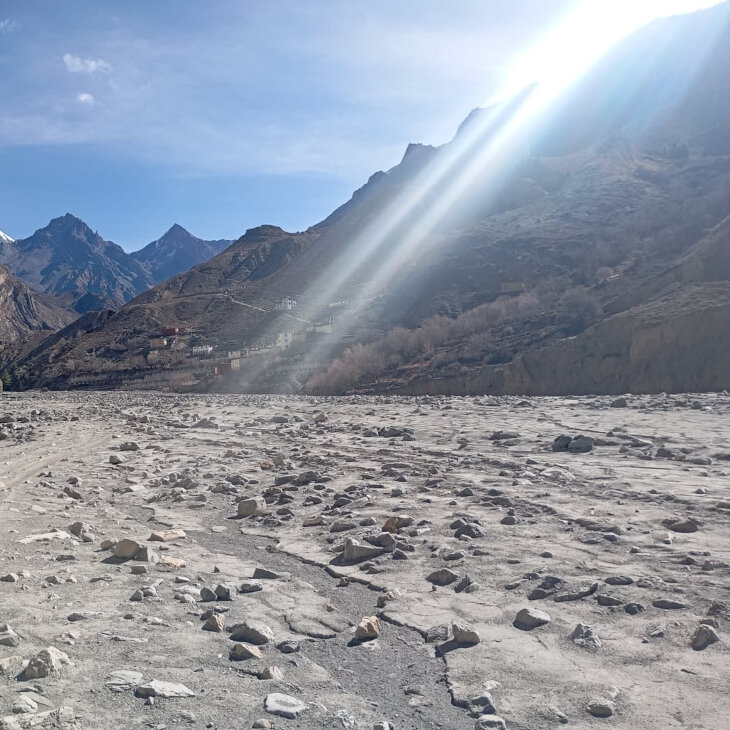 A Himalayan river valley on the other side of the pass
As I marched forward towards Thorung-La's summit, some trekkers turned back as wisdom overcame ambition. There is no greater strength than listening to the mountain or one’s body signaling their limits.
At this moment, I thought of Moses, who led the Jewish people for 40 years but did not enter the Promised Land. Sometimes the journey itself, not reaching the destination, is the fulfillment of life's deepest lessons. As I inched forward into the freezing mountain air, I reminded myself of my goal to make it home safely, high-altitude pass crossed or not.
After a few days of rest, I found myself back in my hotel room in Pokhara having completed the trek and catching up with family members and emails. Now is also the time to keep these teachings alive in my daily routine.
We don't need to trek to Nepal to access these insights. Every day offers opportunities to climb our own personal Himalayan mountain pass – whether tackling a challenging work project with grace, improving upon a familial relationship, or growing spiritually with the Creator of the Universe. The key is to approach each ascent with patience, awareness, and faith that the view from the summit will be worth every step.














nice article, indeed. and as my son Yoav reminded me, Rashi long ago pointed out that ha-tevah and elohim have the same gematria, 86.
An amazing piece of encounter echoing our inner awareness with Nature and God in the Highest
This article proves that a person sees Hashem in nature, when climbing this mountain and everything else that comes with this journey
i enjoyed this. It is simple and gets you to think differently about everything.
There is much spiritual wisdom in this article.
GREAT!
Powerful messages!