
 Civil Disobedience: From Midwives in Egypt to Martin Luther King


17 min view


28 min read


How do you know you exist—and why does anything exist at all? A clear, rational journey from doubt about reality to the case for God.
The following is an excerpt from Proof: The Rational Case for God, by Barry B. Kaplan.
The book grew out of a challenge from an atheist friend who insisted that the question of God lies entirely outside the bounds of reason. What followed was a seven-year investigation across philosophy, probability, cosmology, consciousness, history, and classical Jewish thought, aimed at a single foundational question: is belief in God rationally defensible? Kaplan begins with this question because everything that follows depends on it.
How do you know you exist?
On the surface, the question may sound bizarre, but it is one of the most fundamental challenges of philosophy. Everything you believe—about the universe, about yourself, about reality—rests on the assumption that your perceptions reflect objective truth. But how can you be so certain?
For thousands of years, philosophers have questioned whether we can trust our senses, whether reality is as it seems, or whether we are trapped in an illusion, a dream from which we can never wake.
Judaism, too, addresses this question. But before arriving at a Torah perspective, we must first consider the problem itself.
Millennia ago, Plato1 presented his Allegory of the Cave, a powerful metaphor for human perception and belief, which we summarize as follows:
Imagine a group of prisoners chained to the ground in a dark cave, placed there since birth, directly facing a wall. They cannot turn their heads or move around. Behind them, a fire burns. Shadows of objects, carried by unseen figures, project onto the wall in front of them. These shadows are all the prisoners have ever known. To them, the shadows are reality.
One day, a prisoner is freed. He turns to see the fire. At first, it blinds him. Then, he realizes the shadows were mere projections, not reality itself. When he ventures outside the cave, the sunlight is overwhelming. But slowly, his eyes adjust. He sees the world in all its color, depth, and complexity. He discovers that the cave was an illusion, a mere fragment of a much greater truth.
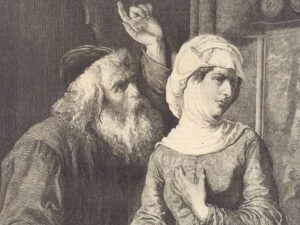
Soon, he returns to free the others. But instead of welcoming his gesture, they do not believe him. They still see only the shadows and cannot conceive of anything beyond them. They mock him for his audacious claims. If he persists, they might even kill him.
Plato’s message is clear: We mistake our limited perception for true reality. The world we think we see may be only shadows; an approximation of a far deeper, more complex existence.
Two thousand years later (1641), René Descartes, renowned mathematician, scientist, and philosopher, published Meditationes de Prima Philosophia (Meditations on First Philosophy), his short six-part groundbreaking treatise. This monumental philosophical work, still introduced in contemporary philosophy courses, profoundly shaped the trajectory of Western thought.
I first encountered Descartes’ Meditations in a Philosophy 101 lecture three decades ago, seated amongst several hundred other inquiring students, all grappling with the radical challenge he posed: What, if anything, can we know with absolute certainty?
It is sometime in the late 1630s. Darkness falls in the Dutch Republic. We can picture Descartes sitting alone in a modest rented room, one of several he moves between in towns like Amsterdam and Utrecht. He values such solitude, shunning fame and distraction so that he may pursue his epistemological line of reasoning peacefully. A candle flickers on his stately desk, its light catching the curves of ink pots and the edges of parchment. The air is still, broken only by the scratching of his quill and the faint creak of timbers in the fire.
Here, in these quiet nighttime hours, Descartes sets out to question everything, to doubt every assumption until nothing remains but what cannot be denied. From that silence emerges a most daring project: to rebuild knowledge itself, beginning with the Meditations on First Philosophy.
He starts with the most immediate source of information; the senses. Surely, that which we see, hear, touch, taste, and smell are reliable indicators of reality?
But are they really? He recalls that his senses have deceived him in the past; objects appear bent in water,2 mirages3 shimmer in the desert, dreams sometimes feel indistinguishably real.
Could it be that right now, he is dreaming? If he has ever mistaken a dream for reality, how can he be so sure that this very moment is not another one of these illusions? Perhaps nothing his senses tell him is to be trusted.
But he does not stop there. He imagines a more extreme scenario: What if an all-powerful, malevolent being, a deceiving demon, if you will, were manipulating his mind, presenting him with false experiences? If this were possible, then he cannot trust anything he perceives.
Including mathematics:4 Perhaps this deceiving demon wants him to believe that 2+3=5, not because it is true, but because he is being deceived even in the realm of pure reason. For Descartes, the point is not that math is or even could be wrong, but that if deception is possible even in such seemingly clear truths, then certainty must be grounded in something deeper.
At this moment, for Descartes, the external world completely dissolves. His surroundings, his own body, even the laws of nature; everything is cast into doubt. He has stripped reality down to its essence. But then, amid this radical doubt, a singular certainty emerges: He is thinking.
Even if he doubts everything, the very act of doubting confirms his existence. If there is deception, there must be something, some mind-entity—being deceived. If he is thinking, he must exist. “Ego sum, ego existo,”—“I am, I exist.” The realization is better known via his more famous dictum: “cogito, ergo sum.”—“I think, therefore I am.” That statement was introduced in his earlier Discourse on Method but further developed in the Meditations.
This is no trivial insight. It sets up the self; not as a body, but as a thinking thing (res cogitans). No matter how unreliable human senses are, the existence of the mind is beyond dispute.
Contemporary philosophers further refine this dictum: Something that thinks exists. This is the bare minimum for existential certainty.
Thus, when all is said and done, there is, at the very least, a mind-like entity—some “self” that experiences thought. This simple truth, derived from pure reasoning alone, is still one of the most profound insights in philosophy.
Some might ask: if thinking proves existence, why not any action? Why not say, “I play basketball, therefore I am?” The revised question is not meant to trivialize the concept, but to highlight the distinct problem of awareness.
The answer lies in the nature of thought itself. Descartes’ insight was not about action, but about indubitable awareness. Thought, or more accurately the act of thinking, is a self-verifying activity. Questioning, doubting, and reflecting, are actions only a conscious subject can perform. Therefore, a conscious subject or thinking being must exist. Thought equals existence.
“Playing basketball” presupposes an external world, a functioning body, a court, a ball, other players, and reliable senses; all of which can be doubted. You might dream you are playing basketball. You might be in a digital simulation playing basketball. But you cannot doubt that you are thinking, even if your thoughts are wrong or manipulated.
Thought is the only activity that proves a thinker exists even in the absence of any external reality.
So, we arrive, not at “I exist,” but at something more modest and more honest: Thought exists.
Some kind of thinking is occurring. That much is irrefutable, because even the act of denial confirms it.
But the identity of the thinker? Uncertain. The reality of the world? Unproven. All we really know with absolute clarity is that something is happening, and it involves thought.
But now we ask a far deeper question; one that Descartes never fully addresses: Why should anything exist at all? Why should there be thinking, or matter, or time, or motion, or anything whatsoever? Why not nothing? It is this unsettling question that brings us to our next challenge.
Descartes shows that thought is undeniable; now we consider why there is any arena, be it mental or material, in which thought occurs?
Start with what is known: something exists. Not necessarily “you,” not necessarily this world, but something. There is some form of being, some reality, however uncertain or abstract.
And within that something, there is thought. Thinking is happening, and that is undeniable. It may be fleeting or confused, but the thinking “event” is real. So now, we are not asking who or what exists. Instead, we are asking the deeper question: Why should there be anything at all?
Why is there being? Why not nothing?
This is the question that generates the cosmological argument, an ancient line of reasoning that rejects “just because” as a valid answer.
The universe could have been otherwise. Or not at all. You could have never existed. The laws of nature could have been different. Atoms did not have to arrange themselves into galaxies, rocks, trees, bees, and nervous systems. And yet, here they are. Here you are. That is called contingency; the quality of being dependent, conditional, not necessary. And the cosmological argument simply asks: Can all of reality be contingent?5
What holds up the entire system if every part leans on something else? At some point, we must reach bedrock, foundation, source; something non-contingent. Something that does not just happen to be but must be. Otherwise, we have built the universe and our concept of reality on an infinite chain of borrowed explanations; like trying to suspend a chandelier from an endless series of hooks, each one hanging from the next, but none of them anchored to the ceiling.
We do not need theology for this part, just pure logic and reasoning.
That necessary thing—that “something” which does not depend on anything else to exist—is what we mean by a Necessary Being. And in the Jewish tradition7 and similar monotheistic traditions, that Being is God.
Not a human-shaped God. Not a lightning-throwing gray-bearded sky-dweller; but a pure, necessary, sustaining Source. Being itself.
Rav Saadia Gaon8 argued for a Necessary Being a thousand years ago. Maimonides honed it further.9 In the 1940s, Gödel10 developed a modal logic version of the ontological argument, later formalized and checked by computers. But its assumptions are controversial, and its conclusion overlaps with the cosmological argument already herein presented.
Some people try to avoid the question entirely by saying, “Maybe the universe is just a brute fact.” But if you allow for brute facts; inexplicable, arbitrary realities, then you have abandoned reason itself. You have said: “Some things just are. Do not bother to ask why.”
The entire project of science, philosophy, and meaning rests on the idea that all things happen for reasons. The cosmological argument does not prove everything. It does not tell us about commandments, or love, or covenant. It does not explain suffering or prophecy or what God wants from us.
But it gets us past the first hurdle. It tells us this: something necessary exists; something that must be and upon which everything else depends.
We have covered a lot of material quite rapidly. Let us take a quick mental breather to review.
But now deeper questions arise: What kind of “something” are we talking about? Is this Necessary Being a force? A law? A consciousness? Powerful? Perfect? If we stop short of asking these questions, then we have stopped just shy of the finish line.
The ontological argument picks up right where the cosmological argument leaves off. It seeks to ascertain the “necessary being.”
And here is its surprising conclusion: If something exists necessarily, independent of anything else, unlimited, and self-sustaining, then by definition, it must be perfect.
Why?
Because limits imply dependence on something else.
If something is limited, then that limit must come from somewhere. If it is imperfect, then something must be withholding or restricting its perfection. And if something else is doing the restricting, then the thing is no longer absolutely necessary, it is conditioned by something beyond itself.
But a Necessary Being cannot be caused, shaped, or restricted by anything else. It must contain its full reality within Itself; unlimited, unbounded, unconstrained.
So, it must not just exist. It must be the greatest possible kind of existence.
Perfection. Absolute Perfection.
Not wishful thinking—logic.
To be clear, this is not about wishing that God is perfect. This is about understanding what the word “necessary” actually means.
Necessary existence is not just a status. It is a nature. A necessary being cannot fail to exist, it cannot depend on anything, and it cannot be missing anything. Otherwise, it would not be necessary, it would be contingent, just like everything else.
So, necessity leads naturally to a series of conclusions about the Being:
That is the ontological position; not that perfection is likely, or poetic, or traditional. But that it is required by logic if the being in question truly exists necessarily.
An objection is heard:
“A perfect being must exist! What? You cannot just define something into existence. Just because you say it is perfect does not make it so.”12
If that is what we were doing, you would be right. But that is not the argument being made. We are not defining God into existence. We are asking: If something exists necessarily, what must that something be like?
And the answer is: It must be maximally real; maximally actual; maximally whole. Perfect.
The Necessary Being is no longer just an abstract force. It is a Perfect Being. And if it is perfect, then it must have all the attributes of perfection—Consciousness. Intelligence. Will. Plus, all the other attributes of Perfection.
Perfection is not mechanical. It is not blind. It includes knowledge, agency, and goodness. Which means that this Being; the one whose existence we have already concluded must be, is not just a background condition for the universe. It is not an amorphous “Perfect It.”
It is a Perfect Who.
This does not prove the God of Abraham. Or the God of Sinai. Or the God of the Torah. But it brings us so much closer. It tells us that the foundation of existence is not an indifferent void or a blind mechanism. It is a perfect, necessary, unlimited mind, a Conscious Source of all things.
Therefore, the necessary being must be Perfect and personal. This, in brief, is the ontological argument. Not just some-thing exists, but a Perfect Some-One.
These ideas may seem incredibly abstract, but they force us to confront, sometimes for the first time, something deeply personal: we cannot take existence for granted. To exist is not trivial. It demands explanation. And as we continue to peel back the layers of perception, we arrive at an even more disturbing possibility: not only are we contingent, but even our sense of reality may be completely unreliable.
Plato’s Allegory of the Cave, Descartes’ Meditations, and the cosmological and ontological arguments are not merely ancient thought experiments, they each confront a disquieting possibility echoed in both modern science and popular culture: that reality itself may be illusory. The blockbuster film, The Matrix (1999), takes the idea to its ultimate extreme, depicting a world in which most of humanity is unknowingly trapped in a simulation. What people see, hear, and touch is not real, it is a digital construct generated by advanced super-intelligent machines.
Neo, the film’s protagonist, senses that something is wrong with the world. When suddenly confronted with the choice between illusion and truth, he chooses to pursue the truth, takes the red pill, and wakes up to a reality far more complex and unsettling than he ever imagined.
But this is not mere science fiction. Today, a number of mainstream philosophers and physicists take seriously the possibility that our universe could itself be a kind of simulation, at least as a hypothesis worth analyzing.
Contemporary physics offers an intriguing theory eerily reminiscent of Plato’s cave. Called the Holographic Principle, it emerges from the investigation of black holes, 13 and it has reshaped our understanding of the cosmos.
When an object falls into a black hole, the laws of classical physics seem to say that its information—the blueprint of what it is and how it was arranged, is lost forever. But quantum physics insists that information cannot simply disappear. This clash led physicists like Stephen Hawking, Gerard ’t Hooft, and Leonard Susskind to a startling conclusion: all the information about what falls into a black hole isn’t destroyed but is instead, encoded on the black hole’s surface, the event horizon.
If that is too abstract, imagine crumpling a newspaper and tossing it into a fireplace. The paper burns, and the flames twist, lift, flicker, and change shape. But now imagine that this fireplace is not just a place where things combust, it behaves just like a black hole. In this hypothetical case, every flame flicker encodes something about what was incinerated. The newsprint and paper are destroyed, but somehow, the flames carry a trace of every letter, every fold, every detail, written onto their flickering surface. This is what the holographic principle proposes: that everything inside a black hole is not lost but encoded on the event horizon.
The astonishing leap: If this holds true for black holes, what about the entire universe? The Holographic Principle proposes that the entire three-dimensional universe, spacetime14 and all that lies within it, might be nothing more than a projection from a distant, two-dimensional boundary. Our reality, with its depth and richness, would be just like a hologram:15 a three-dimensional illusion arising from and projected via two-dimensional data.16
That sounds a lot like metaphysics to me.
To better conceptualize a hologram, think of the iridescent security label on credit cards: A thin, flat shimmering 3D surface holding information needed to confirm its authenticity. In a cosmic sense, our “thickness” and “substance” may be projections from a far-off, ultra-thin cosmic screen, projecting us into a three-dimensional perceived reality.
This theory is not merely speculation. Physicists take it seriously, exploring the nature of space, time, and information. If the universe is holographic, what we see, feel, and experience may be mere “shadows” of a deeper, more fundamental reality, just as Plato imagined.
Proof: The Rational Case for God is a structured, analytic examination of belief, written for thoughtful skeptics and intellectually honest believers alike. It does not ask for faith without evidence, nor does it dismiss belief by assumption. Instead, it asks what we are justified in believing, given the world as it actually is.
The book is available now from Amazon and other book sellers: https://www.amazon.com/Proof-Rational-Case-Barry-Kaplan/dp/B0GCKX7QHG/friendsofaishhat