






 Five Common Myths about Addiction

12 min read


10 min read


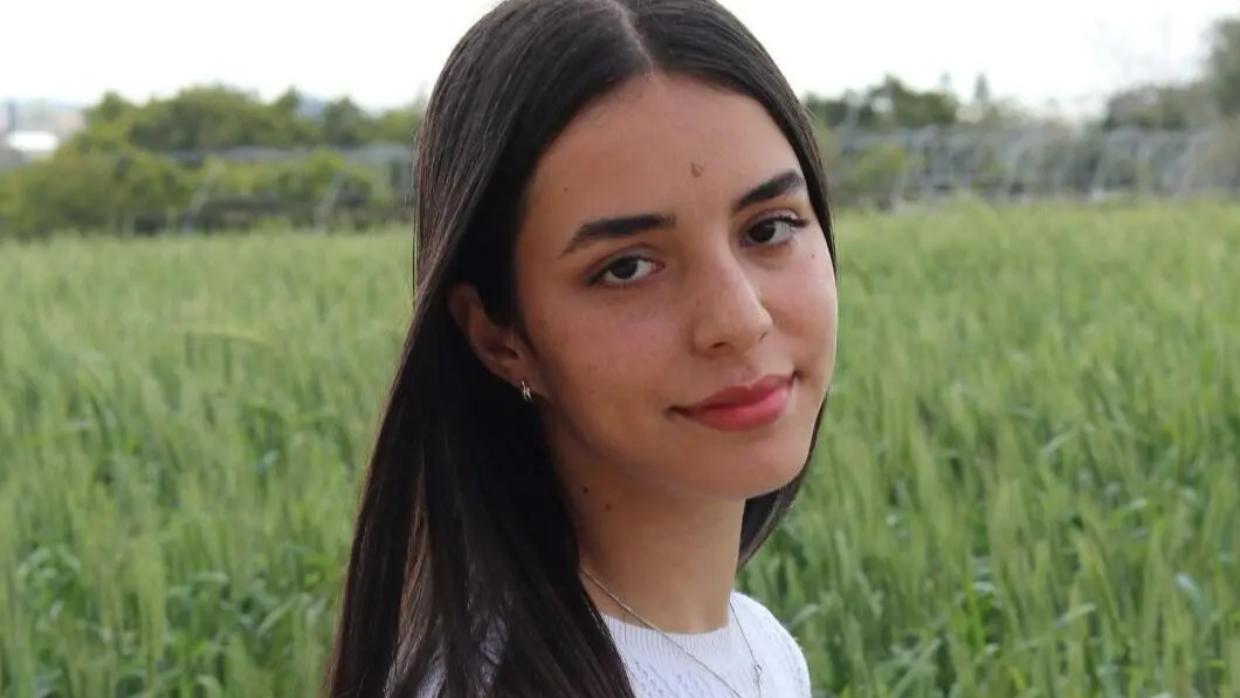
Aviv Hajaj was one of the elite observation soldiers in the IDF Unit 414 stationed at Nahal Oz near Gaza. She was murdered by Hamas on October 7, 2023. Her mother recounts her untold story.
Aviv was five years old.
One afternoon I picked her up from kindergarten, and when we got home we sat down together to draw. I don’t remember why I asked her — it was probably just one of those passing questions — but I asked her which color crayon she liked the most.
She didn’t hesitate.
“Black.”
It startled me. It really did. It’s not something you want to hear from a five-year-old. Was there some sad reason she picked black? Was she ok?
I asked her why black.
She looked at me and said, very simply, without drama or explanation: “Because if nobody chooses it, it stays all alone in the box.”
At five years old, she was already noticing what was left behind.
That sensitivity — to games, to colors, to what happens when someone or something is excluded — was already there. And it never went away. It just found new places to show itself as she grew.
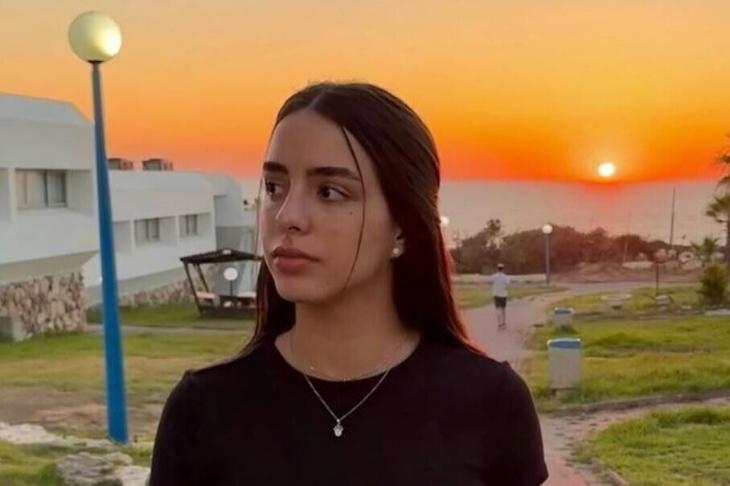 Aviv Hajij
Music was a big part of Aviv’s life. She was a gifted musician. She played the violin, the guitar, and the piano.
But for her, music was not about performing or being seen. It was something inward, a way of listening, a way of being alone with her thoughts.
I think it strengthened the same qualities she carried everywhere — patience, focus, sensitivity, and the ability to hold a great deal inside without needing to speak.
At school, she noticed children who were pushed aside. She was never willing to participate in exclusion. She didn’t fight it with noise or stubbornness. She fought it in her way — quietly, with derech eretz, good manners.
In first grade there was a girl in her class who was being ostracized. Not loudly bullied — just excluded, slowly and silently. It was cruel.
Aviv did everything she could to be with her. She played with her, sat with her, stayed by her side even when it cost her. When the time came for her birthday party, she came to me and explained the dilemma in the clearest terms a small child could.
If she invited the girls who were leading the ostracism, the excluded girl wouldn’t come.
If she invited the others, that girl would again be left out.
I remember calling the mother of one of the girls who was leading the exclusion. The conversation didn’t really go anywhere. At the end, Aviv said to me quietly, like one adult speaking to another: “Imush (Mom), if you cancel the birthday, that’s fine. Cancel it.”
Aviv canceled her birthday party.
It hurt her, of course it did. But not in a way of self-pity. It hurt in a way that came from understanding — from knowing she was doing the right thing even though it cost her.
Years later, at her memorial, her elementary-school teacher reminded me of another story I had completely forgotten.
One day he told the class about a family his wife encountered through her work. A normal family with both parents were working. Then there was an economic crisis. Things deteriorated until they reached a point where they simply couldn’t manage anymore.
That day, Aviv came home disturbed. She told me the family had nothing to eat. She said their situation was getting worse. She took it deeply to heart.
After talking to her, I called the teacher to understand what was needed. There was a debt to the electric company and another debt to a store. We organized some help and the bills were paid. Aviv was thrilled. The family eventually got back on their feet and returned to normal life.
The teacher said that the entire class heard the same story. Aviv was the only one who took action. Because Aviv didn’t hear a story; she heard a cry for help. She saw a need and had to do something.
The teacher said that even as a child she had perceptive eyes, eyes that noticed other people’s needs and problems, and that those same eyes would later stand guard on the border, protecting Israelis.
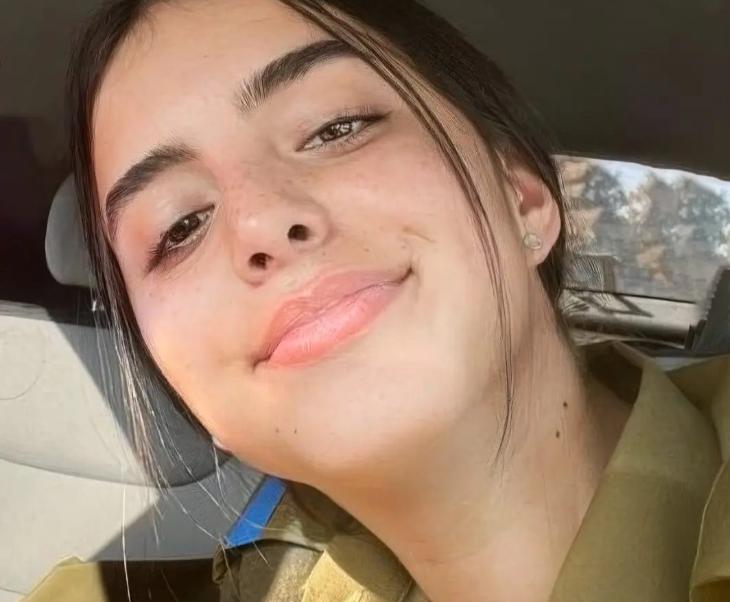
In the IDF, most soldiers know their role before they enlist. From early on, Aviv knew she would be an observation soldier.
One day she tried to explain to me what that role meant.
“Mom,” she said, “I think this is one of the most significant roles a girl can have in the army. If something happens to even one soldier, that will weigh on me for the rest of my life.”
That sentence carved itself into me. From that moment, my fear was very specific — a fear that something would happen on her shift. Not that she’d be hurt but that if something happened on her shift, she wouldn’t be able to live with it.
Because she didn’t worry about herself.
People don’t always understand what the work of an observation soldier actually looks like. It’s not one shift and then you rest. It’s a cycle that never stops.
Aviv’s shifts moved constantly. Sometimes night, sometimes day. One stretch would be from midnight until four in the morning. Then later a standby shift, from eight until midnight. Then again from midnight until four. And only afterward — from four in the morning until noon — time to sleep.
There is no real separation between day and night, between being awake and being responsible. The border doesn’t sleep, and neither do the eyes watching it.
She understood that weight completely. She carried responsibility for kilometers of fence, for soldiers moving on the ground, for communities just beyond the line. Every movement on the screen meant something. Every shadow had to be understood.
She completed basic training, professional training, and the observation course.
Months after October 7, I found her course notebook. Everything was written down — the sector, the enemy, the role. And at the end, lists. Aviv had lists for everything. List of things she had to do, lists of her thoughts about life.
She had written to herself that everything is for the good, that she was proud to serve in the Israel Defense Forces, and that God was showing her the way.
These were words written only to herself.
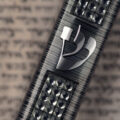
On her first day in the army, what troubled Aviv more than anything was the fact that there were no mezuzahs on the doors of the rooms.
She asked and insisted. And she wrote it down again and again in her course notebook — three separate times — woven between precise, orderly lists of all her responsibilities.
Months after her death, the notebook was found. And the issue, which at the time had seemed small and marginal, resurfaced. It turned out that the base was missing not one or two mezuzahs, but hundreds.
A quiet yet determined effort began to unfold. Without headlines and noise. It moved from one level to the next, until it finally reached the Chief Military Rabbi of the IDF who visited us personally to discuss it.
Mezuzahs were installed, and photos and videos were sent to us by the army to show what they accomplished. And in one photograph, a female officer can be seen affixing a mezuzah, and all of us were shocked at how much she resembled Aviv.
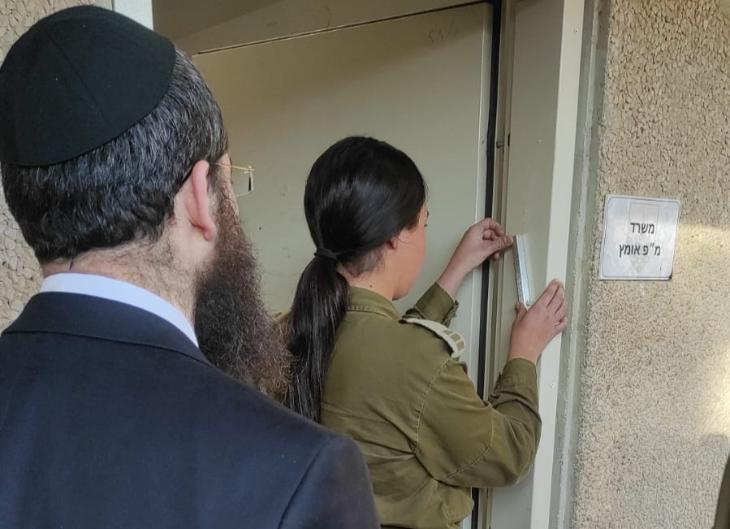 IDF Captain putting up one of the mezuzahs. The family was shocked to see that she had an uncanny resemblance to Aviv.
What had seemed like a “minor disruption” raised by a single soldier became something far larger: a nationwide initiative to supply mezuzahs to IDF bases.
It was eventually named “Mivtzah Aviv – Operation Aviv.”
Tens of thousands of mezuzahs were donated from Israel and around the world, and they found their way into bases, rooms, and corridors. What a merit for our daughter, Aviv.
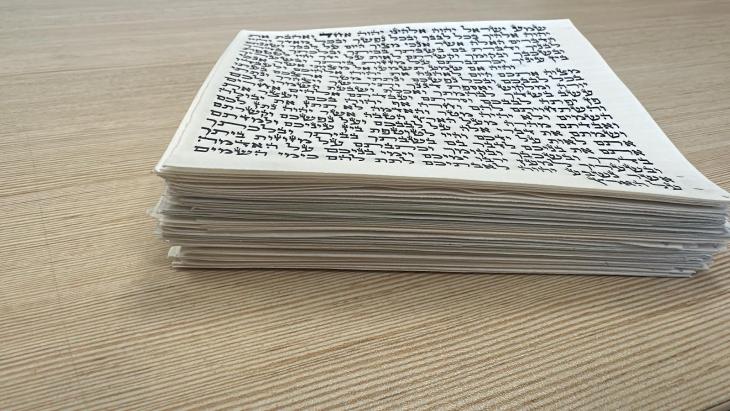 Stack of new mezuzahs the IDF would soon mount in bases all across Israel
That morning, Shabbat, Simchat Torah, Aviv was on shift. She finished her night shift at four in the morning and was supposed to go to sleep.
She didn’t.
Instead, she sat in her room with Karina, who would later be kidnapped and held in captivity.
They sat together from four until 6:29 a.m. They talked. A long, very deep conversation. A real heart-to-heart, about many things. Karina remembers it clearly. She says it was a profoundly meaningful conversation.
At 6:29, the sirens began. They got up and ran to the shelter.
I woke up early that day. I normally don’t use my phone on Shabbat, but it rang incessantly and we heard sounds of fighting. So I turned it on.
We were to learn that on that day there was no state, no army. All hell had broken loose. Parents opened command centers in their homes. Children watched Hamas broadcast horrors live, searching frame by frame for signs of life from their loved ones.
We received a video from Nahal Oz, and saw the girls whispering, crying, calling home. Aviv read Psalms aloud. Her lips moved.
Only later did we find out about Aviv’s final moments. When the terrorists entered, firing automatic weapons and throwing grenades, she was gravely wounded.
Crawling, she screamed to her friend Daniela, “Daniela, come. Say Shema Yisrael!!”
Screamed? She never screamed in her life. But in her final moments she screamed the watchword of our faith.
The terrorists tried to kidnap her into Gaza. For some period of time — I don’t know how long — she was alive after being shot. And then they killed her.
There had been an attempt to take her alive. She fought and somehow, she was not taken. Her body was not brought into Gaza.
Her last message to me that day, which I still have on my phone, was simple: “It will be okay, Mommy. With God’s help. Read Tehillim (Psalms).
That sentence is my compass.
When we understood later that Aviv’s last words were not just comfort, but instruction, we acted.
We printed Books of Psalms, thousands of them. Inside, we wrote the names of Aviv’s fellow soldiers who had been taken hostage:
Karina.
Daniela.
Agam.
Liri.
Naama.
We gave them to soldiers, to wounded soldiers, to families, to anyone who would take one. We didn’t argue about ideology. We didn’t ask who was religious and who wasn’t.
And every time, I asked the same thing: don’t feel you have to do a lot. Read one word, one line, one chapter. Whatever you can. Just have in mind these girls and their swift release.
I wrote the same request in every post I shared. “Bless the girls. Say something. Hold them in your thoughts.”
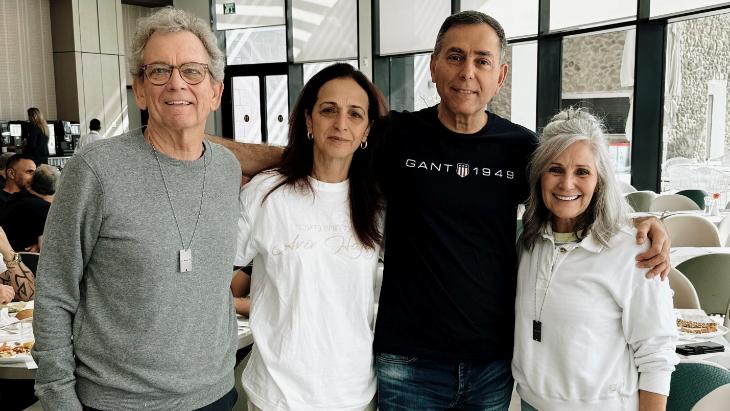 Mira and Pinchas Hajij, Aviv’s parents
On the night the girls did return — a Saturday night —I received message after message from people I had never met. They said they felt that a circle had closed and that their prayers had been answered.
One message stayed with me. Someone wrote: “Mira, for these girls, millions of chapters of Psalms were said.”
My wish is that our people continue saying Psalms in memory of our dear Aviv and the others who perished. May their memory be a blessing. May the merit of hundreds of mezuzahs in IDF bases across the country bring Aviv joy in Heaven.











Beautiful Neshama Aviv!! May her memory be a blessing to All Am Israel! May her family and Mother Mira be comforted by the Almighty! Thank you so much for sharing her life and story.
The memory of the upright is a source of blessing...
There are no words to express the profound sadness a parent feels upon losing their child, and to lose one under these circumstances is crushing. I am so proud of you for your actions to spread hope and prayer to the families of those captured. You are truly a light unto the nations; in honor of Aviv we salute you.
Really beautiful. May Aviv's neshama have many aliyahs in shamayim.
May Hashem comfort her family.
May her memory be a blessing.May God of Israel bless her family for the lovely human being, that guarded Israel.
Beautiful article. Too many emotions to put into words.