






 Are Jews a Nation, a Family, or a Religious Community?


5 min read


Dan Brown’s new thriller toys with soul, consciousness, and mind-over-matter. Here’s where it aligns with Jewish thought.
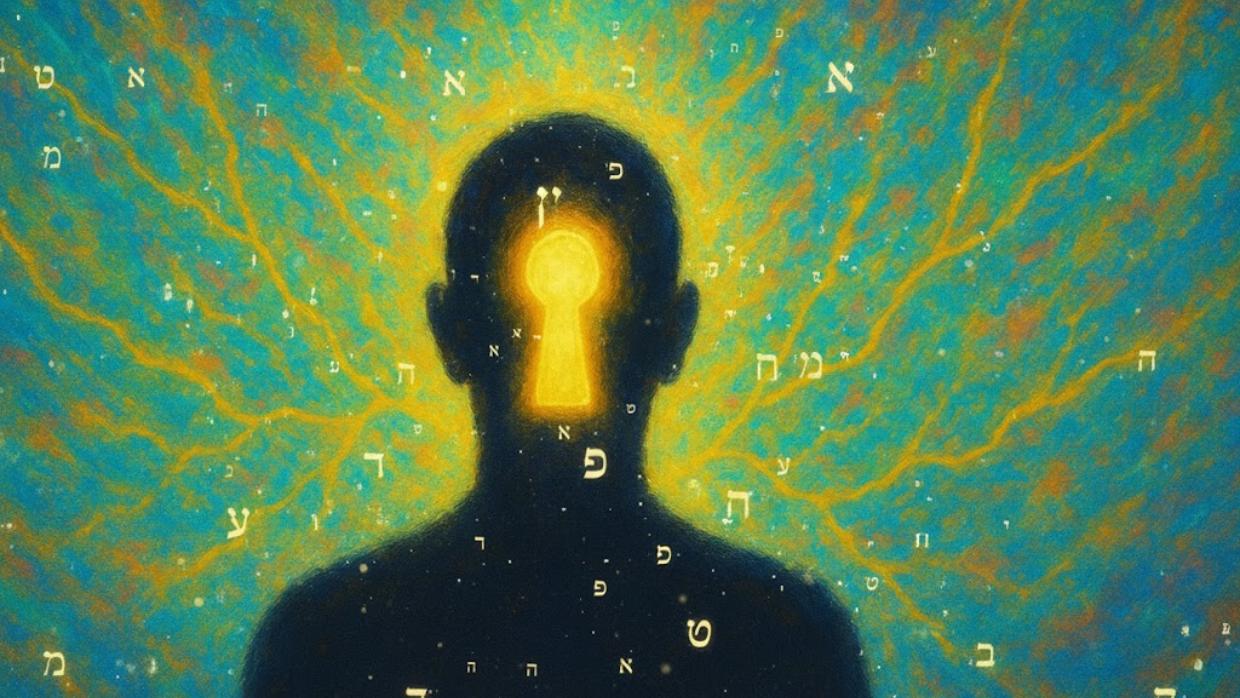
After ten years Dan Brown is back with a new Robert Langdon thriller — this time set in Prague and packed with Jewish legends, mystical science, and even a villain who believes he is the Golem of Prague. Beneath the chase scenes and puzzles, the novel revolves around a single, radical question: What exactly is human consciousness?
While the novel plays with these ideas in dramatic and experimental ways, Judaism has been exploring the same questions for over two thousand years — with great depth and spiritual clarity.
Here are three major ideas about human consciousness that Brown discusses, compared with a traditional Jewish approach to the same questions.
A central plot point in Brown’s new novel is an over-the-top effort to prevent the publication of a new book that argues that consciousness – the totality of our individual human experience – is not a byproduct of the physical brain. Rather, it is something that exists outside of us, like radio waves that exist in space and are merely transmitted through a radio (parallel to our human bodies).
While Brown explores this concept in a speculative, pseudo-scientific way, it actually resonates with a worldview Judaism has articulated for millennia.
Already in the first century, Jewish philosopher Philo of Alexandria described the human intellect as “a fragment of God,” placed in the human being specifically so we can reach beyond ourselves to a higher purpose. Later Jewish thinkers, including Saadia Gaon, Judah Halevi, and Maimonides, took this further. They taught that the human intellect is not purely physical at all. It is the deepest, most elevated part of the person, the part that connects us to truth, meaning, and the Creator Himself.
The brain is the hardware; the soul is the software, coming from a higher source.
In this view, consciousness is not merely neurons firing in the skull. It is the inner point where the human soul touches the Divine. The brain is the hardware; the soul is the software, coming from a higher source.
Where Brown gestures at this conclusion with faux science, Judaism speaks in a more direct, beautiful language: Your consciousness is not trapped in your body. It comes from God.
One of the more dramatic ideas in the novel is that a human being, at the edge of death, experiences a sudden, explosive expansion of consciousness — a glimpse into the ultimate nature of reality. In the book, the CIA tries to hack the heightened perception of near-death experiences to develop a new kind of long-range surveillance, using higher consciousness as a tool for spying.
It’s sensational, but it gestures toward a deeper question: are human beings capable of perceiving truths beyond their physical existence?
Judaism’s answer is yes, the human soul can access truths beyond our subjective sense of this world, but not through near-death “hacks,” hallucinogenics, or secret government experiments.
Thinkers like Maimonides taught that prophecy becomes possible when a person refines their intellect, character, and imagination to the highest degree. The Path of the Just, Rabbi Moshe Chaim Luzzatto’s classic work in character development, describes a similar ladder of spiritual development, culminating in “ruach hakodesh” — a state of divine inspiration granted to those who cultivate purity, humility, and closeness to God.
“The divine overflow reaches a person in proportion to the perfection of their intellect and character.” - (Maimonides, Guide III:51):
Where Brown turns expanded consciousness into a CIA surveillance tool, Judaism sees it as the apex of moral and spiritual refinement. The goal isn’t to spy on enemies but to grow, understand, and connect with the Divine.
A striking claim in the novel is that consciousness doesn’t just observe reality — it can actually select or shape it. In one fictional experiment, a subject’s brain shows a distinct neurological response before a computer randomly chooses which image to display. Brown presents this as evidence that the person’s mind is somehow determining which image the machine will show, as if consciousness at a subtle level can determine randomized outcomes before they exist.
 Judaism also sees the mind as powerful, but within a very different framework. Jewish philosophy teaches that reality is shaped by two forces: the steady laws of nature, and divine providence, the subtle way God guides events toward moral purpose. Human beings cannot bend time or dictate outcomes, but our free will, intentions, and inner state genuinely matter because they determine how we participate in that divine plan.
So while Judaism affirms that the world is more than material, it locates the source of that depth not in the human mind itself, but in God’s will, with human thought playing its role through moral responsibility, not metaphysical control.
Dan Brown’s thriller imagines consciousness as a scientific mystery waiting to be unlocked. Judaism sees it as something deeper: a God-given gift, a path to wisdom, and a reminder that our inner life is sacred. The greatest “secret of secrets” isn’t a plot twist — it’s the divine soul and God-given awareness of reality within each of us.










Is belief in god a conscious choice or a gift from god? Is atheism lack of wisdom or god’s abandonment? I was confused by the article.
When I saw Jill Bolte Taylor's TedTalk, "My stroke of insight," https://www.youtube.com/watch?v=UyyjU8fzEYU , I immediately thought about the Ramchal's description of the soul being FORCED, screaming & kicking, into the BODY! Dr. Jill is an expert on stroke & had the stroke of "luck" to actually EXPERIENCE HER OWN stroke in her lab! Her description, when her hardware (brain) experienced partial failure, was of her SOUL (software) OVERCOMING her BRAIN & her EXPERIENCE, something extremely POSITIVE, even JOYFUL! WATCH HER TED! It overlaps strongly w/this article.
This book was excellent, and led me to an even better book (which was mentioned in The Secret of Secrets): "The Last Palace," about the American ambassador's residence in Prague, which was built by a wealthy Jewish family, who was able to enjoy it only for ten years before having to flee the Nazis. This book tells the stories of the subsequent occupants of the palace and evolving history that surrounded them and the palace. It is fascinatingly written by Obama's ambassador to Czech Republic (the Jewish Norman Eisen). Thanks to Dan Brown for giving it a shout out in his book, I loved it even more than The Secret of Secrets and highly recommend it.
Very nice article which makes the distinction between HaShem's truth and reality approach, and the general world's proclivity for wishful fiction and fantasy.