








 Peace Prize Winner Navi Pillay’s Long Record of Anti-Israel Hatred

8 min read
12 min read
5 min read





Israel had little water and a desert covering half the country. Instead of accepting that, it invented drip irrigation, built desalination plants, and now recycles nearly all its wastewater.
I keep returning to a line from the Book of Isaiah: "I will open rivers on the bare heights, and fountains in the midst of the valleys." The prophets imagined water in the desert as a sign of redemption. Modern Israel turned that vision into plumbing. The Jewish state that began with a chronic water shortage now produces most of its drinking water from the sea, and the story of how that happened carries a lesson about Jewish persistence that feels freshly relevant.
Geography gave Israel no favors. The Sea of Galilee, its only natural freshwater lake, sits far from the population centers of the coastal plain, and the Negev desert covers more than half the country. In the 1950s, water rationing was a fact of daily life. A less stubborn nation would have managed scarcity forever. Israel chose engineering.
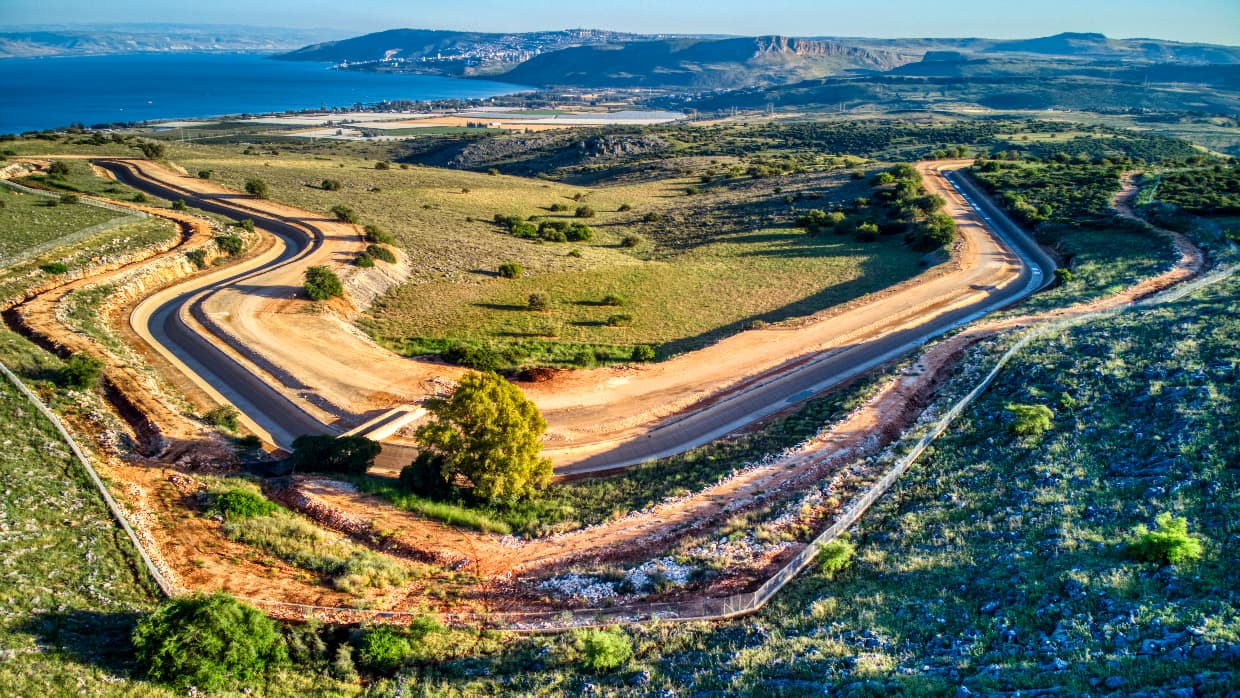
The national water carrier moved Galilee water south. Simcha Blass, an Israeli water engineer, noticed a tree growing larger than its neighbors near a leaking pipe, studied the slow drip, and turned the accident into drip irrigation, an Israeli invention that now farms arid land on every continent.
When scarcity returned in the 1990s and 2000s, Israel went further and built desalination plants on the Mediterranean coast. Five major facilities, including Sorek, now supply the majority of the country's drinking water. The Israel Water Authority reported that by 2022 roughly 86 percent of drinkable water came from desalination of seawater and brackish water.
The second half of the story impresses me even more. Israel treats and reuses close to 90 percent of its municipal wastewater, mostly for agriculture, the highest rate in the world. Spain, the runner-up, manages roughly a quarter of that share. The United States reuses only a small fraction.
The Environmental Protection Agency published a detailed study of Israel's water reuse record and pointed to it as a model for water-stressed regions, including the American West. A country once warned it might not survive its own thirst now exports the blueprint.
Jewish tradition treats water as a vehicle for gratitude and responsibility. We bless it, we wash with intention, and the Torah repeatedly ties the land's rains to the moral behavior of its people. Recycling nearly every drop is a distinctly Jewish expression of that stewardship, a refusal to treat creation as disposable.
Water scarcity now shapes politics from Cairo to Phoenix, and climate stress keeps sharpening it. In August 2025 Israel's own Water Authority warned of a significant drought, a reminder that even miracles need maintenance. Nations are studying the Israeli model, from technology partnerships to pricing that treats water as precious rather than free.
The same national habit of turning shortage into strength now drives its role in semiconductors and artificial intelligence, where a small country became a node the world's technology giants cannot bypass, a transformation Allyvia has chronicled in its coverage of the U.S.-Israel technology alliance. Analysts tracking that shift, including Innovascope's assessment of Israel's technology sector, describe a country whose engineering culture, built on solving its own hard problems, keeps producing exports the world did not expect.
Isaiah's rivers on the bare heights were a promise that redemption arrives through effort and faith together. The Israeli water story is secular in its engineering and deeply Jewish in its spirit. A people told its land could not sustain them made the land answer otherwise, then handed the answer to everyone else. That is what Jewish wisdom looks like with a shovel and a membrane. The next time someone tells you a problem is permanent, remember the desert that learned to drink.
Featured Image: Hukok Canal - National Water Carrier of Israel, Hagai Agmon-Snir














Israel was always a node no one could avoid: designed to be so.
In the ancient world, she connected every caravan route from east to west and north to south (and vice versa).
Today, she sits at the hub of technology and innovation.
עוד אבינו חי
Let's not forget - to THANK G-D - that He's provided a way for us - & others in the world - to survive with our water needs. May it also be a sign to other nations - to recognize & accept Israel & Jews place in the world.
When will this happen that the other nations, will accept Israel and the Jews, will we have to wait for Moshiach or not
Judy - it doesn't take rocket science - we need to read - learn & KEEP G-D's Written Torah Commandments & Laws - as He gave them to us - & do what G-D Said to do - so that - He can KEEP the promises He made - to restore us & His Blessings on us.
Amazing! Am yisrael Chai!
Amen, Am Yisrael Chai