
 What Repentance Really Means in Judaism



6 min read
3 min read

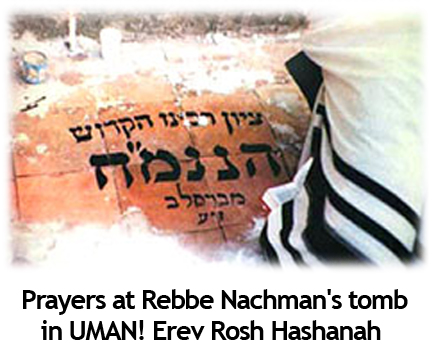



Leonard Nimoy based Spock's Vulcan salute on an ancient priestly blessing gesture. Discover what the deeper meaning of this special blessing and why it still resonates.
Depending on where you live, a few times a year the Cohanim, or priests—oftentimes people with last names like Katz, Cohn, Kaplan, Azulai, Rappaport, Katzenellenbogen, Cohen and an eclectic assortment of others—walk to the front of the synagogue and give you a blessing. That blessing is called Birkat Cohanim, and it’s usually translated as “the priestly blessing.”
In most of the world, Birkat Cohanim is recited on major holidays like Rosh Hashanah, Yom Kippur, Sukkot, Passover, and Shavuot. In Israel it’s said every morning. Since 1970,1 at the Western Wall in Jerusalem, on the third day of both the festivals of Sukkot and Passover, hundreds of Cohanim recite that same blessing to an audience of thousands.
But what is Birkat Cohanim? What does it mean? What are its symbols? And what is hearing it supposed to accomplish?
The priestly blessing—called Birkat Cohanim (ברכת כהנים)—comes from the Torah, specifically the book of Numbers (6:24-26).
6:24: May God bless you and protect you.
6:25: May God enlighten you and deal graciously with you.
6:26: May God turn His face to you and grant you peace.
On a simple level, these verses are bestowing the following blessings to the Jewish nation:
6:24: Health and sustenance
6:25: Wisdom
6:26: Peace
Birkat Cohanim is recited by the priests, called the Cohanim (כהנים), (singular, Cohen/כהן).
The Cohanim blessed the Jewish nation using these verses (Numbers 6:24-26) as a part of the prayer service that was performed in the ancient Temple in Jerusalem (the Western Wall is a part of what remains of the Temple complex the Romans destroyed in 70 CE). Nowadays, as mentioned above, in Israel, the Cohanim say these verses every morning as a part of the daily prayer service; and in the rest of the world the blessing is recited on major holidays (like Rosh Hashanah, Yom Kippur, Sukkot, Passover, and Shavuot).
That’s what the priestly blessing is, but in order to understand what it means, you first need to define the concept of “blessing.”
In Hebrew, a blessing is called a bracha (ברכה), and like many Hebrew terms, it’s built around a three-letter consonant root. That three-letter root—along with other words that share that same root—helps define, as well as clarify, the word’s true meaning.
Bracha (ברכה) = a blessing
Braicha (בריכה) = a spring, as in a spring of water, or, more accurately, a source
Berech (ברך) = a knee
The common denominator connecting these otherwise very different words is the three letter Hebrew root: ב–ר–כ (pronounced B, R, and Ch). How are these words related?
On one level, a blessing (bracha) and a spring (braicha) both refer to a source. When you say a blessing—often poorly translated as “Blessed are you, oh Lord our God”—you’re not saying, “God, you are blessed,” rather you are acknowledging that God is the source, as in: “you, God, are the source of blessing.”
That’s also related to the word “knee” (berech/ברך). Bending your knees is traditionally seen as a sign of humility. Bending a knee in prayer—which is a part of the Jewish liturgy, specifically at certain times when you say the word, baruch (blessed)—is a way of showing humility before God, which is also acknowledging that God is the source.
In Jewish thought, the source is always God. God is the creator and sustainer of the world. Everything comes from Him. God is the source of everything.
And that—depending on what’s going on in your life—should give you something to think about.
The first time the word bracha is used in the Torah is in Genesis 1:22, as a part of the creation story. After God creates the birds and fish, he blesses them “to be fruitful and multiply.” That blessing is then repeated a few verses later after he creates humanity (1:28).
In both cases, God’s blessing establishes him as the source of bounty and prosperity. Your ability to reproduce—to increase—is from God. He is the source.
But it’s deeper than that. In the book of Deuteronomy, after explaining the concept of free will, and emphasizing that a free will choice is a choice between life and death, the Torah relates the following message (Deuteronomy 30:19):
I call heaven and earth to witness against you this day: I have put before you life and death, blessing and curse. Choose life, in order that you and your offspring will live.
Notice the parallel wording: life and blessing are related, and what’s more, life—and by extension blessing—is a choice.
The key point in all this is that a blessing is not magic, or something bestowed to you from on high. A blessing is a perspective. The events in your life are what they are, but—regardless of what they are—they come from God. God is the source. If you appreciate that God is the source of those things, that is a blessing. If you don’t—and you see them as random, or as coincidences, or as something disconnected from God—that is a curse.
That puts the ball in your court. Blessings are a choice. It’s your job to choose to see the blessing in your life.
This famous Hasidic tale says as much as well:
A group of Hasidim asked their rebbe, “We don't understand why the righteous suffer.” The rebbe told them, “Ask Reb Zusha. He will explain that to you.”
Reb Zusha was very righteous, yet he was penniless. He wore rags. He didn’t have shoes. His family lived in extreme poverty. He, ostensibly, suffered.
The Hasidim asked Reb Zusha, “The rebbe told us to ask you, why do the righteous suffer so much in this world?”
Reb Zusha answered, “I have no idea why the rebbe would tell you to ask me. I have never suffered a day in my life. You should ask someone who’s suffered.”2
Reb Zusha didn’t consider his hardships suffering. He only saw the blessings in his life. He understood that God is the source. Since God is the source—and God only has your best interests in mind—everything is a blessing. That is, if you choose to see it that way.
And that’s because in Jewish thought, a blessing is a question of perspective.
But how does that question of perspective tie in with the blessings of Birkat Cohanin, and what does that have to do with the Cohanim themselves, the people who recite it?
The Cohanim are the descendants of the biblical figure, Aaron, who was the older brother of Moses, like it says in Exodus 28:1, “Bring forth your brother Aaron, with his sons, from among the Israelites, to serve Me as priests (כהנים).”
Although the Torah does not specify why Aaron’s descendants were chosen for this role, the Mishna does describe Aaron’s extraordinary personal qualities, which were essential to his role as a spiritual leader (Avos 1:12):
Be like the students of Aaron: love peace, pursue peace, love people, and bring them to Torah.
Aaron’s family is one family from the biblical tribe of Levi. According to the Torah, the Jewish people, after experiencing a national revelation at Mount Sinai and receiving the Ten Commandments, almost immediately afterward blundered and worshiped a Golden Calf (as described in Exodus 32). But that didn’t include the tribe of Levi.
Moses stood up at the camp’s entrance and announced, “Whoever is for God, join me!” And all the Levites gathered around him. (Exodus 32:26)
Due to their zealousness, the entire tribe was selected to replace the nation’s first born sons, who, initially, were given the role of spiritual leaders and teachers. Later in the Torah, Aaron and his descendants were given a further distinction as the priests (or Cohanim) from amongst those spiritual leaders and teachers.
But that was a long time ago. Nowadays, other than the distinction of being a descendent of Aaron, a Cohen can be, literally, anyone. In your community, the grocer, a teacher, the rabbi—anyone—could be a Cohen, yet, at specific, designated times, he sheds his anonymity, walks to the front of the congregation, and blesses you.3
That teaches you a very deep idea: every blessing, regardless of who says it, is significant. That point is expressed in the Talmud (Berachos 7A) like this:
Rabbi Yishmael ben Elisha, the High Priest, said: “Once, on Yom Kippur, I entered the innermost sanctum, the Holy of Holies, to offer incense, and in a vision I saw Akatriel Ya, the Lord of Hosts—a name representing a deep, mystical aspect of God’s presence—seated upon a high and exalted throne. He said to me: ‘Yishmael, My son, bless Me.’ I said to him, ‘May it be your will that your mercy overcome your anger, and may your mercy prevail over your other attributes, and may you act toward your children with the attribute of mercy, and may judge them favorably, as in, beyond the letter of the law.’ God, so to speak, nodded [indicating he accepted the blessing]. This event teaches you not to take the blessing of an ordinary person lightly.
In other words, every person, no matter how undistinguished or unimportant he may seem, has the ability to help refocus your attention, and to help you see God as your source.
And your neighbors, the Cohanim, do that every time they recite their blessing.
According to Jewish tradition, two Temples stood in Jerusalem.
The Temple was the focal point of Jewish spiritual life, and you were commanded to visit at least three times a year on what were called Pilgrimage Festivals, or the Shalosh Regalim (שלוש רגלים), or the Aliyah L’Regel (עליה לרגל). Like it says in Exodus 23:14-17:
Three times a year you shall hold a festival for Me... the holiday of matzah (Passover)... the harvest of your first fruits (Shavuot)... and the final harvest (Sukkot)... three times a year all your men shall appear before God.
In addition to the other requirements of the various festivals, Birkat Cohanim was recited at these festivals as well.
A trip to the Temple was a big deal. It took time to get there, you had to find a place to sleep, you had to bring an animal sacrifice, the crowds were enormous and overwhelming, the buildings were majestic, the spiritual energy was palpable, and—given the circumstances—you were keenly aware of God’s presence.
And in that state, and under those conditions, you then experienced Birkat Cohanim.
Birkat Cohanim, as it was done in the Temple, didn’t just transform you, it refocused your attention. You experienced it at a point when you were already inspired, and it reinforced your awareness of God’s hand in your life. The entire situation was designed to show you that God is the source, and you took that lesson back with you into your regular life.
Nowadays, the lesson isn’t as intense, but in Israel, a semblance of it is reinforced every morning during the morning prayers. Outside of Israel, you get a taste at the different festivals, because that’s when more Jews are attending synagogue services, people are generally not going to work, and the congregants are more focused and able to hear the message.
For similar reasons, even in Israel, during the holidays, the language (or formula) of how the blessing is communicated is expanded (with additional supplications to be read at the time of the recitation).
Take another look at the text of Birkat Cohanim:
6:24: May God bless you and protect you.
6:25: May God enlighten you and deal graciously with you.
6:26: May God turn His face to you and grant you peace.
Here’s what it looks like in Hebrew:
יברכך יהוה וישמרך
יאר יהוה פניו אליך ויחנך
ישא יהוה פניו אליך וישם לך שלום
According to the late chief rabbi of England, Rabbi Lord Jonathan Sacks:
Their simplicity, their cumulative three-word, five-word, seven-word structure, their ascending movement from protection to grace to peace, all make them a miniature gem of prayer whose radiance has not diminished in the more than three thousand years since their formulation.
On a simple level, the blessings of Birkat Cohanim are for:
6:24: Health and sustenance
6:25: Wisdom
6:26: Peace
A blessing is a question of perspective. Regarding Birkat Cohanim, it’s specifically in these areas—when it comes to your health and sustenance, quest for wisdom, and desire for peace—that, regardless of the outcome, the blessing comes when you appreciate that God is the source of those things.
Everything comes from God. That’s the perspective you're expected to cultivate. If the situation isn’t to your liking, ask yourself, “What is God trying to tell me?”
The mechanics of Birkat Cohanim—the special motions the Cohanim do with their hands, as well as pronouncing God’s ineffable name—reinforce that lesson as well.
During Birkat Cohanim, the Cohanim stand in front of the congregation with their hands raised as they bless the people.
While reciting the blessing, the Cohanim also make a distinctive shape with their fingers. Customs vary depending on the community, although the most well-known is probably what’s done by Ashkenazim (Jews of European descent).
The shape looks like this:
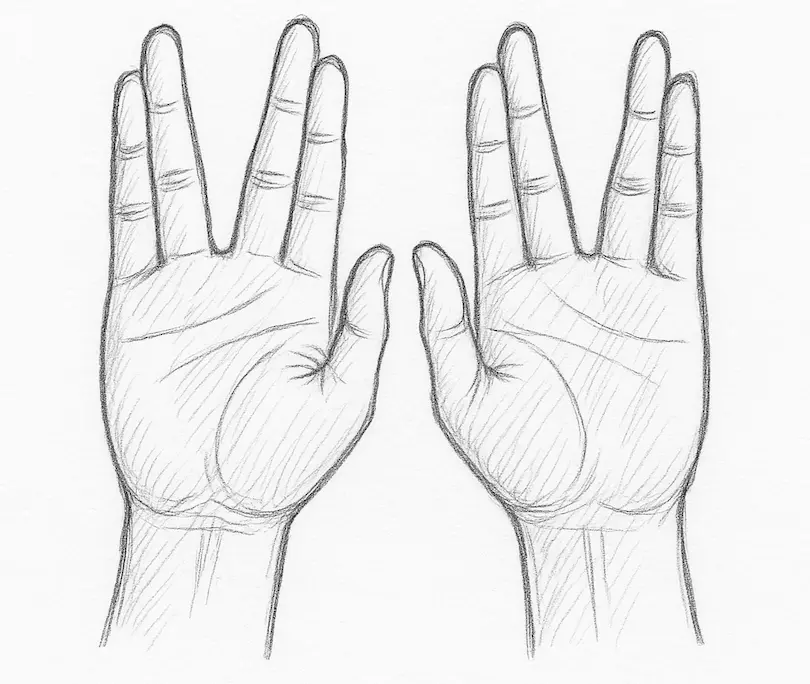
The actor, Leonard Nimoy, made this hand gesture famous when he used it as the Vulcan salute for his role as Spock in the television series, Star Trek.

According to the Zohar, the primary work of Kabbalah, the Divine Presence rests above the Cohanim and shines through the spaces made between the fingers of the Cohanim.4
You can understand that idea from the biblical work, the Song of Songs (2:9), where it says: “My beloved is like a deer or a fawn, standing behind our wall, looking from the windows, peering from the lattices.” The Midrash, an important rabbinical work, explains that “my beloved” in the verse is a reference to the Divine Presence, and “peering through the lattice” means that the divine presence is manifest—palpable, felt—from between the gaps in the Cohen’s spread fingers.5
From that mystical perspective, Birkat Cohanim is considered an intense encounter with the divine, and not something to be taken lightly, and Jewish law reflects that as well. During the recitation of Birkat Cohanim, the members of the congregation (the people being blessed) are instructed not to look at the Cohen’s hands, and in general practice, the Cohanim also cover their hands with a tallis (prayer shawl).
In Jewish thought, God’s presence is “there” at the time of Birkat Cohanim, and that experience teaches you that God is the source of blessing. If you’re plugged in, you feel that—or sense that, or feel an awareness of God—at the time of Birkat Cohanim. More than that, you come to an understanding that God fills the world, or from your perspective, “surrounds” the world. You experience that even nowadays, but at the time when Birkat Cohanim was done in the Temple, that reality—that awareness, or experience of God—was obvious.
A bracha is when—regardless of outcome, be it good or bad—you see God’s hand in your life. Birkat Cohanim is a time to internalize, or to feel, the idea that God is real and present (as in is literally there). But don’t stop there. Birkat Cohanim isn’t a moment of fleeting inspiration. Incorporate that lesson into your life.
The Torah uses a number of different names for God, which represent different aspects of relationship, or different ways to relate to God.
In Birkat Cohanim, the four-letter name for God—considered the holiest one—is used. That name is never pronounced. Rather, a substitute pronunciation, which means, “my master” is used instead, and it is pronounced A-do-noy (אדני).
However, during the recitation of Birkat Cohanim when the Temple stood in Jerusalem, the Cohanim pronounced the name as written. Unfortunately, the tradition for how to correctly pronounce that name was lost. No one uses it nowadays, and the only name used is the substitute.
But hearing that name pronounced in the Temple as a part of the overwhelming experience described above was awe-inspiring. Yet again, it made you aware of God’s presence. Hearing God’s name said with sanctity and reverence reinforced the point of Birkat Cohanim—and indeed the point of all blessings—which is the idea that God is real, and involved in your life.
Birkat Cohanim is not just an inspiring or interesting ritual. It is an important Jewish practice, one that gets to the core of seeing the world through a Jewish lens. In particular, that means knowing that:
The events in your life are what they are, and they all come from God. If you appreciate that God is the source of those things, that is a blessing. If you don’t—you see them as random, or as coincidences, or as something disconnected from God—that’s the opposite.
Birkat Cohanim focuses on essentials (health and sustenance, wisdom, and peace), when you see God’s hand in relation to those things (or lack thereof), you live with blessing, a positive outlook, and the potential for happiness in all your endeavors.
Living with that is a choice. That choice is up to you. Birkat Cohanim is a tool to help make that real.