




 NBC’s Outrageous Antisemitic Ad



6 min read
6 min read
10 min read
4 min read




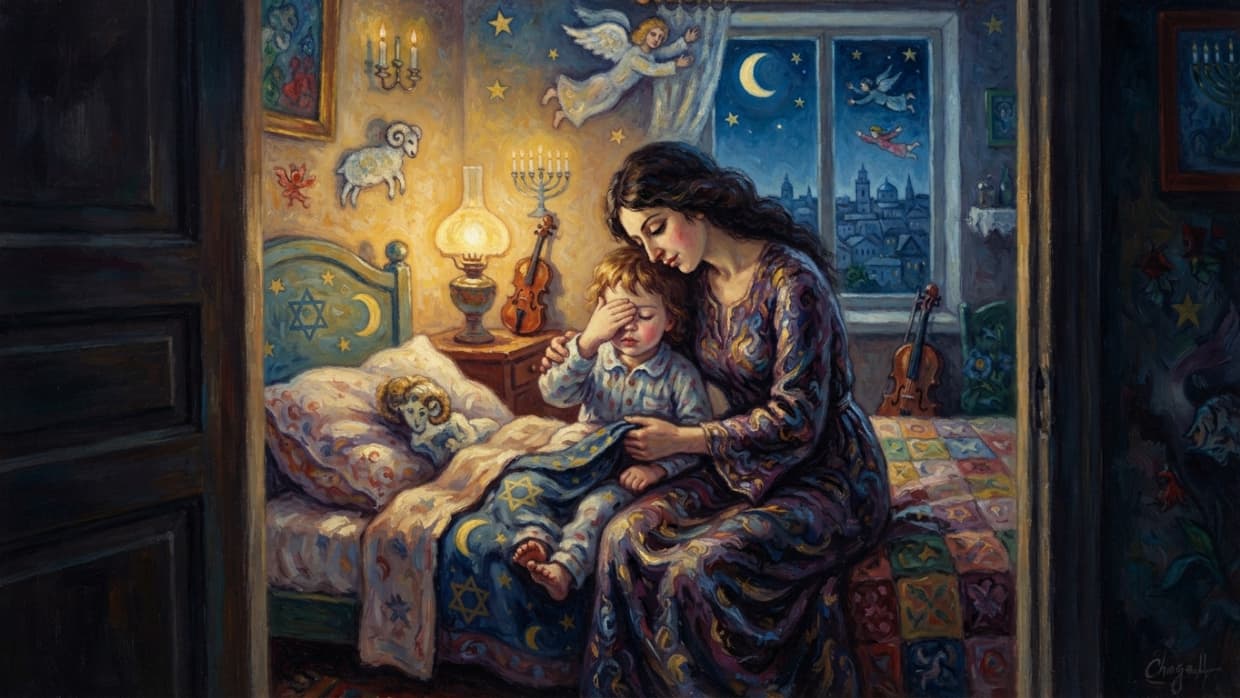
Jewish history and love of our children is written in countless Jewish lullabies. Here are a few beautiful examples.
Lullabies reflect the hopes, fears, and dreams of Jewish mothers and fathers throughout Jewish history. Many Jewish lullabies are about more than simply soothing children to sleep. Though deceptively simple, some address deep issues of faith, exile, fears for the future, and longing to return to the Land of Israel and build a Jewish life there.
Here are six Jewish lullabies and the remarkable meanings they convey.
Durma means sleep in Ladino, the language that Spanish Jews brought with them after they were expelled from Spain in 1492. Spanish Jews are known as Sephardim and settled in North Africa, the Balkans, Greece, Turkey, the Netherlands, and elsewhere, where they often were targets of vicious antisemitism. Sephardim have maintained their distinctive Spanish Jewish culture to this day.
Durma, Durma originated in the Balkans and has several variations; some feature the Shema Yisrael prayer, which is traditionally said in bed at night: when generations of Jewish children tucked their children into bed, they’ve shared a tender moment while saying the Shema together. Though it’s ostensibly written for a young child, Durma, Durma reflects the fear and pain of generations of Jews whose lives were marred by violence and fear of persecution.
Durme, durme hijiko de Madre - Sleep, sleep, mother’s little one
Durme, durme s’in ansio y dolor - Sleep, sleep, free from worry and grief
Sienti joya palavrikas de tu Madre, - Listen, my joy, to your mother’s words,
Las palavras si Shema Yisrael. - The words of Shema Yisrael
Durme, durme hijiko de Madre, - Sleep, sleep, mother’s little one,
Con hermosura di Shema Yisrael. - With the beauty of Shema Yisrael.
Yankele is a Yiddish diminutive of the name Jacob. This beautiful Yiddish lullaby was written by Mordechai Gebirtig, a popular Yiddish poet songwriter. Born in 1877 in the Polish city of Krakow, many of his songs reflect Jewish resilience in the face of ever worsening antisemitism. At a time when Jews were systematically being shut out of public life, Yankele is a mother’s fervent hope that her precious son grow up to become an accomplished, educated, successful man.
Mordechai Gebirtig’s own children and grandchildren were not so lucky. In 1940, Nazis forced him and his family into Krakow’s overcrowded Jewish Ghetto, where he was murdered in 1942, shot by a Nazi soldier.
Shlof zhe mir shoyn, Yankele, mayn sheyner - Go to sleep now Yankele, my beautiful one
Di eygelech, di shvartsinke, macht tsu; - Close your dark little eyes;
A yingele, vos hot shoyn ale tseyndelech, - To a little boy who already has all his teeth,
Muz noch di mame zingen ay-lyu-lyu. - Mama still has to sing a lullaby.
A yingle, vos hot shoyn ale tseyndelech - A little boy who already has all his teeth
Un vet mit mazl bald in cheder geyn, - And will, with luck, soon go to school
Un lernen vet er Chumash un Gemore, - To study Torah and Talmud,
Zol veynen ven di mame vigt im ayn? - Cry while his mother sings him to sleep?
A yingele, vos lernen vet Gemore, - A little boy who will study Talmud
Or shtyt der tate, kvelt un hert zich tsu, - (Here’s your father, beaming as he hears that!)
A yingele, vos vakst a talmed-chochem, - A little boy who will grow up to be a scholar
Lost gantse necht der mamen nisht tsu ru? - Won’t leave his mother be, night after night?
A yingele, vos vakst a talmed-chochem, - Should a little boy, who will grow up to be a scholar
Un a geniter soycher oych tsu glaych, - And a talented businessman alike,
A yingele, a kluger choshen-bocher, - A little boy, practically a clever bridegroom,
Zol lign azoy nas vi in a taych? - Lie soaking wet as if in a river?
Nu shlof zhe mir, mayn kluger chosen-bocher, - So, go on and sleep, my clever bridegroom,
Dervayl lingstu in vigele bay mir. - Meanwhile, you are lying in the cradle here with me.
S’vet kostn noch til mi un mames trern - It will cost a lot of effort yet, and mother’s tears,
Biz vanen s’vet a mentsh aroys fun dir. - Before a man will be made out of you.
This Hebrew lullaby was written by Joel Engel, the famed Jewish musicologist. Born in Russia, Engel devoted his life to studying and writing Jewish songs. In 1924, he joined the growing exodus of Jews from Europe who moved to present-day Israel (then British-controlled Mandatory Palestine) to build new farms and towns.
Numi Numi means “Fall asleep, fall asleep” in Hebrew, and reflects the back-breaking daily reality of Jewish workers who built the agriculture, roads, and cities of modern-day Israel.
Numi, numi yaldati - Sleep, sleep, my little girl.
Numi, numi, nim. - Sleep, sleep.
Numi, numi katanti, - Sleep, sleep, my little one,
Numi, numi, nim. - Sleep, sleep.
Aba halach la’avoda - Daddy’s gone to work
Halach, halach Aba. - He went, Daddy went.
Yashuv im tzeit halevana - He’ll return when the moon comes out
Yavi lach matana! - He’ll give you a present!
Numi, numi…. - Sleep, sleep….
Aba halach el hakramim. - Daddy went to the vineyards.
Yashuv im tzeit ha cochavim - He’ll return when the stars come out
Yavi lach anavim! - He’ll bring you grapes!
Numi, numi.… - Sleep, sleep….
Aba halach el hapardes - Daddy went to the orchard
Halach, halach aba - He went, Daddy went
Yashuv b’erev im haruach - He’ll return in the evening with the wind
Yavi, yavi tapuach! - He’ll bring an apple!
Numi, numi.… - Sleep, sleep….
Aba halach el hasadeh - Daddy went to the field
Halach, halach aba - He went, Daddy went
Yashuv b’erev im tz’lalim - He’ll return in the evening with the shadows
Yavi lach shibolim! - He’ll bring you ears of grain!
Numi, numi.… - Sleep, sleep….
Shalom Aleichem, the Yiddish writer whose stories inspired the musical Fiddler on the Roof, wrote this magical lullaby which quickly became a favorite throughout the Yiddish-speaking world. Parents could all identify with the call to Shluf, Mein Kind (“Sleep, My Child”).
Born in present-day Ukraine, Shalom Aleichem (whose real name was Shalom Rabinovich) fled Ukraine with his family after horrific pogroms engulfed Jewish communities in 1905. He eventually settled in New York, though not all of his children and other relatives were allowed into the United States.
Shluf, Mein Kind reflects the hopes and hardships of a generation of Jewish women whose husbands struck out alone in the New World, working to earn enough money to bring their wives and children to America.
The line “my only Kaddish” in this song refers to the fact that the singer’s little son will one day say Kaddish (the Jewish prayer for the dead) for his mother, honoring her memory and carrying on her legacy.
Here it is sung by the famed cantor Yossele Rosenblatt (1882-1933):
Shlof, mayn kind, mayn tryst, mayn sheyner, - Sleep, my child, my comfort, my beauty.
Shlof zhe, lyu-lyu-lyu! - Sleep, lull-a, lullaby!
Shlof mayn lebn, mayn kadish eyner, - Sleep my life, my only Kaddish,
Shlof zhe, zunenyu. - Sleep my little son.
Bay dayn vigl zitst dayn mame - Your mother is sitting by your cradle
Zingt a lid un veynt. - Singing a song and weeping.
Vest a mol farshteyn mistake - Perhaps you will understand some day
Vos zi hot gemeynt. - What she was thinking.
In amerike iz der tate - Father is in America
Dayner zunenyu, - Your father, my son,
Du bist noch a kind lesate, - Meanwhile you are still a child,
Shlof zhe, shlof, lyu-lyu! - So sleep, sleep, lullaby!
Dos amerike iz far yedn - America is for everyone
Zogt men, gor a glik - They say, great good fortune
Un far yidn a gan-eydn - And a Paradise (the Garden of Eden) for the Jews
Epes an antik. - Something extraordinary.
Dortn est men in der vochn - There, even during the week, they eat
Challah, zunenyu. - Challah, my little son.
Yaychelech vel ich dir kochn - I will cook chicken soups for you
Shlof zhe, shlof, lyu-lyu. - So sleep, sleep, lullaby.
Er vet shikn tsvantsik doler, - He will send us twenty dollars,
Zayn portret dertsu, - And his photograph too,
Un vet nemen, lebn zol er - And he will (may he live) take us
Undz ahintsutsu. - To him there.
Biz es kumt dos gute kviti - Until that good (ship passage) ticket comes
Shlof zhe, zunenyu. - Sleep, my little son.
Shlofn iz a tayer mitl. - Sleep is a precious remedy.
Shlof zhe, shlof, lyu-lyu. - So sleep, sleep, lullaby.
This beautiful Ladino lullaby was written by Flory Jagoda, a towering songwriter and musicologist who helped keep Ladino alive after the Holocaust. Born in Sarajevo in 1923, Flory later moved to Zagreb with her family. They were intensely musical and spoke Ladino, the language of Sephardic Jews.
After the Nazis took over Zagreb in 1941, Flory’s father bought forged documents for her and put her on a train out of the city with strict instructions to play her harmoniku (a kind of Slavic accordion) the entire way. Flory did so, enthralling her fellow passengers and the railway guards alike. Nobody asked to see her papers.
Flory survived the Holocaust; most of her family was murdered. She became a translator for the American Army and married a Jewish American GI. She lived with her husband’s family for a while in Ohio. Her in-laws spoke Yiddish at home; Flory knew German and picked up some Yiddish phrases too. She and her husband eventually settled in Washington, DC, where Flory wrote and recorded scores of Ladino songs, including this moving lullaby, titled “A Mother’s Prayer.”
Padre Santo - Almighty God
En esta klara i solemna ora - In this clear and solemn hour
Ke esto despuesta para - I wish to
Bendizir a mis fijus - bless my children
Segun el dezeo de madre ke konsiento - As a mother who feels deeply
Se, O Diyo siempre pronto - Please, God, always be willing
A eskuchar de los altos sielos - To listen in the Heavens above
Mi orasion i bendision ke yo - To my prayer and benediction that I
Bendigo a mis fijus - That I pray for my children
Mi Diyo. - My God.
Tu ke me iziste alargar la vida - You have lengthened my life
En dandome ficus a mi lado - By giving me children by my side
As me esta buendad - Do me this kindness
Emprezenta me los para - That you give them a
Buena vida - Good life
I ventura - And fortune
I meresime a ver, kun mis - And let me see with my own
Ojus, sus muzal - Eyes, their good fortune
I sus prospero inflorisido, - And their prosperity,
Padre piyadozo. - Merciful God.
This deeply symbolic and hauntingly beautiful lullaby was written by the great Yiddish dramatist Abraham Goldfaden for his 1880 Yiddish opera Shulamit. Rozhinkes mit Mandlen means “Raisins and Almonds,” two sweet treats that young children were traditionally given to reward them for studying Torah in Yiddish-speaking towns and villages. In this lullaby, they represent the sweetness of Torah and Jewish tradition.
Rozhinkes mit Mandlen opens with a mother rocking her child, but this is no ordinary mother: she is the daughter of the widow of Zion, the Jewish people after the destruction of the Jewish Temple in Jerusalem, and she’s sitting in that very same ruined Temple. The child she’s rocking is named Yidele, Yiddish for a little Jew. Underneath his cradle is a white goat, reminiscent of the baby goat in the Passover song Chad Gadya, and which represents the Jewish people in exile. As the widow of Zion rockers her little child, she promises him that one day his long exile will end: though he will spend his life as a wandering trader, he will always remember the sweetness of raisins and almonds - and the Torah learning that they represent.
Listen to Rozhinkes mit Mandlen sung by the famed American cantor and opera singer Richard Tucker (1913-1975):
In dem Beis-Hamikdash - In the Temple
In a vinkel cheyder - In the corner of the room
Zitst di almone, bas-tsion, aleyn - Sits the widowed daughter of Zion, alone
Ihr ben yochidle yideln vigt zi keseider - She rocks her only son, Yidele, to sleep
Un zingt im tzum shlofn a ledele sheyn. - With a sweet lullaby
Ai lu-lu… - Ay, lu lu….
Unter Yidele’s vigele - Under Yidele’s cradle
Shteyt a klor-vays tsigele. - Stands a small white goat.
Dos tsigele iz geforn handlen - The goat traveled to sell his wares
Dos vet zayn dayn baruf - This will be Yidele’s calling too
Rozhinkes mit mandlen - Trading in raisins and almonds
Shlof-zhe, Yidele, shlof. - Sleep, Yidele, sleep.
In dem lidl mayn kind, - In that song, my child, lie many wonders
Lign fil nevues - When you will at some time
Az du vest amol zayn tsezeyt oyf der velt. - Be scattered throughout the world.
A soykher vest du zayn fun ale tvues, - A merchant of all grains,
Un vest fardinen in dem oych fil gelt. - Earning from your trade a lot of money.
Ai-lu-lu - Ay, lu lu…
Un az du vest raykh yidele. - And when you become rich, Yidele,
Zolzt du zich dermonen in dem lidele. - Remind yourself of this lullaby.
Rozhinkes mit mandlen, - Raisins and almonds,
Dos vet zayn dayn baruf. - This will be your calling.
Yidele vet alts ding handlen, - You’ll be a merchant of all wares,
Shlof-zhe, Yidele, shlof. - But for now, sleep, Yidele, sleep.