
 The Dark Deal That Enabled Bondi: A Bakery, a Warning, a Massacre

5 min read
4 min read
6 min read
6 min read

4 min read


The Tenth of Tevet marks not destruction, but the moment decline begins—when isolation, moral confusion, and normalized hostility take hold, a pattern hauntingly visible in today’s antisemitism and Israel’s delegitimization.
The Tenth of Tevet is one of the quieter fast days on the Jewish calendar, yet its message is among the most penetrating. Unlike Tisha B’Av, which marks the destruction of Jerusalem and the burning of the Temple in Jerusalem, the Tenth of Tevet commemorates something far less dramatic: the beginning of the siege.
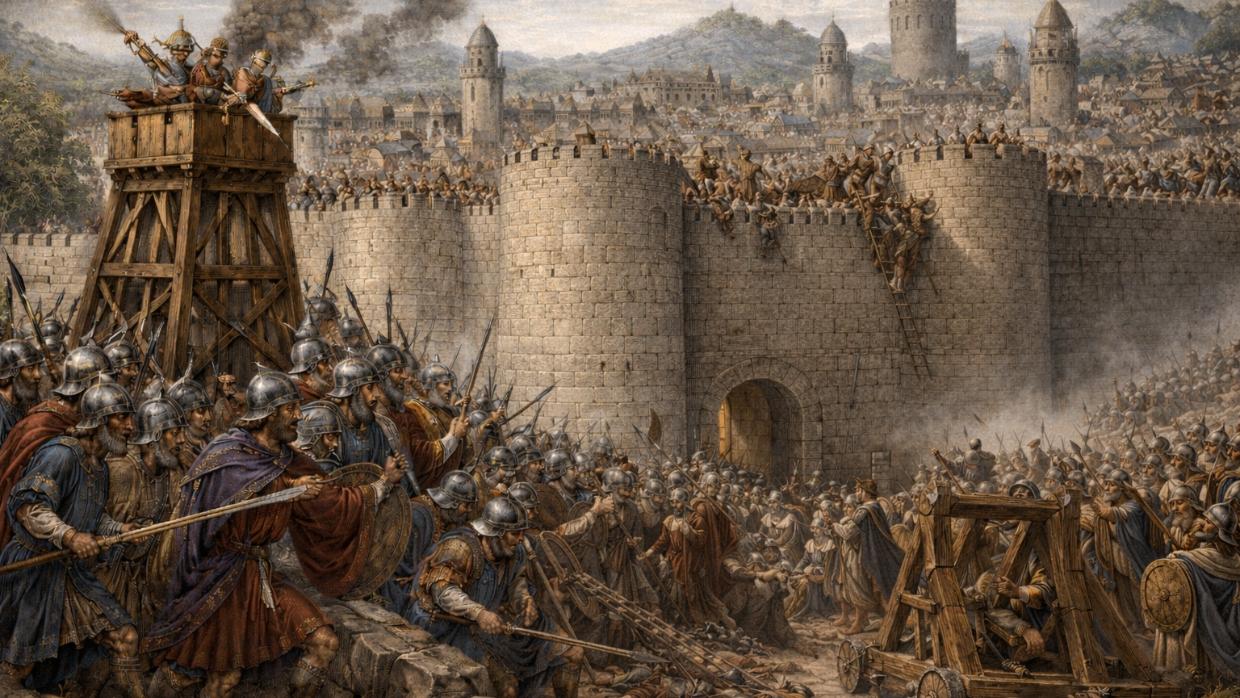
“In the ninth year of his reign, in the tenth month, on the tenth day of the month, Nebuchadnezzar king of Babylon came with all his army against Jerusalem and laid siege to it.” (II Kings 25:1) No walls were breached that day. No flames rose from the Temple. From within Jerusalem, life may have appeared largely unchanged. And yet, Jewish memory designates this moment as the start of national catastrophe.
Why fast on a day when nothing visibly collapsed? Judaism teaches that devastation rarely begins with fire and rubble. It begins with encirclement—with pressure, isolation, and a gradual narrowing of options. The Tenth of Tevet marks the moment when Jerusalem was cut off from the outside world and time began to run out.
Most Jewish fast days commemorate outcomes: exile, massacre, destruction. The Tenth of Tevet marks the cause.
The prophets make clear that Babylon was not merely a geopolitical aggressor. The siege was the result of deep internal failures—social injustice, moral corruption, hollow religiosity, and national arrogance. Ritual observance continued but ethical responsibility eroded. The warning signs were present long before the armies arrived. When the enemy stood at the gates, the real crisis had already occurred.
Whenever a Jewish society loses its moral clarity, whenever unity gives way to internal fracture, whenever faith becomes routine rather than commitment, the siege begins again.
This fast is not only about remembering the past—it addresses a condition that can recur at any time. Whenever a Jewish society loses its moral clarity, whenever unity gives way to internal fracture, whenever faith becomes routine rather than commitment, the siege begins again.
The tragedy of Tisha B’Av is undeniable. The disaster of the Tenth of Tevet is more insidious. Human beings have a powerful capacity to normalize slow decline. When deterioration happens incrementally, we adjust rather than resist. Systems still function, institutions remain and the walls still stand, but something vital is slipping away.
Today, the Tenth of Tevet feels uncomfortably current. Once again, the Jewish people face a siege—not of stone walls, but of legitimacy and moral standing. The massive rise in antisemitism across the world, together with the obsessive and often virulent hatred directed at the State of Israel, follows a familiar pattern. It rarely begins with violence. It begins with language: isolation, delegitimization, and the steady normalization of hostility.
Israel is singled out, judged by standards applied to no other nation, and portrayed not as a complex society but as a moral offense. Jews in the diaspora are increasingly told—explicitly or implicitly—that their acceptance depends on distancing themselves from Israel and suppressing their connection to Jewish peoplehood. This, too, is a siege.
Life continues but the sense of encirclement—cultural, political, and moral—is unmistakable. As in Jerusalem of old, the walls have not fallen, but the pressure is constant and the intent clear.
This fast day calls upon us to recognize warning signs early—to speak when silence feels safer, to defend truth before falsehood hardens into consensus, and to strengthen unity before pressure fractures it.
The Tenth of Tevet warns us of the danger of normalization. When antisemitism is rebranded as “criticism,” when Jewish self-determination is treated as uniquely illegitimate, and when moral clarity is blurred under the guise of progress, the siege quietly tightens and the seeds of destruction are put in motion.
The prophets did not place blame solely on Babylon. They insisted that internal strength—moral, spiritual, and communal—was Jerusalem’s true defense. That lesson remains painfully relevant.
Our response to antisemitism cannot rely only on external allies or reactive strategies. It must be grounded in internal clarity: confidence in Jewish identity, commitment to ethical integrity, unity among the Jewish people, and an unashamed connection to the Jewish People and Israel.
This fast day calls upon us to recognize warning signs early—to speak when silence feels safer, to defend truth before falsehood hardens into consensus, and to strengthen unity before pressure fractures it.
May the fast of the Tenth of Tevet be turned into a day of joy and clarity for Israel and all humanity.