




 When Ms. Rachel "Likes" Antisemitism



10 min read


Before the Holocaust, many Jews deposited their money in Swiss banks in an attempt to secure their families’ future. It took decades and lawsuits for the heirs to recover the money. Some of them never did.
Growing up in Cernăuti, Romania, in the 1920s, Greta Deligdisch and her brother Otto lacked nothing. Their father, Siegfried Deligdisch, owned a textile factory that employed over 1,000 people. The family took expensive vacations to Italy. Siegfried occasionally traveled to Switzerland, where he deposited money into a Swiss bank account. He assured his family that they had nothing to worry about. The assets in the Swiss bank could sustain them for many years to come.
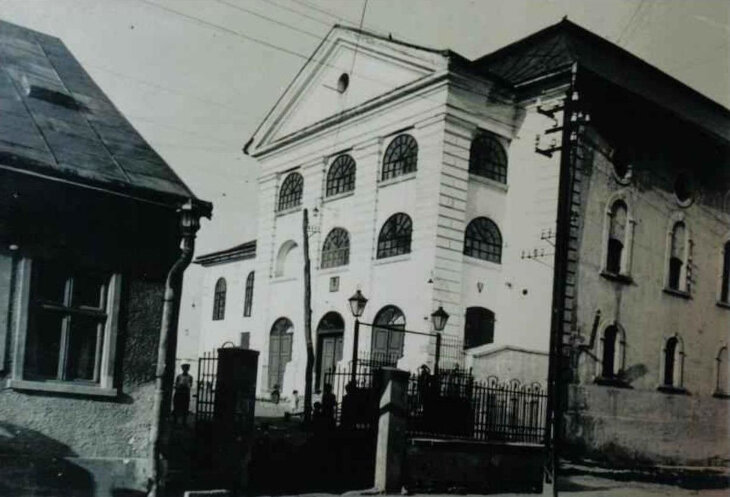 Great Synagogue in Cernauti, Romania, before World War II.
But health is one thing that money can’t buy. Siegfried suffered from kidney disease and in 1940, he succumbed to his illness.
At the time, with Nazis conquering Europe and implementing their “final solution,” Greta, Otto, and their mother were concerned with basic survival rather than the money in a distant Swiss bank. They spent the war years in Brașov, a city in the Carpathian Mountains, living in a friend’s apartment.
The end of World War II did not bring freedom to the Jews of Brașov, as they found themselves under Soviet rule. Greta decided to flee Romania. The escape was fraught with danger and included jumping off a train and smuggling herself through Hungary in a truck. Eventually, Greta reached a displaced persons camp in Vienna.
There, she met and married her husband, Simon Beer. Together, the couple emigrated to the United States of America and were later followed by her mother and brother.
As her life finally gained some stability, Greta decided that it was time to reclaim the inheritance her father had left her in a Swiss bank. It turned out to be much more complicated than she’d thought.
 Greta Beer, photographed in 2018, when she was 96. She passed away in 2020
Greta and her mother went from bank to bank in Switzerland, but the banks kept turning them away. Greta recalled1, “The first time they let my mother and I in, they said, ‘We didn’t find anything, but we are looking.’ They had so many excuses. I know the money was there. My father deposited the money, and then it’s gone. They expunged it.”
The struggle to reclaim her family’s assets lasted for many years and eventually led to Greta testifying in the U.S. Congress.
The Deligdisch family was only one of many Jewish families who had money in Swiss accounts before the Holocaust and had trouble accessing their savings after the Holocaust.
Though few Jews knew the extent of the Nazis’ horrific plans for them, many Jews throughout Europe experienced the rise of antisemitism and felt that they had to take steps to protect their assets and their families’ future. Swiss banks were the natural address for anyone who wanted a guarantee that their money would remain safe.
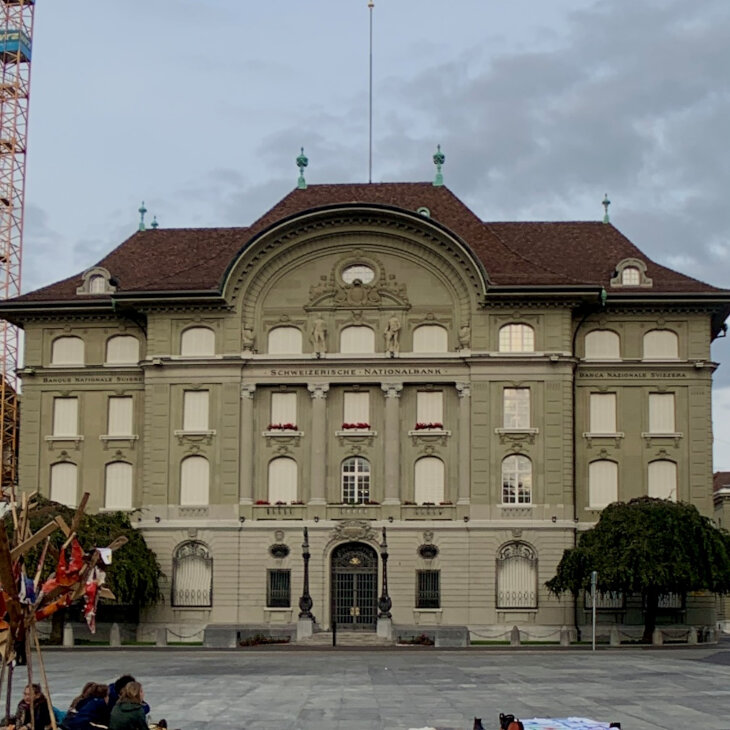 Swiss National Bank headquarters at Bundesplatz, Bern, Switzerland
For centuries, Swiss banks have enjoyed the reputation of being the most secure, based in part on their independence from any local governing body or foreign influence.
The citizens of Switzerland value independence, self-reliance, and hard work. Since the Middle Ages, they’ve resisted the draw of national or political movements, refused to participate in military conflicts or international alliances, and insisted on neutrality. Swiss independence and neutrality were guaranteed by Napoleon in 1802 and accepted by international law ever since.
Within Switzerland itself, the population resisted the establishment of any centralized government, preferring the autonomy of sovereign cantons. A federal constitution, with the notion of a federal government, was finally adopted in 1848.
The powers of the Swiss federal government are very limited and do not extend any authority over the banking industry. To this day, Swiss banks have more autonomy than any other banks in the world.
In the stormy pre-Holocaust years, many Jews turned to Swiss banks to safeguard their lifetime savings. Some opened Swiss bank accounts under their own names, while others opened unnamed numbered accounts or deposited their money into accounts belonging, on paper, to friendly non-Jews. Thousands of those Swiss bank customers were murdered in the Holocaust and were unable to reclaim their money.
Holocaust survivors, or their heirs, began the process of reclaiming their assets shortly after the Holocaust. Some of them managed to hold on to the documentation proving account ownership, and for them, the process was straightforward. Already by 1946, the Swiss banks returned several million dollars to heirs of Holocaust victims.
But most survivors didn’t have the proper documentation in their possession, and the process turned out to be difficult and emotionally wrenching. There were also accounts left with no legal heirs. The question of who this money belonged to occupied courtrooms and media outlets for decades.
In 1954, the Israeli government sued the Swiss banks on behalf of “Jewish orphans and heirs,” insisting that $30 million in unclaimed Jewish funds were held by the Swiss banks. Both the Swiss government and the Swiss Bankers Association vehemently rejected Israel’s claims, insisting that the banks had made every effort to locate Jewish heirs and return their money and that the Israeli government could not claim be the heir to the accounts of Holocaust victims who had no surviving legal heirs.
The legal and moral aspects of the case were debated throughout the Western world for years. Finally, in 1962, the Swiss Federal Council passed the first law interfering with the Swiss banks’ autonomy. The Council ordered the banks to reveal the information about the dormant assets of “racially, politically, or religiously persecuted foreigners or stateless persons.”
However, the law was impossible to enforce without overturning the whole Swiss banking system. It was left up to the banks’ discretion to determine which accounts belonged to persecuted individuals. The Israeli government was disappointed with the outcome of their lawsuit.
But surviving heirs, like Greta Beer, did not give up. They continued to speak up in the media, until their plight was heard and their case taken up by American lawyers.
In 1995, The Wall Street Journal printed an article by Peter Gumbel interviewing Greta Beer and decrying the world’s indifference to the Swiss banks’ refusal to return the money entrusted to them to the rightful heirs.
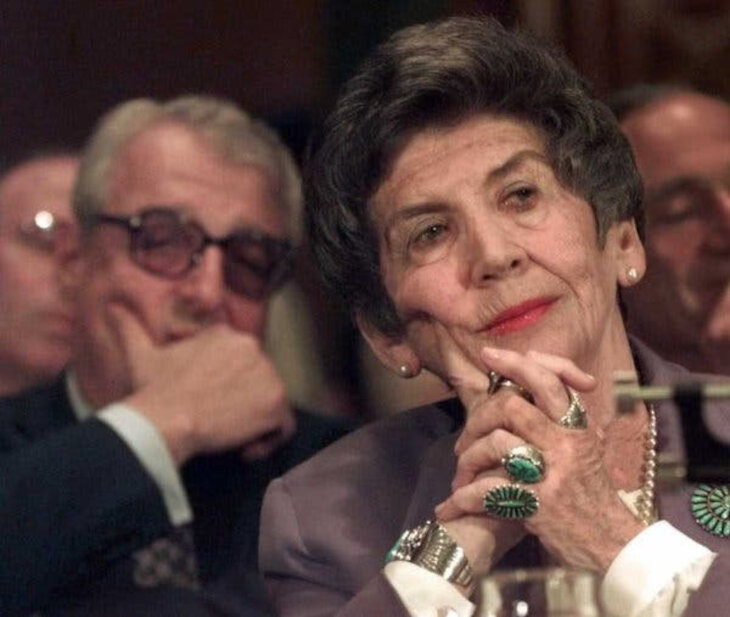 Greta Beer testifying before the Senate Banking Committee in 1996.
The article caught the attention of Stuart Eizenstat, U.S. diplomat and attorney, who at the time served as the U.S. Ambassador to the European Union. Being Jewish himself, Eizenstat had previous experience in helping Holocaust survivors receive compensation from Germany. Eizenstat decided to get involved in the case against Swiss banks.
In his memoir, Eizenstat writes2, “The United States was the only country that cared enough to take an interest at this late date and had the influence to make a difference.”
 Stuart Eizenstat. US Department of the Treasury
Influential Americans got involved, including Senator Alfonse D’Amato, Chairman of the Banking Commission, who eventually invited Greta Beer to testify in Washington.
In a video interview, Senator D’Amato said3, “People today, who are alive, are being denied their rights to these assets over years, over pleading, over trying… The big hand of the banks said, ‘No.’” Senator D’Amato wanted to ensure that justice would be served.
Edgar Bronfman, the head of World Jewish Congress, brought the matter to the attention of the then-president and first lady, Bill and Hillary Clinton. Eizenstat writes4, “Because Holocaust memory is one of the few uniting themes in American Jewish life, Bronfman’s intervention with the president found an open door.”
Eizenstat continues5:
My own contribution was to bring a special level of commitment and perseverance. For me, this was not just another public policy challenge but a chance to help remove a cloud over the history of the United States, which had sacrificed so greatly to win the war but done so little to prevent civilian genocide and then help its survivors after the conflict.
As the lawsuit dragged on, more information on the conduct of the Swiss banks during the Holocaust came to light, revealing how the Nazis used Swiss banks to keep and trade art, jewelry, and other valuables stolen from the Jews.
In May 1997, Eizenstat published a report about the Swiss banks’ gold trade with Nazi Germany during World War II. The report stated that the Swiss National Bank received large amounts of looted gold, including gold from the teeth of Holocaust victims. In the introduction to the report, Eizenstat wrote6: “The neutrals continued to profit from their trading links with Germany and thus contributed to prolonging one of the bloodiest conflicts in history.”
Much later, in a video interview, Eizenstat said7, “I think that Switzerland was spared from German invasion because it was not in the interest of Germany to invade Switzerland… because they got the benefits of exchanging their looted gold… and there was not much more they could have gotten from Switzerland.”
Judge Edward R. Korman, who oversaw the court case, said in a video interview8, “It was useful to the Nazis to have Switzerland as neutral… Not only did Switzerland survive the war fully intact, but they were making money hand over fist in trading that technically may have been legally permitted because they were neutral.”
The famous Swiss neutrality was turning out to be more sinister than previously thought.
Though the discoveries and accusations were met with indignant denial in Switzerland, eventually, under international pressure, the Swiss people had to face their past and admit that the Swiss banks were involved in war-time dealings with the Nazis and profited from them.
In August 1998, Senator D’Amato announced that a settlement had been reached, with the Swiss banks agreeing to pay Holocaust survivors and their heirs $1.25 billion. It took another 15 years for the funds to be fully paid.
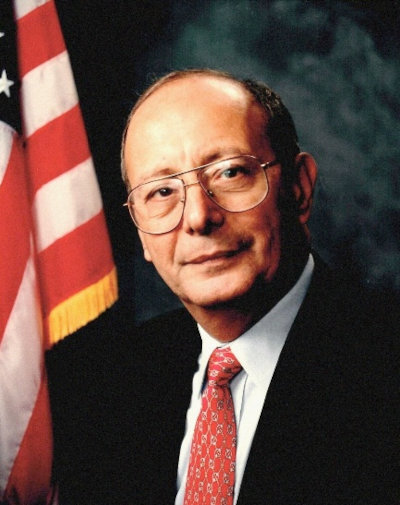 Senator Alfonse D’Amato
In a press conference, Senator D’Amato said9:
I am tremendously pleased and gratified to announce that we’ve reached a historic agreement with the Swiss banks that will bring moral and material justice to those who have suffered for so long and bring closure on these issues around the world and in Switzerland.
Though Greta Beer’s testimony helped in the lawsuit, she was never able to recover her father’s account. In 2002, Judge Korman awarded her with $100,000 from a law firm’s fees for her help in reaching the settlement.
Sources:













Don't tell that if Germany had won the war, it would have left Switzerland alone after. Basically that country and Sweden are cowards, relying on others to do their fighting for them.
Read ' Blood Money" by Tom Bower.
The Swiss Insurance also made billions by refusing to pay death claims due to unavailability of a death certificate.
The banks and insurers were assisted by the Swiss government from 1946 untill 1998. What a despicable nation .
The event with the greatest impact on this case was, astonishingly, omitted from this otherwise valuable story about Swiss banking ethics: In January 1997, security guard Christoph Meili's discovery of documents being shredded illegally by UBS. Those documents consisted of records of Jewish depositors, who had ostensibly been untraceable, or in any case, had not claimed family assets. Why was this critical event not included? Even Stuart Eizenstat himself pointed out its importance in his work, "Imperfect Justice." The emotional impact of that event, and in particular the obstinate reaction of the Swiss banks/government, influenced public opinion more than most other events. Meili attributed his actions to his Christian faith. I can't help but wonder if that snippet is why it was omitted.
Thank you for bringing up this impactful event! It was certainly influential, along with a number of other events and people that weren't mentioned in this article due to space considerations. This article was intended to be a basic overview of the story. For more information, I encourage the readers to see the sources listed.
It was Meili the security guard that brought evidence in the matter of Swiss Banks vs Jewish Heirs assets, even though switzland was supposed to be netural they helped the Nazis(may their names be erased) steal and hide assets that belonged Jews, I hope in the end the Jewish heirs got justice and got their assets back
Wow, enlightening!
I was part of the claims conference team that researched claims on swiss banks in terms of the settlement. I was able to find and verify several rightful heirs who were awarded the accounts
I have known many injustices in life.
People, by majority, have not constructed this world to be fair, or true, loving or kind, merciful or compassionate, understanding or forgiving, nor even righteous or just.
The answer has always been the same: Do your very best in all situations. Let go to HaShem what you cannot fix, or change. Carry on to your best ability, and endure to the end.
Life is short relative to eternity.
Fascinating article; thank you! It's so frustrating that people still have not gotten the money even today.
Very interesting article however Switzerland became independent in 1803 (not 1802) after Napoleon signed off the Act Of Mediation in 1803 and ended the French ruling. This laid the foundations for modern day Switzerland and its so said "neutrality" (if there is such thing !)
As is apparent throughout history, when Jews are involved, there's no such thing as "neutrality."
Though individuals may suffer (for reasons known only to G-d), the Jewish people, as a whole, always prevail — and those who persecute them eventually get their just desert, as has been promised in the Torah.
Am Yisrael chai!
Totally right, for human´s lofty ideals and principles, besides being flawed as they are man made, the acid test is when Jews are involved. The actual situation in Eretz Israel is enough proof of it
Jewish citizens of Switzerland were not rounded up and murdered. There is a Swiss military, but it exists only to protect the land and people of Switzerland. There is very little crime in Switzerland. So neutrality has certainly been a benefit to the Swiss, who enjoy life in one of the safest countries on earth.
You've missed a major point of this article: the Swiss proved their "neutrality" towards Jews by their deceitful actions towards the heirs of Holocaust victims who tried to claim their rightful legacy!
You are absolutely right, Am Yisrael Chai!