




 Moving Forward When You Can’t Go Back

5 min read
5 min read




8 min read


She faced Hitler and refused to bow, helped build Israel, and survived October 7. The extraordinary life of Yocheved Gold, a century of quiet Jewish courage.
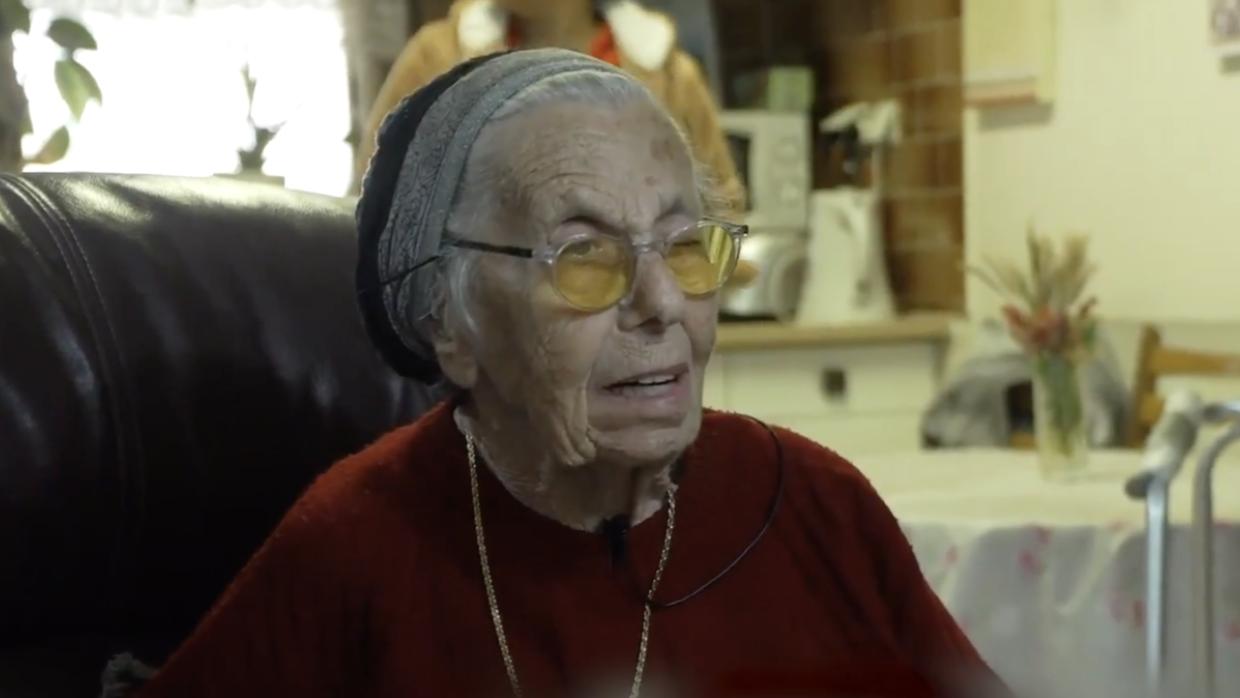
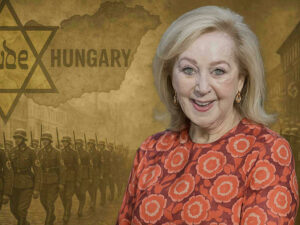
Yocheved Gold, who recently died at the age of 102, lived a life that tracked the arc of modern Jewish history, its deepest horrors and its defiant triumphs.
As a teenager in Nazi Germany, she came face to face with Adolf Hitler and refused to honor him. As a young woman, she helped build the Jewish state. And at 99, she survived Hamas’ brutal October 7 attack, only to insist on returning to her home. This is the story of a woman who refused, again and again, to be moved.
Yocheved was born in 1923 in Halberstadt, Germany, into a family whose roots in the country stretched back generations. Her mother, Sarah (née Bamberger), descended from a line of rabbis; her father, Rabbi Dr. Aharon Neuwirth, was known for his scholarship and deep piety. One of seven children, Yocheved grew up in a warm, proudly observant home that took Jewish life seriously.
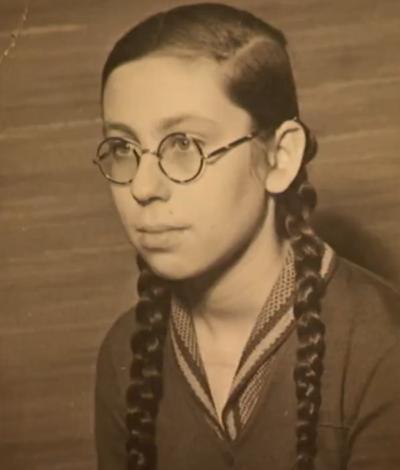 In 1930, the family moved to Berlin. Three years later, Adolf Hitler became Chancellor, and the walls began closing in. Yocheved later remembered walking to synagogue with her mother past Jewish shops whose windows had been smashed, their facades scrawled with a single word: JUDEN.
The assault on Jewish life escalated quickly. In 1933, Jews were barred from working as professors, judges, lawyers, or civil servants. Jewish doctors were forbidden to treat non-Jews. By 1935, German Jews were stripped of their citizenship altogether. Schools, businesses, and public spaces displayed signs that said, “Jews not allowed.”
And yet, the world looked away. The International Olympic Committee saw no problem hosting the 1936 Olympics in Berlin. Jews were excluded from participating but 13-year-old Yocheved was determined to witness the opening ceremony. With her light hair and blue eyes, she could pass as Aryan. She slipped into the Olympic Stadium unnoticed.
Almost immediately, she was swept into a group of children selected to greet Hitler.
The children were handed flowers and instructed to line up. One by one, they would step forward, salute the Führer, and place the flowers in his hands. When Yocheved’s turn came, she froze.
“I saw him face to face,” she later recalled, “and I was a little afraid.” But fear gave way to resolve. “That I, as a Jew, would give Hitler flowers? I refused.”
She did not step forward to offer the flowers.
Somehow, her defiance went unnoticed. Her disguise held. Kater that day, the Jewish girl who had silently snubbed the most powerful man in Germany walked back home to her family, carrying with her a quiet act of resistance that would foreshadow a lifetime of courage.
When Yocheved was 15, she lived through Kristallnacht, a mass pogrom throughout Germany and Austria over the night of November 9-10, 1938. Nazi authorities encouraged widespread violence against Jews and failed to intervene to stop the violence. Mobs and Nazi officials burned over 1,400 synagogues. Thousands of Jewish-owned homes and businesses were ransacked and looted. Thousands of Jews were injured and scores were murdered. Over 25,000 Jewish men were arrested and sent to concentration camps.
The following year, Yocheved managed to buy a ticket on the ship Galileo, sailing to Haifa, then in Mandatory Palestine, governed by Britain. She left behind her entire family and moved to the Land of Israel utterly alone. On board, even though she was a child herself, she nursed fellow passengers who were sick. It was the beginning of Yocheved’s lifelong calling of working as a nurse.
Once in Mandatory Palestine, Yocheved was able to write to her parents. Then, all communication ceased. “I was sure they had been killed,” she remembered. One of Yocheved’s brothers was murdered in Auschwitz. Yet miraculously, her parents and other siblings managed to survive the war.
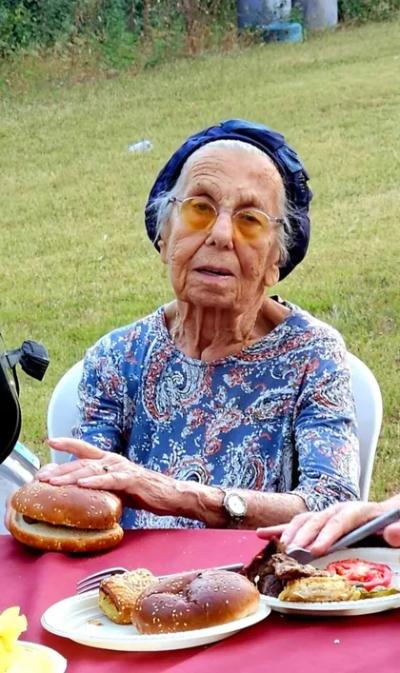 Yocheved’s brother Rabbi Yehoshua Neuwirth later documented his and his family’s near misses. They were deported to a concentration camp and then freed thanks to the intervention of a Hungarian consul. One of Yocheved’s sisters managed to get a job in a village in the countryside. Their father asked her to come home one day, and that night the entire village she’d been living in was flattened in a bombing raid. Yocheved’s father was sick and bought medicine at a pharmacy. He didn’t want to go through the process of mixing it that night, which was Shabbat, and later found out that the pharmacist had in fact given him rat poison, hoping to kill him.
After the Holocaust, Yocheved’s parents and most of her siblings were able to join her in Israel.
While living alone, Yocheved attended a religious girls’ school in Jerusalem, studying home economics and economics. She joined the youth group Bnei Akiva where she met her husband Shmuel. They married in 1942. “It was a small wedding,” she later described. “I hardly had any relatives in the country.”
Bnei Akiva members founded a new kibbutz in the northern Negev Desert in 1947. They called it “Sa’ad” - “aid” in Hebrew. Most of the residents lived in tin huts; Yocheved and Shmuel were lucky: they were assigned to live in a hut made of wood.
Local terrorists attacked the kibbutz relentlessly. “There were constant incidents with the Arabs; they laid mines,” Yocheved recalled. During Israel’s War of Independence Sa’ad came under intense attack and was eventually moved to its present location, near the border with Gaza.
With nursing as her passion, she taught herself a great deal of medicine and eventually became Sa’ad’s full-time nurse, a role she faithfully served for nearly forty years.
During Israel’s early wars, Yocheved was always where she was needed most.
In the 1956 Sinai Campaign, Kibbutz Sa’ad—near the Egyptian border—became a makeshift treatment center for wounded soldiers. “There were wounded and dead, and I was the only nurse,” Yocheved later recalled. Pregnant at the time, she hauled equipment and carried patients through rain and mud, treating Israeli and Egyptian soldiers alike.
She did the same a decade later during the Six Day War, rushing wounded men into shelters whenever the kibbutz came under fire. In 1973, during the Yom Kippur War, Yocheved once again returned to nursing as Israel fought for its survival.
She officially retired from nursing at 69—but not from service. Yocheved went on to work in the kibbutz kitchen, preparing meals well into her nineties, finally slowing down at age 90.
On the morning of October 7, 2023, Yocheved was jolted awake in her small home on Kibbutz Sa’ad by emergency sirens and the thunder of rockets. The kibbutz security team immediately mobilized, patrolling the grounds as fighting erupted nearby. For years, Hamas and Islamic Jihad had fired rockets from Gaza at surrounding Israeli towns and farms. Like all residents, Yocheved had a reinforced safe room, and she hurried into it, sheltering there with one of her sons as the battle raged outside.
Sa’ad is a religious kibbutz, and its gate had remained closed that day for the holiday of Simchat Torah. That decision—along with the kibbutz’s security patrols—prevented Hamas terrorists from overrunning Sa’ad, as they did so many nearby communities. Instead, wounded civilians and emergency personnel later found refuge there, while Sa’ad’s responders rushed out to save lives in neighboring kibbutzim and attack sites.
Yocheved and her son remained in the safe room for 30 hours without food or water. Only after Israeli soldiers secured the area the following day was she able to emerge. Along with the rest of the kibbutz residents, Yocheved was evacuated to a hotel near the Dead Sea as fighting continued inside Israel.
But she refused to stay away for long. Yocheved insisted on returning to the home she had lived in for more than seven decades. “I’m not willing to die in a hotel,” she told her family. “Bring me back home. If I die, I’ll die there.” At 100 years old, Yocheved returned to Kibbutz Sa’ad.
Yocheved’s life was filled with unimaginable hardship. She lost one of her brothers in the Holocaust. Her beloved husband Shmuel died when he was just 41. Yocheved’s oldest child, a daughter named Yael, perished in a car accident at the age of 60. Yet Yocheved remained committed to living, caring for others and building her community and her family. She was the proud mother of five children, 30 grandchildren, 70 great-grandchildren, and three great-great-grandchildren.
Asked about Yocheved’s secret to living so long and remaining happy despite all the tragedies in her life, her daughter Chanush answered: “Maybe the fact that she does not miss any prayers” each day, “or the support she gets from the family she loves very much.”
From Nazi Germany to October 7, Yocheved Gold did what she had always done: she stood her ground, refused to bow, and chose life.










Thank you. Such a special story that I would not have known about if not for you!
Amazing, an other strong religious woman. Kol hakavod. She lived a life of caring for other
She be for blessed memories
SO SPECIAL. יהי זכרה ברוך
What an inspiring story. May she rest in peace!
May her soul live in Paradise and continue to lead our blessed Nation! What an amazing Neshama!
Wow. What an amazing story of courage and service, and so well-written
יהי זכרונה ברוך!