




 American Bigots


5 min read
10 min read


5 min read


Amalek attacked the weakest, mocked what was sacred, and tried to cool the awe nations felt towards the Jews. What does it mean to remember, and why does it still matter?
There is an ancient Jewish commandment that has no building to construct, no food to eat, no prayer to recite. It asks only one thing of us: remember.
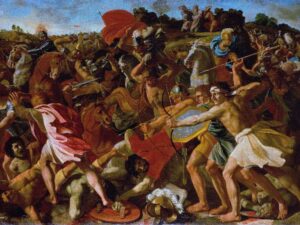
This Shabbat before Purim, we read Parashat Zachor, the Torah's injunction to remember what Amalek did to the Israelites in the desert: "Remember what Amalek did to you on the way, when you left Egypt… you shall blot out the memory of Amalek from under the heavens — do not forget" (Deut. 25:17–19).
The Torah actually repeats the idea twice: zachor — remember; lo tishkach — do not forget. That double emphasis is striking. What kind of commandment has to tell you twice not to forget? The kind, perhaps, that deals with something we are deeply tempted to push aside.
Amalek did not attack the Israelites in open battle. They targeted the weak, the stragglers, the exhausted, those at the back of the caravan. It was not a military strategy. It was cruelty for its own sake. The Torah describes it as an act devoid of fear of God, a moral vacuum.
But Amalek represented more than a single attack. At the time of the Exodus, the world had looked at the Jewish People with awe. An enslaved people had been freed through extraordinary events; the sea had split. Amalek's message, by attacking, was a deliberate one: nothing is sacred, nothing is untouchable, nothing really means anything.
They jumped into that boiling bath, willing to be burned, simply to cool it down for everyone else. That is what Amalek stands for — the worldview that mocks holiness, that reduces meaning to accident, that turns inspiration into cynicism.
Judaism places extraordinary weight on memory. We remember Shabbat, we remember the Exodus, we remember the giving the Torah at Mount Sinai. But memory in Jewish tradition isn’t passive nostalgia. It’s an active moral responsibility. To remember is to shape the present.
Parashat Zachor teaches that forgetting evil is dangerous. If we forget that there are forces in the world that attack the vulnerable and mock what is good, we become naïve. But remembering is not the same as living in hatred. It means cultivating moral clarity.
Amalek is not only a historical nation. As a biological people they are long gone from history. But Amalek as an ideology persists. Wherever cruelty targets the weak, wherever moral relativism is used to excuse violence, wherever cynicism mocks faith or meaning, we encounter Amalek.
Parashat Zachor is always read before Purim because Haman, the villain of the Purim story, is described as an Agagite, a descendant of Amalek. The story of Purim is the continuation of this same battle.
Haman's accusation against the Jews was that they were "a scattered and divided people." Amalek thrives on division. When a people is fragmented, it is vulnerable. Esther's response was telling: "Go, gather all the Jews." Unity became the antidote.
The ancient ritual of the half-shekel offering, which we also recall at this time of year, symbolizes that unity. Every Jew gave the same amount, rich and poor alike, forming a collective whole. Amalek attacks those at the margins; the Torah's answer is to ensure no one stands alone at the margins.
Jewish thinkers have also noted that Amalek exists within us. The Hebrew word Amalek is numerically equivalent to the word safek — doubt. Amalek plants cold doubt in the heart: Does any of this matter? Is your effort meaningful? Is there such a thing as right and wrong? That inner voice that cools passion and weakens conviction — that, too, is the Amalek we carry with us.
To blot out Amalek, then, means refusing to let cynicism define us. It means choosing engagement over apathy, responsibility over indifference, solidarity over fragmentation.
But Parashat Zachor is not only about internal struggle. It is about action. Evil does not disappear on its own. Hatred does not weaken if ignored. Injustice does not correct itself.
To paraphrased Edmund Burke’s famous quote, the only thing evil needs to succeed is for good people to stand by and do nothing.
To remember Amalek means we cannot be passive observers when cruelty appears. We must confront it wherever it arises, whether that is antisemitism, moral corruption, violence, or the dehumanization of any human being. Silence in the face of injustice is not neutrality. It is surrender.
Yet the Torah also guides how we fight. We do not become cruel in fighting cruelty. We do not adopt hatred as our identity. We fight evil with strength — but also with righteousness, unity, and moral clarity.
To blot out Amalek means: Defend the vulnerable. Strengthen solidarity among our people. Stand firmly for moral truth. Refuse to allow hatred to go unchallenged. Refuse to be silent when wrong is done.
"Remember… do not forget."
We remember so that we do not grow complacent. We remember so that unity becomes our shield. We remember so that doubt does not extinguish what we know to be right. We remember so that evil does not go unanswered.
As we approach Purim, may we gather together as Esther commanded, strengthen one another, and commit not only to memory — but to moral courage.













We must come together as a people.. we are stronger as one, united against the hate and the blame. AM ISRAEL CHAI! We survived the Egyptians, Jordanians, syrians, etc....we will continue to grow, build, dance, sing to HaShem, and survive where all others fail!
SHA(LO)M = SHAM LO, His Name
Note Hashem and the help of other people, all the time
Absolutely beautiful. I will remember.
Every word correct. More important now than ever.