
 The Dark Deal That Enabled Bondi: A Bakery, a Warning, a Massacre


5 min read


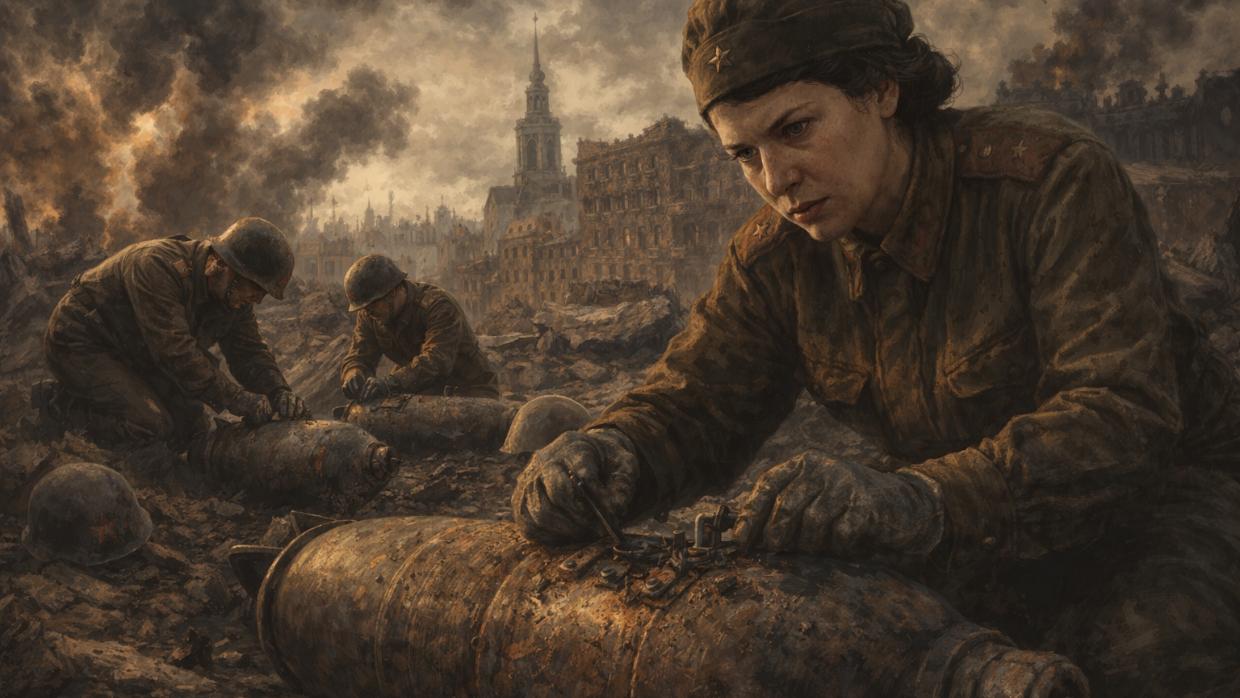
She survived the Siege of Leningrad and defused 750 mines by hand. Meet Sofia Golovinskaya, the female Jewish Red Army sapper history nearly erased.
On June 22, 1941, Hitler unleashed the largest invasion the world had ever seen: three million German troops surging across an 1,800-mile front. He expected the Soviet Union to collapse quickly. Instead, he encountered staggering resistance—compounded by the brutal force of the Russian winter.
As Nazi forces pushed deep into the Soviet Union, Leningrad became a primary target, marked for annihilation by starvation. From 1941 to 1944, German troops encircled the city in a ruthless attempt to choke it into surrender. For nearly 900 days, Leningrad’s people endured a tightening ring of hunger designed to erase the city from the map.
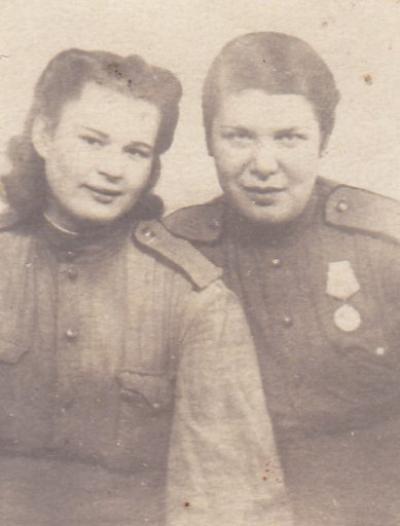 Sofia Golovinskaya on the right
By early 1944, after more than one million civilians had died, most from starvation, the tide finally turned. Soviet forces surged forward, German lines collapsed, and on January 27 the Red Army shattered the encirclement that had strangled Leningrad for years. The city survived only through desperate lifelines and fierce defenders, among them the little-known heroine Sofia Golovinskaya, a Jewish woman who took on combat and defense roles during the blockade.
Born in 1909, Sofia served as a private in Leningrad’s 27th paramilitary fire brigade. She was drafted to battle the relentless fires that swept the city under constant German bombardment. For more than a year, she responded to emergencies across Leningrad, risking her life amid collapsing buildings and air raids until the siege was lifted.
Soon, she would excel in an even more dangerous role and become legendary.
During the siege, Soviet forces laid minefields along every approach to Leningrad and heavily mined key sites within the city, planning to destroy them if German capture became imminent. No complete record survives of how many mines were planted, but historians estimate the number may have reached into the tens of thousands. After Leningrad’s liberation, these explosives posed a deadly threat to returning civilians. Clearing them was essential, and Golovinskaya’s work became part of the broader effort to make the city livable again.
After the siege, she completed an intensive 12-day training course with an engineering bomb-removal squad, learning how to locate and disarm mines. Upon completing her training, she transferred to the local air defense regiment on May 1, 1944.
Bomb and landmine removal specialists are known as sappers. The term comes from the French sappe, referring to trenches once dug to undermine enemy fortifications. Over time, these trench diggers evolved into modern combat engineers skilled in demolitions, bridge construction, mine clearance, and defensive works. Their mission is to open paths for friendly forces, block enemy movement, and build the fortifications armies rely on.
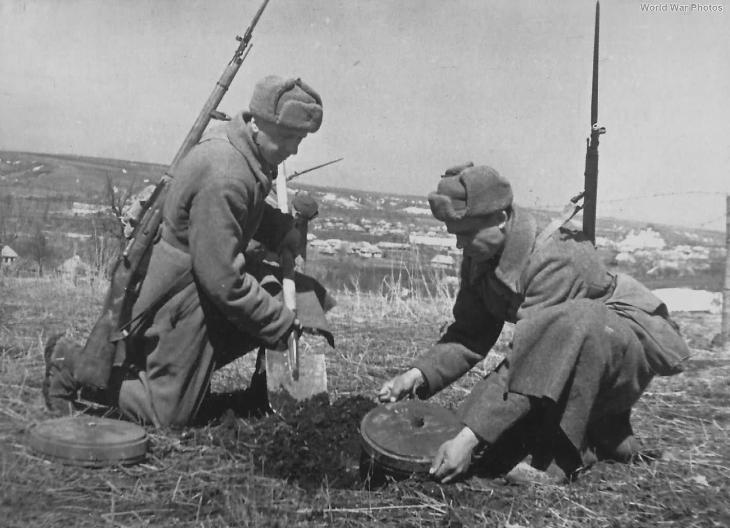 Soviet sappers with anti-tank mine
Sofia’s role as a Leningrad sapper meant instant death from a single mistake.
Using standard Soviet techniques of the era, she carefully probed the earth by hand, exposed hidden fuses, and neutralized live explosives one by one. Through precision and extraordinary courage, she cleared 750 mines from Leningrad’s critical infrastructure. For this, she was awarded the Order of the Patriotic War, 2nd Class; the medals for the Defense of Leningrad and Victory over Germany; and later jubilee honors marking the 30th and 40th anniversaries of victory.
Her work stood out even among Soviet women in WWII. While tens of thousands served as nurses, snipers, and aviators, only a small number were trained as sappers. Golovinskaya’s remarkable tally of 750 defused mines places her among the most exceptional female combat engineers of the war.
Very little is known about Sofia’s childhood, upbringing, or early life, leaving much of her biography lost to history. She has no Wikipedia entry, and her name is scarcely documented in English-language sources. Her story likely survives only in Russian-language archives, memoirs, or local Leningrad and Red Army records. Like many female sappers, her name appears in wartime lists rather than major encyclopedias.
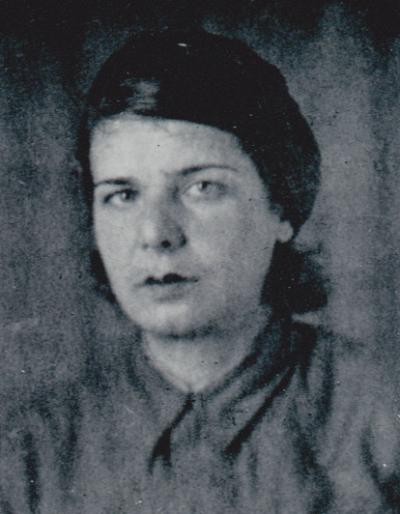 Research is further complicated by frequent confusion with two other women named Sofia Golovinskaya—one a well-known Bolshoi Ballet dancer, the other a contemporary fashion photographer.
Despite her wartime service, Sofia Golovinskaya never received the housing benefits legally owed to single women veterans. Unaware of her rights, she spent years living under harsh conditions in an eight-square-meter room in a communal apartment shared by six families.
Even during major repairs to her building on Pushkinskaya Street, an official attempted to extort a bribe instead of granting her proper housing. When she refused, she was transferred to another communal apartment, where she was later robbed.
In 1994, she emigrated to Israel, where she lived until her death in 2005 at the age of 96, passing away in a nursing home.
Although much of Sofia Golovinskaya’s early life remains unknown, her name stands out among the Jewish women who fought in the Red Army to defeat Nazi Germany. While Soviet women gained fame as snipers and pilots, Golovinskaya distinguished herself in a far rarer and more dangerous role: mine clearance.
Combining the skill of a combat engineer with the endurance forged during the Siege of Leningrad, she neutralized hundreds of explosives—saving countless lives and protecting vital infrastructure. Yet women sappers received little recognition, making her courage an exceptional and often overlooked chapter of World War II heroism.
Sources