








 Peace Prize Winner Navi Pillay’s Long Record of Anti-Israel Hatred


7 min read





Eliza Davis refused to accept the antisemitism of her age—and changed the course of literary history.
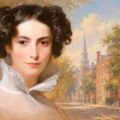
When Eliza Davis was born in 1816, antisemitism seemed like a fact of life. Raised in a large Jewish family, she grew up in Jamaica’s vibrant Jewish community. At the time, Jews had fewer political rights than Christians in Jamaica—a condition common throughout much of the world. Eventually, Eliza moved to London and married a distant relation, James Phinneas Davis, who was building a successful legal career despite the rampant antisemitism of the day. Together, Eliza and James immersed themselves in London’s Jewish community, raising a family and supporting local Jewish institutions. They would go on to have ten children.
In contrast, Charles Dickens’ life was marked by early misfortune. At age 12, his father, John Dickens, was sent to debtor’s prison, forcing young Charles to leave school and work in a boot-blacking factory with other impoverished children. The exploitation he experienced there deeply informed his later writing, inspiring his memorable portrayals of abused and neglected children.
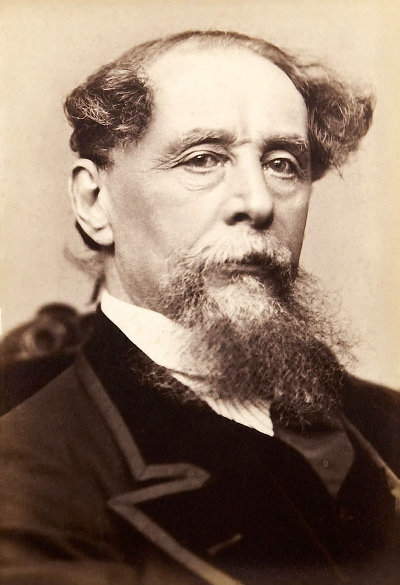 Charles Dickens
By the time Eliza was raising her family, Dickens was becoming one of England’s most celebrated authors. His literary career took off in 1836 with the serialized comic tale The Pickwick Papers, a runaway success that unfolded in 19 installments before being published in book form in 1837. He followed it with a much more ambitious project: Oliver Twist, a dark indictment of child exploitation drawn from his own traumatic experiences. The book introduced one of English literature’s most infamous characters: the Jewish criminal Fagin.
Over 24 magazine installments published over two years, Dickens told the story of Oliver Twist, a pitiful orphan caught in a web of crime and abuse. Central to that web was Fagin, a Jewish criminal who kidnapped and exploited the innocent Oliver. In a later preface, Dickens explained that the story illustrated “the principle of Good surviving through every adverse circumstance, and triumphing at last.” Much of that adversity came in the form of the demonic figure of Fagin.
British barrister and author Anthony Julius, in Trials of the Diaspora: A History of Anti-Semitism in England, calls Oliver Twist a “Christian fable” and likens Fagin to a vampire:
“He rules over [the boys] as a life-giving and life-forfeiting sovereign… Fagin corrupts the boys, draining them of life as he morally drains them… His infant captives have no future; they live hand-to-mouth, day-by-day. In this living death, Fagin is something akin to a vampire. He is a slayer of children, the suppressor of a new generation, the destroyer of fresh life and the thwarter of its promise…”
Dickens describes Fagin as nearly supernatural in his evil:
“He glides stealthily along, creeping beneath the shelter of walls and doorways.”
“Like some loathsome reptile.”
“Some hideous phantom, moist from the grave, and worried by an evil spirit.”
In early editions, Fagin is referred to almost exclusively as “the Jew”—a total of 257 times in the first 38 chapters. By contrast, the non-Jewish villain Bill Sikes is never described by his ethnicity.
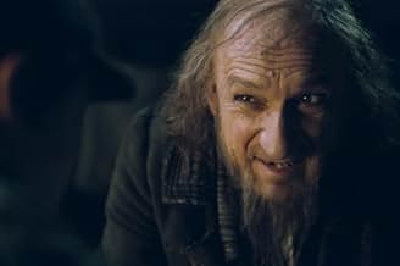 Fagin portrayed by Ben Kingsley
Oliver Twist was an immense success. It has never been out of print—and its portrayal of the evil Jew Fagin has embedded antisemitic stereotypes in English literature and beyond.
As Dickens’ fame grew, he continued to include anti-Jewish tropes in his work. In The Old Curiosity Shop (1840–41), the villain Quilp declares, “He’s richer than any Jew.” In Barnaby Rudge (1841), the character Gashford equates Jews with money and beards. Montagu Tigg in Martin Chuzzlewit (1843–44) sneers at a pawnbroker needing to “weigh out his pound of flesh.” Similar slurs appear in Hard Times, Great Expectations, short stories, and nonfiction.
This literary antisemitism reflected a wider English cultural norm. Pamphlets, books, and cheap literature routinely depicted Jews as filthy, dishonest, and bloodthirsty. In the 1860s, Eliza’s husband, James, was targeted in one such smear: a popular penny pamphlet titled The Vampires of London, by John Colborne. Meant to expose so-called “usurers” and “moneylenders,” the piece portrayed Jews as deceitful predators and named its villain—the “arch-vampire”—Davis.
The Davises sued for slander in 1865. The trial attracted considerable attention, and the courtroom was packed. After just 30 minutes, the judge ruled in James’ favor—but fined Colborne only a token amount. As he left the courtroom, Colborne received applause. The message was clear: literature held immense power to reinforce antisemitic lies—and the public was all too receptive.
During his most productive years, Dickens lived with his family in Tavistock House in London. By 1858, however, he separated from his wife Catherine and took up with a younger woman. Catherine moved out with one of their ten children, and Dickens moved to Kent, putting Tavistock House up for sale.
The buyers were none other than Eliza and James Davis. Despite their integrity, Dickens indulged his prejudices in a letter to a friend:
“If the Jew Money-lender buys (I say ‘if’ because of course I shall never believe him until he has paid the money)…”
But once the deal was completed, Dickens praised Eliza warmly in another letter:
“Mrs. Davis appears to be a very kind and agreeable woman. And I have never had any money transaction with anyone more promptly, fairly, and considerately conducted than the purchase of Tavistock House has been.”
Three years later, Eliza wrote to Dickens again. The prominent Jewish philanthropist Lady Judith Montefiore had recently died, and Eliza was helping raise funds for charitable works in her memory. Aware of Dickens’ philanthropic legacy, she wondered: would he give to a Jewish cause?
She began by praising his contributions to social justice:
“It has been said that Charles Dickens, the large hearted, whose works plead so eloquently and nobly for the oppressed of his country… may justly claim credit (for) the fruits of his labour, the many changes for the amelioration of the condition (of the) poor now at work.”
Then she addressed the elephant in the room:
“Fagin, I fear, admits only of one interpretation,” she wrote, charging that Dickens “has encouraged a vile prejudice against the despised Hebrew.” She concluded by urging Dickens to contribute to the Judith Montefiore Memorial Fund as a gesture of justice and atonement.
Dickens waited 18 days before replying. He sent a donation—and a defense of Fagin:
“It unfortunately was true of the time to which that story refers, that that class of criminal invariably was a Jew.” He added that he would have written a villain as a “Spaniard,” “Roman Catholic,” or “Chinaman” if criminals at the time belonged to those groups. He also rebuked the Jewish community, writing that if they were offended by Fagin, “they are a far less sensible, a far less just and a far less good-tempered people than I have always supposed.”
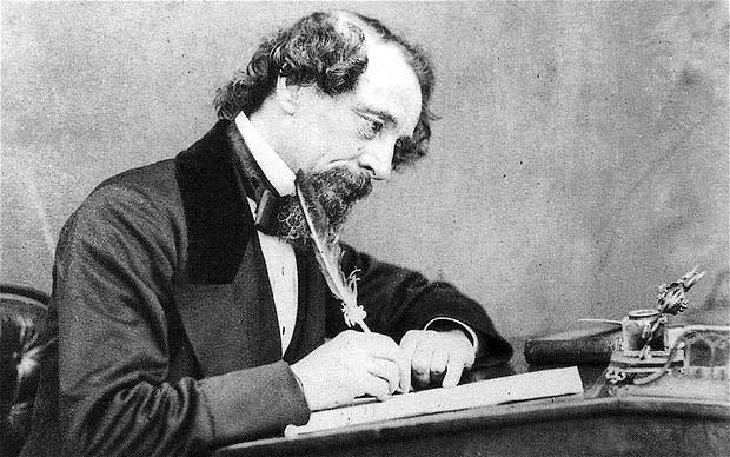
Despite this, Eliza persisted. She continued writing, pointing out that while Dickens created both good and bad Christian characters, his only Jewish character was a villain. She explained that due to systemic exclusion, Jews were often confined to marginal professions: secondhand clothes sales, ragpicking, and informal moneylending.
In letter after letter, Eliza explained how painful antisemitic portrayals were to her and other Jewish readers: “I hazard the opinion that it would well repay an author to examine more closely into the manners and characters of the British Jews and to represent them as they really are.”
Gradually, Eliza’s arguments took root. Dickens halted a reprinting of Oliver Twist mid-production to make changes. The first half of the book had already been printed, but in the second half, he replaced references to Fagin as “the Jew” with simply “Fagin.” (This accounts for the 257 occurrences of “the Jew” in the first 38 chapters and the drastic decline thereafter.)
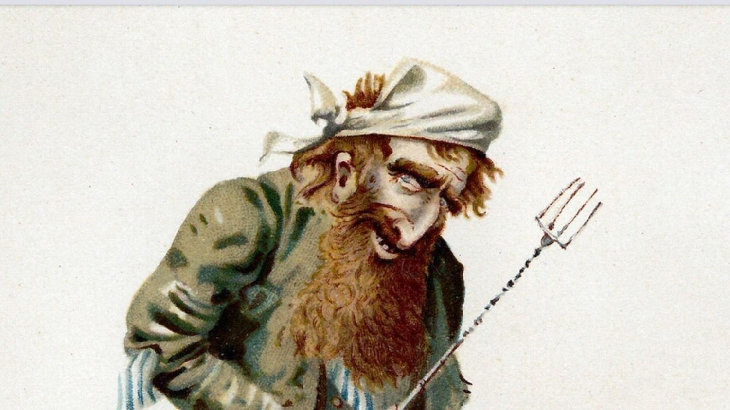 Portrait of Fagin
Dickens’ final novel, Our Mutual Friend (1865), appears crafted in part to reassure Eliza. It introduced Mr. Riah, a kindly Jewish character whose name means “friend” in Hebrew. Though he is slandered and abused as a greedy moneylender, Mr. Riah proves generous, gentle, and heroic—helping the novel’s female protagonists escape peril.
In one of the book’s most poignant passages, Mr. Riah laments:
“Men say, ‘This is a bad Greek, but there are good Greeks…’ Not so with the Jews… They take the worst of us as samples of the best… and they say ‘All Jews are alike.’”
Eliza was deeply moved. She sent Dickens a treasured gift: a copy of the Hebrew Bible in English, translated by Dr. Abraham Benisch. This edition likely matched the one Eliza studied herself—a profoundly personal and generous gesture.
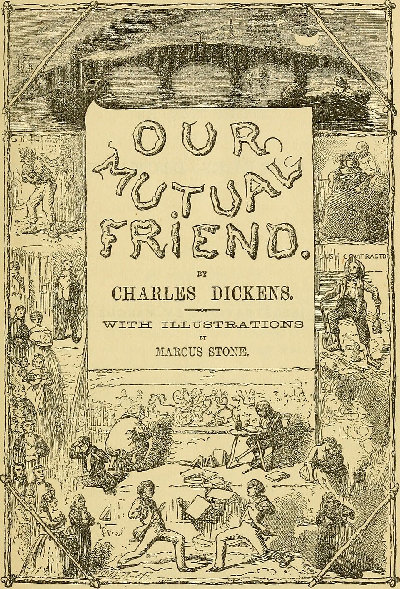
Charles Dickens died in 1868. He and Eliza Davis remained in correspondence until the end. Eliza lived another 25 years, long enough to witness the lasting popularity of Dickens’ work—and the real change she helped inspire.
Eliza Davis’ determination is a model of moral courage. Surrounded by antisemitism, she refused to remain silent. Letter by letter, she chipped away at Dickens’ prejudices. She could have easily dismissed herself as a mere housewife unfit to debate a literary giant. Instead, she embraced her responsibility.
Her efforts call to mind the words of Rabbi Tarfon: “It is not your duty to finish the work, but neither are you free to neglect it” (Ethics of the Fathers, 2:16).
In today’s fight against rising Jew-hatred, Eliza Davis reminds us that even one voice—persistent, principled, and patient—can change the world.









Remarkable !!
G-d bless Eliza. We should all emulate her ways.
PART 3: THE REAL VS VIRTUAL JEWS OF FIELD LANE
Their life-events are documented in the New Synagogue, Leadenhall St. The Benjamins produced 12 children. Several sons travelled to the Cape Colony in the 1840s and founded the wool trade. Next it was the diamonds and gold. The eldest, Michael Henry became a highly respected Cape MP, while the second, Moss embarked on a lifetime of full-time social work, appointed Chairman of the “Society for the Relief of Distressed Persons” at 19. Returning home, they regrouped in Sutherland Ave, Maida Vale, dragging their parents with them. Around that time, Deborah’s brother, Joseph Barnett, who inherited his father’s hat business, appeared in court for bankruptcy. Unlike Dickens' father, he had what it takes to get off!
Possibly a Hebrew Free Loan society came to his aid? Bankruptcy was treated as a crime in Victorian England; the only absolution was by paying the debt, which was nearly impossible for someone who was locked up! Incidentally, the US Constitution is clear that inability to repay a debt is not a crime.
PART 2: THE REAL VS VIRTUAL JEWS OF FIELD LANE
A sardonic New Times report on a fire in the Benjamin-Barnett home at the start of Pesach 1824 states, "Public taste had long since doomed this disgusting pile of buildings to annihilation; but for thc zeal of the firemen the nuisance would probably have been abated on Saturday morning last. It being the Feast of the Passover, the Israelite tribe (with which this place is colonised) were disturbed in their early matins by a watchman's unwelcome warning, and like their fathers of old, fleeing from the tyranny of the Egyptians, they gathered their choicest goods and fled the destroyer. Field Lane Jewish families conducted business, served as voluntary law enforcement officers, and occasionally got booked themselves for 'receiving' CONTINUED
Thank you Dr Miller and AISH
THE REAL VS VIRTUAL JEWS OF FIELD LANE
My great-great-grandfather Lyon and his brother Henry Benjamin, born in the 1790s, grew up in Gravel Lane, Houndsditch. In 1821, Henry married Deborah Barnett and moved in with his in-laws at the bottom of Field Lane. Father-in-law Hyam Barnett was a hatter and it is very likely that he was "the salesman of small stature . . . smoking a pipe at his warehouse door", whom Fagin stopped to address (chap 26). Examining the 1824-1838 London press on general Field Lane criminal activity and reports referring specifically to Field Lane Jewry, Dickens appears to have completely ignored research, relying entirely on weaving his imagination and story-telling magic around pernicious Anglo-Saxon Israelite mythology. CONTINUED
I was born a nonJew in South Africa. I went to the University of the Witwatersrand in Johannesbirg. I studied for a B A degree and the n a law degree. I went to work for lawyers who were Jewish. I started to go to shul on Saturday and I converted to Judaism. I now have Jewish choldren and grandchildren and I live in Israel.
Absolutely fascinating. What a wonderful woman!
Such an interesting story!
The point of a convenience hate is to avoid confronting whatever you don’t like in yourself (it doesn’t have to be at the level of outright hatred, mere discomfort is sufficient) by projecting it onto someone else.
That said, if you are taught to think badly of people from your cradle, you don’t need any internal motivation for hating them. Also you are unlikely to examine that hatred unless forced to.
Well said!
I guess that is why the Jews that wrote comic books wrote the comic book the x- men about regular humans and mutants, I guess in my view Jews are like the mutants and different and are not accepted in general society and need their own country, and their own society, where the Jews got the Torah the mountain is called Sinai which means hatred and usually hatred stems from jealousy, like my mom( obm) used to say " hatred and jealousy are twins" and one of the 10 commentators has to do with jealousy or envy
Charles Dickens was a anti semite until he met Eliza Davis, a lot of England was anti Semitic at that time like the writer that wrote" Charle and the chocolate factory" I think his name was Ronald Dahl, now once again there is a lot of anti semitism around the world, only Jews get lumped together in a bad light, other religions and races don't have this problem,in the article it turns out Chales Dickens did not have a easy life, and for some reason the general population uses Jews as scape goats, some of these people never met a Jewish person, and another thing some non Jewish anti semites think that Jews have horns, how did this insane remark even come about, all through time anti semitism or anti Jewish sentiment was around, some people think it is fear of the other
Re the horns, there are a couple of possible origins: one is the conception of Jews as “the devil’s children” and since the devil is depicted with horns (being himself a derivative of the Greek god Pan), so too his children.
The second derives from Michelangelo’s famous statue of Moses: Michelangelo modeled horns on Moses’s head to represent the rays of light that shone from his face when arriving at the Hebrew encampment with the Tablets of Law (as described in the Torah). Unfortunately, whatever Michelangelo intended, these have been taken as a literal depiction of the Jewish body structure.
The Douay version of the Christian Bible, used by Roman Catholics, actually translates the description of Moses’ “beams” or “rays” of light coming from his face as “horns”.
I will note that this and other Catholic versions include Books that are not in Tanach nor in the Protestant versions.
These include the Books of Judith, Maccabees, and Tobit. While lacking the stature of canonical works, they nonetheless provide an interesting picture of everyday life in ancient Israel.
Yes I believe Mr. Dahl has a history of antisemitism and he wrote some really good books like Charlie and the Chocolete Factory. Just because someone is a good writer like Dahl and Dickens does not mean that they are "good" people. Talent has nothing to do with goodness. The most loving and best and kind people are what you would call average with the exception of Mother Tereasa who of course deserved her sainthood in so many ways, she was unique.
Inspiring!
I have been telling people: We hate Epstein for what he is accused of but do not hate the Jewish People for this. Just like we do not hate all Christians for what some Christian serial killers did. We also do not hate all Catholics for what some Catholic Priests did to children.
Do you hate Catholic Fauci for what he did with the JAB that harmed and killed many? And Nancy Pelosi is Catholic. Do you hate all Catholics for what they did? Of course not.
I was with you until you got to the Covid vaccine. It saved me from contracting it when my husband had it. No vaccine is perfectly safe, and some people will have reactions. I am generally unwell the day after getting the booster. The same is true of every other vaccine and medication.
Dear Chevrah,
I hate to rain on everyone's parade...
Yes, Eliza was noble and lovely and made a kiddush Hashem, but antisemitism doesn't stop from setting records straight. Yes, we should be polite and honest with non Jews as a kiddish Hashem and also because anyway we are supposed to be polite and honest.....
BUT... antisemitism is a phenomenon Hashem embedded into galut...it won't be removed until Moshioch comes. It was placed here to remind Jews to be Jewish, so the only antidote to antisemitism is being the best Jew one can be by keeping the Torah.
Great article! And so relevant to our feeling of helplessness against the rising tide of anti-Semitism. We note that the beginning of the process of Dickens' re-education was interacting with a Jew of admirable personal integrity. Eliza Davis was a shining example we should aspire to emulate.
If you check literary analyses of Our Mutual Friend (or read the book!), you'll find that Riah is widely considered a completely unrealistic character because he is too perfect to be believable. Consequently, many critics feel that he serves only as Dickens' feeble apology to Eliza Davis for his depiction of Fagin (memorably marked as "the Jew" despite later revision) as utterly contemptible.
Unsurprisingly, however, the satanic Fagin was generally accepted with glee by antisemitic Brits, whereas Riah, his diametric opposite, was not (nor is he nearly as well-known), which probably pleased the author thoroughly as the damage was a fait accompli whereas the apology was largely a flop.
Ironically enough, lowercased "dickens" is a milder way of saying "devil"!
How did Dickens know that Riah means "friend" in Hebrew?
The first Hebrew-English was published in 1838, two years after the first edition of Oliver Twist
Shoshana, that's a great example of a dangling participle
An interesting story. One small correction, Dickens died in 1870. As you write his antisemitism was typical of the time. Perhaps we can give him credit for the apparent change in the way he portrayed Jews in his later writing.
Please read my response to Sara Y. Rigler's comment. I rather thoroughly researched the question of Dickens' single favorable portrayal of Jews in his later years and found that his sincerity remains highly questionable.
Since antisemitism cannot be logically explained (see Chana Bender's comment), it's very unlikely that Dickens did a sudden about-face. The more likely scenario is that Eliza. Davis' honorable conduct touched his conscience and Riah is the result. Note that Riah sounds like a combination of Mrs. Davis' rhetoric and Shylock's famous speech!
Thanks. I have not researched this issue as you did. What you write makes sense to me. I once read that Dickens was far from a decent person in his dealings with his own family, especially his wife, so we can add antisemitism to the negative side of his character. To what extent these defects ought to damage his reputation as one of England's greatest writers is an issue I will leave open.
Fantastic. Thank you.
What a great piece of writing. So often it seems our biases, and our judgement values of "others", may come merely from ignorance. We all start out a product of the places and times we grew up in. This is a good and needed reminder to always be aware that our own assumed ideas about other communities might sometimes need rethinking. May we all have the courage to adjust our value systems, when in the fullness of time, we realize that we may have been misguided.
Well said...
Halevai!
I’m so curious: what is the story with William Shakespeare? I hear such conflicting stories about his relationship with Jewish people too!
There’s an excellent book called “Anti-Judaism” (unfortunately I don’t remember the author’s name.) He devotes a whole chapter to Shakespeare, who almost certainly never met a Jew.
Having said that, as a scholar of Shakespeare myself, I don’t believe that he was an anti-Semite. The character of Shylock is a tragic figure. Early in the play, he asks rhetorically “doth the Jew have eyes as other men? If you cut us us, will we not bleed?” He is reacting to the treatment accorded to him every day. At the end, he loses his daughter to intermarriage and endures a forced conversion.
I would make similar comments about “Othello” and Taming of the Shrew”. Essentially, Shakespeare takes contemporary attitudes about Jews, foreigners, and women and requires his audience to examine them
There were Jews in England at the time of Shakespeare. He probably did meet a Jew at some point in his life however such a person might not have identified themselves a Jewish, in order to avoid prejudice. On the other hand I do not go about identifying myself as having Jewish ancestry unless someone asks me.
There were very few Jews in Elizabethan England. Ironically, after Charles I was deposed and beheaded, the “Lord Protector” horrific Oliver Cromwell, who hunted down Catholics and loyalists to the monarchy, granted Jews the right to live in England!
In Protestant Tudor London, there was a group of about eighty Marranos, who were regarded as Portuguese expats. Most notable was Roderigo Lopez, the Queen’s personal physician. When political tension arose between England and Spain, an unofficial enquiry led by the Earl of Essex investigated the Marranos. Lopez was accused of being a Spanish agent and conspiring to poison the Queen and sentenced to be hanged, drawn and quartered. However, Elizabeth delayed authorizing the execution, aware that Lopez had breached patient confidentiality in revealing that Essex, her lover, was suffering from persistent venereal diseases. The sentence was carried out when it was discovered that Lopez was regularly donating to the Portuguese Synagogue in Amsterdam. [hence, that he was Jewish]
Thanks for adding to the record!
I Never knew of the story or of how a vibrant Jewish Lady help change a small part of the Antisemitism of Dickens. Much appreciated.
Important article. Alas, that it is so relevant now, with the increase in antisemitism all over the world. Of course there is an unfortunate evocation of the notorious blood libel in so much fiction!
Thank you for such an interesting piece. One question:
At age 12, his father, John Dickens, was sent to debtor’s prison, forcing young Charles to leave school and work in a boot-blacking factory with other impoverished children. How can his father be only 12?
Thank you from a fellow grammarian! When I was in fifth grade in a public elementary school, I learned how to diagram sentences, and I thought it was fun!
Lol
Watch where the commas were placed...yes HIS father
dangling modifier good catch fabulous article
When Charles was 12.
There are several other editing considerations that outweigh the confusing due to the punctuation. In the context of the article (1) it is superfluous to mention his father by name (there is no mention of any other family member), and (2) as it is unlikely that he chose to leave school. 'Removed from' makes more sense. Thus, When his father was imprisoned for debt, 12-year-old Charles was removed from school to work with other impoverished children in a boot-blacking factory [to support his family].etc
Magnificent article! Thank you so much for sharing that with us! And G-d bless Mrs. Davis. What a fantastic example she set for all of us!
Wonderful article — timely message, too
This is such an interesting article. I was familiar with Charles Dickens' anti-Semitic leanings but had not heard about this fascinating twist. thank you!
No pun intended lol!
Excellent and timely article.