






 The Three Urgent Challenges Jews Need to Confront This Year


16 min read


The Romans destroyed the Second Temple but they were only able to do so when civil war tore the Jewish People apart.
Jews living in the Land of Israel in mid-1st century CE did not have it easy. At the time, the Land of Israel was under Roman rule. The Roman emperor appointed procurators to rule each of the empire’s provinces. The procurators were foreigners who were put in charge of a province’s finances and were responsible for collecting taxes and sending them back to Rome.
Having no personal connection to the people or the land, the procurators were not concerned with their subjects’ well-being. Their only concern was profit. The more taxes they collected the more money they could keep for themselves.
The justice system became corrupted under the procurators’ rule. Uninterested in justice, the Romans would side with whoever would bring them more profit. Criminals had free reign, robbing and murdering innocent citizens with no fear of retribution.
In addition, the procurators had no respect for the local religion or customs. They, and the other foreigners they brought along, would humiliate the Jews and mock their traditions and practices. When the Jews objected to such treatment, the Romans responded with violence and cruelty. In fact, at times they would provoke the Jews in order to justify their violent treatment of them.
Josephus, Jewish military leader turned historian, describes the Roman procurator Albinus:
[there was no] sort of wickedness that could be named but he had a hand in it. Accordingly, he did not only, in his political capacity, steal and plunder every one's substance, nor did he only burden the whole nation with taxes, but he [released criminals from prison in exchange for money].
The released criminals terrorized the population, but the people had no one to complain to. They could only hope to escape abuse by flattering the procurator and gaining his favor. Josephus concludes, “Nobody durst speak their minds, but tyranny was generally tolerated; and at this time were those seeds sown which brought the city to destruction.”
The last procurator before the revolt, Gessius Florus, was the worst. According to Josephus, Albinus’s crimes pale in comparison to Florus’s. He not only abused the population of Judea but did so publicly and boasted about it. He was a master of “disguising the truth; nor could any one contrive more subtle ways of deceit than he did.”
It wasn’t enough for Florus to enrich himself at the expense of individual people, “he spoiled whole cities, and ruined entire bodies of men at once, and did almost publicly proclaim it all the country over, that they had liberty given them to turn robbers, upon this condition, that he might go shares with them in the spoils they got.”
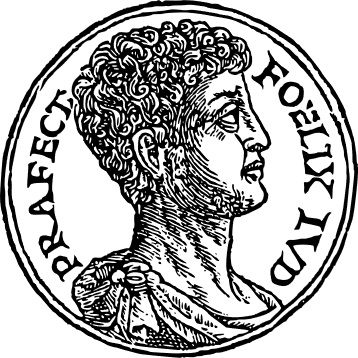 Medalion depicting Felix, one of the Roman procurators of Judea
Among the Jews of Roman Judaea, different views formed on how to respond to Roman cruelty and corruption. Three main factions emerged.
The Zealots believed that the proper response was an open war with the Romans. They were ready to take on the mighty Roman army and believed that they could win independence from the Roman Empire. Many of them were young and inexperienced in either warfare or politics.
The Friends of Rome, who were mostly the wealthy and powerful Jews, believed that the best approach was to befriend the Roman procurator and his representatives, and thus, avoid their wrath.
The moderate faction would have preferred to throw off the yoke of Rome, but they realized that such a goal would not have been realistic. Thus, they preferred to negotiate with the Romans in order to avoid violent confrontation. The majority of the population belonged to this faction, including the elders and the Sages.
The three factions had similar goals – they wanted to ensure peace and justice for Jews in Judaea. Unfortunately, they could not agree on how to reach these goals, and with time and increased oppression, the factions only grew farther apart.
When Florus demanded money from the Temple treasury, the younger generation had enough. They mocked Florus by walking around Jerusalem with charity boxes, collecting for “poor Florus.”
In response, Florus called in his troops. After the elders of the city refused to give over the youngsters that had mocked the procurator, he ordered the soldiers to attack, and they were only too happy to comply. Josephus writes:
[The soldiers] did not only plunder the place they were sent to, but forcing themselves into every house, they slew its inhabitants; so the citizens fled along the narrow lanes, and the soldiers slew those that they caught, and no method of plunder was omitted; they also caught many of the quiet people, and brought them before Florus, whom he first chastised with stripes, and then crucified. Accordingly, the whole number of those that were destroyed that day, with their wives and children, was about three thousand and six hundred.
The attack was intended to incite the Jews to rebel. An open rebellion would allow Florus to declare Jerusalem a conquered city, plunder it, and confiscate the Temple treasury.
Nevertheless, the elders prevailed upon the Jews not to retaliate, in order to prevent another massacre. Together with the priests, they formed a procession to greet the Roman soldiers in peace.
The Romans treated the elders with contempt, not returning their greeting. Offended, some Jews protested loudly. That was exactly what the soldiers were waiting for. They attacked the Jewish procession.
At first, the Jews retreated, but when they saw that the Romans were headed towards the Temple Mount, they mounted a counterattack, preventing the Romans from taking over the Temple.
Florus admitted defeat and ordered his soldiers to leave Jerusalem. Then he came up with another strategy to get the Temple treasures. He wrote a letter to his superior, claiming that the Jews were rebelling against Rome and requesting reinforcements.
The Talmud tells a story that occurred at that time and convinced the Roman emperor that the Jews were indeed rebelling.
A wealthy man prepared a banquet and sent his servant to invite important guests. On the guest list was a friend named Kamtza. The servant made a mistake and invited instead Bar Kamtza, the host’s enemy. When the host saw Bar Kamtza at his banquet, he demanded that his enemy leave. Embarrassed, Bar Kamtza offered to pay for his food. The host insisted that he leave. Bar Kamtza offered to pay for half the banquet, then the whole banquet, but the host threw him out, in full view of the other guests, none of whom stood up for Bar Kamtza.
Determined to avenge his humiliation, Bar Kamtza traveled to Rome and told the emperor that the Jews were rebelling against him. As proof, he suggested that the emperor send an animal for a sacrifice to the Temple. If the Jews refuse to sacrifice the emperor’s animal, that would be a sign of rebellion.
Emperor did as Bar Kamtza suggested. On the way to Jerusalem, Bar Kamtza made a small blemish on the animal, disqualifying it from being sacrificed. In the Temple, the priests debated whether they should sacrifice the blemished animal in order not to anger the emperor, or whether they should assassinate Bar Kamtza to prevent him from reporting to the emperor that his animal was not sacrificed, but they decided against both.
Bar Kamtza returned to the emperor and convinced him that Jews were indeed rebelling against him.
The story illustrates the hatred and distrust prevalent in Jerusalem at the time. The atmosphere was ripe for civil war, which is precisely what happened before the emperor’s troops even arrived in the country.
Civil war erupted between the Zealots and the Friends of Rome, with the former taking control of the Lower City and the Temple Mount and the latter taking control of the Upper City.
Fighting continued for a week, with neither side gaining advantage. Then many Jews came to Jerusalem to celebrate bringing wood to the Temple. Among them was a group of Sicarii, an especially violet faction of the Zealots, named for the daggers (sica) they carried.
Thus reinforced, the Zealots captured the Upper City and set fire to the palace of the High Priest and the Roman tax office.
Some Roman soldiers remained in a fortress in the Upper City. When they surrendered two weeks later, they were promised a safe passage out of Jerusalem. However, when the Sicarii saw the unarmed soldiers, they attacked and slaughtered them.
The Romans responded to the Jewish rebellion by inciting the non-Jews of the Roman Empire to attack their Jewish neighbors. Pogroms took place throughout Judaea, and also in Alexandria and Damascus. Tens of thousands of Jewish men, women, and children were murdered.
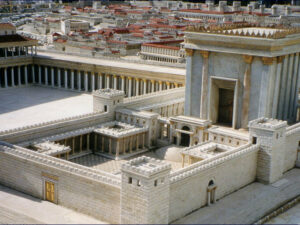
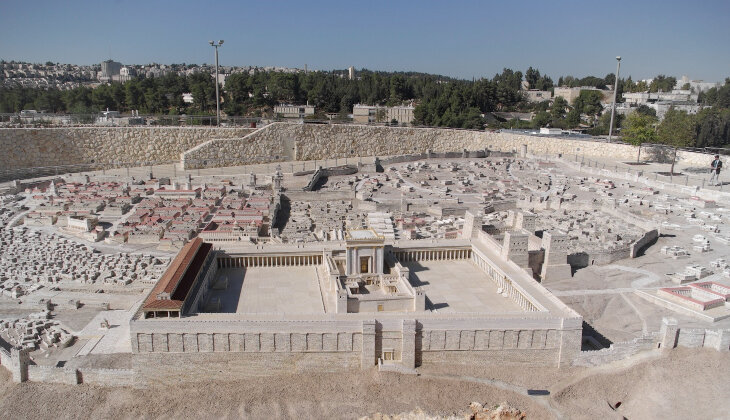 Model of Second Temple-era Jerusalem at the Israel Museum, with the Temple in the foreground
More altercations between Jews and Romans followed. Eventually, the emperor sent a large army, headed by General Vespasian, to crush the Jewish rebellion. Vespasian approached Judea from the north, through Galilee. Anticipating the attack, Jewish leaders from Jerusalem sent Josephus to command the Jewish army in the Galilee.
Josephus was a controversial figure even in his own time. A scion of a wealthy priestly family, Josephus was mistrusted by the Galileans and accused of sympathizing with the Friends of Rome.
Nevertheless, when Vespasian, with 60,000 troops and the latest weapons of war, besieged Jotapata, one of the strongholds of Galilee, Josephus mobilized the Jewish defenders and resisted the Romans for 47 days. Vespasian was only able to conquer Jotapata when the defenders were weakened by starvation.
Vespasian’s forces killed 40,000 Jews in Jotapata and sold 12,000 survivors as slaves. Josephus managed to survive by tricking his people. He surrendered to the Romans and quickly gained Vespasian’s favor. Later, he attempted to mediate between the Romans and the Jews of Jerusalem, but Jerusalemites perceived him as a traitor and refused to speak to him.
Today, Josephus is most known not for his military or diplomatic efforts but his chronicles of the events he’d witnessed. Though certainly slanted to fit his own agenda, they remain the most valuable records of the Jewish Revolt.
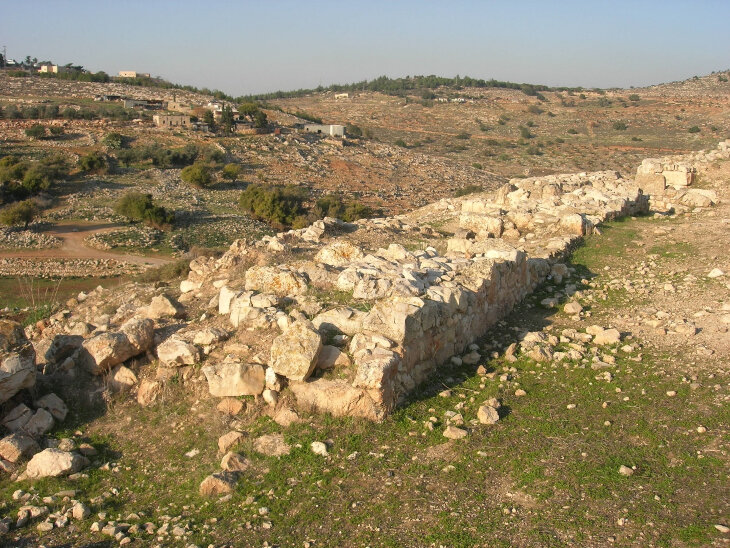 Ruins of ancient Jotapata in the Galilee. Proa 500, CC BY-SA 4.0, Wikimedia Commons
As the Roman army advanced, they destroyed everything in their path. They killed farmers and villagers and looted and burned down their fields and farms. They conquered other cities.
The survivors of the war in the Galilee fled to Jerusalem. Among them was John of Gischala, another fortified city that fell to the Romans. In Jerusalem, he joined the Zealots and urged them to fight the Romans, proclaiming that Jerusalem could never be conquered.
The factions in Jerusalem became even more polarized as the residents prepared for Vespasian’s attack. The Zealots accused the wealthy Friends of Rome of cooperating with the enemy. The violent Sicarii used this pretext to rob and terrorize the Friends of Rome.
In response, the Friends of Rome drove the Zealots from the inner city. John of Gischala took up leadership of the Zealots on the Temple Mount. Again, Jerusalem was torn by civil war.
The moderates, recognizing that the Zealots’ hopes of defeating the Romans were unrealistic, joined the Friends of Rome in besieging the Temple Mount.
In desperation, the Zealots invited the Edomites to come to their aid. The Edomites were a violent people living in the south of Judea. Their ancestors had been forcibly converted to Judaism.
Excited about the potential looting opportunity, the Edomites arrived in Jerusalem. The Friends of Rome closed the city gates, but in the middle of the night, the Zealots overcame the guards and admitted the Edomites into the city.
Trapped, the Friends of Rome and the moderates lost the battle. Many of them were killed. The Zealots and Edomites went on a rampage, murdering anyone they suspected of loyalty to the Romans and looting their property. The Zealots now ruled the city.
The surviving Friends of Rome looked for a new military leader to help them fight the Zealots. They invited Simon bar Giora, a leader of a violent band that had previously attacked and plundered the Edomites.
With Simon’s arrival, the civil war intensified in quantity and cruelty. The streets of Jerusalem turned into battlefields between John’s and Simon’s forces. Even before Vespasian approached Jerusalem, the city experienced tremendous losses.
It was the Roman siege of Jerusalem that finally drew the warring factions together. Simon and John combined forces and led several raids on the Roman forces. They fought fiercely and, despite being vastly outnumbered, caused much damage to the Roman army. They dug tunnels under the city walls, burned down siege towers and ramps, and destroyed catapults. Encouraged by their initial successes, they were sure of their victory.
Meanwhile, the moderates observed the Roman encampment and realized that they stood no chance of defeating the enemy in open combat. Their only hope was that the Romans would get tired of the siege and simply leave.
In the beginning, this hope was not unreasonable. The wealthy people of Jerusalem had storehouses full of food and supplies that could last for many years.
When the Zealots saw that the moderates were getting complacent, preferring to wait out the siege rather than fight the Romans, they took a bold and reckless step. They set fire to the storehouses and burned down all the supplies. They reasoned that, left with no other choice, the rest of Jerusalem’s population would join them in battle.
Soon, the besieged city began suffering from hunger, and its inhabitants began fighting each other over food. Josephus writes:
Now of those that perished by famine in the city, the number was prodigious, and the miseries they underwent were unspeakable; for if so much as the shadow of any kind of food did any where appear, a war was commenced presently, and the dearest friends fell a fighting one with another about it, snatching from each other the most miserable supports of life. Nor would men believe that those who were dying had no food, but the robbers would search them when they were expiring, lest any one should have concealed food in their bosoms, and counterfeited dying…
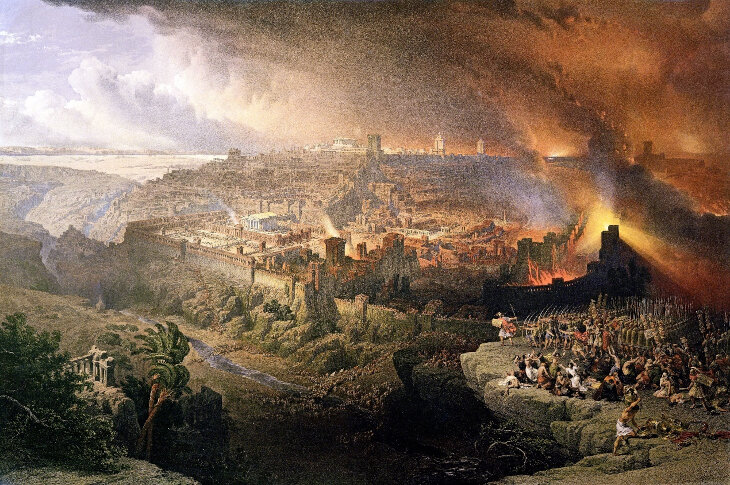 The Siege of Jerusalem by David Roberts
An elderly sage, Rabban Yochanan ben Zakkai, realized that Jerusalem was doomed. Concerned with the future of the Jewish people, he decided to sneak out of the city, whose gates were heavily guarded by the Zealots, and meet with Vespasian himself.
Rabban Yochanan’s nephew, Abba Sikra, was a Zealot leader. Rabban Yochanan asked Abba Sikra to help him get out of the besieged Jerusalem. Abba Sikra suggested that his students spread the rumor that he’d died and take him out of the city in a coffin, telling the guards at the gate that they were on their way to bury him.
The plan worked, and Rabbi Yochanan managed to meet with Vespasian, whom he greeted as Emperor. Vespasian objected that he was not an emperor, but then messengers from Rome arrived and informed him that he was chosen as the next emperor.
Impressed, Vespasian told Rabban Yochanan that he was ready to fulfill his requests. Rabban Yochanan requested three things: the city of Yavneh and its sages, so that Torah would survive the destruction of Jerusalem; the life of Rabban Gamliel and his family, scions of the Davidic dynasty, so that Jewish leadership would survive; and doctors to heal Rabbi Tzaddok, a sage who had been fasting and praying for forty years, trying to prevent the destruction. Vespasian agreed to all three requests.
 Bust of Vespasian. Livioandronico2013, CC BY-SA 4.0, via Wikimedia Commons
Vespasian left for Rome, leaving his son, Titus, in charge of the siege. Titus made several failed attempts to breach the city walls. Giving up, he said to his generals, “…if we do not fight against them, if they do not have a common enemy, they will begin fighting among themselves. If we carry out our plan correctly, whatever we want to do to them, they will do to themselves.”
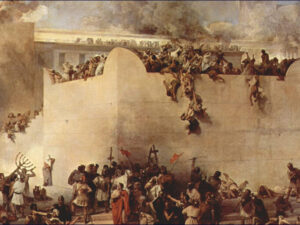
Unfortunately, Titus’s prediction proved correct. The infighting, combined with the famine, weakened Jerusalem’s defenders. On the 17th of the month of Tammuz, Titus and his army broke through the walls. For the next three weeks, fierce battles raged in Jerusalem. On the 9th of the month of Av, Titus and his army reached the Temple and set it on fire.
The defenders fought till their last breath, but they lost the final battle. The Romans plundered and desecrated the Temple. The glory of Jerusalem was gone, and most of its residents were dead. The survivors were captured by the Romans and sold into slavery. According to Josephus, the total number of dead was 1,100,000, and 97,000 were taken captive.
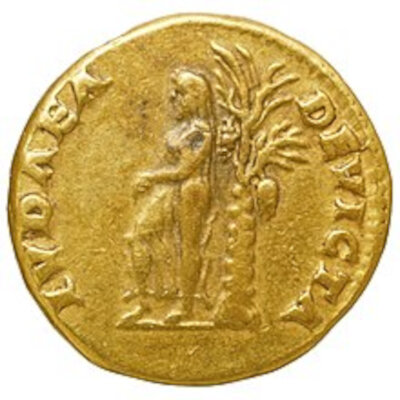 Judaea Capta coin
The Zealot leaders, John and Simon, were captured alive and brought to Rome in chains, where they were displayed in the triumphal procession, along with the treasures looted from the Temple.
The Arch of Titus was built in Rome to commemorate the triumph. To celebrate the victory, Vespasian issued a special coin with the inscription Judaea Capta.
Though the Temple was gone, Judaism survived, shifting its focus from Temple worship to Torah learning, thanks to the foresight of Rabban Yochanan ben Zakkai and to his students’ hard work in rebuilding the community infrastructure.
Sources:











More interested in building the Third Temple than wailing about the Second.
Not Just the wealthy. The Rabbis sought peace and the zealots were against the rabbis. See Gittin 56
very informative
Agree
Burning down your own food supplies?
The height of stupidity!
May the Zealots be forever cursed!
Yeah that's a very dumb move. Akin to cutting off your hand.