








 Those Shameful Thoughts and What They Really Say about You

6 min read
5 min read
4 min read





Roald Dahl’s family has apologized for the author’s anti-Semitism. Is it enough?
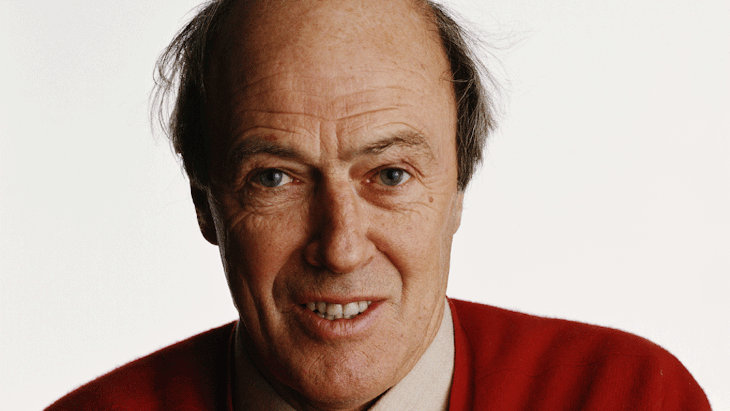
To say my family has had a rocky relationship with Roald Dahl’s stories is an understatement. Like their peers, my kids have read some of Dahl’s bestselling children’s books and watched some of the movies based on them. Charlie and the Chocolate Factory, The Witches, Mathilda – we’ve appreciated the writing and (at times) even the cruel-tinged humor. But we’ve always been keenly aware that Roald Dahl wouldn’t have returned our appreciation of his talent: he would have hated us for the simple fact that we are Jews.
Now, a Broadway play is forcing that contradiction back into the spotlight. "Giant," which opened March 23 after a celebrated run in London's West End, stars John Lithgow as Dahl -- and it's not a flattering portrait. The play centers on a single turbulent afternoon in which Dahl is confronted by his publishers over antisemitic language in a book review, and his response is to mock, deflect, and double down. Lithgow's performance has drawn raves, but the real subject of the play is a question Jews have wrestled with for generations: how do you reckon with an artist whose work you love and whose hatred you cannot ignore?
“There is a trait in the Jewish character that does provoke animosity...even a stinker like Hitler didn’t just pick on them for no reason,” Dahl said in an interview in 1983. In 1990, just a few months before his death, he doubled down on his anti-Semitism, telling a journalist, “I am certainly anti-Israel, and I have become anti-Semitic.”
The family of Roald Dahl – and the company managing his literary oeuvre – issued an apology for the author’s anti-Jewish rhetoric. “The Dahl family and the Roald Dahl Story Company deeply apologise for the lasting and understandable hurt caused by some of Roald Dahl’s statements,” they posted on Dahl’s official website. The apology is welcome, but I doubt it can make up for the damage Dahl caused to generations of young readers who looked up to him and who were influenced by his caustic views and anti-Jewish statements.
Dahl is an example of a man who’s so overcome with bitterness and hatred that it warps his entire life.
For years, I’ve used Dahl as a cautionary tale with my kids: an example of a man who’s so overcome with bitterness and hatred that it warps his entire life.
Dahl had some very horrible experiences. His first wife was American actress Patricia Neal, with whom he had five children (and whom he later divorced). In 1960, their infant son Theo was severely injured in a car accident and sustained brain damage. Two years later, their seven-year-old daughter Olivia died from complications after a bout of measles. In 1965, Patricia suffered a series of strokes and became partly paralyzed and unable to talk. Dahl nursed her intensely through her recovery and lent his formidable intellect and his resources as a famous author to help support research into brain damage treatments, stroke recovery, and measles vaccines.
But he also responded to some of the tragedies with a coldness that characterized his cruel humor in many of his books. When his daughter Olivia was sick with the measles that would soon kill her, Dahl recalled that “we even teased her for her polka dots.” When his wife Patricia was unable to remember basic words after her stroke and would mistakenly say nonsense-sounding words instead, Dahl used these odd-sounding phrases for comic effect in his book The BFG: “...I suppose, yes, some of the trouble Pat had did work its way into The BFG. Yes, it must have,’ he later said. He spoke publicly about losing his Christian faith as a result of all these trials, and missing the comfort and hope that religion might have offered him.
Sometimes tragedy can help spur us to respond with growth, I’d tell my kids. Other times, we risk sinking into depression and despair. Dahl’s anti-Semitism, his hatred, his bitterness and even the cruelty that works its way into his humor in his books might stem from his inability to deal with the tragedies in his life, I’d suggest.
The hatred for Jews and Israel that Dahl displayed is even more baffling in light of his earlier understanding of the key importance of Israel as a homeland for the world’s Jews. Dahl fought in Britain’s Royal Air Force during World War II and spent time in present day Israel, where he came face to face with desperate Jewish child refugees. In his compelling non-fiction memoir Going Solo, he describes meeting refugees from Hitler’s Germany near Haifa, in northern Israel. After landing his plane, about fifty young children came out excitedly to look at it. The scores of children were being looked after by a German-Jewish couple. “But who are you and who are all these children?” Dahl asked the grown up. “We are Jewish refugees,” the man explained. “The children are all orphans. This is our home.”
After inviting Dahl into their small, basic shelter for coffee, the husband and Roald Dahl had a long conversation about the centrality of Israel in Jewish life, which Dahl was able to record word for word over forty years later. “You have a country to live in and it is called England,” the Jewish man told Dahl. “Therefore you have no problems.” Dahl responded in great anger, pointing out that England was fighting Germany in a war to the death. Didn’t this Jewish man care whether or not Hitler was defeated?
“Of course I care,” the Jewish man responded. “It is essential that Hitler be defeated. But that is only a matter of months and years. Historically, it will be a very short battle...My battle is one that has been going on since” ancient times.
“I still have a very clear picture of the inside of that hut and of the bearded man with the bright fiery eyes who kept talking to me in riddles,” Dahl wrote; “‘We need a homeland,’ the man was saying. ‘We need a country of our own. Even the Zulus have Zululand. But we have nothing.’”
“‘You mean the Jews have no country?’”
“‘That’s exactly what I mean,’ he said. ‘It’s time we had one.’”
Dahl and the man spoke for hours, then Dahl took photos of the children and the land they were farming. In Going Solo, published in 1986, Dahl wrote “The name of that tiny settlement of Jewish orphans was Ramat David. It is written in my Log Book. Whether or not anything exists on the site today I do not know….”
If Dahl had only taken the time to investigate, he would have learned that Kibbutz Ramat David did indeed still exist in northern Israel then – and continues to flourish today. The kibbutz was established in 1926, named after former British Prime Minister David Lloyd George (who was in power when the Balfour Declaration, committing Britain to establishing a Jewish homeland, was issued.) If Dahl had wanted to, he might have even visited the kibbutz once more and possibly met some of those children, now grown, who might have remembered him and thanked him for his efforts in helping to defeat Nazism.
The Dahl family’s apology is of course welcome. But I can’t help but feel that it’s too little, too late.
But Dahl never made that journey – just as he never regained the innocence and optimism he seemingly had as a young man. “A life is made up of a great number of small incidents and a small number of great ones,” Dahl wrote in his introduction to Going Solo. Roald Dahl had a great many tragedies and horrible times in his life.
The acidity in his humor and the resentment against Jews and Israel that he outspokenly shared prevented us from embracing his works as favorites.
The Dahl family’s apology and that of the company controlling his books is of course welcome. But I can’t help but feel that it’s too little, too late. His family stated in their apology: “We just hope that, just as he did at his best, at his absolute worst Roald Dahl can help remind us of the lasting impact of words.” Those words – describing how he hated Jews – can never be erased. We can enjoy Dahl’s undisputed genius, but in our home we’ve never been able to enjoy his legacy.














Dr miller touches on a serious flaw of popular culture. I used to enjoy the Oscars, amd films in general. However, I find it difficult to separate the real person from the character.
The way Dahl treated his family already shows what a nasty person he was.
In the beloved Charlie and the chocolate factory he also ridicules overweight people.
Bottom line for me, take the good when it is worthwhile, and skip culture that comes from toxic people.
Many individuals and families have suffered tragedies, be they heath related, death by drunk drivers, other accidents, criminality, etc., but these horrific incidents do not turn family members into hateful antisemites. I’d be interested to discover the real underlying impetus for Dahl’s deeply seeded hate of Jews.
I believe tragedies can turn someone into a hateful person. Each of us can break. And that breakage brings about different emotions. One or more emotions continue to linger, thrive really. And everything they see, touch, smell or taste is reinforced by the emotion. Life can break us. It’s up to us to control the emotions because we certainly can not control the tragedies.
It may be that, having come face-to-face with Jewish resilience in the war and then finding a lack of resilience in himself, his enmity was sparked by jealousy, as so much Jew-hatred is.
It's also possible that he felt the Jews he met were insufficiently grateful to him; he may have expected them to fawn on him rather then be preoccupied with their own issues. Which would mean that even then he was self-absorbed.
I listen to music by Johan Sebastian Bach, I am sorry to admit. However, I don't buy books by antisemites, and I don't listen to what anti-semites have to say.
I came to Israel from England, at a time when England was a lovely place to live in.
I am annoyed by a couple of things here in Israel but have never criticized Israel or made public negative staements about the people or the country, because I am convinced that a Jew speaking negatively of Jews encourages non-Jews to do the same. Look how frightened people are to criticize Islam and look at Salman Rushdi
who has had a Fatwa hanging over him for over 40 years. I wouldn't waste time or money on Roald Dahl's books.
His family apologized- you can't ask more from them than that. They were not anti-semites.
I do not know who you are nor do you know me. You make statements as if they are fact and you really do not know. This website is filled with facts that are not the same your facts. You will convince no one here. At best, we will feel sorry for you, especially if you have a Jewish heritage. You can learn here or wallow . .
..
Tried to like Roald Dahl as an author, but as a child I just couldn't get through 'James and the Giant Peach'. Decided then that I didn't like him as an author. After that, I couldn't pay much attention to anything he wrote, or anything he said.
Considering the fact that I am an intelligent, educated woman and was a highly sensitive child, it comes as no surprise to me now to learn that Roald Dahl hated Jews.
I must have somehow sensed this about him at age 7 or 8, even though I have no doubt I could not have put my dislike into any clear words of description or explanation. I see now though that my impression of him was absolutely correct, even at such a tender age.
Funny how children's sensibilities are often pure and accurate, despite the lack of life experience or education.
How can a hater of children be a children's author, also Roald Dahl oce was a kid too, so what happened to him that he didn't like children and also had a problem with the people of tribe( Jews), he also sounded that he more prejudices against others not only Jews, usually if somebody is full of hate they usually don't like themselves to much either, maybe according to psychology if you don't like yourself how can you like others
Now, they found out this anti Semitic character was a spy in England too, I read that a lot of people in Europe had the time had anti semitic feeling towards Jews, only a handful of people saw Jews in a positive light, unfortunately there is a rise of anti semitism all over the world in this day and age, besides that there is a lot of assimilation and intermarriage too
Another thought -- Also, several professors and others I have known of are successful in their field and are not very good people. That is they don't have a decent sense of right and wrong. It took me until I was a bit older to separate the work they contributed in their careers from their personal lives and whose students thought they were "sleazy" individuals.
Sometimes these people didn't learn the Golden rule like Judaism teachs, these people might of had a good secular education but they did not learn morals good from bad, these days people are mixing up the bad with the good, now we live in a topsy turvy world which seems to remind of a sci fi show called" The Twilight Zone " where you don't know the twist that is coming, also why does someone that doesn't like children write children's book, everyone that was born human was once a child at one time, we don't know what kind of childhood he had, sometimes people's lives are like a jigsaw puzzle, we don't what are the missing pieces why he doesn't like children for that reason
I have read that Dahl did not like children. Distaste for children certainly shows in the Chocolate Factory story. The children in that story are gross little brats, but that brat quality seems to have come from their parents lack of good parenting and thus the parents are also disgusting. Only the poor are likable in that story, but are also good. He perhaps just did not like people and thus did not like himself. A bit of reflecting his self-loathing? Hmm! My ideas come only from the second movie and no reading of his books.
I have read that Dahl did not like children. Distaste for children certainly shows in the Chocolate Factory story. The children in that story are gross little brats, but that brat quality seems to have come from their parents' lack of good parenting and thus the parents are also disgusting. Only the poor are likable and good in that story. He perhaps just did not like people and thus did not like himself. Perhaps reflecting his self-loathing? Hmm! My ideas come only from the second movie and no reading of his books.
I did not know how horribly he treated his wife and daughter while they were experiencing medical challenges. I don't care that his family has apologized. It is the least they could do. On the other hand, I don't think his books should be banned. Let kids read them and make their own decisions/
I've encountered a few of his stories in the films (Matilda, Wonka chocolate, BFG), but I never thought of them as helpful to children's development. His stories only seem to recommend to children to "win the lottery!"
In my opinion, it's more important to help children grow to understand that their own learning and effort can lead to fruitful, fulfilled lives.
Now lets figure out why Alan Rickman also was a Jew-hater
I was watching the HBO show Rooster this past Sunday. One of the characters says in an aside that his favorite author is Dahl, that he knows Jewish people don't like that but that he loves Matilda. It was a completely gratuitous comment, with absolutely nothing to do with the plot of the show. I feel the writers and/or actor were slyly sliding an anti Semitic comment in which is very disturbing. You may not even catch it but I certainly did.
Actors are required by contract to follow the script. If an actor improvises a line, it will be omitted unless the director and writer approve.
I was interested to learn more about Dahl, since i loved his books. And esp "Going Solo". Did i miss something here? Where in his books did he express antisemitism?
I don’t think he expressed it in the books themselves, or if so they were edited out. But in interviews and other media he did.
While it's nice to get an apology from the family, it can't erase the anti-semtism of Roald Dahl. It would had to have come from him himself.
Decades ago I very much enjoyed watching 2 episodes of Alfred Hitchcock Presents adapted from Roald Dahl's short stories. Little did I know about his leanings. BTW, the stories were Lamb to the Slaughter and Man from the South.
I agree. It would have been more meaningful if they had said that they distance themselves from his views and words.
hitchcock did six stories based on dahls writings
Don't look a gift horse in the teeth. The family have tried to make amends and the man is dead - not the only genius in one field to be an unpleasant person in others. Sir Isaac Newton and Wagner were also not nice people.
I don’t think Newton was antisemitic. He was very interested in Jewish wisdom.
It goes to show that one must sometimes separate an artist from his or her art
Many insane antisemites were great artists - Wagner, Richard Strauss, Pound et al - and one should perhaps take in their art and reject their vile insanities
That might be ideal if it could be done, but the fact of the matter is that it's extremely difficult to separate a work of art from its creator since (unless one uses AI!) he essentially puts himself into it. Sometimes an attempt is made to cover crassness, but eventually a discerning reader will discover it.
Consider that after being challenged, Dickens tried to edit parts of Oliver Twist (in later editions) that depicted Fagin as the Devil, but the author's antisemitism still screams shrilly from almost every page.
A posthumous apology on his behalf from Dahl's family shows only that they feel uncomfortable about the degree of his illogical hostility towards Jews and/or that they don't want his reputation to be tainted!
On the other hand, without accepting objectionable art as something we fully embrace, we should be aware of “presentism”. Prior to about 50 years ago, most art portrayed women as either simpletons or sirens. American authors similarly stereotyped African Americans and Native Americans. The tropes about Jews are wrong, but they illustrate the beliefs of many Europeans. They should not influence young children, but adults should be able to understand the historical context and that artists often portrayed outsiders so as to make viewers question their own beliefs.
Dickens did in fact repudiate his own antisemitism later in his life and in his later works added a few sympathetic Jewish characters. Unfortunately, popular culture prefers the Fagin type.
Likewise, Kipling's pervasive racism in his works regarding Indian and black people has made it difficult to publish and read in its original.
I believe there are extensively edited versions available.
He was a big anti semite, and also prejudice against other minority groups, a hateful person is really a ignorant and angry person, anyone that hates Jews and Israel is like having a disease, they found a vaccine for covid , but creating a vaccine against hate is another matter, I wish there was a cure for this disease too