 Bestselling Author Freida McFadden Reveals Her True Identity


7 min read
13 min read
8 min read


6 min read


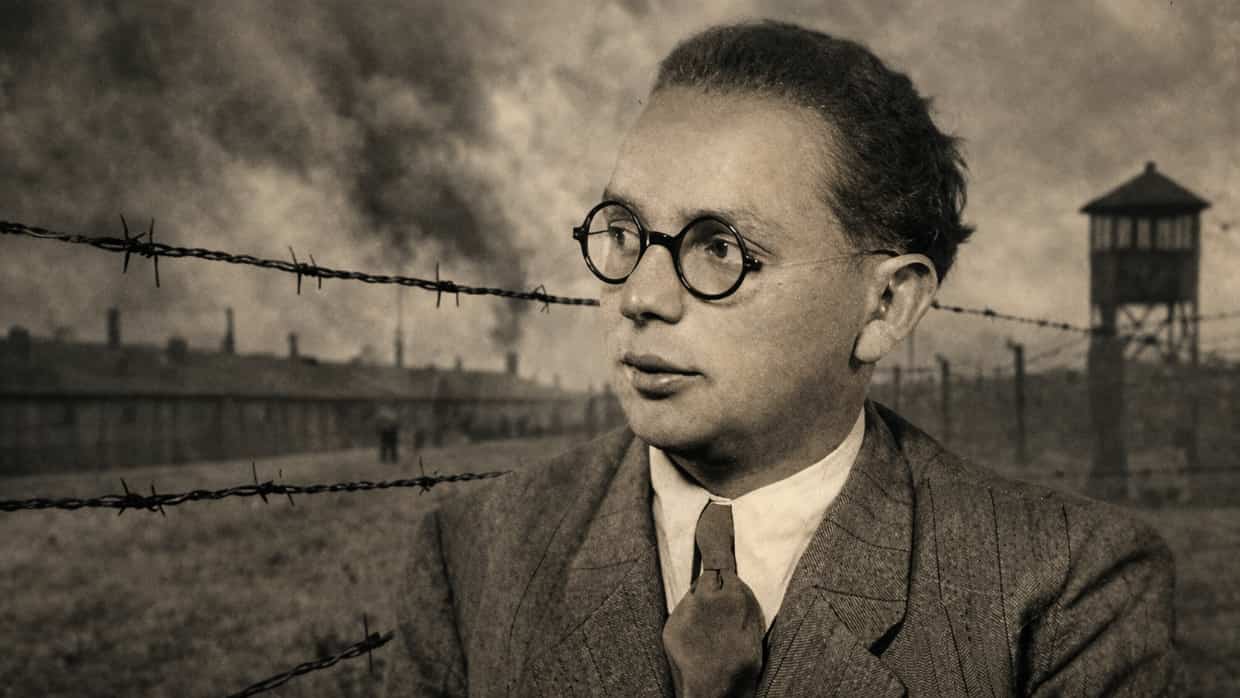
Ernst Bornstein survived seven camps. He never forgot what his father asked.
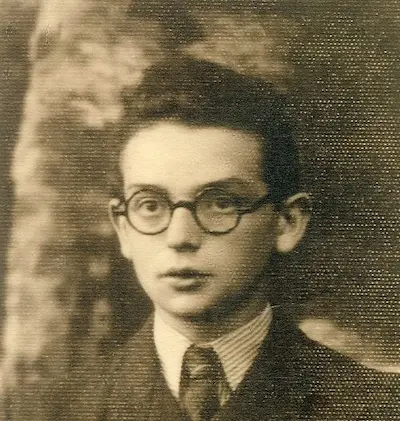
On the last Friday night they would ever spend together as a family, Ernst Bornstein's father recited the Shabbat prayers in a low, frightened voice. Two small candles barely lit the room. Ernst, 18, sat with his three siblings around the table and could not get the thought out of his mind: who knows if this is the last Shabbat during which I will hear my father's prayers at our table?
It was early 1941 in Zawiercie, a city in Polish Upper Silesia. The Germans had occupied the town since September 1939. Ernst's father, Usher, had spent years as a community elder and Zionist leader who believed the Jewish future lay in the Land of Israel. He had not gotten his family there in time, and that Shabbat, he seemed to know it.
After the candles, his mother pressed food into Ernst’s hands, her face wet with tears, and sent him into the dark to hide. He tried. At four in the morning the SS came anyway, found him in a neighbor's cupboard and drove him down the stairs under a hail of blows. He looked up at his mother on the landing above him, wanting to run back. The guards pushed him into the street. He was marched to a factory hall where over a thousand Jewish men had been assembled, their heads bloody from beatings.
 In all that misery, he found his father. Usher laid his hand silently on his son's shoulder, and neither of them spoke.
They were sent to Grünheide, a labor camp where they were put to work building a motorway. Usher Bornstein, a man his community had revered and turned to for counsel, now dug clay ditches in his suit, his hands covered in ulcers, falling further and further behind the other workers. Ernst went to help fill his truck. A guard appeared and beat him away from his own father.
Before the war, the Judenrat in Zawiercie had organized a brief electrician's training course. Ernst attended. At Markstadt, the next camp, when skilled workers were called for, he gambled on that thin training and stepped forward. Through connections he built in the camp, he was eventually assigned to work alongside a German electrician named Hermann, a decent man who spoke to him as one human being to another. After years of being treated as something less than a person, that mattered more than the extra food.
Before his father was finally sent home, the two of them walked behind the barracks in silence. Ernst said he would try to get home too, that together they would find a way out of Europe. His father answered quietly: "We failed to recognize the danger in time." Then the whistle blew.
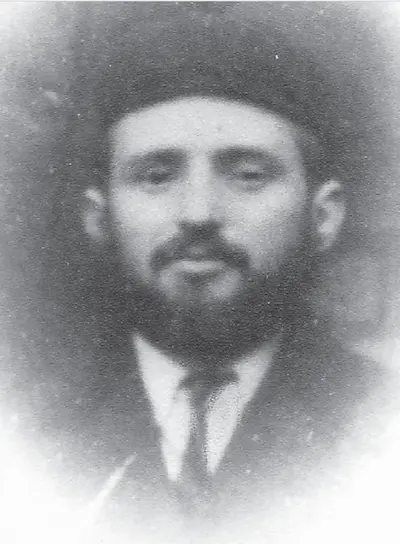 Usher Bornstein
As the SA guard approached the gate, Usher turned, stroked his son's hair, and said, "Promise me one more thing." His words caught. "Remain a good Jew."
Ernst nodded. He pressed against the wire fence and watched his father walk away, growing smaller, the guard's rifle rising over his silhouette until he disappeared. He wrote, "So I saw him for the last time. For the very last time."
Weeks earlier, on the morning Ernst had been loaded onto the buses, his 13-year-old sister Noemi was outside the factory gates. She ran from bus to bus searching for her father or her brother through the glass, and she found Ernst. They were forbidden to open the windows. They stared at each other through the glass. He wrote, "My final memory of my little sister is of these lingering glances."
In August 1943, his parents, his brother Yehuda, and his sister Noemi were gassed at Auschwitz.
He was moved from camp to camp: Markstadt, Fünfteichen, Grossrosen, Flossenbürg, Leonberg, Mühldorf. At Fünfteichen he was stripped naked in December cold and given the number 24131. At Flossenbürg he dragged corpses up an icy path to the crematorium, and a Kapo painted a red cross on his forehead, the mark of those chosen to be eliminated. A man from his hometown washed it off with soap.
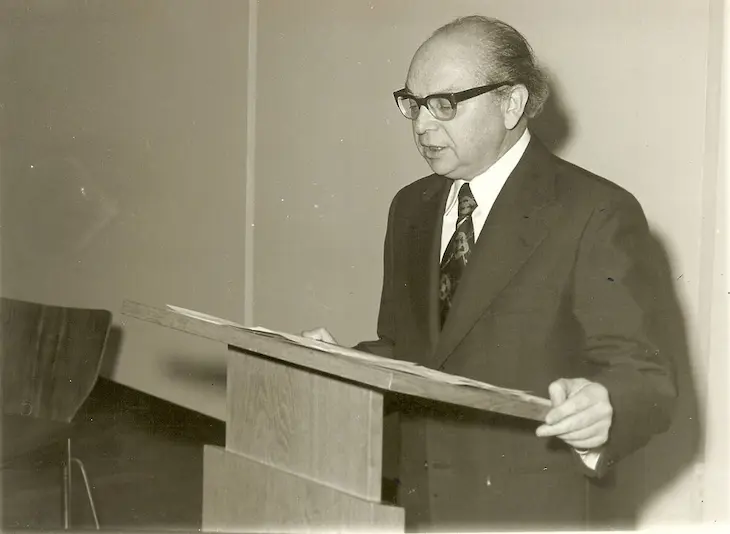 Ernst Bornstein in later years
On the final transport, sealed in a cattle car with men dying around him, Ernst collapsed from hunger and dysentery while his uncle Leon held his hand in the darkness. He fell asleep.
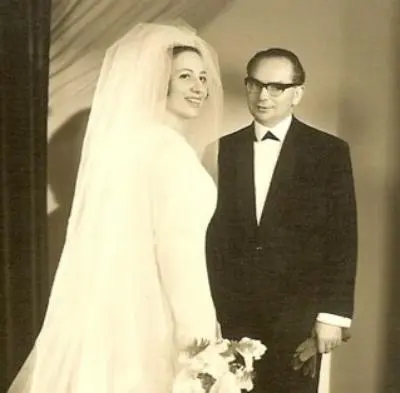 Ernst and Renée Bornstein
On April 30, 1945, American tanks reached a train siding near Lake Starnberg in Bavaria. Ernst stepped out into a cold morning, 22 years old, in wooden clogs because his shoes had been taken. He walked to the nearest tank and put his hand on the barrel. He wrote, "We were solitary islands in a freezing, foreign world. Now we were free, but what remained of our past?"
He studied medicine in Munich, earning doctorates in both dentistry and medicine. He married Renée Koenig, herself a child survivor, in December 1964, and raised their three children, Noemie, Muriel, and Asher Alain, in a home of Shabbat and Hebrew and everything his father had asked him to preserve.
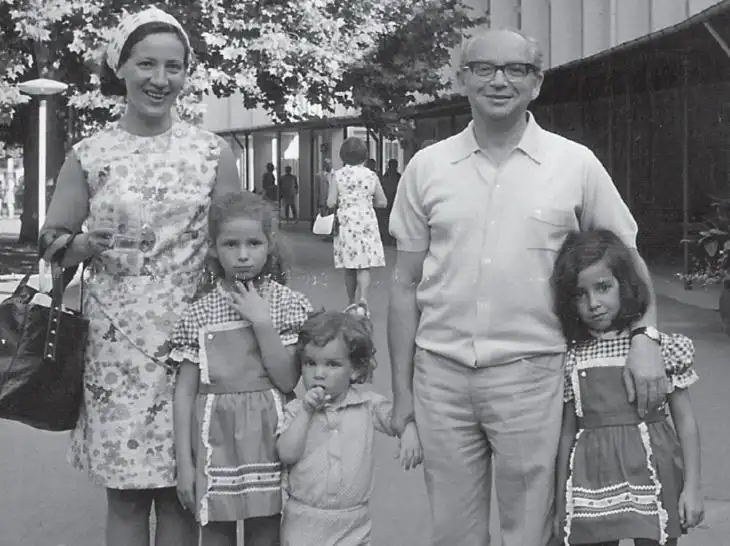 The Bornstein Family, 1978
He also kept a different kind of promise to the dead. He founded the Association of Ex-Concentration Camp Inmates in Munich and led it until the day he died. He pushed for the first Jewish memorial ever erected at Dachau, in 1964, and fought against statutes of limitations on Nazi crimes. He built a memorial in Bavaria that read: "To the honor of the Dead and to warn the living." In 1975, 30 years after liberation, he stood at Dachau and gave the address. He said, "It is only in deep silence that we can hear the cries of pain that fell on the deaf ears of the world."
He died on August 14, 1978, at 55. His rabbi said at the grave: "The righteous do not need monuments, for it is their deeds that uphold their memory."
 His daughter Noemie, who carried her aunt's name, translated her father's testimony into English. He had written it shortly after the war, while the memories were still raw, because a young German patient had once asked him whether the gas chambers were real. She had been told it was Allied propaganda. He wrote it for her and for his brother Yehuda, so that the question of how it was possible would have at least a partial answer, from someone who had been there.
The Long Night by Ernst Israel Bornstein is published by The Toby Press, an imprint of Koren Publishers Jerusalem. Available at https://korenpub.com/products/the-long-nightpaperback.