




 A New Holocaust Film Every Young Person Should See

Jewish Geography
Jewish Geography



5 min read


Discover the mysterious Jewish legacy of Crete.
Step into the ancient world of Caphtor, a land mentioned in the Bible and believed by many scholars to be the legendary island of Crete, the largest in the Aegean Sea. Caphtor is often associated in the Bible with the Philistines, ancient adversaries of Israel, who are said to have originated from this island, bringing with them a culture influenced by the Minoan and Mycenaean civilizations.
But Caphtor, or as it is now known, Crete’s story doesn’t end there — this strategically vital island, long contested by empires, has also been home to a vibrant Jewish community since the time of Alexander the Great. Ancient historians like Josephus, who married a Cretan woman, recognized this connection, identifying Caphtor with Crete and inviting us to explore the enduring legacy of the Jewish presence on this remarkable island.
For centuries, the Romaniote Jews of Crete thrived as one of the world’s oldest and most unique Jewish communities. They blended their rich traditions with the vibrant Greek culture surrounding them, speaking Yevanic—a captivating mix of Hebrew and Greek—and maintaining distinct religious practices that set them apart. This resilient community played a vital role in Crete's history, leaving an indelible mark on the island until their near-destruction during World War II.
Archaeological discoveries on Crete reveal a thriving Jewish presence as far back as the 2nd and 3rd centuries CE, with inscriptions from Kisamos confirming an active synagogue and community during the Roman period. In Gortyna, the ruins of ancient synagogues and menorah carvings tell the story of Jewish life in the early centuries of the Common Era. These remarkable finds, including beautifully preserved synagogue remains near Chersonisos, showcase the enduring legacy of Jewish culture on this historic island.
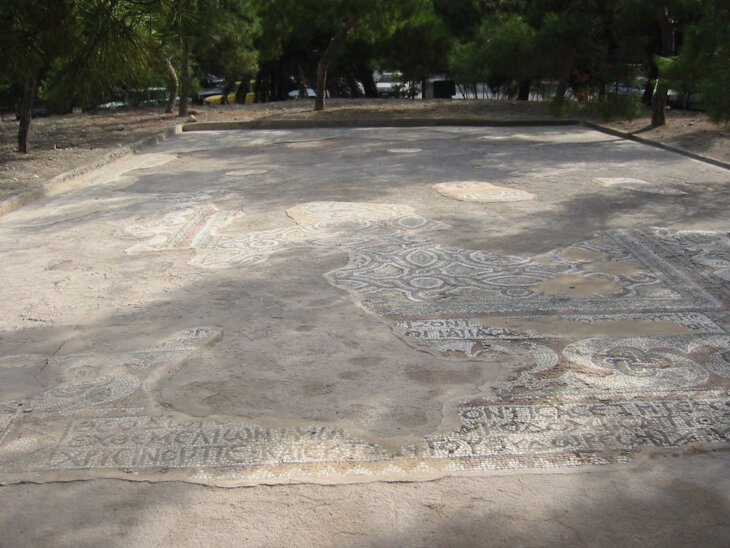 Mosaic floor of a Romaniote synagogue in Aegina, ca. 300 CE (Public domain).
During the Venetian era (13th–17th centuries), the Jewish community flourished, becoming an integral part of Crete’s social and economic fabric. Jews enjoyed relative stability under Venetian rule, contributing to trade, craftsmanship, and various professions. The community was centered in cities like Chania, where the historic Etz Hayyim Synagogue, built in the late 15th century, became a focal point of religious and communal life. Despite occasional restrictions and tensions, the Jews of Crete preserved their Romaniote traditions while engaging with the broader Venetian culture.
In an ironic twist of fate, Sephardic Jews fleeing the Catholic Kingdom of Isabella in 1492 found refuge on the then-Catholic island of Crete, ruled by Venice. They brought with them their vibrant culture and traditions, building a second synagogue, Beit Shalom, alongside the existing Romaniote synagogue, Etz Hayyim, enriching the island's Jewish life. Their arrival marked a unique moment of cultural fusion, as they sought new beginnings on an island governed by the same faith that had expelled them from their homeland.
The Jewish community's resilience was highlighted in 1541 during the "Purim of Candia," which commemorated their miraculous deliverance from a violent attack planned by the local population in Heraklion (then known during the Venetian period as Candia). The attack was averted when the Venetian authorities, who had segregated the Jews but also sought to protect them, warned the Jewish community to leave their quarter temporarily. This local Purim, celebrated annually on the 10th of Adar, became a cherished tradition, marking a significant moment of salvation in the community's history under Venetian rule.
This period of cultural exchange and diversity continued until the Ottoman conquest in the 17th century, which brought significant changes to the Jewish community's status and way of life.
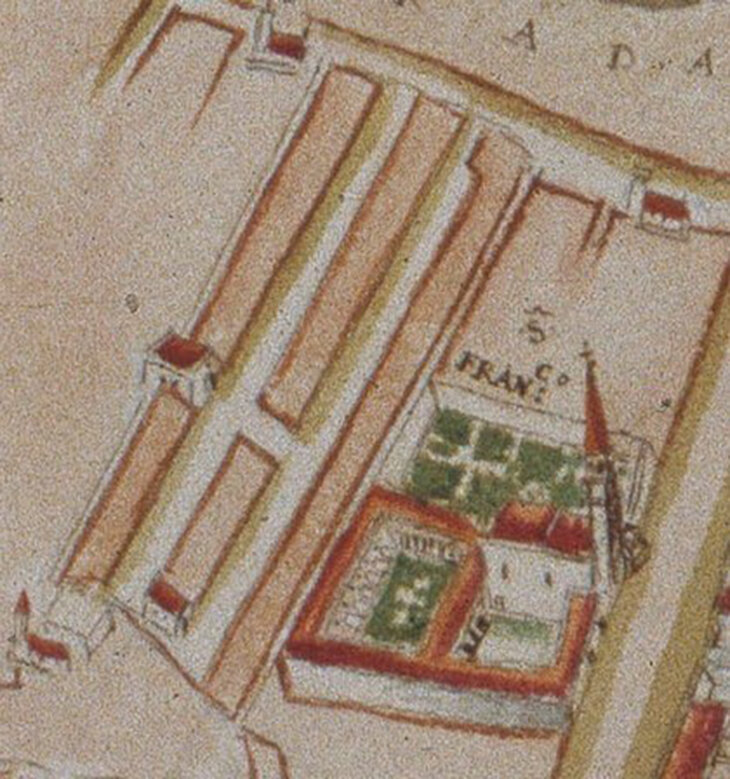 The Jewish ghetto of Hania as it appears on a 17th century Venetian map (Public domain)
The once-thriving Jewish community of Crete faced a tragic downfall during the Holocaust. In 1944, nearly the entire Jewish population was deported by the Nazis. In a devastating turn of events, the British accidentally sank the ship Tanais on June 9, 1944, which was carrying 260 Jews, political prisoners, and others. Nearly everyone on board perished, effectively ending centuries of Jewish presence on the island.
The story of the Tanais has since become a powerful symbol in Crete, with an art exhibit titled “History as Reckoning with Trauma” at the Archaeological Museum memorializing the tragedy and honoring those lost. One of the few Jewish survivors, Iossif Ventura, wrote a poignant book of poems about the Tanais.
During World War II, the Nazis further ravaged the community by bombing the Beit Shalom Synagogue, vandalizing the Jewish cemetery, and largely destroying the Jewish quarter of Chania—though some of the old homes still stand today, silent witnesses to this painful history.
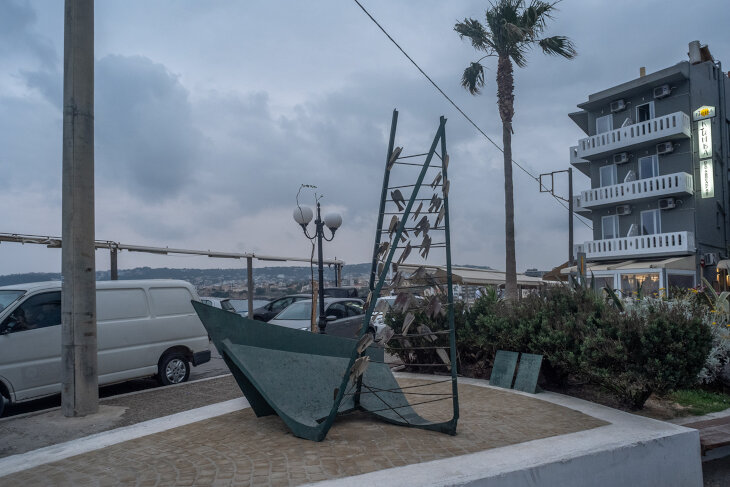 Jason Francisco, Tanais memorial, Koum Kapi beach, Chania, Crete, 2023
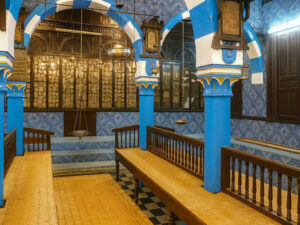
In a powerful testament to Jewish resilience, the Etz Hayyim Synagogue in Chania was beautifully restored in the 1990s after an earthquake nearly destroyed the building in 1995. With support from international donors, the historic site was completely rebuilt, and a new era of Jewish life on the island was revived after the tragic loss during the Holocaust. Today, Etz Hayyim stands as the only operating synagogue in Crete, a symbol of hope despite ongoing challenges, including an arson attack in 2010 fueled by lingering antisemitism in Greece. This Romaniote synagogue, distinct in its structure with the bimah on the western wall, reflects ancient traditions while fostering a spirit of life-affirming hope and continuity for the future.
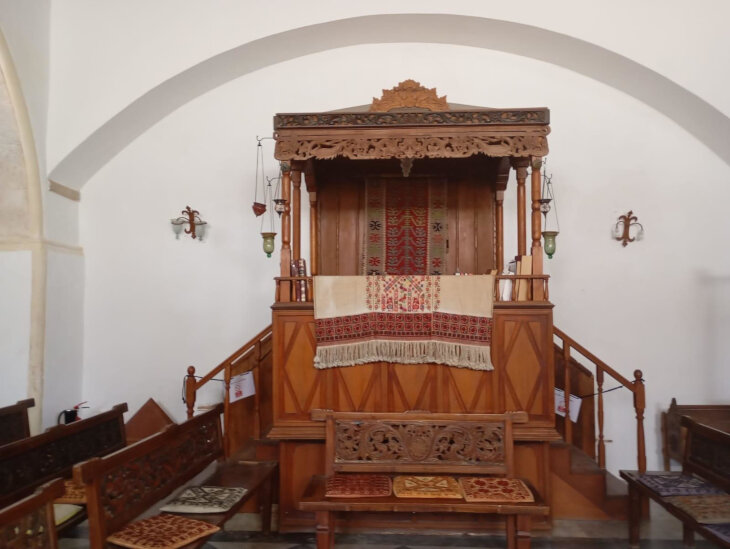 Bima on the eastern wall (photo by the author)
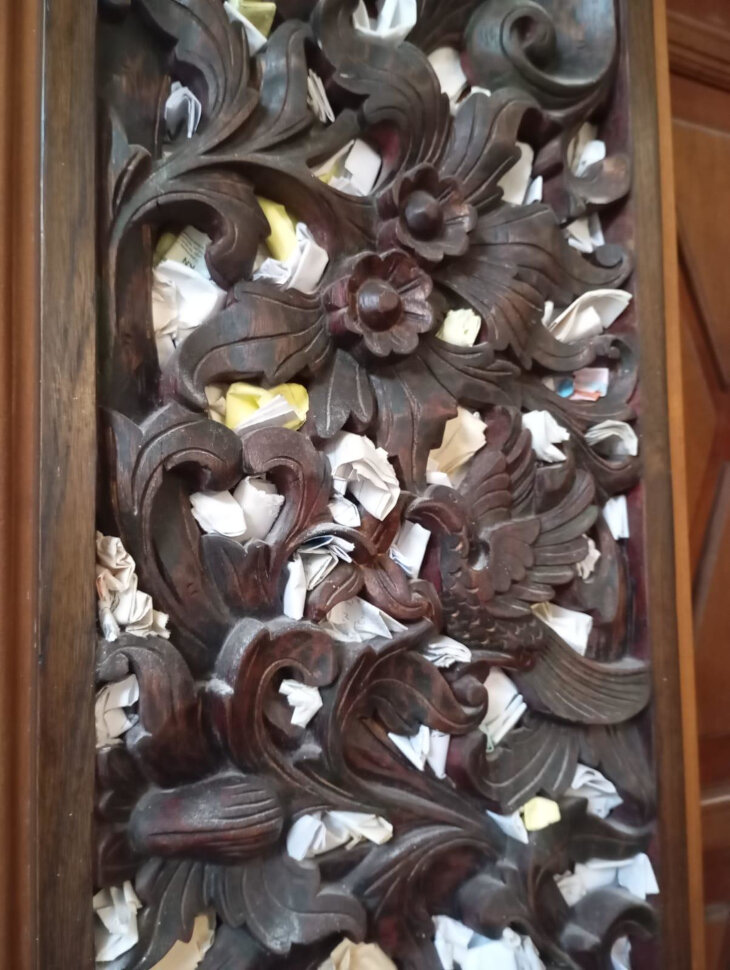 Close up of the synagogue’s Aron embedded with notes











Those Jews that arrived in Crete etc are that from ROMAN IDUMEAN EDOMITES that converted into JUDAISM! You can see where they originated to this day in Petra Jordan with there same building structures used by there decendents throughout Europe & America! The real Israelites ran into Africa in 70AD when the Roman's took the land! They next went into slavery with the curses that will let you know how to identify those people in Deuteronmy 28..43-68. That's not hard to figure out its those black & colored people.
A frw years ago we visited Chania and saw tje remnant of a mezuza on a doorpost near the quay
I love the stories of Jewish communities around the world that are not publicly known. This is what we must do, keep our history alive.