





 Purim’s Counterintuitive Strategy for Confronting Modern Antisemitism

7 min read


14 min read


Meeting Jews and visiting Israel destroyed the narrative they were fed since birth.
It’s no secret that the Muslim world is seething with strong virulent Jew hatred, antisemitic conspiracy theories, and anti-Zionist political leanings.
Anti-Israel sentiment is manifested on every level in many Muslim societies, from the home to the mosque, to the educational system, and of course the media. Many Muslims grow up to despise what they perceive as a strong sense of injustice regarding Israel’s actions in the Israeli-Palestinian conflict.
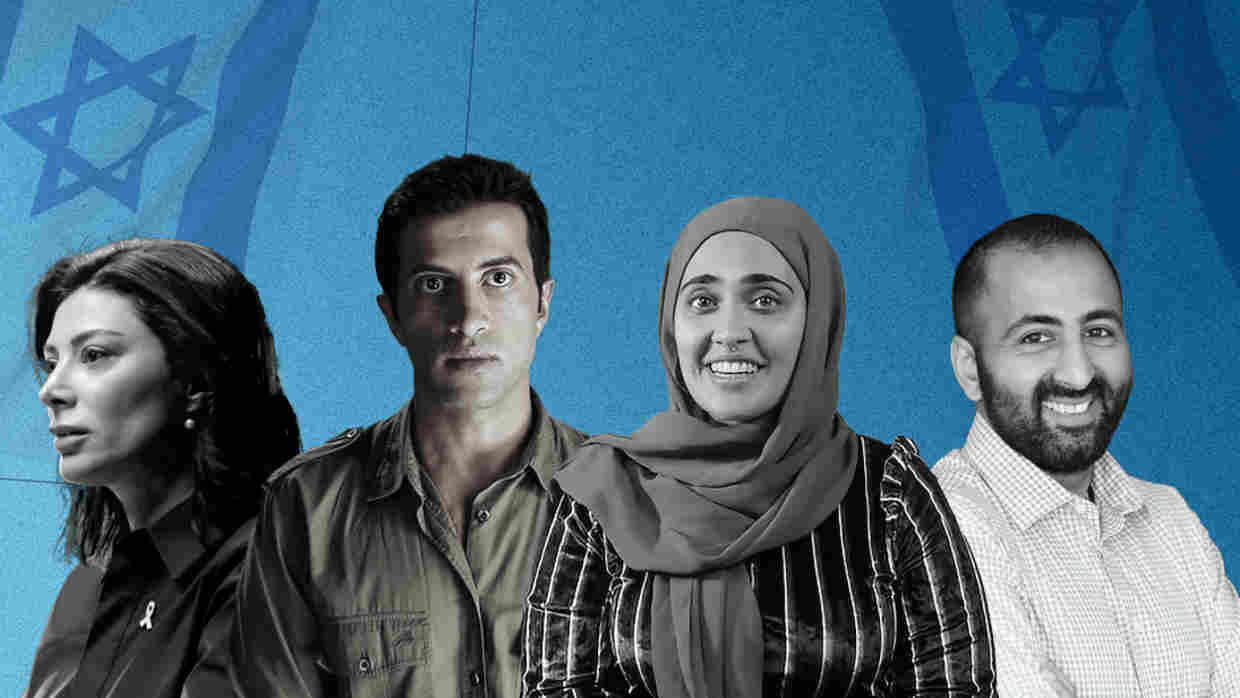
Yet, in recent years, a few individuals raised in deeply anti‑Zionist environments have experienced transformative journeys—through personal encounters, academic research, and direct exposure to life in Israel and Jewish communities around the world—that have reshaped their views. Here are the stories of four young Muslims who, despite their early indoctrination against Zionism and the Jews, have become passionate supporters of Israel.
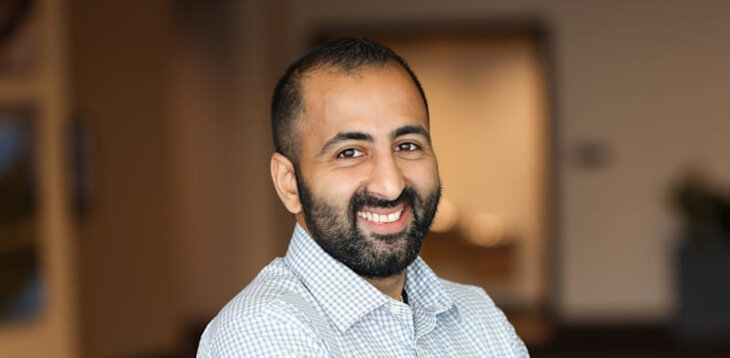
Born in 1983, Kasim Hafeez grew up in Nottingham, England in a Muslim family of Pakistani origin. His community was not particularly radical, but rather consisted of new immigrants from Pakistan who were hardworking, devout Muslims. But antisemitism did exist, even in his own household.
Hafeez, for example, recalls vivid memories of his father praising Adolf Hitler. He says political mobilization among Muslims surged after the publication of The Satanic Verses in 1988 and the war in Bosnia in the early 90s. Influenced by radical propaganda in his teenage years, he embraced anti-Israel and antisemitic views, later joining the Islamic Society at the University of Nottingham, where uncontextualized images of Israeli military actions fueled further hatred.
For him, Israel was a symbol of oppression—a narrative reinforced by the media as well as community teachings. This early indoctrination painted a picture of Israel that was far removed from the reality experienced by its citizens. By the early 2000s, he was saving money for a plane ticket to Pakistan where he aspired to join a terrorist training camp.
One day, Hafeez walked into a bookshop. While exploring various novels, one particular book title caught him off guard: The Case for Israel, by Alan Dershowitz.
“The case for Israel?” he thought. “What case? Is this a joke?”
He picked up the book, not out of any intellectual curiosity, but to easily disprove the claims of what he thought was “Zionist propaganda”. As he read through it, he encountered arguments he never heard before, which were in total contradiction to his belief system. Since the claims in the book had academic sources and direct references, he decided to fact check everything, hoping to expose what he thought had to be straight out lies.
The more he researched and gained a better understanding of historical truth, the more he fell into despair and depression, as a crisis of faith lingered within him. After two years of internal agony, Hafeez decided the only way to confirm his longstanding belief that Israel was some type of evil apartheid state would be to actually visit the country itself1.
Desiring to challenge the pro-Israel views he had internalized, Hafeez embarked on a journey to Israel, which was nothing short of revelatory. What he encountered was a country that defied the caricatures he had been taught to believe in. Instead of a land solely defined by conflict, he witnessed a vibrant, diverse society with thriving communities, varieties of ethnic and religious groups living side by side in harmony, innovative technology, and a commitment to democracy.
In conversations with locals—from entrepreneurs to street vendors, from Jews to Arabs, religious and secular—he discovered a multifaceted country that defied the narrative he had been taught from his youth. Where was the evil? Where was all the racism? Where was the hate? He didn’t know what to think since all he encountered was kindness from normal Jewish people coexisting with their Arab neighbors.
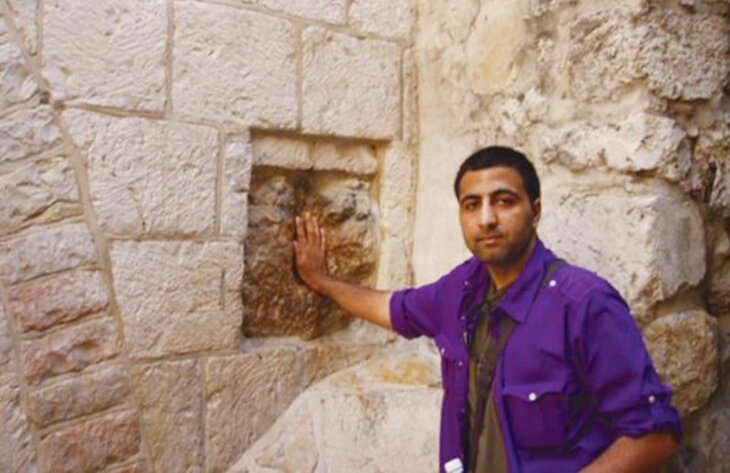
By touring the country, he discovered Israel’s rich history, from ancient sites to modern innovations, which painted a picture of resilience, creativity, and deep roots. He started to understand that Jews were originally from this land and all they wanted throughout history was to come back home, something that for him, transcended both religion and politics. By the end of his trip, he found himself touching the Western Wall full of tears in his eyes and a newfound love of the Jewish people in his heart.
Kasim Hafeez began speaking publicly about his transformation shortly after his 2007 visit to Israel, which alienated him from much of his family and community. Over the following years, his career as a public speaker evolved as he toured university campuses and international forums, sharing his personal journey from radical views to staunch support for Israel.
Since the Hamas attack on October 7, 2023, Hafeez has intensified his efforts by engaging in high‑profile interviews and talks, emphasizing Israel's democratic values and the importance of basing opinions on factual, firsthand experiences. His public addresses continue to counter prevailing misconceptions and inspire a more nuanced understanding of the conflict.
View this post on Instagram
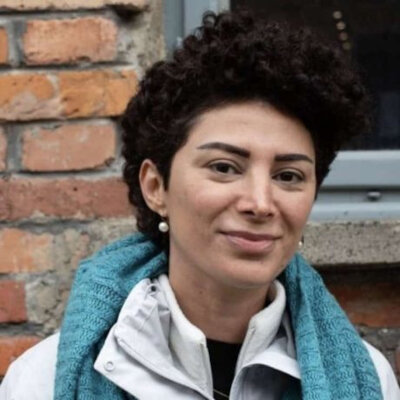
Rawan Osman was born in Damascus, Syria in 1983, but grew up in the Beqaa Valley of Lebanon, a stronghold of the Hezbollah terrorist organization. Although she came from a mixed Muslim background, her father being Sunni and her mother Shiite, they found commonality in their anti‑Jewish and anti‑Zionist beliefs. Like many in her community, she was exposed to a worldview that depicted Jews and Israelis in a strongly negative light, seeing them through the lens of hostility and conflict.
After high school, she relocated back to Syria and spent time in both Saudi Arabia and Qatar. After the eruption of the Syrian civil war in 2011, Osman moved to Strasbourg, France where she met Jewish people for the first time2.
Osman settled in Strasbourg’s Jewish quarter near Synagogue de la Paix, not realizing that Jewish people still lived there. She was familiar with old Jewish quarters in Syria and Lebanon that have been abandon for decades and assumed all Jews live today either in Israel or the United States. For the first time, she encountered normal Jewish individuals going about their lives outside the confines of hostile media narratives, in school, in restaurants, and bars.
These personal interactions were eye‑opening and challenged the antisemitic stereotypes she had grown up with. Motivated by her curiosity and a desire to better understand the Jewish people, Osman pursued a bachelor’s degree in Jewish Studies at Heidelberg University in Germany, which also included a course on Modern Hebrew. Aside from her academic studies, she decided on her own time to immerse herself in the history of the Middle East and the history of Israel. In Europe, unlike in Lebanon and Syria, information is uncensored and as the puzzle pieces of history started coming together, she realized that she had been brainwashed her entire life. Everything she was taught about Jews and Israel turned out to be a lie.
Over time, Osman became an active supporter of normalization between Arabs and Israelis, founding the forum "Arabs Ask" to encourage dialogue and to challenge ingrained prejudices. Through conferences, public talks, and participation in initiatives like the March of the Living (an annual organized trip to Poland’s former concentration camps), she has consistently promoted a narrative of coexistence and mutual understanding.
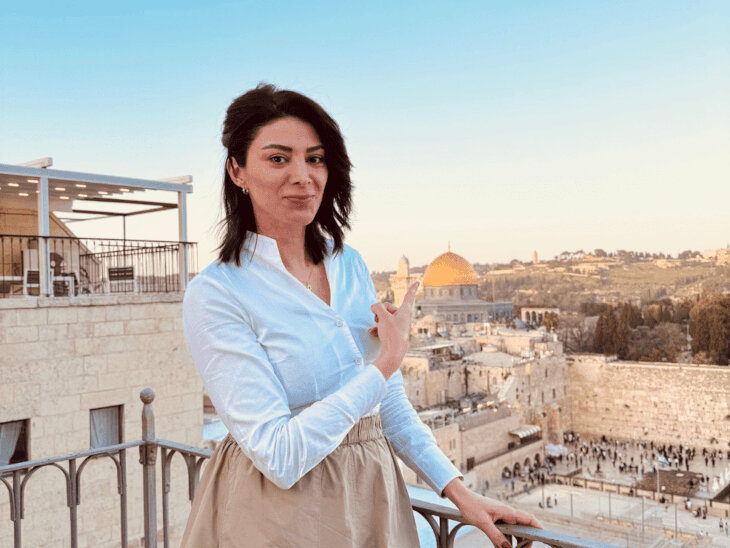
Since the October 7, 2023 attack on Israel, Osman’s activism has taken on an even greater urgency. She has intensified her public engagements, using her platform to highlight Israel's democratic values and to counter extremist narratives in the Arab world. Her work now more sharply emphasizes the need for peace and cooperation, challenging those who continue to demonize Israel and calling for a broader re-examination of entrenched biases.
Rawan Osman’s story highlights the powerful impact that personal interaction and self-education can have on breaking down long-held biases.
View this post on Instagram
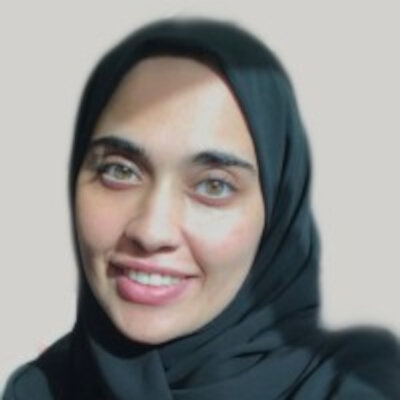
Sumaiiah Almheiri was born in Boulder, Colorado to an Emirati Muslim family who relocated back to the United Arab Emirates when she was 8 years old. There, she found a country with a wide diversity of nationalities and cultures that was pushing the threshold of technological innovation in the Middle East. At the same time, growing up in a predominantly Arab society, anti‑Israel views were widespread, reinforced by regional media and political discourse. For many in her community, Israel was seen as an enemy—a perception that was rarely challenged by alternative narratives.
In 2014, Sumaiiah came across music produced by the late Ofra Haza, the famous Israeli artist of Yemenite-Jewish heritage also dubbed “the Madonna of the East”. Sumaiiah heard her music, in particular the song “Tzur Menati”, which explores themes of longing, spiritual reflection, and the enduring connection to a lost or distant homeland. The song is sung in Hebrew with the distinctive cadence and pronunciation of Yemenite dialect, which adds a unique and evocative flavor to its melody. The familiar Arabic melodies combined with a beautiful Mizrahi Hebrew pronunciation was something she never heard before and was drawn to learn more about Israeli culture3.
Following the establishment of the Abraham Accords in 2020, many facets of economic and cultural exchange suddenly opened up between Israel and the U.A.E. including trade, tourism, and education. In 2021, Sumaiiah Almheiri became the first Emirati citizen to study in an Israeli university.
After enrolling in a nursing program at Haifa University, Sumaiiah immersed herself in a campus environment that promoted academic rigor, dialogue, and the exploration of multiple perspectives. She found herself exposed to a version of the Israeli–Palestinian conflict that was nuanced and multifaceted. Interacting with Israeli peers and professors allowed her to see beyond the simplistic, hostile narratives she had known.
Forming friendships with local Jews, Muslims, Christians, and Druze transcended political divides and underscored their common humanity. Sumaiiah’s experience at Haifa University was transformative, reshaping her worldview and prompting her to advocate for reconciliation and cooperation.
Inspired by her academic experiences, Sumaiiah became an advocate for open dialogue between Arabs and Israelis. She began to support initiatives that aimed at normalizing relations, such as the Abraham Accords and the Friendship League, which she sees as steps toward peace and reconciliation in the region. After returning to the U.A.E., she became the cultural and social manager at Sharaka, a non-profit NGO that aims to extend normalization agreements of the Abraham Accords beyond governmental and B2B cooperation, to the societal P2P level (people to people), between Israel and the broader MENA region. In April 2022, she participated in the International March of the Living, marking a historic moment as part of the first official United Arab Emirates delegation to join the event.
View this post on Instagram
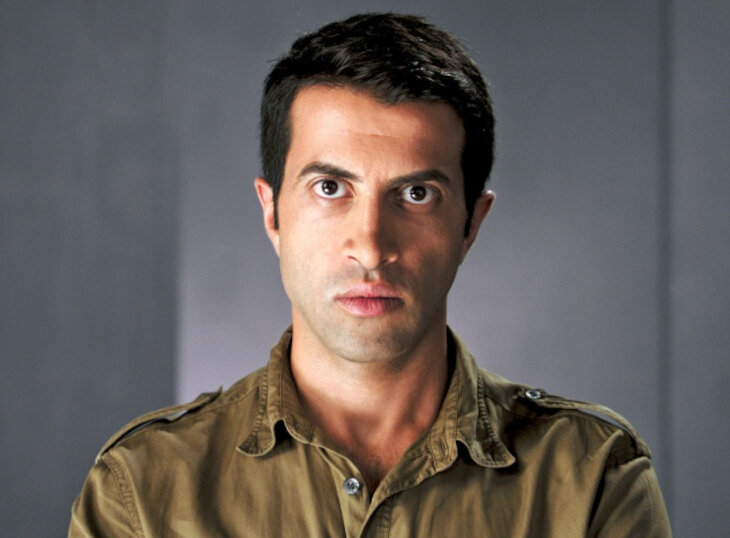
Mosab Hassan Yousef is also known as “the son of Hamas” since his father, Sheikh Hassan Youssef, was one of the co-founders of the Hamas terrorist organization. Born in Ramallah in 1978, Mosab was still a child when the first intifada broke out (in the late 80s). Inspired by the uprising against Israeli rule in the West Bank, Mosab, like many of his Palestinian friends, dreamed of becoming a fighter.
His ideology was fundamentally opposed to Zionism and the existence of the State of Israel. He spent time in and out of Israeli jail for many years because of throwing stones and other violent activities directed against Israeli soldiers and Jewish settlers. As the eldest of his siblings, he was perceived by his society as an heir to his father’s legacy.
During one of Mosab’s incarceration periods in Megiddo prison during the mid-90s, Hamas prisoners initiated a campaign to root out those they suspected as being collaborators with Israel. Behind the backs of the guards, Hamas prisoners would capture suspected collaborators (fellow prisoners) and literally torture them to death using needles inserted under their fingernails and by charring their bodies with burning plastics4.
During this period, hundreds of prisoners were killed by their own brethren in this manner, most of whom had nothing to do with Israeli intelligence. Hearing their screams, pain, and agony made Mosab question which side was his true enemy, the Hamas thugs who used brutality against their own people, or the Israeli authorities who arrested them. The answer became clear to him and while still in prison, he was recruited by the Shin Bet as an undercover agent. After being released, he spent the next decade as a spy for Israel within the top echelons of the Hamas leadership.
Between 1997 and 2007, Mosab engaged in espionage activities (primarily in the Ramallah area) that led to the prevention of dozens of planned attacks against Israeli civilians, potentially saving hundreds of lives. It was precisely during the years of the Second Intifada (2000-2005), when Palestinian suicide bombers regularly killed and injured scores of Israeli civilians in restaurants, night clubs, wedding halls, and on public buses, that Mosab’s intelligence gathering was most valuable.
Due to his close affiliation with the top brass of Hamas leadership, Mosab Hassan Yousef was considered the most reliable source of information to the Shin Bet and other Israeli security services. Whereas in the early part of his life he was focused on taking lives, during this phase, he was exclusively focused on saving lives. Some of his greatest achievements included the arrests of high-ranking terror leaders such as Ibrahim Hamid and Marwan Barghouti as well as his role in preventing the assassination of Shimon Peres.
During Mosab’s years of espionage, he developed personal relationships with Israelis both in the security apparatus and in the public at large. His involvement in counterterrorism also led him to become disillusioned with Islam and eventually embraced Christianity. He immigrated to the U.S. in 2007 and settled in San Diego where he started writing a book about his experiences. In March 2010, he published “Son of Hamas: A Gripping Account of Terror, Betrayal, Political Intrigue, and Unthinkable Choices”.
Due to his public admission of previously working for Hamas, he came under the scrutiny of the U.S. Department of Homeland Security who threatened him with deportation for providing material support to a U.S. designated terrorist organization. However, since his former commander within the Shin Bet, Gonen ben Yitzchak, flew to the U.S. to testify on his behalf during his immigration hearing, he was granted political asylum.
Since 2010, Mosab has engaged in a number of public appearances including book tours, media interviews, and lectures at political/security conferences. He became a well-known public figure and invited speaker among pro-Israel circles and within the U.S. Evangelical Christian community. Since the October 7 attack on Israel, Mosab has become a global symbol of pro-Israel activism, defending Israel’s position and narrative on a number of news networks and social media platforms.
The powerful personal journeys of these four individuals reflect a growing trend where traditional social barriers in the Middle East and around the world are breaking down. Although the Internet and social media can be platforms to project antisemitism and disinformation about Jews and Israel, it can also be a genuine source of knowledge for those researching and seeking the truth. By meeting Jewish people, visiting Israel, and experiencing the diverse spectrum of Israeli society, preconceived notions and hostile attitudes naturally fade away.
After the events of October 7 and the wave of anti-Jewish hostility that followed, there’s never been a better time to break barriers, learn new perspectives, and see each other as fellow human beings. These stories serve as powerful reminders that change is possible—even during longstanding conflict—and that dialogue and understanding can be the foundation for a more peaceful future.












Or more importantly, a story about how legions of anti-Torah or Torah-ignorant Jews turned around to become pro-Torah and pro-Hashem!
Aish.com has many articles about both Jews and non-Jews who have "found" the Torah. What aish.com doesn't do is present the perspective of non-religious Jews; people who have pride in their Jewish heritage including the Torah and other texts while rejecting the orthodoxy that has grown up around them.
It is encouraging to hear about these people who, when confronted by the dissonance between what their religion teaches them and what they witness for themselves, choose to believe in themselves.
When I read of these Muslims, I wonder if they still consider themselves to be Muslims. To truly be a Muslim, they must believe that Muhammad was a prophet and that everything he said was the truth. How do they read Muhammad's admonishments of the sinfulness of the Jews once they have seen for themselves that it is a big lie?
They are demonstrating incredible Courage!
Reading these (unusual!) people's stories, one wonders how many truth seekers there might be among the Muslim population, who have been fed a steady diet of outrageous lies for so long.
Not everyone has the ability to finance a trip to Israel and see for themselves.
But if I were able to subsidize fact-finding trips (or courses), I'd start with Jewish Jew-haters (cf. Maritime Guy's post) because they're the saddest group in the lot of antisemites and probably received no, little, or incorrect "education" about Judaism.
This a interesting story to hear, what a big turn around they had
Praise be to G_d for their testimonies& sharing!
These 4 special souls have, G-d forbid, SO much to lose, yet have fought so hard for truth. I have nothing, but admiration for them.
Excellent! All honor to our friends!
Also recommend an article about the Israeli-born Arabs & Druze who are advocating for Israel.