




 When Ms. Rachel "Likes" Antisemitism

10 min read


15 min read


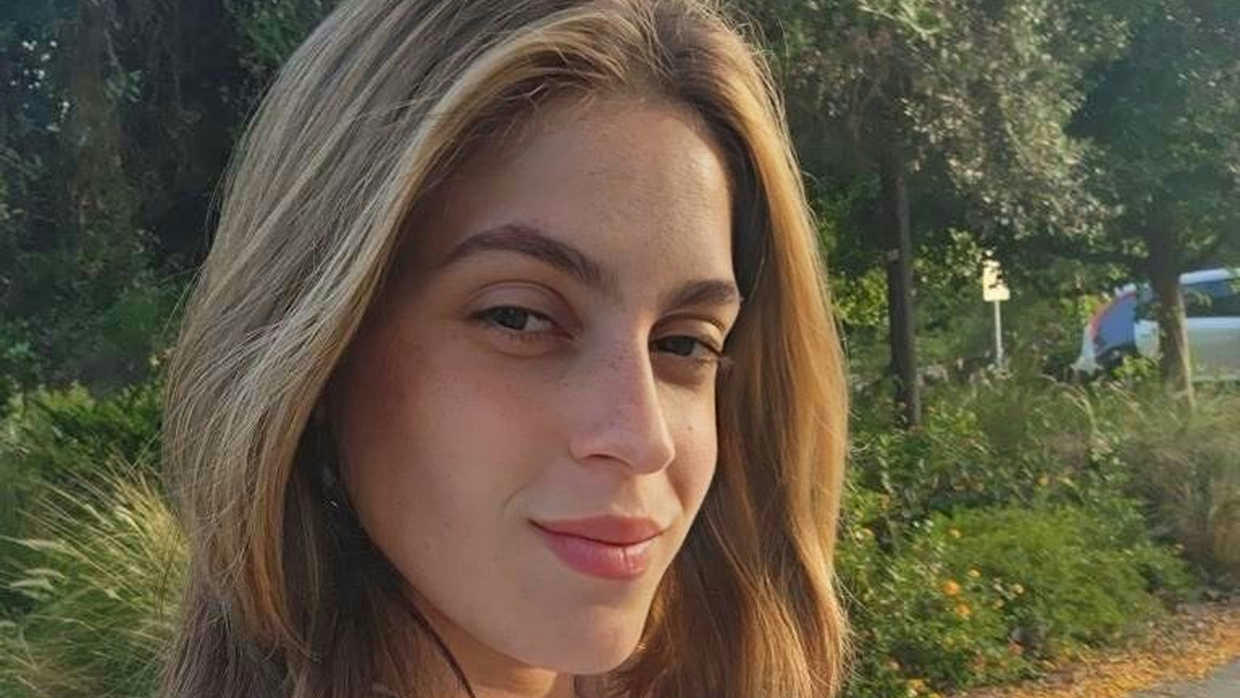
On October 7, Amit Man risked her own life to save others, treating the wounded with unfathomable courage and bravery.
Excerpted from One Day in October: Forty Heroes, Forty Stories.
Emerging from the pain and sorrow inflicted on October 7, 2023, these first-person accounts offer consolation and hope.
We weren't surprised about Amit. Two years ago there was a terror attack at a shopping center in Beersheba; the terrorist ran around with a knife and stabbed people. Amit was first on the scene. When she got there, the police wouldn't let her out of the ambulance. They said, "The terrorist hasn't been caught yet; he's still on the loose. You can't go out and treat the wounded." But she just pushed her way past them and said, "I don't care if the terrorist is still around; someone is bleeding because he stabbed her, and I'm going to help her” and she just ran out to treat her. She had this whole disciplinary hearing afterward. So when we heard about how Amit's life had ended, we weren't surprised. It was her life's mission, after all.
My name is Mary. I grew up with my four sisters in Netivot; Amit is the youngest. We're fifteen years apart in age, but we were very, very close. We grew up in a very loving home. We were each other's partners in everything. We have a strong bond. That's how we were raised. My sisters are my bedrock, and my mother is the glue that keeps us all together. My father died eight years ago of that terrible disease, cancer. He died after four painful, tortured years.
Amit had a special bond with my father. He was a wonderful father, out of this world, and Amit was his baby, his youngest daughter. They had a special connection. I think Amit was ten years old when my father got sick; she was very young. She watched him dying from a very young age. He was such a big, strong father, and she saw how he withered away before her eyes. We, the older sisters, got married during those years; we moved out, so my father and Amit became even closer because she never left his side. Even when he needed full-time care and couldn't get out of bed, she never left him. She would just sit there next to him, singing to him.

Singing was always her special gift from as early as I can remember her, since she was a baby. She was always singing. At home, in the shower, everywhere. She would sing for anyone who would listen. We have so many videos of Amit sitting next to my father when he was already really ill, singing to him. There's one video of her singing Sarit Hadad's song "I Was in Paradise" to him, and he's shushing everyone else because she's the only one he wanted to hear. She was his comfort.
During that time, during those years when Dad was sick, all these doctors and nurses would come to our house, but Amit never budged from his bed; she saw everything. Even when Mom would say, "Go outside, this isn't for you," she would say, "No, Mom, I want to see what they're doing to him, I want to make sure that he's okay, that he feels okay after the treatment.” That's when her passion for medicine began, when she saw all those angels in white - that's what she called them, the angels who would come to our house and help her father live another day, survive for just a little longer. When she saw them from so close up - that's when she decided what she wanted to do in life.
That's how a little girl of twelve started reading about diseases and about medicine. She'd come home from school and draw on the windows in Dad's room with whiteboard markers. She'd draw him the heart and the human body, and all these things she was learning about. She dreamed of studying medicine and becoming a doctor. That was her dream: to become a doctor and save lives.
At twenty years old, Amit became a paramedic, and at the age of twenty-two she was the youngest paramedics course instructor in the whole country; she ran the Magen David Adorn paramedics course in the southern district. You can barely grasp what a crazy achievement that is. We only appreciated it during the shiva, how impossible her accomplishment really was. It was only then that we appreciated how much she'd achieved in her short life, that little girl.
We woke up to the sound of sirens at 6:20 on Shabbat morning. We sent messages on our sisters' WhatsApp group, making sure everyone was okay. Amit wrote to us that she was in the safe room at home in Be'eri with Ofir. Ofir is her partner; he's a paramedic in the Magen David Adorn station in Netivot. So when the sirens started in the kibbutz, Ofir says to her, "Amit, get ready quickly; we're going to Netivot” and she says to him, "No way, I'm not going to Netivot; I'm the paramedic on call here and I have to stay here.”
So he says to her, "You're crazy! Look at what's happening, all these sirens, all these booms; we're the closest to the border. Come with me; let's go to Netivot!"
But she refuses. She says, "No way. If something happens, I have to be here.” He realizes that she's not going to budge; he knows her too well, so he says to her, "Promise me you'll stay here in the safe room!" and she promises, and he closes the safe room door and drives away and miraculously manages to make it to Netivot, to the Magen David Adorn station. We heard later that they did amazing things there; they saved a lot of people that Shabbat. And Ofir is calm because Amit promised to stay in the safe room. He had no idea that she left her apartment and ran to the dental clinic to treat people there.
"Send ambulances! People are dying before my eyes!"
At a quarter to seven Amit writes to us that the kibbutz is on alert for a terrorist infiltration; she was sure that they were talking about one or two terrorists. When she heard shooting, she realized there must be wounded people who needed medical attention, so she ran out to the kibbutz dental clinic to receive them and treat them. She met the kibbutz nurse Nirit there, and after an hour or two, they called Dr. Daniel Levy, a doctor who lives on the kibbutz, to come and help. Dr. Daniel is amazing; he didn't think twice, he ran straight there with all the shooting, and the three of them found themselves all alone in the dental clinic with barely any medical supplies, trying to treat patients who were severely wounded. Fighting to save lives.
The whole time, Amit was in touch with Magen David Adorn. We heard all the recorded conversations later; you can hear her pleading with them, "Send ambulances! People are dying before my eyes!" She's describing their injuries, and she's describing how she's treating them, and how she's bandaging them up. They answer her, and it's heartbreaking to hear them, how direct they are: "Amit, love, it's all up to you. The security services aren't answering us, and there are no medical aid teams that can get to you. No ambulances, no helicopters. You're on your own; just do whatever you can.”
And you can really hear how her tone changes during that conversation, on the recording; how her voice changes from a whole bunch of exclamation marks, "We need this! We need that!" to a different tone, a quiet tone of understanding and acceptance - that this is it, she's alone there, she's not going to get any help or any aid, and whatever happens, happens.
She treated patients there for hours, from the morning on. At some point, people all over the kibbutz start sending her WhatsApp messages, asking her advice: ''Amit, they shot my father in the shoulder; what should I do?" and she answers them, "Do this, do that” or ''Amit, I'm thinking about running out of my apartment!" and she answers, "No way! Move the closet against the safe room door and secure the door handle.” She's like completely exhausted, wiped out, covered in blood, but she keeps on answering them, giving tips, giving advice, insisting on taking care of every single person in the kibbutz.
The hours drag on and on, and Amit watches as some of her patients die before her eyes; they die of severe gunshot wounds. She can't treat them. She tries, but she can't. And we keep sending her messages, begging her to tell us what's happening.
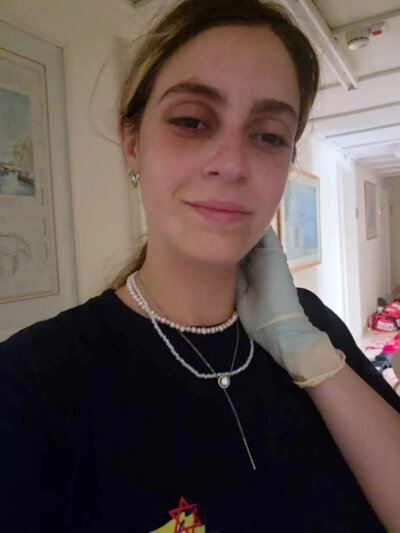
At one point we write, "Amit, send us a photo of what's going on, we want to see you!" She sends us a selfie, and we can see the dark circles under her eyes. She has this halfsmile, like she's forcing herself to smile for us, for her family, and mainly for Mom. Behind her, you can see this trail of blood, and the corridor is full of wounded people just lying there. Horrifying. Later, we found out that at the same time, she sent another photo of herself to her best friend Lital, and in that photo she's crying, sobbing, and she writes to her, "God, I'm so scared.”
All through those hours of hell, two guys from the civilian security squad, Shachar and Eitan, are standing by the clinic door with very limited ammunition, taking out any terrorists that come close. Amit keeps writing us, "Thank God that Shachar and Eitan are here! Thank God that they're keeping guard!" At one point she records a message: "Wait, wait, wait, I hear another terrorist coming closer, that's it, I think this is the end," but a minute later, "Whoa, thank God, Shachar managed to take him out!" As far as she was concerned, Shachar and Eitan were her shield; they were the ones who kept her alive all those hours. She was taking care of the patients, and Shachar and Eitan were keeping her and her patients alive.
Amit won't abandon her patients, no matter what. We understand that she'll never run away.
My husband Haim spoke to Amit on the phone a few times. Each time he said to her, "Amit, look around; see if you can see any way out. Maybe there's a window there, maybe there's a safe room, or a bush you can hide in," and he kept trying to find ways to save her. We also kept trying to convince her to run away, to hide, to pretend she was dead, anything, but we all understood something simple: Amit won't abandon her patients. She told us that over and over. She won't leave them alone in the clinic, no matter what. And we understand that she'll never run away.
At 1:55 in the afternoon, she sends us this insane voice recording that she somehow managed to make, and in it you can hear shooting and Amit shouting, "Shachar! No! Shachar! God, please make it stop, please make it stop!" and Shachar is yelling at the terrorists, “Tm not your enemy! I'm not your enemy!" but it doesn't help. The terrorists kill him.
What happened is that the ammunition of the civilian security team simply ran out, and the terrorists managed to overcome them. At this point, Amit writes to me, "That's it, they're here, there's a lot of them, they're here, I won't make it out.” And the terrorists start throwing loads of grenades into the clinic, then Amit writes to us, "They killed them all, I'm the last one left.”
Dr. Daniel Levy, and Eitan Hadad, and Shachar Tzemach - they were all murdered. The only one who miraculously managed to survive was the nurse, Nirit. We only found this out later; Amit didn't know that Nirit had made it.
We understand that this is the end. We understand that the terrorists took over the clinic. My mother and I call her, certain that she won't answer, but somehow she does! She picks up the phone. We put her on speakerphone, and my mom screams, "Amit, Amit, what's happening to you, Amit?"
And she says, "Mom, they shot me in the leg, they shot me in the leg, I'm not getting out of here, I love you all!" She answered the call just to say goodbye to us.
But we don't get what's happening and we say to her, "What do you mean, they shot you in the leg? Where are you? Try and hide, lie underneath the bodies, cover yourself in blood!" But she knows that she isn't getting out of there. She says to us, “Tm not going to get out of here alive.” Then she starts asking my mother to forgive her. I have no idea why. She must have said it three or four times: "Mom, forgive me for everything, Mom, forgive me for everything. I love you, Mom, please forgive me for everything.”
They only found her body two days later. The people who found her saw that her bag of medical supplies was empty, down to the last band-aid. There was nothing left in her bag. For hours she just treated and treated people until not even a single band-aid was left.
Later on, we realized that she had managed to make herself a tourniquet on her leg, because there was a tourniquet on her body when they found it. One of the patients Amit had treated managed to hide in a little closet in the kitchenette there, and he saw everything. He saw Amit raising her hands to the terrorists in surrender, trying to approach them, and they shot her in the leg, and afterward, after she had treated her leg with a tourniquet, they came back in and shot her again and again. They didn't leave her a chance.
But she really decided, against all the rules, against all human instincts, just to run straight into the gunfire, straight into the inferno.
In retrospect, we know she had two chances to save herself. The first was to go to Netivot with Ofir, first thing in the morning, which is what any normal person would have done. But she insisted on staying in the kibbutz to treat the wounded. The second was, if you're already staying, then shut yourself up in the safe room. You know there are terrorists, you hear all the sirens and the booms and the insane missiles. According to the rules of Magen David Adorn, if a paramedic's life is at risk, they're required to stay in the safe room.
But she really decided, against all the rules, against all human instincts, just to run straight into the gunfire, straight into the inferno, straight into the thick of the battle. Why??!! We keep trying to ask ourselves why she made this choice when she knew that it might cost her her life. But I understand that from her perspective, there was no other option. Because if Amit had hidden and shut herself up in the safe room while there were wounded people in the kibbutz, when she was the paramedic on call, who is responsible for tending to the wounded, she never would have forgiven herself. Her whole life, all her love for medicine, for saving people, all those hours she'd spent volunteering for Magen David Adorn, all those hours in the library reading medical books - it all came down to this day, to those moments.
She simply understood that there were people who needed her.
They needed someone to save them. And from her perspective, if she could save just one or two or three people, then she had done what she had to do in this world. That was Amit.
Excerpted from One Day in October: Forty Heroes, Forty Stories.
Emerging from the pain and sorrow inflicted on October 7, 2023, these first-person accounts offer consolation and hope.
Another patient who survived told us something. He was in the civilian defense unit and was severely wounded that day, and his friends took him to the clinic. Amit spent hours treating him there. When he was finally taken to the hospital he was unconscious, and when he woke up three days later, he told everyone there, "I won't breathe until I speak to Amit's family! Get me Amit's family on the phone!"
He called us from the hospital just moments after he regained consciousness, and he said to my mother, "Listen, your daughter saved my life. Without your daughter, I wouldn't be alive. She treated me, and I'm alive thanks to her:' He described everything that had happened in great detail. He told us, "Even after all the equipment was used up, even when she had nothing left to treat me with physically, she placed a sheet under my head so I could rest on something soft, and she stroked my head, and she spoke to me calmly; she was my heaven:' These are the very words he used: "In the midst of all that hell, Amit was my little piece of heaven, and thanks to her I'm still alive today; thanks to her I'm alive:' Amit was a flower plucked far too soon. She had so many dreams.
One of them, the biggest one, was to become a doctor.She also dreamed of becoming famous, a singer, an actress. And she dreamed of becoming a mother, of getting married; God, she had so many dreams. But now, all that's left of all those dreams is her story. And her story is here in the world, and it'll be told for many generations to come. Because somehow, she became a symbol. In this war, with all this insanity, she became a symbol - a symbol of saving lives, of helping others, of goodness, of song, oflight. A symbol oflove for humankind. That's Amit.









She is a true hero. After she was killed,
I had seen a clip that went around of her singing and i was so touched by that clip, that i saved it. Haunting and beautiful. I could already see what a beautiful person she was. I feel for your loss. What a special person. Thank you for telling her story.
Her devotion and dedication will probably never be known to enough people who can praise her. Her soul was a blessing.
May those who died with her to save and protect their fellow Jews be for a blessing
I was a paramedic at 20, also, and recognize Amit’s total dedication and what courage that took. She saw white angels in her father’s carers; I see a transcendent angel with deep circles under her eyes. May her memory be for a blessing. I will honor it. Consolation to her family.
I’m crying what a wonderful caring, loving person G-D created, it’s like HE took her so young so she could be in HIS GLORIOUS PRESENCE forever.
Thank you for telling your sister Amit’s story.