




 When Ms. Rachel "Likes" Antisemitism

7 min read
4 min read
4 min read
4 min read



4 min read


Leonard Cohen's classic lyrics offer a unique lens on the connection between Yom Kippur and Sukkot.
Yom Kippur and Sukkot could not be more different. One day, we divest ourselves of material concerns, spending the day in repentance and prayer. A few days later, on Sukkot, we find ourselves outdoors, eating a lavish meal in a flimsy hut under the open sky. The connection between these holidays always felt mysterious to me, until I encountered the lyrics of Leonard Cohen.
The songwriter, whose haunting music often echoed biblical themes, once wrote:
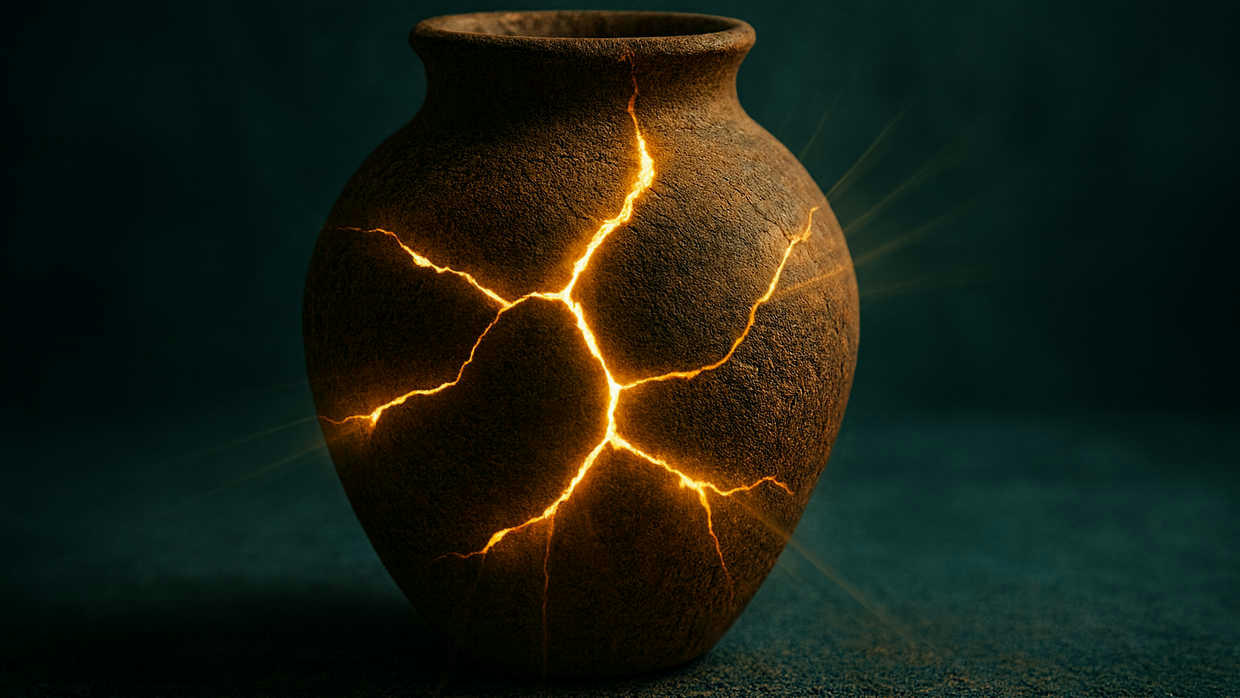
“There is a crack, a crack in everything / That’s how the light gets in.”
Cohen’s words give us a lens to understand the unique journey from the awe of Yom Kippur to the joy of Sukkot: how brokenness becomes a portal to blessing.
On Yom Kippur, we enter a space of radical reflection. There is no eating, no drinking, no distractions. We stand like angels but with broken wings. Our liturgy repeats this message again and again: We have failed to live up to our ideals, in one way or another.
This honesty can feel crushing, but it’s essential. As an ancient philosopher wrote, “We can easily forgive a child who is afraid of the dark; the real tragedy of life is when men are afraid of the light.” It can be daunting to step out into the light and expose our flaws to scrutiny. But Yom Kippur asks us to be courageous, to acknowledge the cracks in our character, the fractures in our faith, the rifts in our relationships. Most of the year, we are tempted to keep our flaws in the dark, to find ways of rationalizing them. But on Yom Kippur we face them head-on.
This acknowledgment is where healing begins. As the Talmud teaches, heartfelt repentance can transform even sins into merits. The “crack” is not a failure to be hidden—it is the very channel through which light will ultimately shine.
Only a few days after Yom Kippur, we are commanded to leave our homes and sit in the sukkah. The sukkah is defined by its schach—a roof that must be made from raw plant material and full of gaps. It cannot be solid. It must have cracks through which the rain can fall and the stars can be seen.
Here lies the deep connection to Cohen’s lyric: the sukkah teaches us that the cracks are not a flaw in the design. They are the design.
The imperfection and vulnerability of the sukkah is exactly what fills it with light. Looking up through the schach, we encounter a physical embodiment of a spiritual truth: All of our flaws, all of our failings, create opportunities for new insight and growth.
Perhaps this is the meaning of the famous maxim of Rabbi Menachem Mendel of Kotzk: “There is nothing so whole as a broken heart.” Our feelings of brokenness may ultimately be exactly what bring us to greater wholeness. Likewise, the very thing that made Yom Kippur so difficult—admitting our cracks—becomes the source of illumination on Sukkot. We look up through the gaps and glimpse the stars.
Our modern world insists that imperfection is something to be ashamed of. Social media encourages us to present an idealized version of ourselves—quite literally filtering out our blemishes. Resumes conceal the failures and skip over the gaps. We curate our lives to appear solid, seamless, and unbroken.
Life's cracks are not signs of utter failure—but of unending possibility.
But Judaism insists otherwise. Our holiest days teach us to lean into imperfection. On Yom Kippur, we confess. On Sukkot, we celebrate in leaky huts. We embrace the cracks precisely because they reveal our limitations—the places where further growth is possible, where God’s presence dwells.
Sitting in the sukkah can be a meditative experience. As we gaze up through the schach, we can reflect on those events in our past that felt like tragic failures—until we transformed them into opportunities for growth. Or we can consider our current cracks, the aspects of our lives that still feel broken or unfinished, and ask ourselves what new light is attempting to break in.
Leonard Cohen, whose Jewish roots ran deep, may not have had Yom Kippur and Sukkot in mind when he wrote those lines, but they capture an eternal Jewish truth: life's cracks are not signs of utter failure—but of unending possibility.











I feel like I want to become a practicing jew from this!!! Your ability to forge the secular and the holy are on target. Very good. Please write more.
Awesome! Beautiful. Excellent. B'H Thank you! R David C.! Yaesher Koach. ( I love LC's music and lyrics, kudos! for calling attention to his spiritual lyrics that have always been so heart felt and meaningful and tying them here, into this wonderful message)