




 An Open Letter to Mayor Zohran Mamdani

4 min read
9 min read
4 min read
6 min read




5 min read


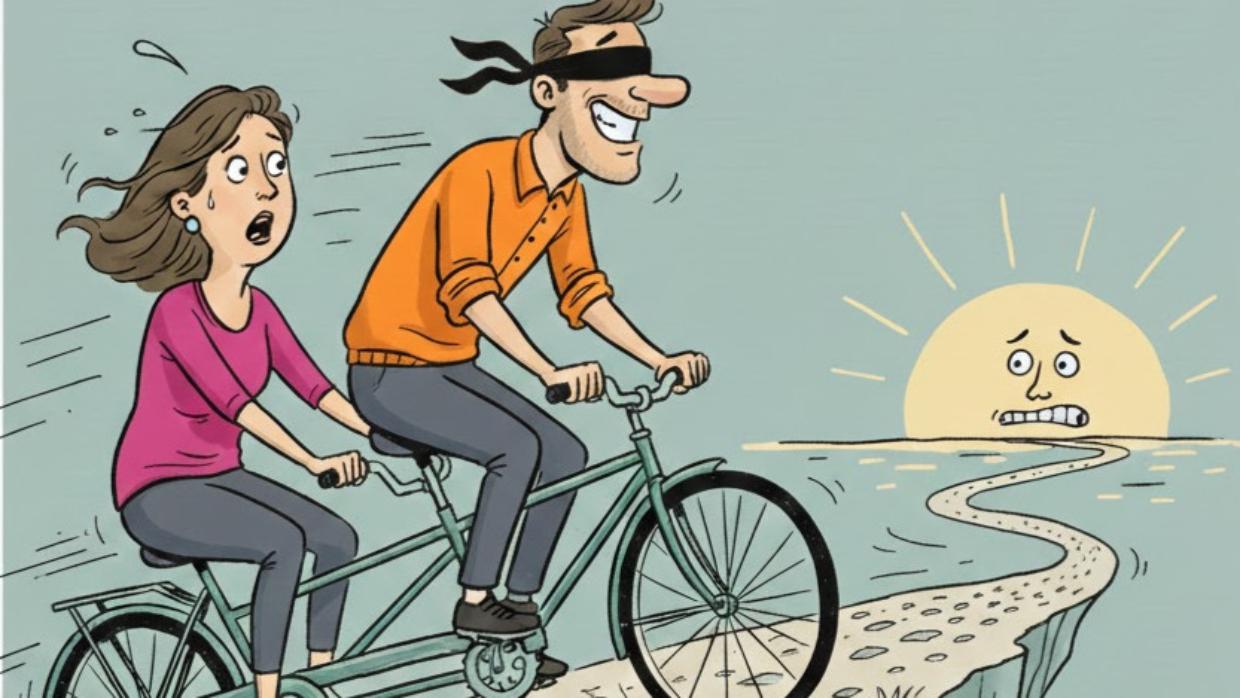
Most men struggle in marriage because they’re operating with faulty assumptions. Here are 10 of the most common myths about marriage.
Most men struggle in marriage because they’re operating with faulty assumptions. Through years of coaching and teaching, Rabbi Aryeh Nivin has identified recurring beliefs that quietly undermine marriages. Here are ten of the most common false beliefs, and the truths that challenge them.
Fact: Some aspects of life will be easier, but many aspects of companionship may be difficult and challenging.
Bringing two different people together forever is no easy task. Varying personalities, backgrounds, schedules and parenting styles all make marriage the wonderful yet challenging journey that it is.
Marriage is the most meaningful and joyful relationship you’ll ever have. Easy? No. Rewarding? Absolutely.
Fact: Your wife doesn’t need you to find a solution. She needs empathy and a hug.
Many men assume that when their wife is upset and talking to them, she wants them to jump into problem-solving mode. This is a false assumption.
Men may also hear emotion as accusation and respond by shutting down or becoming defensive, when what is actually needed is attentive listening without fixing. She may be processing life—not accusing you.
When a woman is venting, she is essentially saying, “I trust you enough to share these personal feelings with you.” She wants you to sit, listen, and support her while she figures things out. Listening makes her feel understood and helps her process.
Fact: Few beliefs are more mistaken than this one. Love and respect must be expressed frequently and in a way a wife can actually receive. For most women, that means verbal, intentional, high-quality expressions of love.
Love that remains unspoken loses its power. A husband cannot rely on what he feels alone—he must actively communicate it.
Fact: Reducing a woman’s emotions to biology dismisses her inner world. When a woman is in a bad mood with her husband, it’s usually because she feels unloved.
An attack might mean, “Please show me that you really care.” Assume she doesn’t feel loved and work on point #3.
Fact: All marriages experience conflict. Avoiding it is often more dangerous than engaging in respectful disagreement. A wife’s resistance frequently signals engagement, not withdrawal. Silence is not peace; it’s often suppressed resentment.
When conflict is expressed in a healthy way, it is normal and does not mean something is fundamentally wrong. On the contrary, it can become the catalyst for deeper understanding, workable solutions, and a much stronger relationship.
Fact: Men and women often operate according to different systems of logic.
Sometimes a couple has a fight and they don’t understand each other.
He thinks he explained it clearly. She feels unheard.
This is because men’s logic can be linear and intellectual. Women’s logic can be circular and connected to the emotional realm. To women, logic without emotional attunement feels dismissive and she may not accept his argument. Continuing to try to win her over with logic won’t because it ignores women’s emotional default. This logical dissonance can end up making her feel unloved.
Fact: Women often process their thoughts and feelings out loud. What she says in one moment may not be her final stance. This does not mean that women are indecisive, but rather women’s opinions can be more flexible and open ended.
Keeping this dynamic in mind will prevent confusion and frustration if and when she changes her mind.
Fact: Respect is not a private inner feeling. It is expressed through behavior, tone, and attentiveness. In Jewish law, a man must respect his wife even more than he loves her.
While everyone gets irritated at times, overly frustrated expression often signals a lack of respect. A man may truly care about and respect his wife, yet become irritated and express that frustration. When his wife says, “You can’t talk to me that way,” he may respond, “What are you talking about? I deeply respect you.”
But respect cannot live only in intention. Men cannot continually express frustration and claim respect at the same time. External behavior and internal feelings need to match.
Loss of self-control or expressions of anger make a wife feel fearful and withdrawn. Women experience words and tone more deeply than many men realize. Respect is the foundation of a relationship and must be expressed both internally and externally.
Fact: A man is responsible for creating a home environment where his wife can feel happy, loved, and secure (assuming there isn’t any mental health issue, or serious character flaw at play).
If his wife is not happy, the husband needs to take responsibility—within reason— and address it.
Fact: Providing for your wife includes fulfilling her emotional needs and being emotionally available.
Although a man may be working hard to adequately provide for his wife and feel exhausted, this does not absolve him of his responsibility. He must learn the skill of compartmentalizing his work and being present and emotionally available at home, even though this is a demanding task.
While everyone has a bad day or experiences low energy from time to time, part of a husband’s job is to greet his wife and express his love physically, emotionally and spiritually.














We constantly hear and read about what a man is supposed to do for women. How about some in depth articles on how women are supposed to behave towards men and also women's misguided beliefs about marriage towards their husbands. ??
that piece is in the works! as the author wrote in her last line
"Myth: I am not responsible for my wife’s happiness."
NONSENSE: NO person (male or female) is "responsible" for his/her spouse's happiness...but certainly should try to foster it. Let's face it - some folks (either gender) just ain't gonna' be happy...no matter what. Try your best, of course, but....
No one is responsible for someone else emotions, thoughts or actions. That leads to a codependent, caregiver or controlling relationship which is not a healthy marriage.
Too many sexist connotations in this article. I have met plenty of men who think emotions only, some of them real drama queens and women who replace emotion with logic. Also a lot of women nowadays are breadwinners and they also think it's ok to be grumpy if they are tired.
I’m a problem solver and a logical, linear thinker. I am a retired attorney. I find it difficult when people want to talk about their feelings when I can see ways to solve the problem without becoming hysterical. One of my siblings tells me I am cold. I am sorry sibling feels that way, but I will go on relying on my intellect because it has served me well for many years.
u cannot use same tools in different settings. A marriage is primarily an emotional relationship not a logical one. U absolutely need to use logic in your life consistently and daily it is major for your own existence as a man. However you cannot have it as your only tool in your relationship: this might lead to a catastrophe. We need to be cold when the other side is in hysteria because they need it. They do need that feeling of security and someone in control. That give a sensation of safety. However at the same time we need certainly to attuned with their feelings and valid them otherwise they'll think we are taking them seriously and then we'll be losing their trust. In short: Balance is the keyword!
This is an excellent article especially with the misogynistic and dubious men's online forums and attitudes out there. Makes me wonder what's up with men nowadays acting like dating, relationships, and marriage were invented by women as part of an evil plot to take away men's right to self-determination. I've been married 40 plus years and my husband still has his manhood intact without being a nasty person.
Tomorrow I want to see a similar article:
10 false beliefs women have about marriage
one of my teachers used to tell me if only each one would focus on their responsibilities and not demanding the other to work on theirs most of problems would be resolved. Respect commands respect. When you work on yourself you actually show without having to put up a speech that your relationship is important, that you care, that you truly love, and that she matters. The wisest of men, King Solomon, said: as water reflects the features of a face, the same, the hearts reflects the heart's feelings. if you truly work on yourself your world will automatically change
This article made me cry. I was married for 38 years to a man who verbally abused me and our children. I was no saint but I tried for years to make it a more stable marriage and when that failed I played at his game and destroyed what little peace we had. He and I were both of the same faith. The Torah and the Bible both say divorce is not allowed except under certain conditions. So I stayed married for all those years and then one day G_d took him home. There is nothing I can do to fix what was. Hopefully I can teach my children, grandchildren, and some day my great grandchildren what you have just said. Thank you.
Loved this article! I knew every point but could not articulate so clearly as you have. Married 27 years and he failed at every single one here. Divorced for 18 now and so very happy not to have to explain these to deaf ears. Thank u.
Spot on.