







 Those Shameful Thoughts and What They Really Say about You

7 min read
2 min read
6 min read
8 min read




How the underlying moral order in Yellowstone stands in stark contrast to the tenets of Judaism.
From the rugged characters and breathtaking vistas to a narrative steeped in violence and passion, Yellowstone completely pulled me into a raw and unpolished realm of cowboy life. The characters revel in manual labor, ride horses, carry guns and get into bar fights. Problems are solved with murder, guns and violence. Quite a different world for this nice Jewish boy from Brooklyn.
What fascinated most was how the underlying moral order in Yellowstone, woven into the thematic elements and the characters throughout the show, stands in stark contrast to the tenets of Judaism.
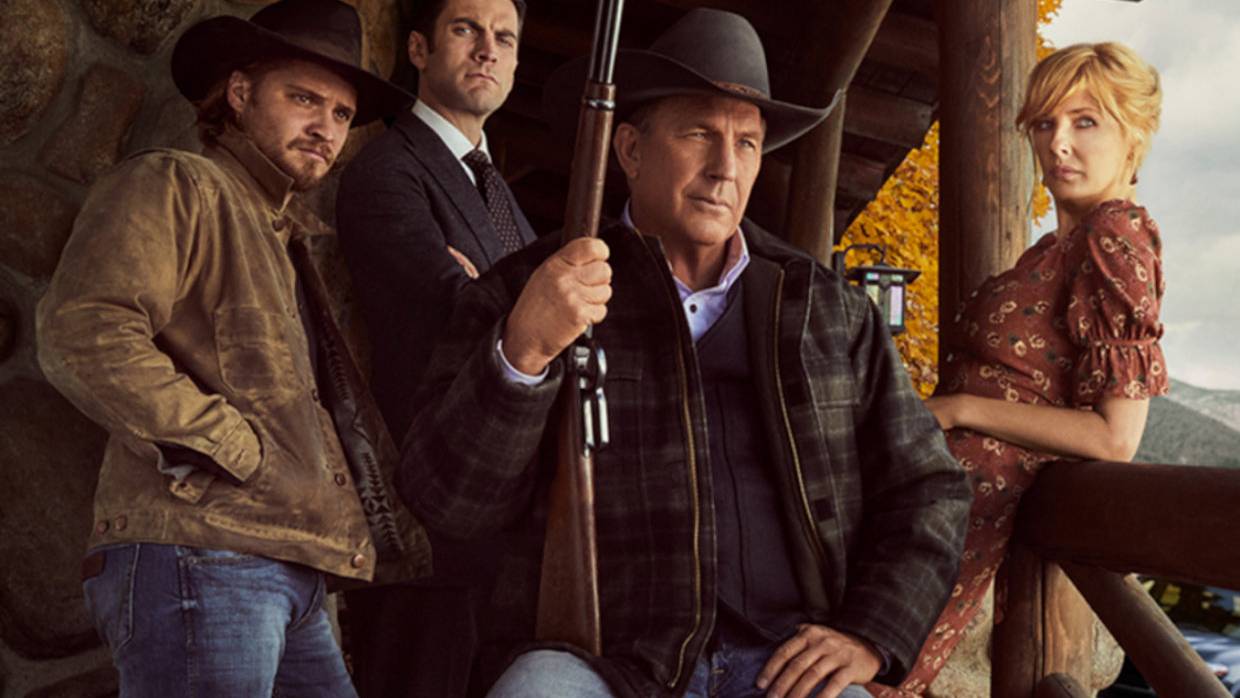
At the heart of Yellowstone lies the land itself—almost elevated to the status of a living, breathing character. John Dutton’s relentless drive to protect his property transforms the land into a kind of sacred battleground. In his eyes, the ranch isn’t just a piece of real estate; it’s the legacy of his forefathers and the embodiment of his identity. His mission is singular: protect the land and don’t let anyone take even part of it away from the family, no matter the cost.
 Kevin Costner as John Dutton
This fixation is a sharp contrast to Judaism’s perspective on land. The land of Israel is given to the Jewish people conditionally. Our mission to create a society that models Godly principles requires a homeland, and our presence on the land is predicted on our accepting this responsibility. The commandments regarding the land reflect that the land ultimately belongs to God. The Sabbatical year, in which Jews leave the land fallow one year in seven, and the Jubilee year, in which every 50 years all land returns to its original owner, gives concrete expression that the land belongs to God. The commandment to give tithes and to leave remaining sheaves to the poor also demonstrate subservience of land use to social responsibility. The land is important but it serves as a backdrop for personal growth and responsibility, not as the ultimate prize.
In Yellowstone, the land is almost seen as a divine force in itself that dominates every action and decision, and ultimately, every sacrifice.
This sacrifice extends far beyond the material—it reaches into the very essence of what it means to grow and become an individual. In John Dutton’s relentless pursuit of protecting his land, his children pay a steep price: their personal development is sacrificed on the altar of protecting the ranch. Each child is molded to serve this single, unyielding purpose leaving little room for their own dreams, identities, or growth. Each of the four Dutton children is expected to forgo personal dreams in favor of a single-minded devotion to the ranch. Beth, despite hating the ranch, enthusiastically devotes all her energy to it as the only way to earn her father’s love. Jamie is repeatedly punished for attempting to have his own independent identity. Lee is killed in battle in defense of the ranch, and Kaycie nearly loses his marriage in service to the ranch.

Judaism’s protest against this approach lies in the story of Abraham. Though God repeatedly tells Abraham that his son Isaac will inherit the land and the mission of the Jewish People, God also makes it clear to Abraham that he is not meant to sacrifice his child, not even by divine command. In Judaism, sacrifice is meant to enhance one’s sense of faith, individual purpose and moral development. It is not meant to hinder growth in the brutal manner of John Dutton.
Judaism also emphasizes the impact one makes on others. Jews are known as “rachmanim bnei rachmanim” (compassionate descendants of compassionate ones), and the Mishna cites acts of kindness as one of the pillars of the world. The Torah tells the story of Abraham, Lot, and the angels. Both Abraham and Lot warmly welcome the angels as guests into their homes in contrast to the people of Sodom, who were punished for their intended cruelty toward the guests. A similar attitude toward strangers and foreigners pervades the world of Yellowstone, where tourists and expats are repeatedly looked upon with contempt and suspicion, and visitors to the Yellowstone property chased away by gunpoint.
Indeed, one of the most striking features of Yellowstone is its near-total absence of any genuine divine presence. Despite the cultural embeddedness of God into the American heartland that is the setting of Yellowstone, and despite the sacred reverence for the land, any reference to God is conspicuously missing from the narrative—appearing only in a couple of token moments. At one point, Beth Dutton kidnaps a priest for a hurried marriage ceremony in a cynical use of religious ritual as a tool to serve personal ends rather than as a genuine spiritual endeavor. Similarly, the priest called to lead the services at John Dutton’s funeral is spoken to dismissively, with the physical labor of digging and filling the grave portrayed as the true last respect. Ironically, the pagan Native American rituals performed throughout the show are portrayed with notably more respect and attentiveness.
The book of Genesis opens with a world of chaos brought into order by the word of God, and a garden given by God to man to work and maintain it. Yellowstone opens with a ranch that is protected and developed, and ends with the land being returned to its wild state – all vestiges of human stewardship removed. The scenes in the finale of the ranch being returned to nature are accompanied by pagan ritual celebrations in what can be interpreted as a reversal of the divine act of creation. It is the earth that is worshipped, rather than its creator.
The world of Yellowstone contains no God, no repentance, and no mutual responsibility.
Genesis also opens with a society marked by fratricide and acts of evil that lead society to collapse twice –once during the flood and again in the dispersal after the Tower of Babel. Cain murders Abel, but following Abraham’s revelation and awareness of God, society evolves. Isaac and Ishmael come together to bury Abraham. Jacob and Esau reconcile and go their separate ways. Joseph, betrayed by his brothers, later witnesses Yehuda’s assumption of responsibility. His act of repentance leads to Joseph’s act of forgiveness, both only possible with the awareness of God’s sovereignty over the world.

The world of Yellowstone, however, contains no God, no repentance, and no mutual responsibility. This is most evident in the relationship between Jamie and Beth. Long ago as a teenager, Beth fell pregnant. Fearful of her father’s reaction and not wanting him to discover her secret relationship, she asks her then-teenage brother Jamie to help her get an abortion. Local clinics would have alerted their parents due to Beth’s being underage, so they go to a clinic located on a nearby a Native American reservation. These clinics, however, perform a procedure following the abortion that prevents the woman from ever getting pregnant again. Jamie knows this but does not tell Beth. The procedure is performed and Beth is forever barren. Throughout the show, Beth's hatred toward Jamie is explicit. She repeatedly threatens him, and in a line almost directly lifted from Esau notes that after her father dies, she will murder him. After John Dutton’s murder, she does exactly this, plunging a knife into her brother’s chest. Not once in the show do we hear responsibility taken or forgiveness offered. Once again, it is a reversal of human development as portrayed in the Torah.
Together, these dual narratives—the irreparable rupture between Jamie and Beth and the pagan reclamation of the land—offer a haunting critique of a world that has lost touch with the transformative values of forgiveness, redemption, and responsible stewardship. In the final moments of the series, the absence of reconciliation and the embrace of nature in its rawest form stand as stark reminders of what happens when a society forsakes the moral imperatives that have long guided our collective journey. Yellowstone serves as a stark reminder of the cost of forgetting who we are and what truly matters.











Thank you for such an in-depth, thorough, biblical analysis of Yellowstone!! I had avoided it for a couple of years and then was drawn in, and have to say intrigued and enveloped by a world so foreign to me. But your superb biblical critique was so helpful in clarifying what is wrong with the premise and culture of the Story! Thank you again for taking the time to do this!
We thoroughly enjoyed Yellowstone and its prequels. This depiction of the American pioneer experience and survival despite many trials and tribulations resonates with us on many levels, including our shared, but different, Jewish pioneer experience in the establishment of The State of Israel. We're proud of both and the pioneer spirit!
Fighting for your ancestral land is something we all can understand and respect. The Dutton family's decision to return the majority of the land to the tribal council shows a high level of moral development.
Judging a depiction of American history harshly on the basis of Jewish values isn't consistent with fundamental Jewish values and unhelpful.
Stopped watching YELLOWSTONE after two episodes, for the above stated reasons. Better screenwriting with a higher moral framework could have made this a worthwhile series. Sadly, schlock writers instead created a violent, unethical mess.
Agreed. I've known westerners; they're nicer and more tranquil than these highly-wound characters in "Yellowstone".
Believe it or not, I’ve been making more than $15k a month from home.
COPY HERE➤➤ RichJob2.Com
I disagree on one point!!! To many Jews not all the land of Isreal is very important to us. It is worth fighting for. That part of the saga is important. The fact hat Dutton is willing to do anything to keep his land, even immoral things does not mean that he does not have a right to protect what he sees as his and his family legacy. Jews have a right to protect their land (Isreal) and their legacy.
You seem to be implying that "all's fair in love and war," which is NOT at all a Jewish ethic (nor even an Israeli secular one)!
If you're referring to the recent Gaza War that was started by Hamas terrorists with full support of Gaza's residents, who clearly all have genocidal intent to destroy Israel, cv"s, you appear to be parroting the leftist media's falsehoods about where the full blame lies.
Of course Israel has the right to defend itself, and many who know what they're talking about agree that the IDF is the most moral army in the history of the world's warfare, risking their own soldiers in an attempt to spare the very civilians who are Hamas supporters and whom those brutes are using as human shields.
Clearly, only antisemites can skew the situation backwards!
I agree with you 100%, the Israeli army is so moral they are endangering their own lives which isn't right, well my hero Rabbi Meir D. Kahane( obm) wrote a book " They Must Go" and he( obm) was more than 100% right whatever he( obm) said will come to be pass in exile and in Israel happened now, unfortunately nobody listened to him( obm) for not wanting to see the truth, somehow he ( obm) foresaw what was coming a while back, all over Israel there is graffiti that Kahane ( obm) was right 100%, you see what is unfolding these days, if they listened to Kahane ( obm) in the first place we would of not been in this position today
Thank you for the comment, I absolutely agree. My point here was not that we do not have the right to defend our land. In fact we have an OBLIGATION to defend our land. My point was that the importance of the land is not inherent in itself. The importance of the land- the reason for its holiness- is that it is needed as the place from which the Jewish people can fulfill its mission. Unlike John Dutton, the land itself is not our mission. The land is important to us in it's function to our mission- hence Hashem's repeated linking of our presence in the land and the land's bounty to our fulfilling our mission as Jews. Thanks for reading!
Wonderful moral clarity!