




 Are You a Spy or a Tourist?
5 min read
7 min read
6 min read




8 min read


The darker sequel spotlights the machinery of demonization and the necessity for moral courage.
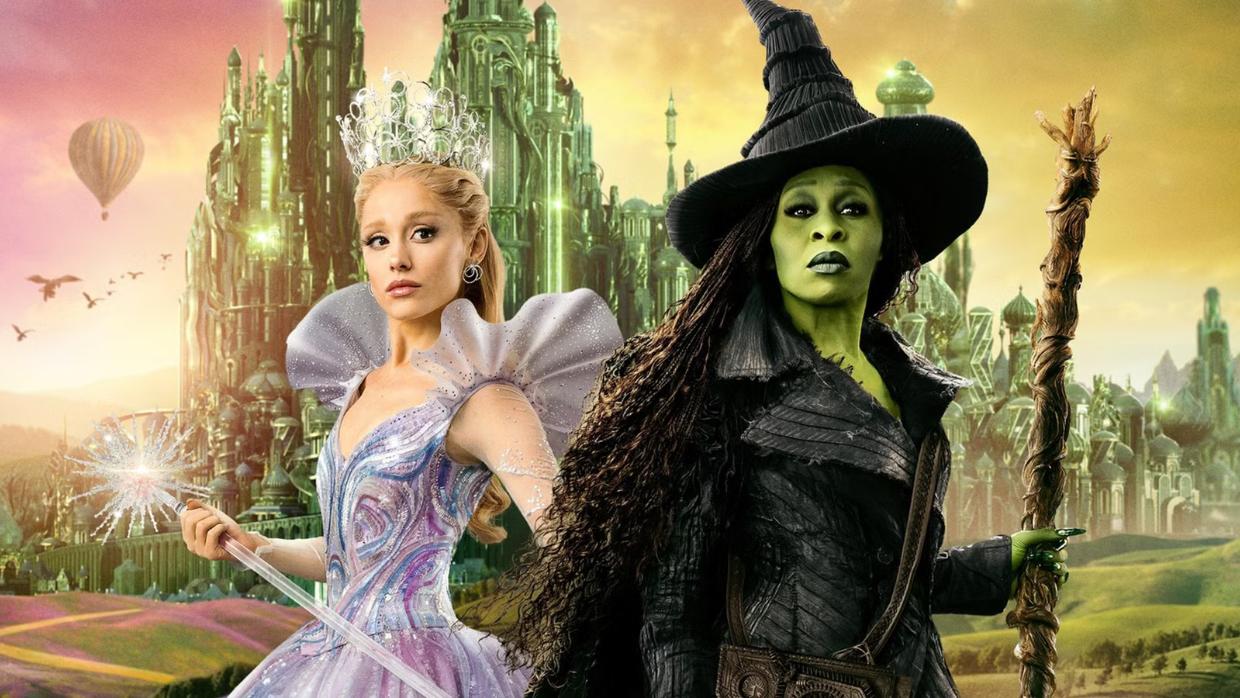
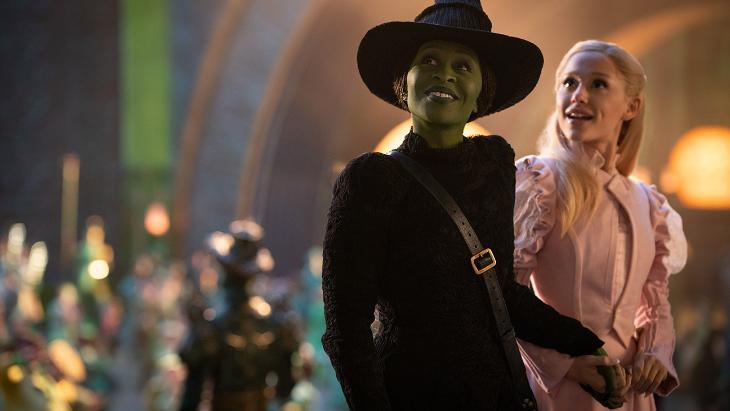
Wicked: For Good feels less like a sequel and more like a warning flare. After last year’s Wicked used Oz to mirror the early stirrings of fascism, Jon M. Chu returns with a darker, sharper chapter that shows how a society can be hustled into cruelty, one rumor, one scapegoat, one “reasonable” compromise at a time. This is the movie we need right now because it exposes the dangers of sleepwalking into extremism, intolerance, and hate.
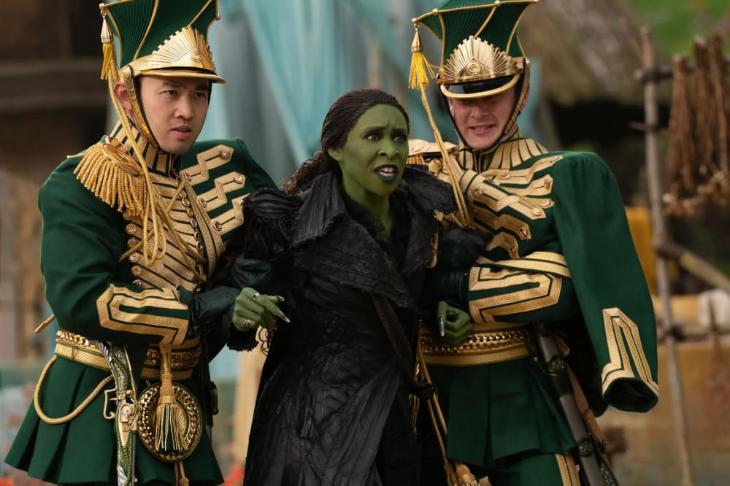
Without divulging any spoilers, Wicked: For Good follows Elphaba and Glinda on their radically different trajectories. Elphaba is a green-skinned sorceress with a heart of gold who always tries to do the right thing. Despite her good intentions, she’s widely hated for the way she looks. Every action she takes is given the worst possible interpretation. People slander her constantly, sometimes twisting her actual words and at times lying outright, to make her out to be a “wicked witch”.
Glinda’s fate is very different: widely believed to be good, her utterances and actions are perceived in the most generous possible way.
These two polarizing reputations are encouraged by Oz’s hapless Wizard and the scheming Madame Morrible who eggs him on. Seeking to control Oz with an iron fist, the pair scheme for ways to instill fear in the populace, designating a growing list of creatures as enemies against which the citizens of Oz can rally. In the first movie Wicked, citizens of Oz were goaded to band together to hate and imprison the magical talking animals in their midst. In Wicked: For Good, the list of Oz’s supposed enemies expands. Most hated of all is Elphaba, who is held up as a bogeyman who supposedly wants to destroy all of Oz.
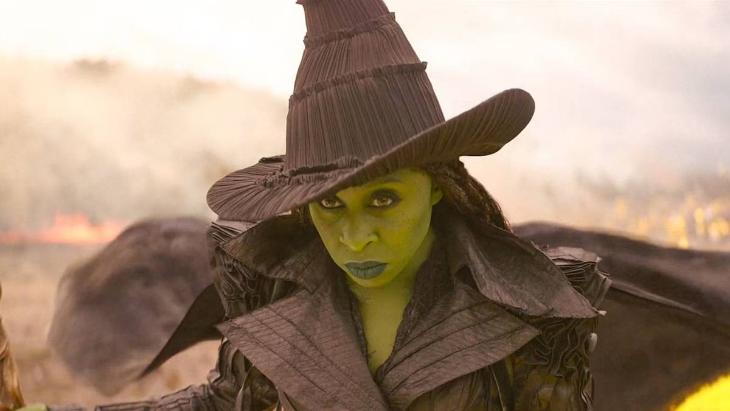
Director Chu acknowledges the pertinence of Wicked: For Good and its depiction of the Wizard, a “charismatic leader who gaslights a community that (Elphaba) is wicked just because she’s standing up for a marginalized group of people in society…” In one scene, Chu even recreates a dance in the 1940 film The Great Dictator starring Charlie Chaplin as a Hitler-like dictator who plays and dances with an inflatable globe. The Oz in this film is a frightened, dark place where people are so “empty headed,” as one character complains, that “they’ll believe anything.” As Oz’s cynical wizard exploits their fear and inability to think for themselves, it’s easy to relate to the fear and intolerance depicted in the film.
Take political disagreements. In America, voters are increasingly likely to view people who hold different political opinions not as well-intentioned actors with differing views, but as people who are evil, stupid, and untrustworthy. A recent poll found that in 2016 nearly half (47%) of Republicans and over a third (35%) of Democrats said people who voted for the other party were immoral. In 2024, a whopping 72% of Republicans and 63% of Democrats held that view.
Intolerance is increasingly rampant on college campuses, as well. One 2025 survey found over a third (34%) of American college students say it’s acceptable to use violence to stop someone whose views they disagree with from speaking on campus; 72% feel it’s acceptable to shout down a speaker they don’t like. Well over a quarter (28%) report keeping their views to themselves during classroom discussions because they fear being labeled somehow bad or wicked because of opinions they hold.
In Britain, a majority of students report believing that some speakers should be banned outright from university campuses. Like the residents of Oz, those who challenge our preconceived beliefs aren’t people to be debated, but are like Elphaba, somehow the embodiment of evil, to be feared and shunned.
As Wicked: For Good opened across the world, showcasing Oz’s growing hatred of Elphaba, intolerance for Jews was spilling over into the real-life streets.
On November 19, 2025, protestors gathered outside Park East Synagogue in Manhattan. The synagogue was holding an informational event for congregants considering moving to Israel. Screaming protestors thronged the street outside, chanting: “Resistance you make us proud, take another settler out,” “From New York to Gaza, globalize the Intifada,” and “Death to the IDF (the Israel Defense Forces).” One organizer explained to reporters: “We need to make them scared.”
Rabbi Arthur Schneier, who works at the synagogue, said the mob reminded him of Kristallnacht, the two-day rampage in November 1938 when Jews and synagogues were attacked across Germany and Austria. Yet the event seemed to garner little opprobrium. Police outside the synagogue declined to intervene. New York Mayor-elect Zohran Mamdani refused to condemn the chants or even call them antisemitic, and criticized the synagogue for holding the event in the first place, inaccurately stating that it violated “international law.” On Sunday, November 23, a similar mob targeted St. John's Wood synagogue in London, calling for Israel's destruction and projecting "stolen land here" onto the walls of synagogue; as in New York, police stood by and declined to intervene - with the exception of preventing some Jews from walking through the baying mob and accessing the event.
The following day, outside Washington DC’s busy Union Station, a group of masked actors acted out the anti-Jewish blood libel, the false claim that Jews crave the blood of non-Jewish children. As hundreds of commuters strolled by or stopped to watch and take pictures, performers wearing masks of Israeli Prime Minister Benjamin Netanyahu, US President Donald Trump, former US President Joe Biden, US Secretary of State Marco Rubio and former US Secretary of State Antony Blinken feasted on bloody fake body parts. Red-spattered children's limbs lay scattered across the table. The actors drank from goblets that seemed to contain human blood and wiped their masked faces with Israeli flags.
A prominent sign stated the men were celebrating an Israeli Thanksgiving, featuring “Gaza children’s limbs,” “stolen organs,” “illegally harvested skin,” and “Gaza’s spilled blood.” Nobody stopped the group; few people seemed offended or bothered by the outrageous display.
This nonchalance isn’t surprising: recent surveys show that huge numbers of people are willing to believe the worst about Jews. One 2025 poll found that 40% of young people under the age of 35 globally believe that “Jews are responsible for most of the world’s wars.” It’s a ridiculous claim, yet one that’s gaining ground.
People who live in societies where it’s common to demonize people, like the citizens of Oz, are more likely than others to accept anti-Jewish canards. The willingness to demonize people you disagree with is a key factor in rising antisemitism. When people are taught or incentivized to feel hatred towards their opponents, antisemitism inevitably skyrockets.
Judaism warns against the histrionic slander that marks the Wicked movies and the current hatred for Jews and other scapegoats: “With righteousness shall you judge your fellow. You shall not be a gossipmonger among your people” (Leviticus 19:15-16). It’s all too easy to insult and demonize those you disagree with. Jewish wisdom urges you to check those impulses and take time to think before you speak.
With so much extreme content on social media and in public discourse, it can be difficult to know how to begin slowing down the tsunami of outrage and hate. Here five ways to start.
1. Put down your phone. High levels of social media use is associated with more extreme and/or hateful opinions. In-person conversations are associated with healthier communication and lower levels of outrage.
2. Pick up a book. When it comes to Israel and other pressing issues having a solid basis of knowledge can help insulate us from extremist and biased viewpoints. Read books or articles about Israel and other topics to help gain perspective and a solid knowledge base from which to grow.
3. Engage with someone different from you. Don’t be afraid to hear opinions you disagree with, so long as the person speaking is willing to have a respectful, balanced conversation. Learn from hearing opinions different from your own.
4. Be aware who’s listening. As parents, it’s easy to slip into negative speech without realizing that your kids are learning from everything you say. By expressing views respectfully and in a measured way, you’re more likely to influence others.
5. Be willing to walk away. When a conversation is becoming inflamed or disrespectful, the best thing you can do for our own mental health is to walk away and not engage. Whether in person or online, it’s important to know when to stop and focus your energies elsewhere.
Wicked: For Good dares us to notice the moment we’re living in. It asks whether we will keep outsourcing our judgment to slogans, mobs, and charismatic liars, or whether we will reclaim the moral courage to see a human being instead of a headline. Judaism’s insistence on fairness, restraint, and refusing to traffic in slander isn’t quaint in an age of outrage; it’s necessary wisdom for free societies. If hatred is growing louder, then decency has to grow braver: speak carefully, learn deeply, and challenge demonization wherever it appears.










While the author connects Elphaba with the Jewish experience, I assume that the filmmakers do not. Rather, I am willing to bet that the film was made with the assumption that Glinda is the Jew and Elphaba is the victim of the Jew.
My opinion isn't a popular one... But I'm going to say it:
These bums need to have an experience with an angry Jew. They think they can cow us because we let them. WE... Need to make THEM afraid of us.
The lion isn't one of our symbols for nothing.
Agreed
The article showcases a subtle point about how superficial today's value system is in judging by appearances: if you like the way someone looks, he/she is deemed "good" or vice versa.
The fact that justice can be subverted this way or that the victim is considered the aggressor is inconsequential to those who "stray after their eyes."
There is saying in English and Hebrew about " judging a book by its cover" and Hebrew " about don't judge a jug until you know what is inside " some bad people look nice and some good people don't look nice, there is a saying " beauty is the eyes of the beholder" everyone judges beauty differently and in Judaism we should look insides of a person's character not the way they look, for example in megillah Esther the midrash says she had a green complexion and was beautiful, also the author of the book " The Wizard of Oz " was anti Semitic
I am not sure whether the author is American, so I am going to point out that even the most disgusting speech is permitted by the 1st amendment. The NYPD can do nothing about shouting. Assuming that the Union Station protesters were in an area where protests are permitted, they likewise could not be moved. I routinely ignore such people; they are itching for attention.
"Freedom of Speech" is NOT "freedom to intimidate" -- something that the New York Protestors were explicitly doing. In fact there is a Federal Law (the "FACE Act") that has Criminal Penalties for those who interfere with access to a House of Worship.
The NYPD absolutely SHOULD have acted to ensure that those who wished to attend would NOT feel threatened or intimidated. Mamdani showed EXACTLY what sort of "human being" he is by not condemning the "protestors".
If the protesters were physically impeding detainees, the police should have moved them back. Specific threats against a particular person or group is assault. However, general protesting using generalized threatening language is covered by the First Amendment. Personally, I think we should reexamine this with regard to social media and the internet, but at in person protests, we have to allow offensive speech.
So you're advocating for free speech, including "generalized threatening language" in person / face to face, but want to abort it online?!
The same people who'd spit in your face in public are obviously only going to get "braver" behind the safety of social media!
I’m not advocating for threatening language, I am providing legal analysis. Re social media, the algorithms sort and separate users. I don’t seek out extremist web pages so I am unlikely to come across the rise of hate speech spreading easily and anonymously around the country and the world. The 1st Amendment mentions freedom of “speech” and the “press”. There are legal remedies for threats, slander and libel, and those rules carried over into radio and television. However, social media providers have successfully claimed that illegal or civilly liable language posted by others does not incur responsibility for the provider. This has to be narrowed, including removing financial rewards to companies that permit such language to stand.
Re: The 1st Amendment. There is law and there is morality. Mamdani's apathy toward the harassers at the Park East synagogue showed him as the latter individual. Second, since when does freedom of speech equal freedom from consequences? Third, the harassers at the Park East Synagogue were not only disturbing folks who wanted to enter the event, but were also bothering others living in the neighborhood.
The Holocaust started with words before burning books, Nurenberg Laws, and then murdering 6 million Jews and 5 million non Jews, globalize the infita is not free speech but hate speech, how can a Jew support using violence, intimate tactics and assurance and battery against Jews, and spitting on Jews, also before the Holocaust there was something called Kristall Nacht " the night of broken glass" were Jews had to pay for the damage and boycotts of Jewish owned businesses, and the Muslims are going down the same way, in Gaza and Arab Muslim countries they have the book " Mein Kenif " ( my struggle or my fight) in Arabic by Adolf Hitler ( Y"S) the original was in German, is this hate manifesto also free speech according to your distorted views,
I don't think you have any connection to the Holocaust, also you didn't learn how the Holocaust started, it started with words and why should Jews think hate speech is free speech, a speech which promotes violence against Jews is not free speech, I am a child of a Holocaust Survivor ( obm), besides your warped view about rights of terrorists, these Muslim characters are going outside shuls if they have a program to have people that help people make Aliyah they harassed the people, and also in colleges and universities and can also happen in public they also assault and battery, and spit and do violence against Jews, it looks like America is starting to look like Europe.
This was superb to read and, maybe even more importantly, you offered solid real-world tips that are easy to implement. Thank you!!
We need more movies that touch on scapegoating. Something has to be done to fight the scourge of scapegoating, particularly innocent groups. The only problem I find with Wicked is that its demographics are more than just children. The movie is also directed at gays, who make up the other part of its audience demographics. Aside from that criticism I have, I believe we need movies that help society look at scapegoating in the face, and force it to take scapegoating apart. It's time scapegoating, particularly innocents, gets canceled.
This is a standout article. I am taking my grandchildren to see Wicked2 this week; I will be thinking of this article as we discuss the movie later.
Despicable world that we are living in the world has no clue that we are only .001% of the world that we only have one Jewish state and our enemies have 57 Islamic nations and 27 Arab nations and the world can’t see it they have no clue to the history of Israel how tiny it is how few people we are and no, we don’t control the weather or the world because if we control the world boy we’re doing a terrible job. Look at all the Jew hatred. It’s Qatari money poisoning the students.
Wonderful article. I won’t be seeing this movie because the two main actors are anti semites.
Agree!!! I haven’t been to a movie in 20 years and never plan on going again all antisemites
Look into “Guns and Moses”, produced by an Orthodox Rabbi.
If you're referring to Salvadore Litvack, I haven't heard that he's an Orthodox rabbi, though the cast includes a character who plays the role of a Chabad rabbi.
You are correct: I looked up his full bio, which is impressive, but it appears that he has not received ordination. He is Orthodox and teaches Talmud online.
It looks like a lot of people turned into anti Semites and being anti Israel getting brainwashed from Arab Muslim oil money, there has to be a way to stop this, because Arab Muslim countries are out of control, controlling the minds from kindergarten till college/ university it is like a cult of hate against the Jews and Israel, and then everyone else will be targeted just like in the time of the Holocaust. it starts with the Jews and Israel, and will end with everyone else, Jews are like the canary in the coalmine , if Jews and Israel are in trouble, then society is in very big danger too
Thank you for publishing this article. Just saw Wicked For Good yesterday with my daughter, and was very disturbed by the parallels of the plot line in the movie, and what is happening around the world against the Jewish People.
Am Yisrael Chai!
Amen , Am Yisrael Chai, whoever targets Jews and Israel will dissappear into history books and nof be around anymore like the ancient empires that started up with Jews