





 Passover and the Crisis of Jewish Identity






7 min read


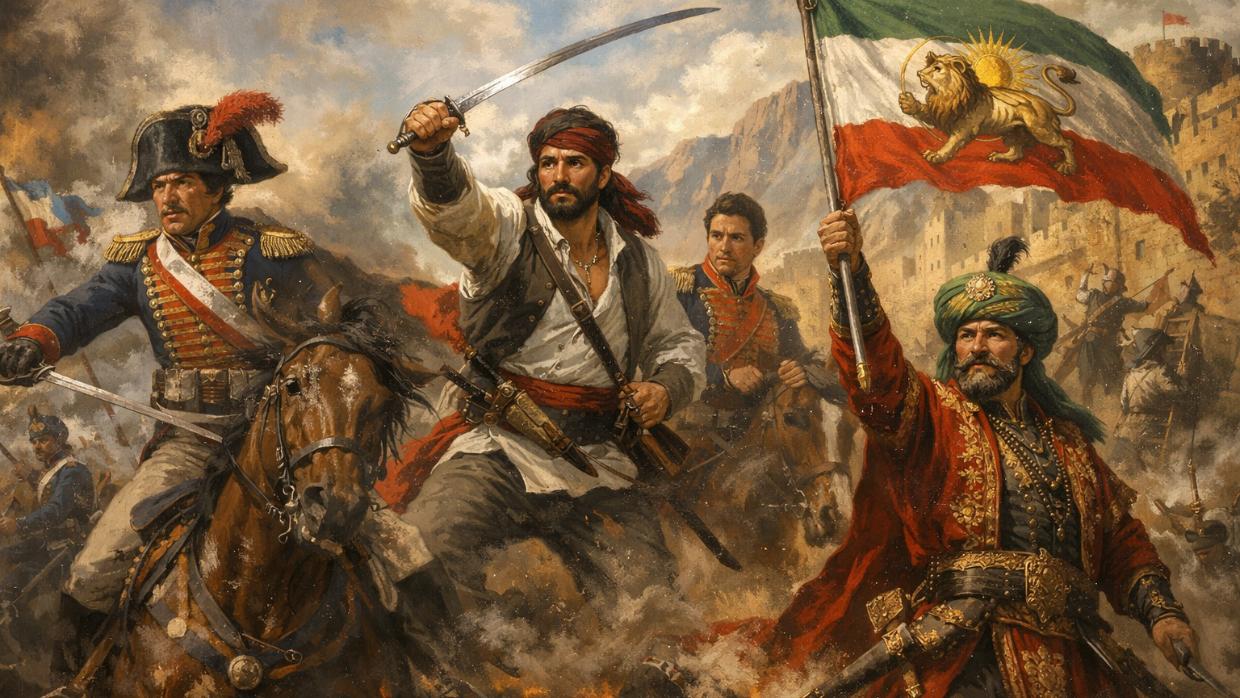
Gen. Isidor Borowski was a Jewish adventurer-soldier who fought for Napoleon, helped liberate Venezuela, and rose to become a favored general of the Persian Shah.
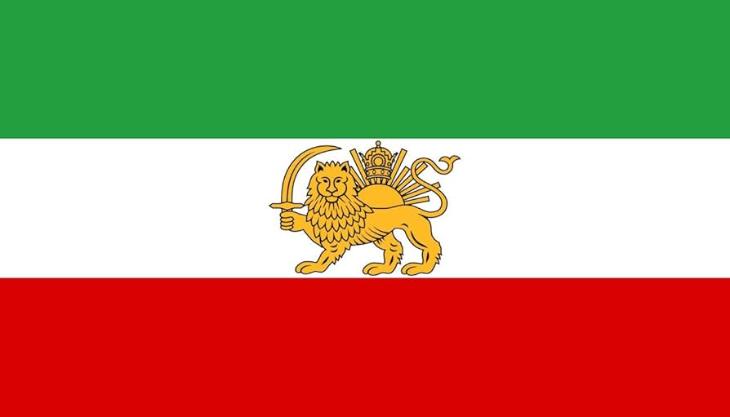
Protesters across Iran are demanding an end to the dictatorial Islamic theocracy that has choked the nation’s promise for a generation. One protester in London recently scaled the walls of the Iranian embassy, tore down the stark flag of the Islamic Republic, and raised Iran’s traditional banner—the lion and sun—over its place.
Of all the Persian patriots who have flown that lion and sun flag, perhaps the most surprising was Isador Borowski, a European Jew who fought all over the world before becoming one of Persia’s greatest patriots and a vizier in 19th Century Persia. Gen. Borowski fought and fell carrying the sun and lion flag of Iran. His little-known story is one of incredible bravery and derring-do, as he led troops and fought in some of the world’s most famous armies and battles.
In later years, Gen Borowski ensured that his early life was shrouded in mystery. He was born into a Jewish family in Poland sometime near the turn of the 18th century. Different accounts of his life describe him variously as being born in 1776, 1803, or 1770, and in Vilnius or Poland or the Polish city of Mazovia. He embellished his origins, telling people, according to some accounts, that he was the son of a Polish nobleman and a Jewish mother. To other interlocutors, he said that he was the son of a prince who had a secret liaison with a Jew. (The reality is likely far more prosaic.)
What’s clear is that he felt patriotic towards Poland, joining the army and likely fighting his first battles as a young man when he took part in the Polish Uprising of 1794 against Russia. That ill-fated uprising tried to claw back a measure of independence for the Polish-Lithuanian Commonwealth that governed most of current-day Poland and the Baltics. When the uprising was crushed, Isidor Borowski fled. Some sources say to fight for England, though it seems likely that he moved to France and joined the army there.
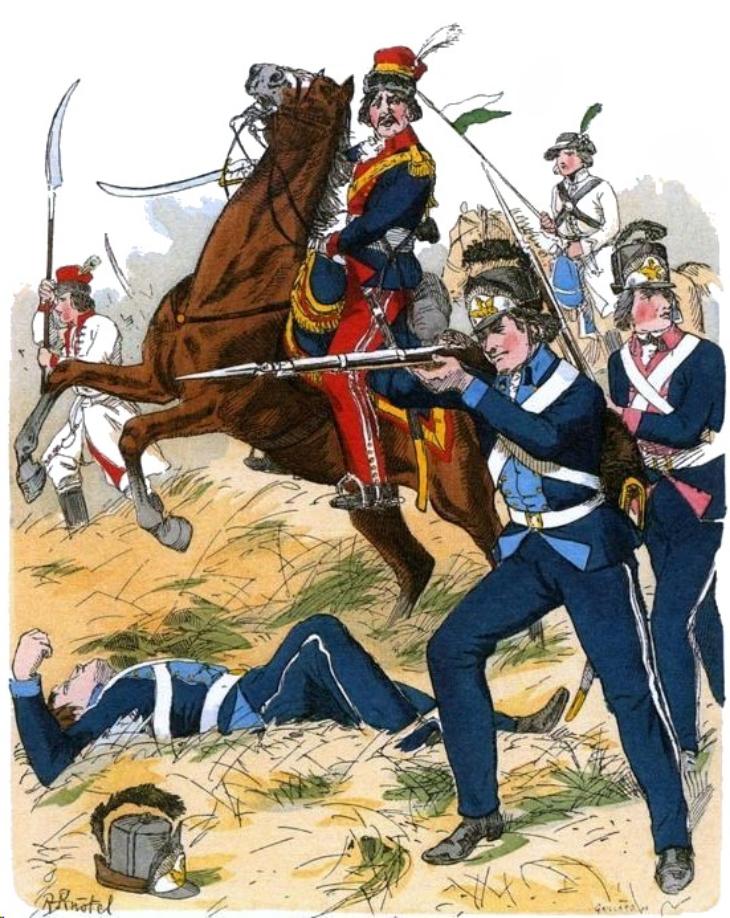 Polish soldiers of the uprising, painting from 1850
Like many Polish soldiers disillusioned with Russia’s dominance over Poland, Borowski joined a Polish legion in Napoleon’s army so he could once more fight against Russia. The Polish legion was organized by Tadeusz Kosciuszko, one of the leaders of the Polish Uprising. Borowski saw a great deal of action and rose to become an officer. When the Polish legion was disbanded in 1801, Borowski joined Napoleon’s regular army, an act that would radically transform his life and send him away from Europe forever.
Napoleon sent Borowski as part of his force to subdue the free state of Saint Domingue in present day Haiti, which at the time was led by the former slave Francois-Dominique Toussaint Louverture. After seeing heavy fighting between French and breakaway formerly enslaved soldiers, Borowski quit the French army. Instead of returning to Europe, he spent several years in the New World.
For a time, he even worked as a pirate. Borowski joined the "Brethren of the Coast,” an alliance of pirates and privateers working in the Caribbean Sea and off the coast of North and South America. The "Brethren" made their living by gaining licenses from various European countries to attack and loot their enemies’ ships on the high sea. Though he’d trained as a land soldier, he seems to have thrived as a fighter on the high seas, as well.
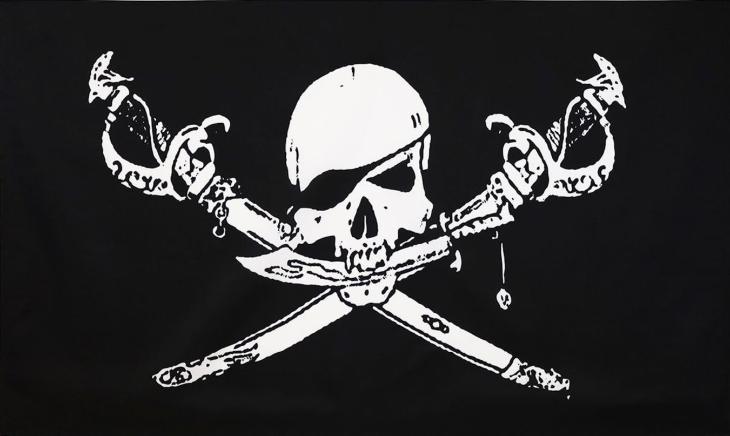 Brethren of the Coast flag
After a few years, Borowski once again changed course, joining the idealistic new army that Simon Bolivar, a military officer from present-day Venezuela, was raising to fight against Spain. Bolivar and his supporters like Borowski were in favor of a free independent country in South America. Over the next sixteen years, from 1805 to 1821, Borowski fought alongside Bolivar across modern-day Colombia, Peru, Venezuela, Ecuador, and Panama. Again and again, he distinguished himself in battle, eventually rising to the rank of General.
Gen. Borowski led thousands of men in at least two decisive battles. At the Battle of Boyaca, on August 7, 1819, amidst fierce fighting in difficult mountain terrain, Bolivar’s fighters defeated Spanish forces, freeing the colony of New Granada and allowing Bolivar to declare the end of colonial rule. In 1821, Gen. Borowski once again led troops in liberating another Spanish territory: this time freeing modern-day Venezuela from Spanish rule in the Battle of Carabobo on June 24, 1821.
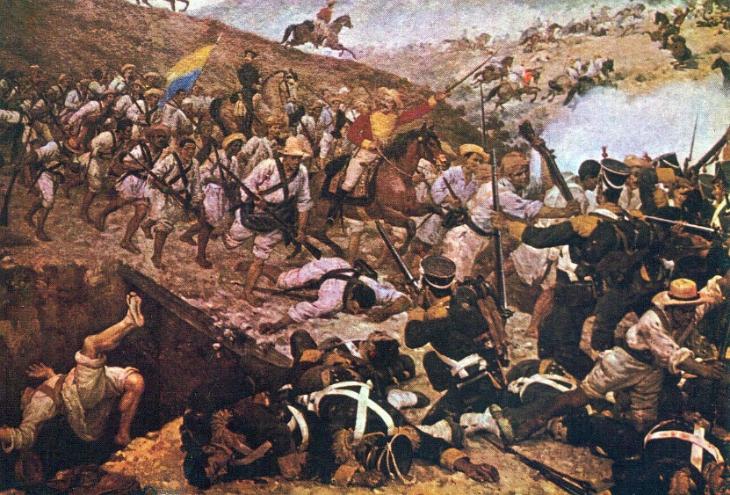 The Battle of Boyacá, by Martín Tovar y Tovar
Little is known about Gen. Borowski’s next steps. It’s thought he lived in Bogota for a time, perhaps working as a scientist, then moved to North America.
Records of Gen. Borowski’s peripatetic life resumed in 1829, when he was known to be living in Egypt. By now middle aged, Gen. Borowski was teaching English and Math and was part of a large Jewish community in that country.
Over a thousand miles east, in Persia, present-day Iran, the great Shah, Abbas Mirza, was modernizing his army. Having lost vast swathes of territory to Russia when he was a young prince commanding his father’s forces, Abbas Mirza realized that the Persian army was in desperate need of change. He sent his soldiers to study in Europe and built modern ammunition factories in Persia.
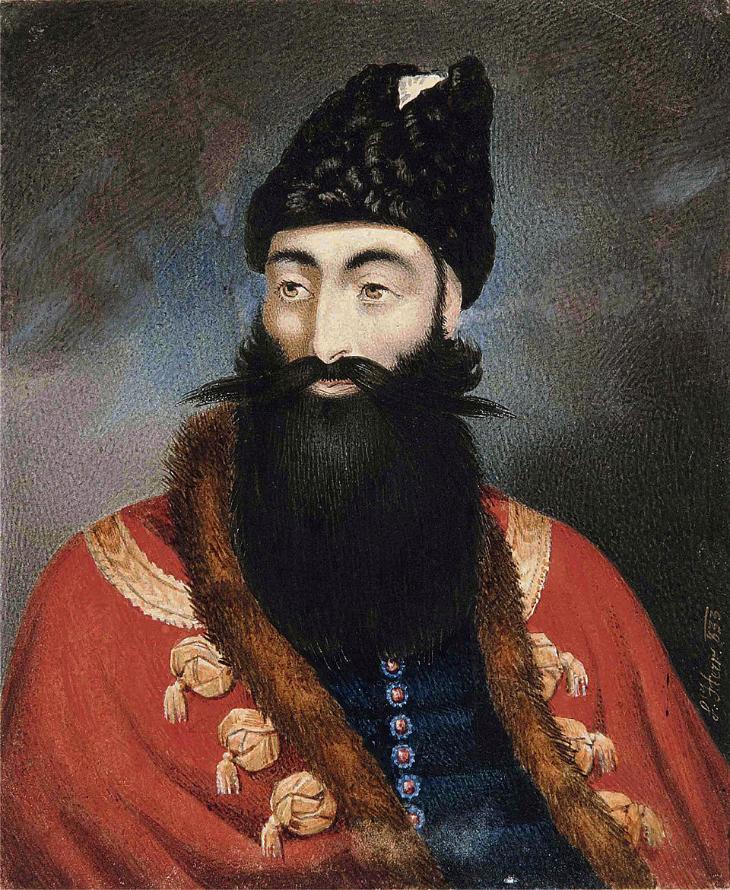 A Portrait of The Crown Prince Abbas Mirza, Signed L. Herr, Dated 1833
When the Shah received word that a decorated General was living in Egypt, he sent for him. Ever the intrepid adventurer, Gen. Borowski complied, travelling to the royal court in Persia and renewing his military career.
Gen. Borowski aided the Shah in attacking former Persian possessions in central Asia. Starting in 1831, he captured the town of Cochan in Khorossan and the castle in the town of Sarakhs for the Persians, in both cases planting the Persian flag featuring the lion and the sun of Persia on city walls.
When Shah Abbas Mirza died in 1833, Gen. Borowski continued to work for his son, Shah Mohamed Mirza. A key goal for the new Shah was attacking the Afghan tribes and trying to capture the Afghan city of Herat. When Persian forces marched on Herat in 1837, Gen. Borowski was in the lead, commanding 34,000 troops armed with 60 cannons as they approached the walled city. In the heat of battle a few months later, still fighting over Herat, he was shot in the abdomen and died soon after. After his death, Persian forces had no chance of capturing the city and eventually withdrew.
A Persian minister, Mirza Sadik, described the pivotal role that Gen. Borowski played in the battle in a letter to the Persian ambassador to Istanbul: “We went to our deaths cheerfully under the command of our Polish General Borowski, the bravest of the brave, whose death, envious of his glory, took him at the moment when he was planting the banner of the Lion and the Sun on the ramparts of the fortress.”
Gen. Borowski had at least one son, though accounts of what happened to his son or sons differ: some say that two sons succeeded him in working for the Shahs of Persia; others say that one son became a great Persian general as well, following in his father’s footsteps. He was buried in the Persian city of Isfahan.
In his relatively short life, Gen. Isidor played an unbelievable number of roles: Jewish son, Polish patriot, Napoleonic fighter, Latin American liberator, pirate, and favored General of the Shah of Persia.











Wow! What a fascinating movie this would make! And there's enough unknown parts of his life that could easily be embellished to add romance.
Fascinating character and story. Thanks for sharing it!
Wild & interesting. Persia wanted to reclaim territory from Russians, but CONQUER territory from the Afghans. Many years ago I read "The Jewish Connection" which brought a long list of accomplishments which, exactly at the right time, involved various JEWS to rocket the endeavor ahead. Sounds like this gentleman.