




 Why Does the Word “Zionist” Still Exist?





6 min read


In the early 20th century, Schwester Selma Meir, a German-trained nurse, brought order, compassion, and professional care to Jerusalem, changing the future of medicine in the Land of Israel.
When Selma Meir arrived in Jerusalem in the early twentieth century, she entered a world utterly unlike the one she had left behind. Trained in Germany, steeped in discipline and order, she now found herself in a dusty, underdeveloped city under Ottoman rule, where hospitals lacked even the most basic infrastructure. There were no paved streets, no electricity, no piped water.
Her journey from Europe had taken nearly a month, spanning trains, carriages, and long stretches of uncertainty. When she finally reached Jerusalem, she was taken to the hospital by donkey wagon.
She had agreed to stay for three years. She would remain for nearly seven decades.
Selma Meir was born in 1884 in Hanover, Germany, into a poor Jewish family. Her childhood was marked by tragedy. When she was just five years old, her mother died in childbirth, leaving behind five young orphans. This experience of early loss shaped her entire life. Deprived of maternal care at a young age, she developed a deep longing to provide others with what she herself had lacked — what she called “mother love and love of human beings.” Nursing, she felt, was not simply a profession, but a mission.
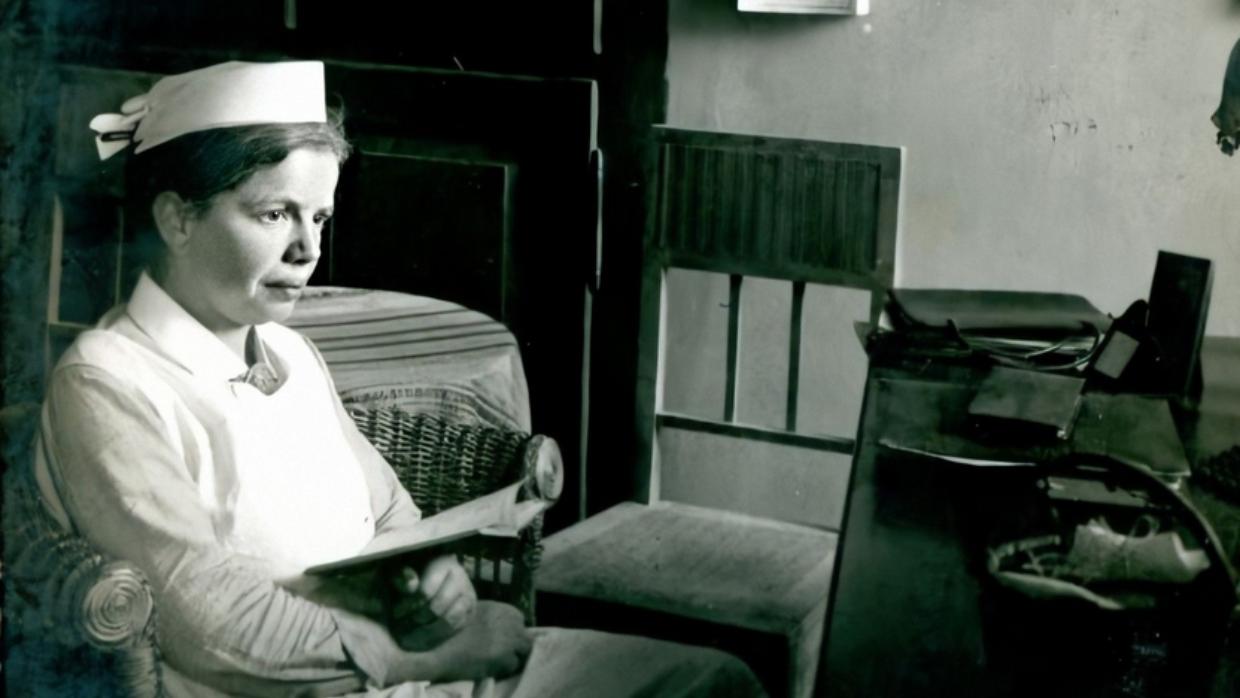
 Werner Liebenthal family album
By the time she reached adulthood, Selma had become a trained nurse working at the Salomon Heine Hospital in Hamburg. It was there that her life took a decisive turn. Dr. Moshe Wallach, the visionary director of Shaare Zedek Hospital in Jerusalem, had traveled to Germany in search of a head nurse capable of transforming a struggling institution into a functioning hospital. Selma was recommended for the position. Knowing little of the hardships that awaited her, she accepted.
The Jerusalem she encountered bore little resemblance to Europe. Transportation was primitive, public services were scarce, and medical conditions were challenging to the extreme. Inside Shaare Zedek Hospital, she found what she later described as “a rather disordered state of affairs.” The nursing staff were untrained. Departments were crowded together. Food was prepared on kerosene stoves, and heating came from the same source. Only the infectious disease ward was isolated in a separate building. Rather than fall into despair, Selma set to work.
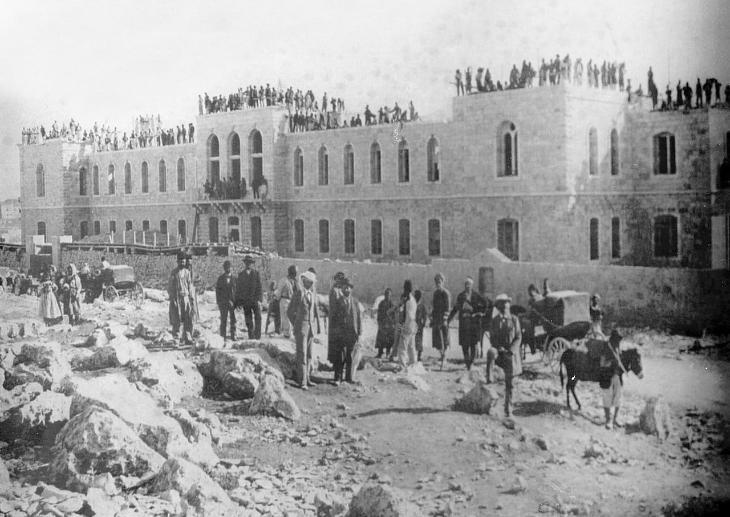 Shaare Zedek Hospital under construction, circa 1901.
During her first weeks, she walked through the hospital with a notebook, recording everything that needed correction. Step by step, she introduced professional nursing standards modeled on the German system — training staff, establishing routines, enforcing hygiene, and creating order where disorder had prevailed. Nurses were required to wear sterile caps, and sheets were changed daily, practices we now take for granted in modern medicine. Beyond nursing, she oversaw the hospital’s kitchen and managed medical supplies, ensuring that even the most basic systems functioned efficiently. Her approach was quiet but firm, practical rather than ideological. Over time, these changes fundamentally reshaped patient care.
Beyond nursing, she oversaw the hospital’s kitchen and managed medical supplies, ensuring that even the most basic systems functioned efficiently.
Soon after her arrival, Jerusalem was struck by epidemics, including typhus. Severely ill patients lined up outside the hospital as far as the Machane Yehuda market, desperate to be admitted. Selma worked tirelessly alongside doctors, often under dangerous conditions. Her duties went beyond nursing, as he assisted in surgeries as well. To protect her staff, she introduced protective clothing — simple measures that reduced infection and saved lives.
She developed a particular attachment to the maternity ward. Childbirth at the time was fraught with danger. Mothers frequently became gravely ill, and infants often failed to survive. Selma took profound satisfaction in seeing a sick newborn gain strength and health. Yet she also bore witness to immense sorrow. When a mother died after giving birth and there was no one to care for the baby, a woman was found to nurse the infant, and the hospital provided food and medical attention but a long-term solution was still needed.
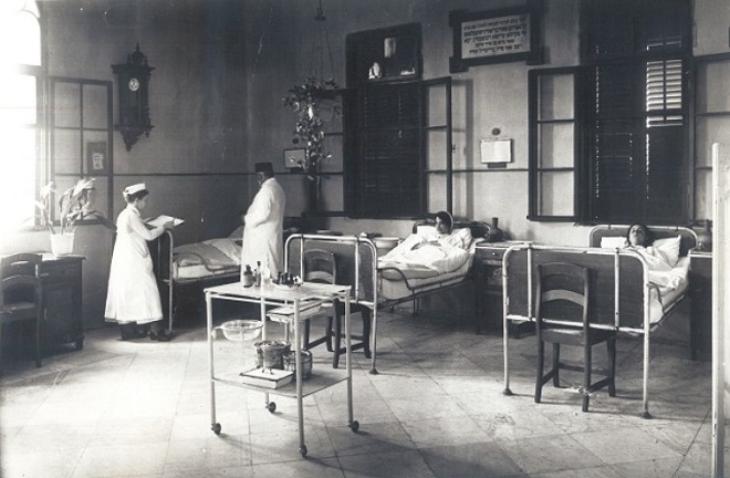 Selma Mayer at work alongside Dr. Moshe Wallach at Shaare Zedek Hospital. Courtesy of the Central Zionist Archives
At the time, her three-year commitment was nearing its end and she was considering returning to Hamburg. Dr. Wallach asked whether she would assume responsibility for the orphaned infant. After reflection, Selma agreed, and with that decision, her life in Jerusalem became permanent. Later, another motherless baby came under her care. What had begun as a professional duty evolved into a personal responsibility and a deep emotional investment.
War soon added new challenges. During World War I, Jerusalem became a battleground as British and Ottoman forces clashed nearby. Wounded soldiers from both sides, as well as injured civilians, flooded the hospital. As explosions echoed through the city, Selma and the staff continued operating, treating the injured and improvising under fire. When fighting drew dangerously close, Selma ordered all patients moved to the basement. The following day, silence fell — the Ottoman forces had surrendered.
In 1934, Selma founded a nursing school at Shaare Zedek, personally training a new generation of professional nurses. She believed deeply in minimizing patient suffering, insisting that caregivers spare no effort in easing pain and preserving dignity. Her influence extended far beyond the hospital walls; the standards she established helped shape modern nursing in Jerusalem and, eventually, throughout Israel. Many of her trainees later played prominent roles in the country’s healthcare system.
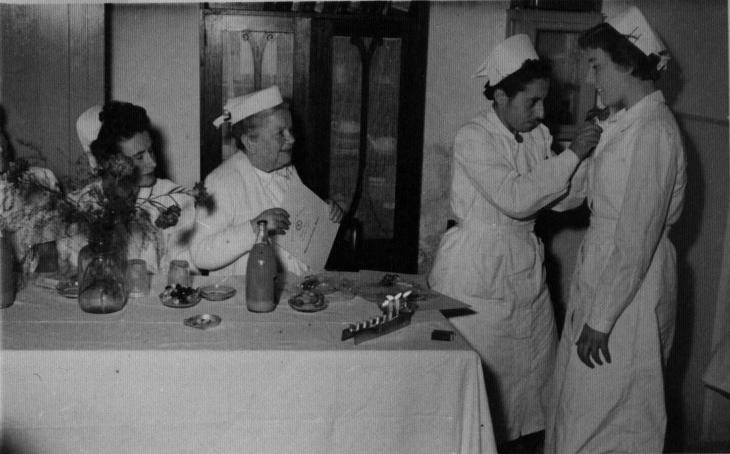 A nursing-school graduate receives a nurse's pin as Schwester Selma (second left) looks on, circa 1954.
Even in her later years, Selma’s sense of responsibility never waned. When fighting erupted again in 1948 with the founding of the State of Israel, she was in Tel Aviv. Knowing that her hospital and patients needed her, she joined a dangerous convoy back to Jerusalem, despite the threat of bombs and sniper fire.
Selma Meir eventually retired, but she continued living on the hospital grounds she had helped build, now a modern medical center unrecognizable from the one she first encountered decades earlier. One of the infants she had taken in long ago grew up and cared for her in her final years.
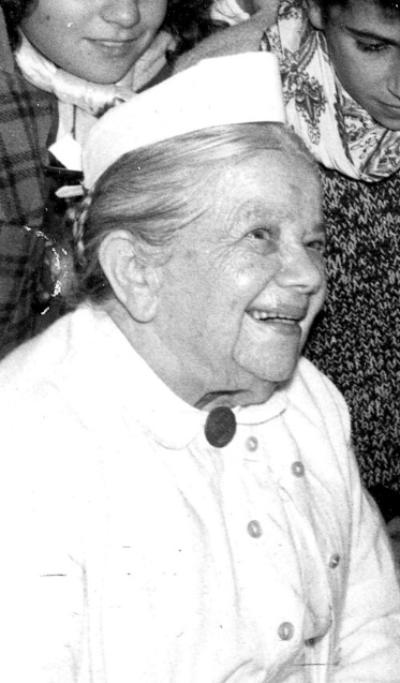
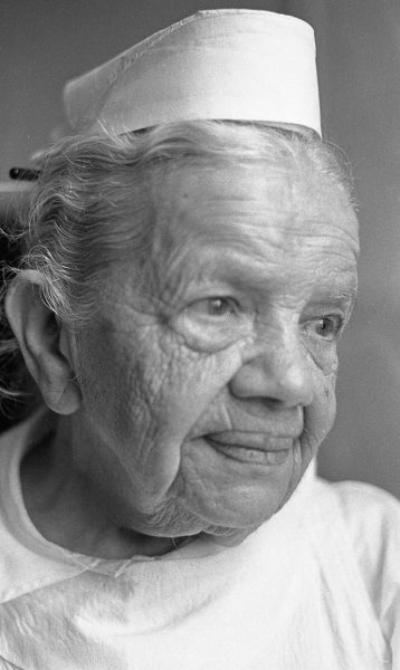 Selma Mayer, 1970. From the Aliza Auerbach Archive, the National Library of Israel
Schwester Selma Meir’s life relates a quiet but powerful story: how compassion, discipline, and perseverance can shape institutions and lives. Without seeking recognition, she helped lay the foundations of modern healthcare in Jerusalem. Her legacy endures not only in buildings and procedures but also in the countless lives she touched through her steady commitment to care and community.
As the 42nd anniversary of her passing approaches on February 19 (2 Adar), Schwester Selma Meir’s life reminds us that quiet dedication and compassion can leave an enduring imprint on a city, a medical system, and generations of patients and caregivers.






A beautiful soul. She inspires me to give selflessly to others in need.
Wow what an amazing nurse with such tenacity and empathy. No words, what a humanitarian 🙏🙏🙏🙏
While she couldn’t have known it when she decided not to return to Germany, that likely saved her life. When we have an opportunity to continue on a path that helps others, it helps us as well, although we may not realize it at the time.
Good point! Thank you for sharing that.
I pass by that building on the way to work. It's quite modest, with high ceilings. Jerusalem is built on layers & layers of such pioneering tzaddiqim & their holy contributions, people who give WAY beyond themselves.
It was both gratifying and touching to read that an orphaned infant she had cared for did the right thing by looking after her in her old age.
What a beautiful legacy she left behind. I trained as a nurse in Shaare Zedek Nursing School from 1983-1986, and Schwester Selma was, at the time, living in the Gynaecology ward in a private suite. I was working at the time, as a student on that ward! I remember the hospital making her a big party to celebrate her 100th birthday, and at the celebration, Schwester Selma got up and said "I think G-D has forgotten me!" ..... she passed away a few days later! We were always told about her and her devotion to patients and to the hospital was a legend.
I strive to be as devoted as she was in my treatment as a nurse and my relationships to my patients.
Mrs Naomi Zipporah Freeman (nee Englard)
Thank you for this article, such a beautiful soul@