 University of Michigan Crossed a Dangerous Line with Jewish Students

3 min read
5 min read
3 min read


3 min read


Protecting kids doesn't require scary talks. Simple, calm conversations woven into everyday moments can give children the language, confidence, and awareness to keep themselves safe.
Not long ago, conversations about child safety, especially those involving personal boundaries, were largely absent from many Jewish homes and classrooms. The silence was not born of indifference, but of discomfort, uncertainty, and a deep desire to preserve childhood innocence.
Parents wanted to protect their children. They just weren’t sure how to begin.
For years, the prevailing assumption was that speaking to young children about personal safety might frighten them or expose them to concepts they were not ready to process. And yet, as awareness slowly grew about the realities children can face, even within familiar environments, it became clear that silence carried its own risks.
One of the most important realizations to emerge over time is this: children do not need to be frightened in order to be empowered.
In fact, the most effective safety education often looks surprisingly gentle.
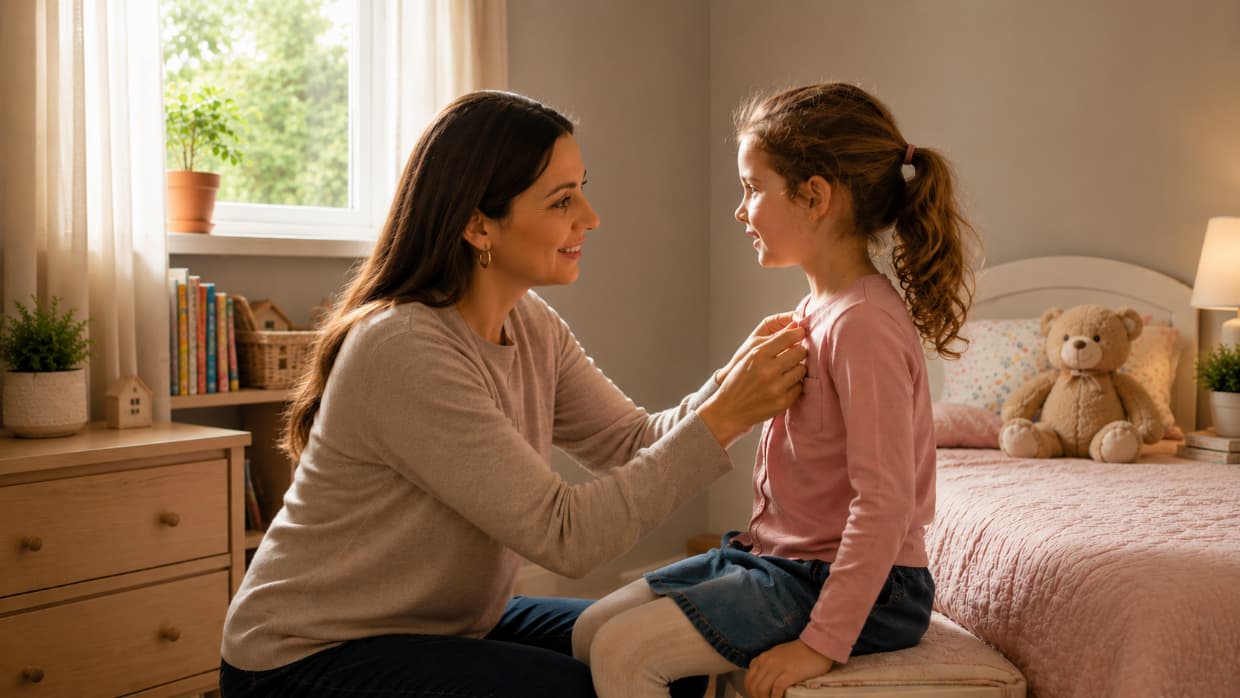
Rather than dramatic warnings, it can take the form of calm, age-appropriate conversations woven into everyday life. A parent helping a child get dressed, a discussion before a doctor’s visit, a reminder during swim time—these ordinary moments can become opportunities to build a child’s awareness of their own body, their boundaries, and their voice.
These conversations don’t need to feel forced or dramatic; ordinary daily interactions can naturally become opportunities to build a child’s lifelong awareness of personal safety.
Those involved in developing early resources for these conversations have witnessed this shift firsthand, watching as what once felt like unfamiliar territory gradually became part of the broader educational landscape in Jewish homes and classrooms.
Another important shift has been the understanding that safety education is not a one-time conversation, but an ongoing process. Just as we revisit other areas of health and wellbeing as our children grow, personal safety can be addressed in small, thoughtful increments, with language that evolves alongside a child’s maturity.
Experts increasingly emphasize that even very young children can begin learning simple, foundational ideas: that their bodies are their own, that certain areas are private, and that they can speak up if something doesn’t feel right. These messages, when delivered with warmth and clarity, do not burden children; they strengthen them.
Perhaps most significantly, communities have begun to recognize that these conversations are not in conflict with our values, but an expression of them.
Teaching children to respect their bodies and trust their inner sense of discomfort aligns deeply with a broader commitment to dignity, responsibility, and care for one another. Protecting children is not only about responding to danger; it is about equipping them, in age-appropriate ways, with the tools they need to navigate the world safely.
Today, something has shifted.
Parents, educators, and mental health professionals are increasingly working together to create resources that make these conversations more accessible. What once felt daunting is becoming more natural.
Safeguarding children begins not with fear, but with clarity and gentle, open communication.
By giving children simple language, by inviting their questions, and by reassuring them that they can always come to us, we are protecting them and strengthening their sense of self, helping to build a culture where safety, trust, and dignity are paramount.
Bracha Goetz is the Harvard-educated author of 47 children’s books, including the safety books, Let's Stay Safe, Talking About Personal Privacy, Let's Swim Safely, and the new board book release for preschoolers, My Special Body: A First Book About Personal Safety.